Blast chillers commercial buyers regret choosing too small
Many commercial buyers discover too late that undersized blast chillers commercial units create daily bottlenecks, food safety risks, and costly workflow disruptions. For procurement teams, choosing the right capacity is not just about fitting the budget—it is about protecting service speed, compliance, and long-term operational efficiency. This guide explains why buying too small often leads to regret and what smart buyers should evaluate first.
Why do buyers of blast chillers commercial equipment so often regret choosing too small?
The most common reason is that purchasing decisions are based on purchase price, floor footprint, or a supplier’s “good enough” recommendation rather than real production flow. In hospitality, institutional catering, central kitchens, bakery operations, and premium food retail, chilling demand is rarely steady. It spikes before service, after batch cooking, during banquets, and around delivery cut-off times. A small unit may appear economical on paper, yet it quickly becomes the slowest point in the cold chain.
For procurement professionals, regret usually appears in three forms. First, staff begin queueing trays, pans, or trolleys because the blast chilling cycle takes longer than the kitchen schedule allows. Second, chefs or operators bypass the intended process and place hot product in standard refrigeration, raising food safety and quality concerns. Third, management realizes the business has paid once for a small machine and must pay again for either a replacement or a second unit. In other words, undersizing blast chillers commercial systems often turns a capital-saving decision into an operating-cost problem.
This is especially important for buyers serving high-volume or premium environments. A five-star hotel, hospital foodservice department, airline caterer, school campus, or large bakery cannot afford delays between production and storage. If the equipment cannot pull core temperature down within the required time window, product consistency, kitchen rhythm, and compliance all suffer together.
What does “too small” actually mean for blast chillers commercial applications?
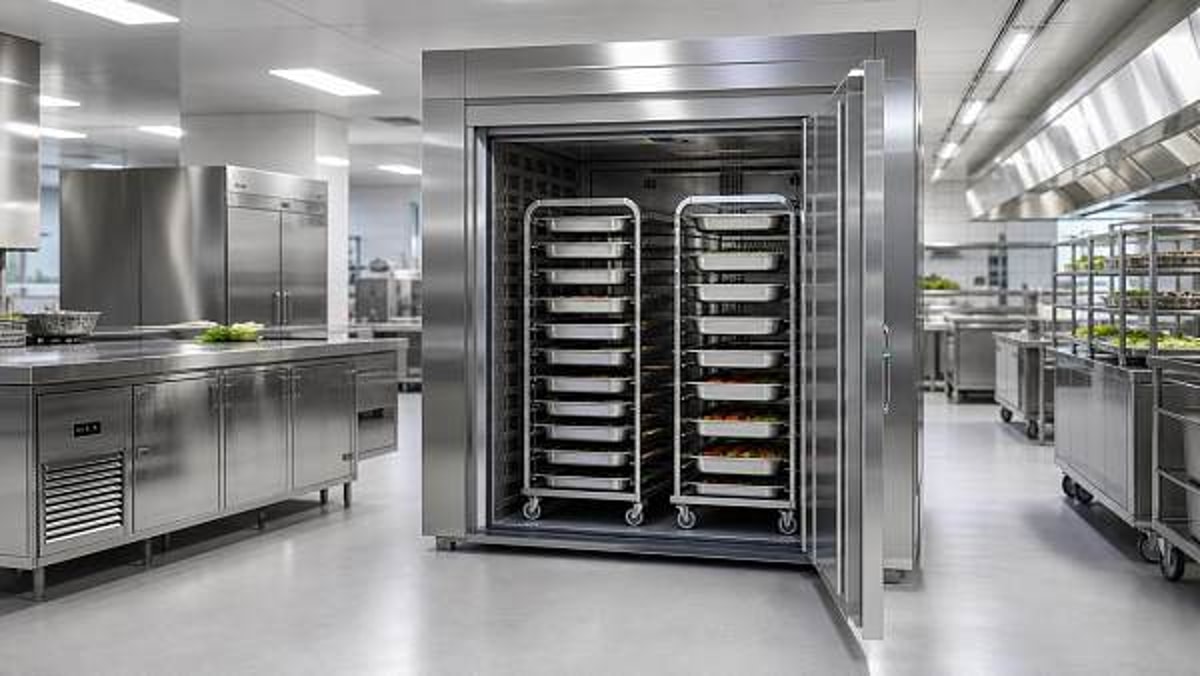
“Too small” does not only mean low internal volume. In blast chillers commercial procurement, small can refer to insufficient tray capacity, weak refrigeration performance under load, limited airflow design, inability to handle dense products, or poor recovery time between cycles. A cabinet may physically fit ten trays, but if it cannot chill the actual food mass quickly and evenly, practical capacity is far lower than the brochure suggests.
Buyers should distinguish between nominal capacity and usable capacity. Nominal capacity is what marketing literature claims under controlled conditions. Usable capacity is what the unit can process in a real kitchen with mixed products, frequent door opening, warm ambient temperatures, and pressure from service schedules. The gap between these two figures is where many bad investments happen.
A unit may also be too small if it cannot support future menu expansion. Many operations begin with basic cooked foods, then add pastry, plated desserts, sauces, seafood, sous vide items, or prepared retail meals. As menu complexity grows, so does the need for fast and reliable chilling. A machine sized only for today’s output can become a constraint within a year.
Which buyers and operating scenarios are most at risk of undersizing?
Not every site has the same exposure, but several buyer groups face elevated risk. Multi-outlet hotels often prepare food in batches for banquet, room service, buffet, and restaurant operations simultaneously. Institutional kitchens in healthcare or education depend on predictable batch chilling to maintain service timing. Commissary kitchens and food manufacturers rely on throughput because missed cycles affect deliveries. High-end bakeries and patisseries need precision to preserve texture, finish, and shelf life.
Risk also rises when buyers focus too heavily on available floor space. Compact layouts are common in urban hospitality projects, but squeezing a small machine into the plan should not override process needs. Another high-risk scenario is procurement based solely on current occupancy or average daily volume. Equipment should be selected around peak load, production window, and growth expectations, not the quietest week of the year.
Operations with strict compliance requirements are particularly sensitive. If a site must document temperature reduction, support HACCP procedures, or maintain traceability for audit purposes, a marginally sized unit leaves little room for error. Procurement teams in these environments should treat blast chillers commercial capacity as a risk-management decision, not just a kitchen equipment line item.
How can buyers tell whether a blast chiller is correctly sized before purchase?
The best method is to start with production reality instead of equipment dimensions. Buyers should ask: how many kilograms of product must be chilled per hour, what is the hottest product entering the machine, what is the target exit temperature, and how many cycles occur during peak production? Without these answers, any recommendation is guesswork.
A useful procurement review should include product type, batch size, container depth, loading pattern, and labor behavior. Soups, proteins, sauces, rice, bakery fillings, and plated items all behave differently during chilling. Deep containers take longer than shallow pans. Full loads behave differently from partial mixed loads. If the supplier does not ask these questions, the sizing process is probably not rigorous enough.
Buyers should also evaluate the production window. A machine may technically process the required volume over an entire day but still fail operationally if that volume must be chilled in a two-hour period. Throughput per shift matters more than theoretical daily totals. For this reason, commercial procurement teams often benefit from requesting a load profile, not just a capacity sheet.
What hidden costs come with undersized blast chillers commercial units?
The hidden cost issue is where many procurement teams change their perspective. A smaller purchase price can be attractive during budget review, but the total cost of ownership often becomes worse. Labor costs increase when staff wait for cycles to finish, split batches inefficiently, or re-handle products to make them fit. Energy use may rise if the unit is constantly overloaded or forced into repeated recovery. Maintenance can also increase when a machine operates at its limit every day.
There are also quality-related losses. Overcrowded loads can chill unevenly, which affects texture, moisture retention, glaze, appearance, and shelf life. In premium hospitality or specialty retail, those quality losses directly affect guest satisfaction and brand perception. For operators supplying multiple locations, a single bottleneck can disrupt packaging, dispatch timing, and vehicle loading windows.
The greatest hidden cost, however, is process workarounds. When a blast chiller is too small, teams often abandon best practice under pressure. They leave product at ambient temperature too long, use conventional refrigeration improperly, or reduce batch size in a way that slows the entire kitchen. These workarounds rarely appear in the original procurement spreadsheet, yet they shape long-term operating performance more than the purchase price difference did.
What are the most common sizing mistakes buyers make?
One common mistake is choosing by tray count alone. Tray count is easy to compare, but it does not reveal refrigeration strength, airflow quality, compressor performance, or how well the unit handles heavy product loads. Another mistake is assuming a blast chiller that works for one menu will automatically work for another. A hotel banquet kitchen, a pastry lab, and a central commissary may all need blast chillers commercial equipment, but their load profiles are very different.
A third mistake is failing to involve end users early. Procurement may focus on compliance, cost, and lead time, while chefs and operations teams understand actual production rhythm. The best outcomes come when finance, procurement, kitchen leadership, and technical teams align on real throughput requirements. Ignoring service engineers can also be costly, because installation conditions, ventilation, ambient heat, and door clearance all affect practical performance.
Another frequent error is treating future growth as optional. If the business plan includes additional covers, external catering, packaged meal programs, or menu premiumization, capacity planning should account for that. Buying the smallest acceptable unit can appear prudent, but in expanding operations it often creates replacement pressure long before the asset should reach end of life.
Should buyers choose one larger unit or multiple smaller blast chillers commercial models?
The answer depends on workflow, resilience needs, and site layout. One larger unit can simplify operation, improve batch efficiency, and deliver stronger throughput for centralized production. It may also reduce the temptation to overload smaller cabinets. For high-volume kitchens with concentrated production windows, a larger machine is often the safer strategic choice.
However, multiple units may make sense where product segregation, phased loading, or redundancy is critical. For example, sites handling different menu categories, staggered prep teams, or multiple service streams may benefit from operational flexibility. If one unit is down, the site still has partial continuity. Buyers should compare not just price, but also process resilience, labor movement, cleaning schedules, and service access.
The key is that “smaller” should be a deliberate system design, not an accidental budget compromise. If several smaller units are selected, their combined capacity and workflow logic must still meet peak operational demand. Otherwise, the organization simply multiplies the original sizing error.
What should procurement teams ask suppliers before placing an order?
A strong supplier discussion should go beyond model number and discount rate. Ask for validated performance data under realistic load conditions, not just ideal test figures. Request clarification on chilling capacity by product category, cycle time, ambient condition tolerance, and recovery between batches. For blast chillers commercial projects, buyers should also ask about controller features, probe accuracy, data logging, alarm functions, and compatibility with food safety documentation needs.
It is equally important to verify service support, spare parts availability, installation requirements, and commissioning standards. Even a well-sized machine can disappoint if after-sales support is weak. Procurement teams operating across regions should assess whether the supplier can support multiple sites consistently. This is especially relevant for global hospitality groups, institutional buyers, and foodservice chains sourcing through complex international supply networks.
Finally, ask the supplier to justify the recommendation in writing. The more clearly they connect the proposed equipment to your batch size, menu, growth plan, and compliance requirements, the lower the risk of post-purchase regret. In professional sourcing, the quality of the recommendation matters as much as the machine itself.
What is the practical takeaway for buyers comparing blast chillers commercial options?
The practical lesson is simple: undersizing is rarely a bargain. A blast chiller should be evaluated as part of a live production system, not as a static box with a low price. When buyers assess true peak throughput, product mix, compliance needs, staff workflow, and business growth, they usually see that the safer decision is the unit that protects operational continuity rather than the one that only protects the initial budget.
For procurement teams, the smartest first step is to translate kitchen activity into measurable requirements: kilograms per cycle, cycles per shift, hottest incoming product, target cooling window, and future expansion volume. With that information, supplier comparisons become more accurate and more strategic. If you need to confirm a specific solution, parameters, lead time, budget range, or sourcing direction, the priority questions should be capacity under real load, recovery performance, documentation support, installation conditions, and how the proposed blast chillers commercial setup will handle both today’s peak demand and tomorrow’s growth.
Search News
Hot Articles
- Commercial KitchenStainless steel GN pans with reinforced corners last longer in busy kitchensMay 02, 2026
- Hotel Room AmenitiesMemory foam hotel mattresses: when soft comfort leads to faster saggingMay 02, 2026
- Hotel Room AmenitiesElectronic hotel door locks: battery alerts are often less simple than they seemMay 02, 2026
Popular Tags
Need ExpertConsultation?
Connect with our specialized leisureengineering team for procurementstrategies.
Recommended News
 May 02, 2026Stainless steel GN pans with reinforced corners last longer in busy kitchensStainless steel GN pans with reinforced corners help busy kitchens reduce warping, improve hygiene, and cut replacement costs. See why buyers choose longer-lasting performance.● Hospitality Sourcing Dir
 May 02, 2026Commercial induction cookers: power ratings that mislead first-time buyersCommercial induction cookers are not as simple as wattage labels suggest. Learn how to compare real performance, efficiency, pan fit, and reliability before you buy.● Hospitality Sourcing Dir
 May 02, 2026Beverage dispensers wholesale: what causes dripping after heavy useBeverage dispensers wholesale guide: learn what causes dripping after heavy use, how to spot seal, valve, and pressure issues, and choose durable suppliers with confidence.● Hospitality Sourcing Dir
 May 02, 2026Disposable wooden cutlery and the taste issue customers noticeDisposable wooden cutlery can affect taste, texture, and customer perception. Learn what causes woody aftertaste, how to test suppliers, and how to choose better options.● Hospitality Sourcing Dir
 May 02, 2026Sushi display cases: curved glass looks better, but is it practical?Sushi display cases with curved glass look premium, but are they practical? Compare visibility, cleaning, temperature control, and ROI before you buy.● Hospitality Sourcing Dir
 May 02, 2026Vacuum sealing machines food businesses can scale withVacuum sealing machines food businesses can scale with improve shelf life, workflow, and cost control. Explore reliable, compliant solutions for growing food operations.● Hospitality Sourcing Dir
 May 02, 2026Chafing fuel gel bulk: storage and burn-time issues to check firstChafing fuel gel bulk buyers should check storage stability, seal integrity, and real burn-time performance first. Reduce waste, avoid service disruption, and source with more confidence.● Hospitality Sourcing Dir
 May 02, 2026Custom printed napkins that keep logos sharp after unfoldingCustom printed napkins that keep logos sharp after unfolding help hotels, restaurants, and event brands protect presentation quality. Learn what to check before you buy.● Hospitality Sourcing Dir
 May 02, 2026Panini presses commercial models: smooth plate or grooved plate?Panini presses commercial buyers: compare smooth vs. grooved plates for hotels, cafés, catering, and foodservice. Learn which style boosts speed, cleaning, presentation, and value.● Hospitality Sourcing Dir
 May 02, 2026Catering transport carts: how much insulation is actually enough?Catering transport carts: discover how much insulation is truly enough to protect food quality, meet compliance goals, and improve service efficiency across real catering operations.● Hospitality Sourcing Dir
 May 02, 2026What slows down commercial bone saw machines during peak prep hoursCommercial bone saw machines slow down from blade wear, workflow bottlenecks, raw material variation, and cleaning delays. Learn what really cuts throughput and how to choose higher-efficiency equipment.● Hospitality Sourcing Dir
 May 02, 2026Refrigerated display cabinets: glass fogging problems and how to avoid themRefrigerated display cabinets often face glass fogging in humid settings. Learn key causes, smart anti-fog solutions, and how to choose reliable cabinets for clear visibility.● Hospitality Sourcing Dir
 May 02, 2026Commercial food processors: the attachment issue many kitchens overlookCommercial food processors are only as effective as their attachments. Learn how the right system improves consistency, safety, workflow, and ROI before you buy.● Hospitality Sourcing Dir
 May 02, 2026Biodegradable takeout containers that leak less with hot foodsBiodegradable takeout containers that leak less with hot foods: compare materials, heat resistance, grease barriers, and sourcing factors to choose reliable eco packaging.● Hospitality Sourcing Dir
 May 02, 2026Hotel & Catering Equipment checklist for new venue openingsHotel & Catering Equipment checklist for new venue openings: discover must-have items, common planning gaps, compliance checks, and sourcing tips to launch on time and with confidence.● Hospitality Sourcing Dir
 May 02, 2026Commercial waffle makers: flip or fixed plate for busy breakfast serviceCommercial waffle makers: compare flip vs fixed plate models for busy breakfast service. Learn which option improves speed, consistency, labor efficiency, and guest satisfaction.● Hospitality Sourcing Dir
 May 02, 2026Paper coffee cups wholesale: which lid fit causes the most complaintsPaper coffee cups wholesale buyers face the most complaints from loose lids that seem sealed but leak in use. Learn key fit risks, root causes, and sourcing checks before bulk orders.● Hospitality Sourcing Dir
 May 02, 2026Blast chillers commercial buyers regret choosing too smallBlast chillers commercial buyers often regret going too small. Learn how proper sizing protects food safety, peak throughput, compliance, and long-term operating efficiency.● Hospitality Sourcing Dir
 May 02, 2026Commercial wine coolers with dual zones: when are they worth it?Commercial wine coolers with dual zones: learn when the added cost pays off for hospitality, retail, and event venues through better temperature control, display, and service efficiency.● Hospitality Sourcing Dir
 May 02, 2026How to compare stainless steel GN pans by gauge and depthStainless steel GN pans compared by gauge and depth: learn how thickness, capacity, and workflow fit affect durability, heat performance, and smarter catering purchases.● Hospitality Sourcing Dir
 May 01, 2026Hotel and Catering Equipment Trends Shaping 2026 RenovationsHotel & Catering Equipment trends for 2026 renovations reveal smarter, cleaner, and more flexible solutions that cut risk, improve efficiency, and elevate guest experience.● Hospitality Sourcing Dir
 May 01, 2026Outdoor Patio Heaters: What Changes in Windy Dining AreasOutdoor patio heaters in windy dining areas need more than high output. Learn how wind changes comfort, efficiency, safety, and placement to choose smarter commercial heating solutions.● Hospitality Sourcing Dir
 May 01, 2026Food Warmers Commercial Models That Keep Texture, Not Just HeatFood warmers commercial buyers trust do more than hold heat—they preserve crispness, moisture, and presentation. Discover how to reduce waste and improve service quality.● Hospitality Sourcing Dir
 May 01, 2026Bakery Dough Mixers Sized Right for Batch ConsistencyBakery dough mixers sized right improve batch consistency, dough quality, and efficiency. Learn how to match capacity, torque, and dough type for reliable bakery performance.● Hospitality Sourcing Dir