Biodegradable takeout containers that leak less with hot foods
As demand grows for sustainable food packaging, biodegradable takeout containers are under pressure to perform just as well as traditional options—especially with hot, oily, or moisture-rich meals. For buyers researching practical alternatives, understanding which materials leak less, hold heat better, and align with commercial sourcing standards is essential before making a reliable purchasing decision.
Why performance expectations are changing faster than sustainability claims
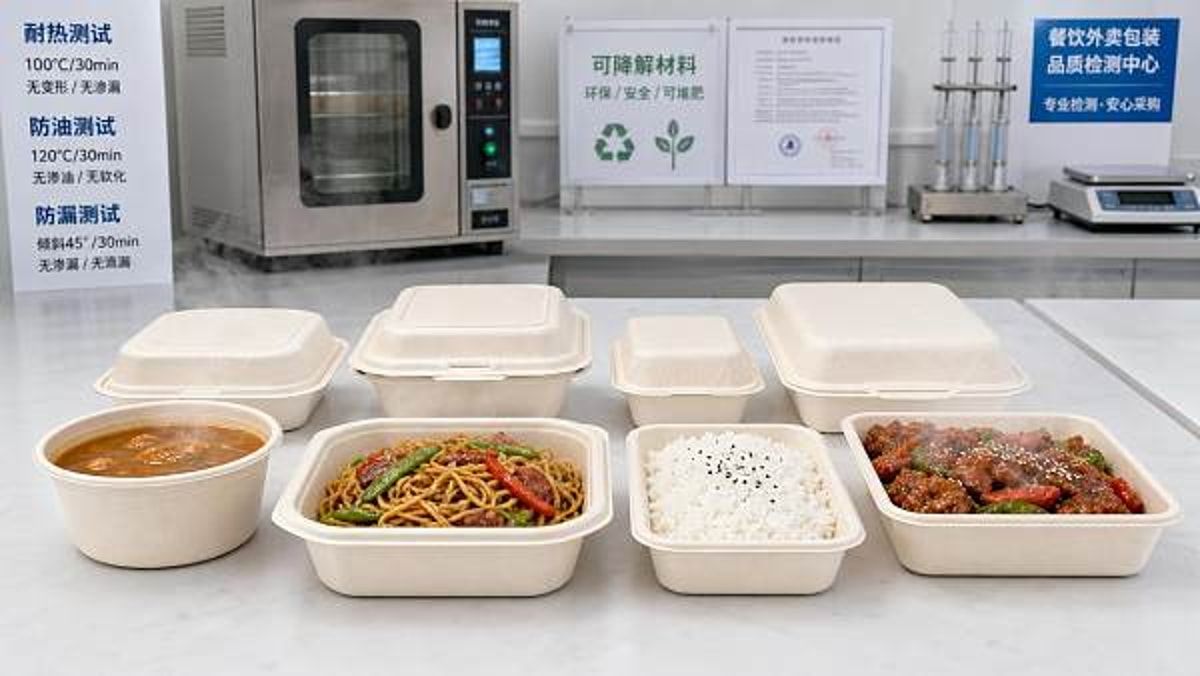
The conversation around biodegradable takeout containers has shifted. A few years ago, many foodservice operators adopted eco-friendly packaging mainly to signal environmental responsibility. Today, the market is more demanding. Restaurants, hotel catering teams, institutional kitchens, and delivery-focused brands increasingly expect compostable or biodegradable formats to match conventional packaging in real operating conditions. The biggest pressure point is no longer whether a container is marketed as green, but whether it can survive contact with hot soups, oily noodles, steamed rice dishes, gravies, and other challenging foods without softening, warping, or leaking.
This change matters for sourcing teams because buyer priorities are becoming more layered. Sustainability remains important, but it now sits alongside food safety, customer satisfaction, delivery reliability, stacking strength, heat retention, and end-of-life compliance. In practical terms, that means the most competitive biodegradable takeout containers are not necessarily the cheapest or the ones with the strongest environmental messaging. They are the ones that perform credibly in real distribution conditions while still supporting sustainability goals.
The main market signal: hot-food resistance is becoming a deciding factor
One of the clearest trend signals is that leakage resistance with hot foods is becoming a front-line sourcing criterion. Buyers are asking more specific questions: Can the container handle temperatures above serving heat? Does it resist oil migration? Will condensation weaken the lid seal? Can it maintain structure during a 20- to 40-minute delivery journey? These questions reflect the wider transformation of foodservice into a delivery, takeaway, and hybrid dine-in model.
For information researchers and procurement evaluators, this means a simple category label such as “biodegradable” is no longer enough. Materials that work well for dry bakery items may fail with curry, braised dishes, or hot pasta. Likewise, containers that appear sturdy at room temperature may underperform when exposed to steam buildup. The trend is pushing the industry toward more application-specific product selection instead of generic eco-packaging substitution.
What is driving the shift toward higher-performing biodegradable takeout containers
Several forces are accelerating this shift. First, regulations and corporate sustainability commitments continue to reduce reliance on certain single-use plastics in many markets. Second, consumers have become less tolerant of packaging failure; a sustainable container that leaks into a delivery bag damages brand trust quickly. Third, menu complexity has increased. Foodservice operators now package a wider range of hot, sauced, and multi-component meals than before. Finally, cross-border sourcing is becoming more sophisticated, with buyers seeking suppliers that can document performance consistency, migration safety, and manufacturing control.
These combined forces explain why the market is rewarding suppliers that can demonstrate not just biodegradability, but thermal stability, barrier performance, and quality repeatability. In sectors such as hospitality, campus foodservice, and premium commercial catering, the packaging decision is increasingly treated as an operational risk decision, not only a sustainability decision.
Key drivers behind current demand patterns
Which materials are gaining attention for leaking less with hot foods
The market is not converging around one universal answer. Instead, biodegradable takeout containers are being judged by how well specific material systems fit particular meal profiles. Molded fiber, bagasse, coated paperboard, PLA-lined structures, and emerging bio-based composites all have roles, but their suitability varies.
Bagasse and molded fiber formats continue to attract attention because they offer a sturdy feel and strong sustainability positioning. However, buyers are becoming more cautious about assuming all fiber-based products behave equally. Some handle hot foods well for moderate periods, while others may absorb moisture or allow oil seepage under prolonged exposure. Coating quality, wall density, lid design, and manufacturing consistency often determine whether a fiber container performs well or fails in use.
Paper-based containers with barrier treatments can offer better resistance in some hot-food applications, but sourcing teams increasingly want clarity on what those coatings mean for compostability, food contact compliance, and regional disposal systems. Bio-based plastic alternatives may deliver stronger moisture and grease barriers, yet their performance should be reviewed alongside heat tolerance and local waste-processing realities. The trend is clear: buyers are moving away from material labels alone and toward evidence-based application fit.
A practical comparison trend buyers are making
Why leakage is now linked to broader commercial risk
For B2B buyers, a leaking container is more than a packaging defect. It can trigger refunds, customer complaints, food safety concerns, damaged secondary packaging, and higher labor costs. In hotel and catering operations, leakage can also affect presentation standards, especially for premium room service, banquet support, or executive dining. In educational and institutional settings, where meal service is high-volume and operationally tight, underperforming biodegradable takeout containers can create costly disruptions at scale.
This is why leakage resistance increasingly intersects with supplier evaluation. Buyers want manufacturers that can explain sealing methods, lid compatibility, stack compression behavior, and batch consistency. A supplier that merely offers a sustainability certificate without use-case validation may no longer satisfy serious commercial procurement requirements.
Who is most affected by this packaging performance shift
The shift affects multiple decision-makers across the commercial food ecosystem. Research-stage readers should note that the same container may be judged differently depending on the operator’s service model, menu architecture, and brand positioning.
The next sourcing trend: from eco claims to proof-based specification
A notable trend in commercial sourcing is the move from broad environmental claims toward measurable performance specifications. Buyers increasingly request hot-fill suitability, grease resistance indicators, sealing test information, and food contact documentation as part of the evaluation process. This reflects a more mature packaging market in which sustainability is important, but unsupported claims are no longer enough.
For suppliers, this means product development and marketing need to become more transparent. For buyers, it means procurement teams should compare biodegradable takeout containers under realistic operating conditions, not only catalog descriptions. A controlled trial with representative menu items often reveals more than a sustainability label or generic sales sheet.
What buyers should evaluate before shortlisting suppliers
Information researchers looking ahead to commercial purchase decisions should pay close attention to how product claims connect to actual use. Several evaluation factors are becoming especially important in the current market direction.
- Heat exposure tolerance during holding, transport, and serving
- Grease and moisture barrier behavior over time, not just at first fill
- Lid security, venting design, and resistance to steam-related deformation
- Stacking strength for delivery, storage, and back-of-house handling
- Compliance documentation for food contact and destination markets
- Manufacturing consistency across batches and reorder cycles
This evaluation logic is particularly relevant for international sourcing platforms and B2B procurement environments, where product reliability must be understood before larger commitments are made. In that context, biodegradable takeout containers should be reviewed as part of a broader commercial performance system, not as isolated disposable items.
How to interpret future signals in this category
Looking forward, three signals are worth monitoring. First, expect more material refinement aimed at balancing biodegradability with improved grease and heat resistance. Second, expect commercial buyers to push for better alignment between packaging claims and local waste infrastructure. Third, expect stronger differentiation among suppliers based on test transparency, not just on price or environmental language.
The likely direction is not a single winning material, but a more segmented market. Containers for dry snacks, hot entrees, oily dishes, and premium meal presentation will continue to diverge. This means sourcing decisions will become more menu-specific and channel-specific. Companies that recognize this early can reduce failure rates and make better long-term packaging choices.
Final judgment for researchers and sourcing teams
The key market change is straightforward: biodegradable takeout containers are no longer evaluated only by whether they are sustainable, but by whether they can reliably replace traditional packaging in demanding hot-food applications. Leakage resistance has become a signal of product maturity, supplier credibility, and operational fit.
If your business is assessing how this trend affects future sourcing, focus on a few essential questions: Which menu items create the highest leak risk? Which materials have been validated for those conditions? What compliance and performance documentation can the supplier provide? And how well does the packaging align with your brand, disposal environment, and service model? Answering those questions will provide a stronger basis for selecting biodegradable takeout containers that support both sustainability goals and real commercial performance.
Search News
Hot Articles
- Commercial KitchenStainless steel GN pans with reinforced corners last longer in busy kitchensMay 02, 2026
- Hotel Room AmenitiesMemory foam hotel mattresses: when soft comfort leads to faster saggingMay 02, 2026
- Hotel Room AmenitiesElectronic hotel door locks: battery alerts are often less simple than they seemMay 02, 2026
Popular Tags
Need ExpertConsultation?
Connect with our specialized leisureengineering team for procurementstrategies.
Recommended News
 May 02, 2026Stainless steel GN pans with reinforced corners last longer in busy kitchensStainless steel GN pans with reinforced corners help busy kitchens reduce warping, improve hygiene, and cut replacement costs. See why buyers choose longer-lasting performance.● Hospitality Sourcing Dir
 May 02, 2026Commercial induction cookers: power ratings that mislead first-time buyersCommercial induction cookers are not as simple as wattage labels suggest. Learn how to compare real performance, efficiency, pan fit, and reliability before you buy.● Hospitality Sourcing Dir
 May 02, 2026Beverage dispensers wholesale: what causes dripping after heavy useBeverage dispensers wholesale guide: learn what causes dripping after heavy use, how to spot seal, valve, and pressure issues, and choose durable suppliers with confidence.● Hospitality Sourcing Dir
 May 02, 2026Disposable wooden cutlery and the taste issue customers noticeDisposable wooden cutlery can affect taste, texture, and customer perception. Learn what causes woody aftertaste, how to test suppliers, and how to choose better options.● Hospitality Sourcing Dir
 May 02, 2026Sushi display cases: curved glass looks better, but is it practical?Sushi display cases with curved glass look premium, but are they practical? Compare visibility, cleaning, temperature control, and ROI before you buy.● Hospitality Sourcing Dir
 May 02, 2026Vacuum sealing machines food businesses can scale withVacuum sealing machines food businesses can scale with improve shelf life, workflow, and cost control. Explore reliable, compliant solutions for growing food operations.● Hospitality Sourcing Dir
 May 02, 2026Chafing fuel gel bulk: storage and burn-time issues to check firstChafing fuel gel bulk buyers should check storage stability, seal integrity, and real burn-time performance first. Reduce waste, avoid service disruption, and source with more confidence.● Hospitality Sourcing Dir
 May 02, 2026Custom printed napkins that keep logos sharp after unfoldingCustom printed napkins that keep logos sharp after unfolding help hotels, restaurants, and event brands protect presentation quality. Learn what to check before you buy.● Hospitality Sourcing Dir
 May 02, 2026Panini presses commercial models: smooth plate or grooved plate?Panini presses commercial buyers: compare smooth vs. grooved plates for hotels, cafés, catering, and foodservice. Learn which style boosts speed, cleaning, presentation, and value.● Hospitality Sourcing Dir
 May 02, 2026Catering transport carts: how much insulation is actually enough?Catering transport carts: discover how much insulation is truly enough to protect food quality, meet compliance goals, and improve service efficiency across real catering operations.● Hospitality Sourcing Dir
 May 02, 2026What slows down commercial bone saw machines during peak prep hoursCommercial bone saw machines slow down from blade wear, workflow bottlenecks, raw material variation, and cleaning delays. Learn what really cuts throughput and how to choose higher-efficiency equipment.● Hospitality Sourcing Dir
 May 02, 2026Refrigerated display cabinets: glass fogging problems and how to avoid themRefrigerated display cabinets often face glass fogging in humid settings. Learn key causes, smart anti-fog solutions, and how to choose reliable cabinets for clear visibility.● Hospitality Sourcing Dir
 May 02, 2026Commercial food processors: the attachment issue many kitchens overlookCommercial food processors are only as effective as their attachments. Learn how the right system improves consistency, safety, workflow, and ROI before you buy.● Hospitality Sourcing Dir
 May 02, 2026Biodegradable takeout containers that leak less with hot foodsBiodegradable takeout containers that leak less with hot foods: compare materials, heat resistance, grease barriers, and sourcing factors to choose reliable eco packaging.● Hospitality Sourcing Dir
 May 02, 2026Hotel & Catering Equipment checklist for new venue openingsHotel & Catering Equipment checklist for new venue openings: discover must-have items, common planning gaps, compliance checks, and sourcing tips to launch on time and with confidence.● Hospitality Sourcing Dir
 May 02, 2026Commercial waffle makers: flip or fixed plate for busy breakfast serviceCommercial waffle makers: compare flip vs fixed plate models for busy breakfast service. Learn which option improves speed, consistency, labor efficiency, and guest satisfaction.● Hospitality Sourcing Dir
 May 02, 2026Paper coffee cups wholesale: which lid fit causes the most complaintsPaper coffee cups wholesale buyers face the most complaints from loose lids that seem sealed but leak in use. Learn key fit risks, root causes, and sourcing checks before bulk orders.● Hospitality Sourcing Dir
 May 02, 2026Blast chillers commercial buyers regret choosing too smallBlast chillers commercial buyers often regret going too small. Learn how proper sizing protects food safety, peak throughput, compliance, and long-term operating efficiency.● Hospitality Sourcing Dir
 May 02, 2026Commercial wine coolers with dual zones: when are they worth it?Commercial wine coolers with dual zones: learn when the added cost pays off for hospitality, retail, and event venues through better temperature control, display, and service efficiency.● Hospitality Sourcing Dir
 May 02, 2026How to compare stainless steel GN pans by gauge and depthStainless steel GN pans compared by gauge and depth: learn how thickness, capacity, and workflow fit affect durability, heat performance, and smarter catering purchases.● Hospitality Sourcing Dir
 May 01, 2026Hotel and Catering Equipment Trends Shaping 2026 RenovationsHotel & Catering Equipment trends for 2026 renovations reveal smarter, cleaner, and more flexible solutions that cut risk, improve efficiency, and elevate guest experience.● Hospitality Sourcing Dir
 May 01, 2026Outdoor Patio Heaters: What Changes in Windy Dining AreasOutdoor patio heaters in windy dining areas need more than high output. Learn how wind changes comfort, efficiency, safety, and placement to choose smarter commercial heating solutions.● Hospitality Sourcing Dir
 May 01, 2026Food Warmers Commercial Models That Keep Texture, Not Just HeatFood warmers commercial buyers trust do more than hold heat—they preserve crispness, moisture, and presentation. Discover how to reduce waste and improve service quality.● Hospitality Sourcing Dir
 May 01, 2026Bakery Dough Mixers Sized Right for Batch ConsistencyBakery dough mixers sized right improve batch consistency, dough quality, and efficiency. Learn how to match capacity, torque, and dough type for reliable bakery performance.● Hospitality Sourcing Dir