Chafing fuel gel bulk: storage and burn-time issues to check first
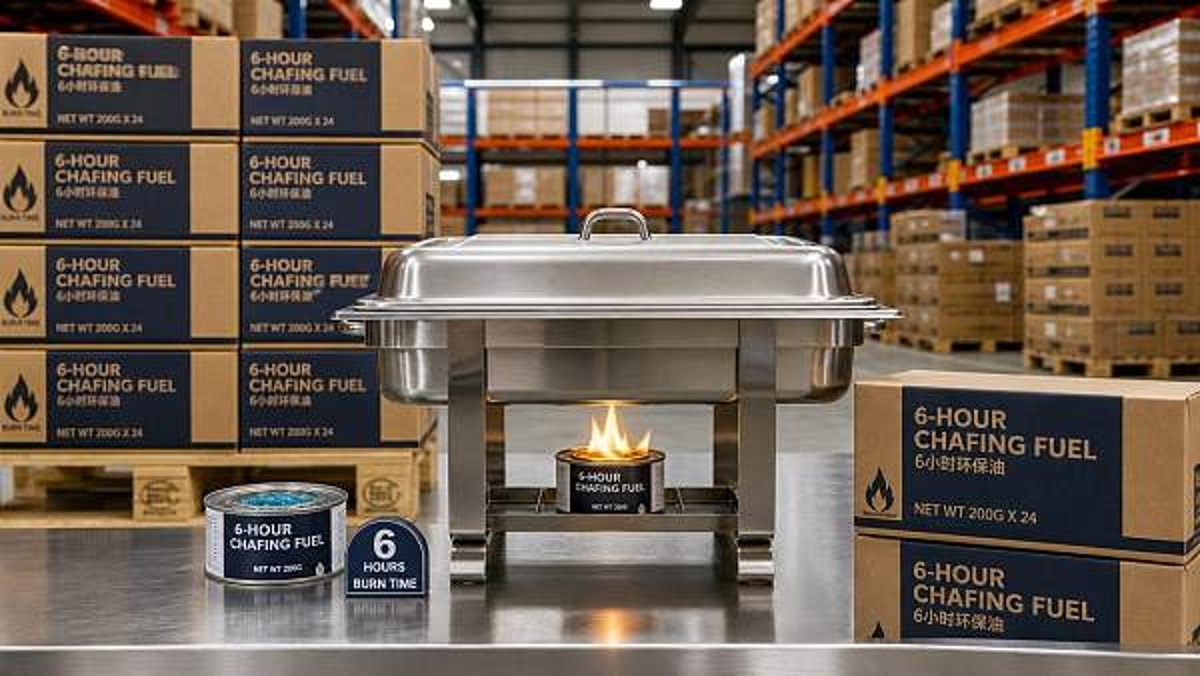
Buying chafing fuel gel bulk can reduce unit costs, but poor storage conditions and unclear burn-time performance often create waste, safety risks, and service disruptions. Before placing large-volume orders, procurement teams should verify shelf stability, packaging integrity, heat consistency, and real-world burn duration to ensure reliable catering operations and better total sourcing value.
Why storage and burn-time vary so much across catering scenarios
For procurement teams, chafing fuel gel bulk is not a simple commodity purchase. The same carton of fuel may perform acceptably in a controlled hotel banquet hall yet become unreliable in an outdoor event, a high-turn buffet line, or a long-distance distribution network. That is why storage and burn-time should be evaluated in context rather than in isolation.
The main issue is that fuel performance depends on where and how it will be used. Indoor buffet service values stable flame and predictable table turnover. Central kitchens and catering groups care more about warehouse safety, transport resilience, and lot consistency. Event operators may prioritize mobility, weather tolerance, and easy staff handling. In each case, the procurement decision changes.
A low unit price may look attractive, but if the gel separates during storage, leaks from the lid, underperforms in cold conditions, or burns out earlier than the service plan assumes, the total cost increases fast. Teams may need emergency replenishment, extra labor, more frequent can replacement, or larger safety buffers. For buyers responsible for service continuity, these risks matter as much as price.
Where chafing fuel gel bulk is commonly used and what each setting really demands
Most buyers searching for chafing fuel gel bulk fall into a few practical operating environments. Understanding them helps define the right specifications before asking suppliers for quotations or samples.
Hotel buffet and banquet service
Hotels usually need a professional appearance, reliable heat output, low odor, and consistent burn duration across many identical setups. A banquet team does not want one can to last 4 hours and another to fail after 2.8 hours. Here, the priority is standardization, easy replacement during service, and product cleanliness that matches premium guest expectations.
Off-site catering and event operations
Mobile catering crews face vibration during transport, uneven storage conditions, and variable setup times. In this scenario, packaging durability is often as important as flame performance. Containers must resist leakage, dents, and loose caps. Burn-time claims also need verification under real field conditions, not only in a laboratory or ideal indoor setting.
Institutional foodservice
Schools, hospitals, campuses, and corporate dining facilities often purchase in volume but run more controlled schedules. They may emphasize compliant labeling, safer handling procedures, storage documentation, and dependable reorder cycles. For these accounts, shelf life and lot traceability can matter more than premium branding.
Wholesale distribution and regional resupply
Distributors sourcing chafing fuel gel bulk must think beyond one end user. Their challenge is whether the product remains stable across warehousing, repack movement, climate variation, and multi-client delivery windows. They need stronger confidence in carton integrity, pallet handling, production consistency, and claims support from the manufacturer.
Scenario comparison: what buyers should check first
The table below helps procurement teams align product checks with actual operating conditions rather than buying all fuel by the same criteria.
Storage issues to check before committing to chafing fuel gel bulk
Storage failures are one of the biggest hidden costs in chafing fuel gel bulk purchasing. Buyers often compare only can size and quoted burn hours, but neglected storage details can turn inventory into waste.
Shelf stability by climate and warehouse condition
Ask how the gel behaves under heat, cold, and seasonal fluctuation. In warm regions or non-air-conditioned storage, some formulas may thin, separate, or lose consistency. In colder environments, ignition and flame stability may change. Procurement teams should request documented shelf life, preferred storage temperature range, and any known risks associated with prolonged stacking or environmental stress.
Packaging seal integrity
A leaking lid can damage cartons, create odor complaints, and pose handling concerns. Check the closure design, seal quality, liner performance, and whether the supplier has carton drop-test or transport simulation data. This is especially important when the fuel will be moved through multiple distribution points.
Outer carton and pallet suitability
Bulk purchases often fail not at the can level but at the logistics level. Weak cartons collapse in humid warehouses, and unstable pallets increase breakage during loading. If you are sourcing for export or regional distribution, confirm carton board quality, stack limit, pallet pattern, and whether moisture protection is included.
Traceability and date coding
When inventory turns slowly, date coding becomes essential. Procurement teams should verify batch coding, manufacturing date visibility, and first-in-first-out practicality. Without clear traceability, it becomes difficult to identify aging stock or isolate a problematic lot.
Burn-time issues: why label claims are not enough
Burn-time is one of the top decision factors for chafing fuel gel bulk, but published runtime often reflects ideal test conditions. Real service conditions are less forgiving. Flame exposure, ambient temperature, wind, chafing dish design, and opening frequency all affect actual duration.
For procurement, the goal is not simply to find the longest possible burn time. The better question is whether the fuel can support the service window your operation needs with acceptable heat consistency. A can that claims 6 hours but loses useful heat after 3.5 hours may not be suitable for buffet holding.
Useful heat versus total flame time
Some products continue burning after their heating efficiency drops. Buyers should ask suppliers whether stated burn time refers to visible flame only or practical food-warming performance. If possible, test under a loaded chafer with real holding pans rather than relying on open-air burn data.
Batch-to-batch consistency
One of the biggest operational problems is runtime variation between lots. In banquet settings, even a 20- to 30-minute difference can disrupt synchronized service. Ask for batch consistency controls, production tolerance, and whether the supplier tracks customer complaints related to short burn duration.
Ignition and relighting behavior
In some service scenarios, staff may need to relight cans after a pause or adjustment. If the gel chars excessively or becomes difficult to relight, labor time increases and service becomes less efficient. This factor is often overlooked in sample testing.
How different buyer types should evaluate chafing fuel gel bulk
Common mistakes when matching bulk fuel to real operating scenarios
A frequent mistake is buying chafing fuel gel bulk based on price per can without calculating effective cost per service hour. If actual burn time is shorter than expected, consumption rises and labor increases. Another mistake is approving a product after a single short test in a controlled room, then deploying it across events with very different temperature and airflow conditions.
Some teams also underestimate inventory aging. Bulk purchasing only works if stock rotation, storage discipline, and forecast accuracy are in place. Otherwise, low-cost buying turns into expired or degraded inventory. Finally, buyers sometimes ignore the supplier’s ability to maintain quality over repeated orders. A good sample does not guarantee dependable long-term supply.
A practical sourcing checklist before placing a bulk order
Before finalizing a chafing fuel gel bulk contract, procurement teams should confirm several points in writing:
- Documented shelf life and recommended storage range
- Burn-time methodology and whether useful heat was measured
- Leak prevention details for lids, seals, and transport packaging
- Batch coding, traceability, and complaint-handling process
- Carton and pallet performance for warehouse and export movement
- Pilot test results in the same service environment where the product will be used
Final decision guidance for procurement teams
The best chafing fuel gel bulk option is the one that fits your service scenario, not just the lowest quoted price. Hotel buffets, institutional dining, event catering, and distribution businesses all place different stress on the product. That means storage reliability, packaging strength, and practical burn performance must be checked against the way your team actually buys, stores, transports, and uses fuel.
If you are evaluating suppliers, start with a scenario-based trial: test the fuel in your real chafers, under your normal holding times, with your actual warehouse conditions and replenishment rhythm. When those results are paired with clear documentation and stable supply capability, procurement can move from price comparison to true total-value sourcing.
Search News
Hot Articles
- Commercial KitchenStainless steel GN pans with reinforced corners last longer in busy kitchensMay 02, 2026
- Hotel Room AmenitiesMemory foam hotel mattresses: when soft comfort leads to faster saggingMay 02, 2026
- Hotel Room AmenitiesElectronic hotel door locks: battery alerts are often less simple than they seemMay 02, 2026
Popular Tags
Need ExpertConsultation?
Connect with our specialized leisureengineering team for procurementstrategies.
Recommended News
 May 02, 2026Stainless steel GN pans with reinforced corners last longer in busy kitchensStainless steel GN pans with reinforced corners help busy kitchens reduce warping, improve hygiene, and cut replacement costs. See why buyers choose longer-lasting performance.● Hospitality Sourcing Dir
 May 02, 2026Commercial induction cookers: power ratings that mislead first-time buyersCommercial induction cookers are not as simple as wattage labels suggest. Learn how to compare real performance, efficiency, pan fit, and reliability before you buy.● Hospitality Sourcing Dir
 May 02, 2026Beverage dispensers wholesale: what causes dripping after heavy useBeverage dispensers wholesale guide: learn what causes dripping after heavy use, how to spot seal, valve, and pressure issues, and choose durable suppliers with confidence.● Hospitality Sourcing Dir
 May 02, 2026Disposable wooden cutlery and the taste issue customers noticeDisposable wooden cutlery can affect taste, texture, and customer perception. Learn what causes woody aftertaste, how to test suppliers, and how to choose better options.● Hospitality Sourcing Dir
 May 02, 2026Sushi display cases: curved glass looks better, but is it practical?Sushi display cases with curved glass look premium, but are they practical? Compare visibility, cleaning, temperature control, and ROI before you buy.● Hospitality Sourcing Dir
 May 02, 2026Vacuum sealing machines food businesses can scale withVacuum sealing machines food businesses can scale with improve shelf life, workflow, and cost control. Explore reliable, compliant solutions for growing food operations.● Hospitality Sourcing Dir
 May 02, 2026Chafing fuel gel bulk: storage and burn-time issues to check firstChafing fuel gel bulk buyers should check storage stability, seal integrity, and real burn-time performance first. Reduce waste, avoid service disruption, and source with more confidence.● Hospitality Sourcing Dir
 May 02, 2026Custom printed napkins that keep logos sharp after unfoldingCustom printed napkins that keep logos sharp after unfolding help hotels, restaurants, and event brands protect presentation quality. Learn what to check before you buy.● Hospitality Sourcing Dir
 May 02, 2026Panini presses commercial models: smooth plate or grooved plate?Panini presses commercial buyers: compare smooth vs. grooved plates for hotels, cafés, catering, and foodservice. Learn which style boosts speed, cleaning, presentation, and value.● Hospitality Sourcing Dir
 May 02, 2026Catering transport carts: how much insulation is actually enough?Catering transport carts: discover how much insulation is truly enough to protect food quality, meet compliance goals, and improve service efficiency across real catering operations.● Hospitality Sourcing Dir
 May 02, 2026What slows down commercial bone saw machines during peak prep hoursCommercial bone saw machines slow down from blade wear, workflow bottlenecks, raw material variation, and cleaning delays. Learn what really cuts throughput and how to choose higher-efficiency equipment.● Hospitality Sourcing Dir
 May 02, 2026Refrigerated display cabinets: glass fogging problems and how to avoid themRefrigerated display cabinets often face glass fogging in humid settings. Learn key causes, smart anti-fog solutions, and how to choose reliable cabinets for clear visibility.● Hospitality Sourcing Dir
 May 02, 2026Commercial food processors: the attachment issue many kitchens overlookCommercial food processors are only as effective as their attachments. Learn how the right system improves consistency, safety, workflow, and ROI before you buy.● Hospitality Sourcing Dir
 May 02, 2026Biodegradable takeout containers that leak less with hot foodsBiodegradable takeout containers that leak less with hot foods: compare materials, heat resistance, grease barriers, and sourcing factors to choose reliable eco packaging.● Hospitality Sourcing Dir
 May 02, 2026Hotel & Catering Equipment checklist for new venue openingsHotel & Catering Equipment checklist for new venue openings: discover must-have items, common planning gaps, compliance checks, and sourcing tips to launch on time and with confidence.● Hospitality Sourcing Dir
 May 02, 2026Commercial waffle makers: flip or fixed plate for busy breakfast serviceCommercial waffle makers: compare flip vs fixed plate models for busy breakfast service. Learn which option improves speed, consistency, labor efficiency, and guest satisfaction.● Hospitality Sourcing Dir
 May 02, 2026Paper coffee cups wholesale: which lid fit causes the most complaintsPaper coffee cups wholesale buyers face the most complaints from loose lids that seem sealed but leak in use. Learn key fit risks, root causes, and sourcing checks before bulk orders.● Hospitality Sourcing Dir
 May 02, 2026Blast chillers commercial buyers regret choosing too smallBlast chillers commercial buyers often regret going too small. Learn how proper sizing protects food safety, peak throughput, compliance, and long-term operating efficiency.● Hospitality Sourcing Dir
 May 02, 2026Commercial wine coolers with dual zones: when are they worth it?Commercial wine coolers with dual zones: learn when the added cost pays off for hospitality, retail, and event venues through better temperature control, display, and service efficiency.● Hospitality Sourcing Dir
 May 02, 2026How to compare stainless steel GN pans by gauge and depthStainless steel GN pans compared by gauge and depth: learn how thickness, capacity, and workflow fit affect durability, heat performance, and smarter catering purchases.● Hospitality Sourcing Dir
 May 01, 2026Hotel and Catering Equipment Trends Shaping 2026 RenovationsHotel & Catering Equipment trends for 2026 renovations reveal smarter, cleaner, and more flexible solutions that cut risk, improve efficiency, and elevate guest experience.● Hospitality Sourcing Dir
 May 01, 2026Outdoor Patio Heaters: What Changes in Windy Dining AreasOutdoor patio heaters in windy dining areas need more than high output. Learn how wind changes comfort, efficiency, safety, and placement to choose smarter commercial heating solutions.● Hospitality Sourcing Dir
 May 01, 2026Food Warmers Commercial Models That Keep Texture, Not Just HeatFood warmers commercial buyers trust do more than hold heat—they preserve crispness, moisture, and presentation. Discover how to reduce waste and improve service quality.● Hospitality Sourcing Dir
 May 01, 2026Bakery Dough Mixers Sized Right for Batch ConsistencyBakery dough mixers sized right improve batch consistency, dough quality, and efficiency. Learn how to match capacity, torque, and dough type for reliable bakery performance.● Hospitality Sourcing Dir