Custom Hotel Uniforms: Where Fit Problems Usually Start
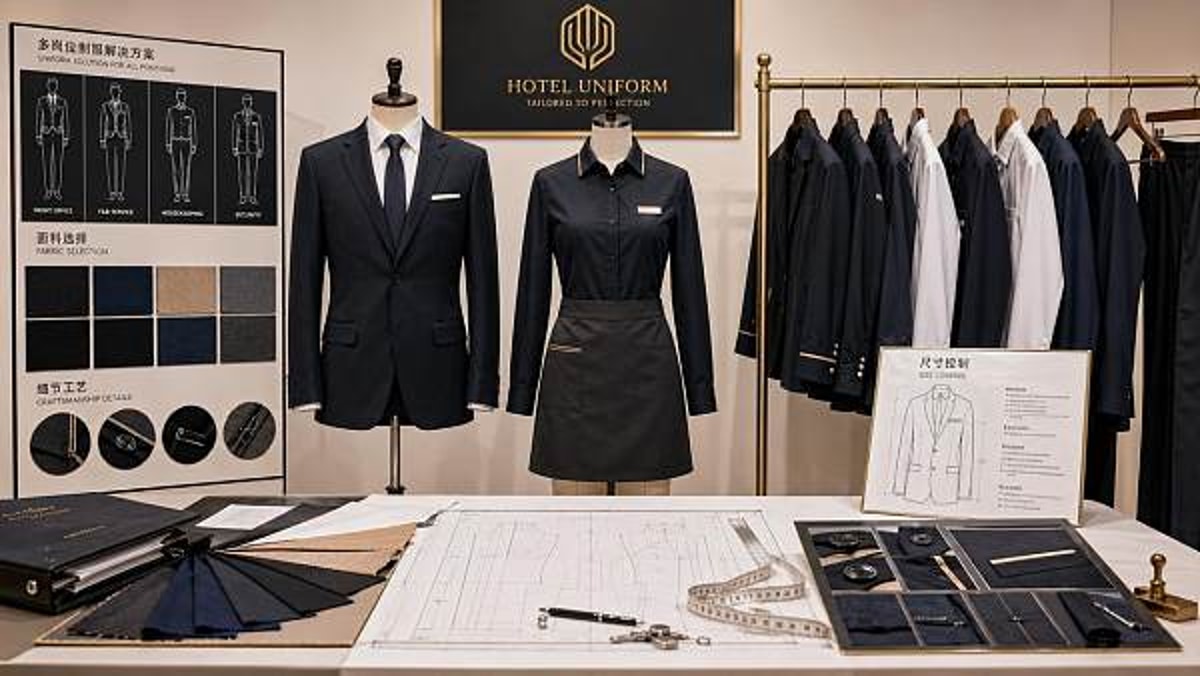
Custom hotel uniforms often look flawless on paper, yet fit issues usually emerge long before staff wear them on the floor. For procurement teams, poor sizing can lead to discomfort, inconsistent brand image, and costly reorders. This article explores where custom hotel uniforms typically go wrong and how buyers can prevent fit problems through smarter planning, supplier alignment, and practical specification control.
Why do fit problems start so early in custom hotel uniforms projects?
In hospitality procurement, fit problems rarely begin at final delivery. They usually start at the briefing stage, when buyers focus on color, logo placement, and fabric swatches but leave sizing logic too broad. Custom hotel uniforms must work across front desk teams, concierge staff, housekeeping, food service, door attendants, and supervisors. Each role moves differently, works in different temperatures, and presents the brand in different guest-facing moments.
For procurement personnel, this is not a minor tailoring detail. A poor fit can increase staff complaints, reduce garment life, create operational delays, and weaken visual consistency across properties. In upscale hospitality environments, even small fit inconsistencies are visible to guests. Jackets pull at the shoulder, trousers break poorly at the ankle, sleeves catch during service, and dresses restrict movement during long shifts. These issues quickly become a cost problem as well as a brand problem.
This is where structured sourcing intelligence matters. GCT supports buyers by connecting design requirements, commercial practicality, supplier evaluation, and implementation control. In complex purchasing environments, buyers need more than attractive mockups. They need a repeatable framework for selecting custom hotel uniforms that fit real staff, real workflows, and real replacement cycles.
- Initial size assumptions are often based on generic unisex charts rather than role-specific body data.
- Design approvals may happen before mobility tests, laundering tests, or wear trials are completed.
- Suppliers may interpret “slim,” “tailored,” or “relaxed” differently if technical specifications are vague.
- Multi-site hotel groups often ignore regional body-size differences when consolidating orders.
Where custom hotel uniforms usually go wrong: the main fit failure points
Before selecting suppliers, procurement teams should identify the exact stages where fit problems most often appear. The table below summarizes common failure points in custom hotel uniforms projects and the commercial impact they create.
The pattern is clear. Most fit failures in custom hotel uniforms are management failures, not just sewing failures. Buyers who treat uniform sourcing as a technical program rather than a simple apparel order usually reduce risk much earlier.
The hidden problem: design language without measurement language
Many suppliers receive mood boards, reference photos, and color standards, but no detailed fit brief. Terms such as “elegant silhouette” or “modern luxury look” may be useful creatively, yet they do not define chest ease, shoulder slope, sleeve pitch, rise depth, or movement allowance. Without measurable fit instructions, the supplier must guess. That guess often becomes expensive.
Role-specific movement is often underestimated
A receptionist may need a clean, formal profile while standing for long periods. A housekeeping supervisor bends, reaches, and lifts. Food and beverage staff rotate quickly, carry trays, and work under heat. If one pattern block is applied too broadly, the result may look consistent on a hanger but fail during operations.
What should procurement teams specify before requesting quotations?
When sourcing custom hotel uniforms, quotation requests should include more than quantity, fabric preference, and logo artwork. Buyers should define the fit architecture of the program. This improves price accuracy, sample relevance, and production predictability.
- Identify garment categories by role, such as front office suiting, housekeeping separates, kitchen outerwear, and banquet uniforms.
- State intended fit profile for each category, including tailored, regular, comfort, or stretch-assisted fit.
- Define laundering conditions, expected shift duration, indoor or outdoor use, and seasonal rotation needs.
- Set measurement tolerances and identify which dimensions are critical, such as shoulder width, hip room, inseam, and sleeve mobility.
- Request sample approval stages, including prototype review, size set review, and wear-test feedback.
This level of specification supports better supplier comparison. It also reduces the common problem of attractive unit prices that later increase due to revisions, urgent remakes, or fragmented reorders.
Key technical details buyers should not leave undefined
- Size grading logic for male, female, and unisex uniforms.
- Shrinkage allowance after repeated commercial laundering or standard wash cycles.
- Fabric composition in relation to stretch recovery, wrinkle resistance, and breathability.
- Placement of vents, pleats, gussets, elastic inserts, and hidden functional details.
- Accessory sizing consistency for aprons, scarves, belts, and neckwear.
How to compare supplier fit capability, not just garment pricing
Two suppliers may offer similar prices for custom hotel uniforms, yet their fit-control capability can differ significantly. Procurement should compare development discipline, not only fabric books or lead times. The table below gives a practical supplier evaluation framework.
The stronger response is not always the cheapest at first glance, but it is often less expensive over the full contract period. Fewer alterations, better staff acceptance, and more stable replenishment can outweigh a small unit-price difference.
Questions buyers should ask during supplier review
Ask how the supplier manages fit across different departments, whether they can support size-set sampling, and how they track specification changes between prototype and bulk production. Also ask who owns the approved pattern, how reorder consistency is controlled, and what happens when a hotel group expands into new regions with different staff measurement profiles.
Which fit strategy works best for different hotel departments?
Not every department needs the same balance of formality, mobility, and durability. Buyers can reduce fit complaints by matching garment strategy to role requirements instead of forcing one visual language into every function.
The table below helps procurement teams align custom hotel uniforms with actual use scenarios across the property.
This kind of role-based planning supports both brand coherence and operational realism. It is especially useful for hotel groups that need custom hotel uniforms across luxury, business, and resort formats with different service models.
How can buyers prevent costly reorders and fit-related waste?
Procurement cost does not stop at purchase order value. Reorders caused by poor fit can disrupt onboarding, create department-level shortages, and force emergency buying at weaker terms. Prevention is more efficient than correction.
Build a fit-control workflow before mass production
- Collect measurement data from a representative employee sample, not only senior staff or showroom models.
- Approve a base pattern for each major role category.
- Review a size set to confirm grading across smaller and larger sizes.
- Conduct wear trials during actual work activity, not just mirror checks.
- Confirm care instructions and expected dimensional stability before final sign-off.
Plan for replenishment from day one
Custom hotel uniforms are rarely one-time purchases. Staff turnover, seasonal hiring, promotions, and property expansion all create repeat demand. Buyers should confirm whether the supplier can hold patterns, maintain fabric continuity, and manage minimum order quantities for top-up orders. If not, the initial fit success may not continue into year two.
Consider total cost, not just first cost
A lower upfront quote may become expensive if it results in frequent alterations, short garment life, or weak staff adoption. In procurement terms, the better decision is often the one that reduces replacement frequency, service disruption, and administrative rework. GCT’s sourcing approach helps buyers compare these factors across suppliers instead of relying only on headline pricing.
What compliance and quality checkpoints matter for custom hotel uniforms?
Fit is the central issue here, but it should not be separated from quality and compliance review. Hospitality buyers often need to consider fabric performance, care labeling, workplace practicality, and market-specific requirements. While exact requirements vary by project and destination market, buyers should ask suppliers to clarify the testing and documentation available for materials and finished garments.
- Colorfastness and dimensional stability data for fabrics expected to undergo frequent washing.
- Care labeling consistency to reduce garment damage after deployment.
- Trim and accessory durability, especially buttons, zippers, snaps, and decorative pieces.
- Any applicable market or buyer-required documentation related to chemical restrictions or textile safety expectations.
For procurement teams managing premium hospitality environments, the goal is to align appearance, comfort, and reliability. A well-fitted uniform that fails after several wash cycles is still a sourcing failure.
FAQ: practical buyer questions about custom hotel uniforms
How many samples should be approved before bulk production?
For most commercial programs, one sample is not enough. A safer path includes at least one prototype, one revised fit sample, and one size-set review for key garments. If the hotel group is large or has multiple departments, wear trials on representative staff are strongly recommended before final approval.
Are unisex custom hotel uniforms a good way to simplify procurement?
They can simplify inventory in some operational roles, but they often create fit compromise in guest-facing departments where silhouette matters. Buyers should use unisex designs selectively and only where mobility, ease of stock management, and role practicality outweigh the need for sharply tailored presentation.
What is the most common sizing mistake in hotel uniform procurement?
The most common mistake is relying on a generic size chart without validating it against the actual workforce. Another common issue is approving patterns on fit models who do not reflect the body profiles of the hotel’s staff population. Both errors lead to mismatched size distribution and increased alterations.
How should buyers handle international hotel groups with different regional body profiles?
They should avoid assuming one grading system will fit every region equally well. A master design can stay consistent, but measurement blocks and size ratios may need regional adjustment. This is particularly important for custom hotel uniforms supplied across multiple countries or climate zones.
Why work with GCT when sourcing custom hotel uniforms?
Procurement teams need more than supplier lists. They need sourcing clarity. GCT supports buyers with industry-focused intelligence across hospitality and related commercial sectors, helping them evaluate suppliers, compare program structures, and reduce avoidable mistakes in custom hotel uniforms projects.
If you are reviewing a new uniform program or trying to fix recurring fit complaints, you can consult GCT on practical topics that matter during purchasing and implementation.
- Parameter confirmation for fit specifications, fabric behavior, and measurement tolerances.
- Supplier comparison support for sampling capability, reorder continuity, and lead-time planning.
- Custom solution planning for different hotel departments, service models, and seasonal use needs.
- Discussion of certification expectations, care performance questions, and documentation needs.
- Sample support strategy, quotation communication points, and bulk delivery preparation.
Well-managed custom hotel uniforms improve staff confidence, strengthen visual identity, and reduce lifecycle cost. If your team needs support on fit planning, product selection, delivery scheduling, sample review, or supplier communication, GCT can help turn a visually appealing concept into a commercially reliable uniform program.
Search News
Hot Articles
- Musical InstrumentsChina Table Tennis Team Departs for London; BS EN 14904:2021 Takes EffectMay 01, 2026
- Outdoor RidesSanya Asian Beach Games Closure Triggers Halal Certification Demand for Sand Sports EquipmentMay 01, 2026
- Outdoor RidesAI Football Training Robots Export Surge After Man Utd MatchMay 01, 2026
Popular Tags
Need ExpertConsultation?
Connect with our specialized leisureengineering team for procurementstrategies.
Recommended News
 May 01, 2026Custom Hotel Uniforms: Where Fit Problems Usually StartCustom hotel uniforms often fail at the fit-planning stage. Learn where sizing issues start, how to compare suppliers, and how to avoid costly reorders with smarter sourcing.● Institutional Buyer
 Apr 28, 2026How to Shortlist an Office Supplies WholesalerOffice supplies wholesaler selection starts with the right criteria. Learn how to compare an office supplies supplier, distributor, or manufacturer for cost, quality, compliance, and scalable B2B sourcing.● Institutional Buyer
 Apr 28, 20262026 Office Supplies Supplier Trends to WatchExplore 2026 office supplies supplier trends and learn how every office supplies wholesaler, distributor, and manufacturer can improve sourcing, compliance, fulfillment, and OEM growth.● Institutional Buyer
 Apr 28, 2026What to Check Before Choosing an ExporterOffice supplies supplier and exporter checklist: compare quality, compliance, lead times, MOQ, and service to choose a reliable office supplies manufacturer or wholesaler with confidence.● Institutional Buyer
 Apr 28, 2026Can an Office Supplies Producer Improve MarginsCan an office supplies producer improve margins? Learn how an office supplies manufacturer, supplier, and exporter boosts profit through smarter sourcing, lean production, and OEM value.● Institutional Buyer
 Apr 28, 2026How Bulk Suppliers Handle Custom PackingOffice supplies supplier insights: learn how an office supplies wholesaler, distributor, or OEM manufacturer manages custom packing to reduce risk, control cost, and improve delivery.● Institutional Buyer
 Apr 28, 2026Office Supplies OEM Manufacturer Pros and ConsOffice supplies OEM manufacturer pros and cons explained for every office supplies supplier, wholesaler, distributor, and B2B buyer—compare cost, quality, MOQ, and delivery before sourcing.● Institutional Buyer
 Apr 28, 2026Who Needs an Office Supplies B2B SupplierOffice supplies supplier guide for procurement teams, distributors, and institutions. Learn when to choose an office supplies wholesaler or manufacturer for stable supply and better B2B sourcing.● Institutional Buyer
 Apr 28, 2026How to Avoid Risks With Office Supplies FactoriesOffice supplies supplier risk guide: learn how to vet an office supplies manufacturer, wholesaler, distributor, or factory for quality, compliance, OEM reliability, and on-time delivery.● Institutional Buyer
 Apr 27, 2026Office Supplies Manufacturer MOQ ExplainedOffice supplies manufacturer MOQ explained: compare an office supplies supplier, wholesaler, distributor, OEM manufacturer, and factory to reduce cost, improve flexibility, and source smarter.● Institutional Buyer
 Apr 27, 2026Distributor or Supplier for Fast ReordersOffice supplies supplier or distributor for fast reorders? Compare lead times, stock stability, and bulk supply options to choose a reliable office supplies B2B supplier.● Institutional Buyer
 Apr 27, 2026How Wholesalers Cut Office Supply CostsOffice supplies supplier and office supplies wholesaler solutions help cut costs through bulk buying, OEM options, and smarter sourcing. Compare distributors and manufacturers to save more.● Institutional Buyer
 Apr 27, 2026Office Supplies Supplier Pricing Red FlagsOffice supplies supplier pricing red flags explained: compare an office supplies wholesaler, distributor, or manufacturer, spot hidden risks, and choose a reliable B2B partner with confidence.● Institutional Buyer
 Apr 27, 2026How to Vet an Office Supplies ExporterOffice supplies supplier vetting made simple: learn how to assess an office supplies exporter, manufacturer, wholesaler, and distributor for quality, compliance, and reliable B2B growth.● Institutional Buyer
 Apr 27, 2026What to Ask an Office Supplies Producer FirstOffice supplies supplier screening starts with the right questions. Learn how to evaluate an office supplies manufacturer, wholesaler, or producer on quality, OEM, compliance, pricing, and delivery.● Institutional Buyer
 Apr 27, 2026How to Compare Office Supplies Bulk SuppliersCompare every office supplies supplier model—wholesaler, distributor, OEM manufacturer, and bulk supplier—to evaluate quality, compliance, lead times, and costs for smarter B2B sourcing.● Institutional Buyer
 Apr 27, 2026Is an Office Supplies OEM Manufacturer Worth ItOffice supplies OEM manufacturer or standard sourcing? Compare an office supplies supplier, wholesaler, and distributor to find the best B2B fit for cost, branding, and scalable growth.● Institutional Buyer
 Apr 27, 2026Best Office Supplies B2B Supplier for ScaleFind the best office supplies B2B supplier for scale. Compare an office supplies supplier, wholesaler, distributor, and OEM manufacturer to secure reliable bulk sourcing and growth.● Institutional Buyer
 Apr 27, 2026Office Supplies Factory Audit ChecklistOffice supplies factory audit checklist for choosing a reliable office supplies manufacturer, supplier, or OEM partner. Learn key quality, compliance, and capacity checks before sourcing.● Institutional Buyer
 Apr 27, 2026When to Work With an Office Supplies ManufacturerOffice supplies manufacturer or office supplies supplier? Learn when to source direct, compare wholesaler vs OEM options, and improve cost, quality, and supply stability.● Institutional Buyer
 Apr 27, 2026What Makes a Reliable Office Supplies DistributorDiscover what sets a reliable office supplies distributor apart. Compare an office supplies supplier, wholesaler, or B2B supplier by quality, lead times, inventory, and global delivery.● Institutional Buyer
 Apr 27, 2026Office Supplies Wholesaler vs DistributorOffice supplies wholesaler vs distributor: learn how an office supplies supplier, distributor, or manufacturer impacts pricing, lead time, and growth—choose the best B2B sourcing model.● Institutional Buyer
 Apr 27, 2026How to Choose an Office Supplies SupplierLearn how to choose the right office supplies supplier by comparing an office supplies wholesaler, distributor, manufacturer, or B2B supplier for quality, price, delivery, and growth.● Institutional Buyer
 Apr 24, 2026How to Pick Educational Supplies by AgeEducational supplies by age: discover how commercial furniture, sensory playground designs, playground safety, climbers, borders, music accessories, hotel tables and amusement equipment improve ROI.● Institutional Buyer