Retractable Badge Reels: The Small Item That Fails First
Retractable badge reels are easy to overlook—until they stop working at the worst possible moment. For facilities managers, office buyers, and sourcing teams, this small accessory often fails before larger equipment, creating daily friction, replacement costs, and brand inconsistency. Understanding why retractable badge reels break first can help buyers choose more durable, compliant, and cost-effective options for commercial environments.
In hotels, offices, educational campuses, event venues, healthcare-adjacent reception areas, and specialty retail counters, badge access is part of everyday workflow. A reel that jams after 3 months, cracks under repeated pulls, or detaches from clothing during peak traffic can slow entry, disrupt staff routines, and force unplanned replenishment. For information-led buyers evaluating small accessories at scale, the issue is not the unit price alone. It is lifecycle value, user safety, visual consistency, and supply reliability.
Because retractable badge reels are used dozens of times per shift, they often accumulate wear faster than many larger workplace items. A sourcing decision made with only appearance or lowest-cost criteria can lead to a 2x to 4x replacement cycle within 12 months. For commercial buyers, that makes this small item a meaningful procurement category rather than a disposable afterthought.
Why Retractable Badge Reels Often Fail Before Other Workplace Accessories
The main reason retractable badge reels fail early is simple: high-frequency movement concentrated in a very small mechanism. Unlike a static lanyard clip or a rigid ID holder, a reel depends on a spring, cord, housing, clip, and fastener working together under repeated tension. Even in moderate office use, one reel may be extended 20 to 60 times per day. In shift-based environments such as hospitality back-of-house or campus security, usage can go even higher.
High-cycle stress in low-cost components
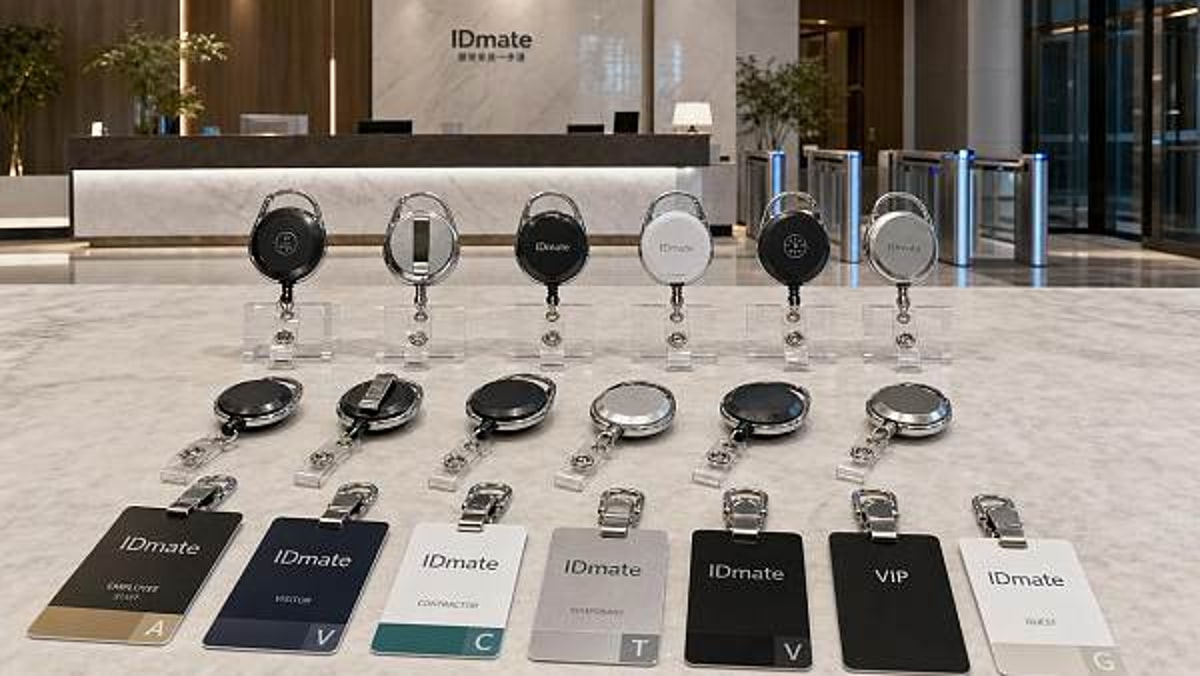
Most failures start in one of four points: the recoil spring, the cord, the clip, or the badge attachment. If any one of these parts is built with thin-gauge metal, brittle plastic, or weak fasteners, the overall product becomes the first accessory to break. A badge reel may look acceptable in a catalog image but still perform poorly after 1,500 to 3,000 pull cycles.
Common failure triggers
- Cord overstretch from long reach distances at doors, scanners, and time clocks
- Spring fatigue caused by rapid daily retraction
- Cracked housing in environments with drops, impacts, or cold storage transitions
- Clip deformation when worn on thick uniforms, aprons, or security belts
- Attachment ring failure due to heavier smart cards, key tags, or multi-card stacks
Environmental conditions also matter. A badge reel used in a climate-controlled corporate office has different demands than one used near kitchen humidity, loading docks, or amusement venue entrances. Moisture, skin oils, dust, sanitizer exposure, and frequent snagging on uniforms all reduce service life. In many commercial settings, failure is not a design mystery; it is the predictable result of mismatching the product to the use case.
The table below outlines the most common failure points commercial buyers should review before placing a volume order for retractable badge reels.
The key takeaway is that early failure is rarely random. It usually traces back to cycle life, material quality, and the mismatch between product design and real operating conditions. Buyers who define those three variables early can reduce replacement frequency and improve user acceptance across multiple sites.
Why the cheapest option often becomes the most expensive
A reel priced 15% to 25% lower may seem attractive in a tender or replenishment round. However, if it lasts only 4 months instead of 12 months, the procurement team absorbs repeated ordering labor, internal distribution effort, packaging waste, and staff complaints. In multi-site operations with 500 to 5,000 badge users, the hidden cost of reordering small accessories can become significant.
This is especially relevant in businesses where visual presentation matters. Hotels, premium campuses, branded service counters, and luxury retail environments need consistent accessories across departments. Mixed replacement lots, faded logo inserts, and different clip styles weaken presentation standards that larger procurement programs spend months trying to protect.
What Commercial Buyers Should Evaluate Before Sourcing Retractable Badge Reels
For B2B buyers, the best approach is to evaluate retractable badge reels like any other operational component: by use case, performance threshold, and supply continuity. Instead of asking only whether the reel looks acceptable, ask how it will behave after 6, 9, and 12 months of daily use.
Core specification areas to compare
The most useful buying criteria usually fall into 6 areas: pull length, retraction strength, cord material, housing durability, clip type, and badge weight compatibility. For most office and hospitality applications, a pull length of about 60 to 80 cm is practical. Longer extension can help at access points but may also increase stress on the cord and spring if the internal mechanism is not designed for higher cycle loads.
Before finalizing a vendor, it helps to compare functional requirements side by side. The table below can be used as a practical sourcing checklist for retractable badge reels in commercial settings.
This comparison shows that a badge reel should be specified by workflow, not by catalog photo. A front-desk team, a housekeeping department, and a campus security unit may all use ID accessories, but their durability requirements are not identical.
Questions buyers should ask suppliers
- What is the intended usage category: light office, medium commercial, or high-frequency access?
- Is there a recommended card weight or attachment limit?
- What clip options are available for uniforms, jackets, or waistband use?
- Can logo customization be matched across repeat orders within the same color tolerance?
- What is the standard lead time for stock items versus custom-branded orders, such as 7 to 15 days or 3 to 5 weeks?
- How are replacement claims handled for early mechanical failure?
These questions help separate commodity sellers from suppliers that understand commercial program continuity. A reliable sourcing partner should be able to discuss packaging method, production consistency, finish quality, and replenishment planning, not just price per piece.
Matching Badge Reel Design to Real Commercial Environments
Not all retractable badge reels belong in every setting. A design that works well in a low-traffic admin office may fail quickly in a hotel operations corridor or a leisure venue with constant movement. Buyers get better results when they segment applications into at least 3 broad environments: light-duty, medium-duty, and presentation-critical.
Light-duty environments
Typical examples include general office staff, administrative departments, and academic support teams. Here, the reel may be extended 10 to 25 times daily. Standard plastic housings and conventional clips can be acceptable if badge weight remains low and there is minimal physical impact. Even so, buyers should still check clip retention and logo print durability, since appearance remains important over a 6- to 12-month use window.
Medium-duty and movement-heavy environments
This category includes hospitality teams, event staff, campus supervisors, amusement venue employees, and service technicians moving between zones. Daily extension frequency often reaches 30 to 70 pulls. In these cases, reinforced clips, stronger spring performance, and better cord wear resistance can justify a higher purchase price. The cost difference at unit level is usually modest compared with the operational disruption caused by frequent failures.
Typical stress factors in active environments
- Fast walking and repeated bending
- Use with thicker workwear or layered uniforms
- Frequent scanning at doors, back rooms, and service elevators
- Increased risk of snagging on carts, bags, or equipment
Presentation-critical environments
Luxury retail, premium concierge services, executive reception, and branded experiential spaces need more than function. They need visual coherence. In these applications, the housing finish, custom insert quality, logo placement, and consistency across production lots become procurement issues. A cheap reel that yellows, scratches, or varies in color after 2 batches can undermine brand standards even if it still retracts properly.
For these environments, buyers often benefit from approving a physical sample set of 3 to 5 variants before a full run. This step allows review of gloss level, edge quality, print alignment, and clip ergonomics under real uniforms and real lighting conditions.
Procurement, Maintenance, and Risk Control for Long-Term Value
A stronger buying decision does not end with product selection. Long-term value from retractable badge reels comes from clear acceptance criteria, orderly rollout, and structured replenishment planning. This is especially important for organizations with multiple buildings, seasonal staffing, or branded workforce programs.
Build a simple 5-step sourcing process
- Define user groups by duty intensity and badge weight.
- Shortlist 2 to 3 reel types based on clip, cord, and housing performance.
- Request samples for 2- to 4-week field testing in actual departments.
- Set acceptance standards for retraction consistency, clip hold, and visual finish.
- Plan reorder timing, spare ratio, and packaging by site or department.
Even a short pilot can reveal whether the reel performs under real access habits. Procurement teams do not need a complex lab test. A practical field check focused on 4 or 5 measurable issues is often enough to prevent a poor-volume purchase.
Practical inspection points on receipt
When a shipment arrives, quality control should not focus only on counting cartons. A random inspection of 1% to 3% of units can be useful for medium-volume orders. Buyers can check clip tension, cord smoothness, housing closure, surface defects, and print consistency. If the reels are branded, color and logo alignment should be reviewed at the same time to avoid split-batch visual issues.
Another useful control measure is a spare planning ratio. For example, a site with 300 active users may hold 10% to 15% spare units to cover onboarding, loss, and normal wear without forcing emergency purchases. This improves continuity while giving procurement teams time to consolidate reorder cycles.
Common buying mistakes to avoid
- Buying one universal reel for all departments, even when usage intensity varies sharply
- Ignoring badge weight and adding keys or tools later
- Approving custom branding without checking repeat-order consistency
- Evaluating only unit cost rather than replacement frequency over 12 months
- Skipping sample testing for high-visibility or high-use teams
FAQ for information-led buyers
How long should commercial retractable badge reels last?
Service life depends on use intensity, card weight, and environment. In lighter office applications, a well-matched reel may perform acceptably for around 9 to 12 months or longer. In heavier use environments, the relevant goal is not maximum lifespan alone but consistent function across the expected duty period without widespread early failure.
Are metal badge reels always better than plastic ones?
Not always. Metal can improve impact resistance and perceived quality, but the internal mechanism and clip design matter just as much. A poorly engineered metal reel can still fail early, while a well-built plastic reel may perform better in standard office conditions. Buyers should assess the full assembly rather than the shell material alone.
When is customization worth it?
Customization becomes valuable when brand presentation, department coding, or client-facing appearance matters. Hotels, campuses, specialty retail chains, and event operators often benefit from custom inserts or branded finishes if reorder consistency and lead time are managed properly. For temporary use or short campaigns, standard reels may be more practical.
Retractable badge reels may be small, but they sit at the intersection of access control, staff efficiency, daily comfort, and brand presentation. Buyers who treat them as a strategic consumable rather than a low-priority add-on can reduce avoidable replacement cycles, improve visual consistency, and support smoother operations across offices, hospitality sites, campuses, and specialty commercial spaces.
If you are reviewing sourcing options for retractable badge reels, standardizing accessories across multiple locations, or planning a branded procurement program, now is the right time to compare specifications, testing methods, and supply models. Contact GCT to explore tailored sourcing guidance, evaluate suitable commercial-grade options, and learn more solutions for durable workplace identification accessories.
Search News
Hot Articles
Popular Tags
Need ExpertConsultation?
Connect with our specialized leisureengineering team for procurementstrategies.
Recommended News
 May 04, 2026PU Leather Journals: Why Some Covers Peel Too SoonPU leather journals can look elegant and affordable, but why do some peel so quickly? Discover the real causes, warning signs, and smarter buying tips before you choose.● Institutional Buyer
 May 04, 2026Retractable Badge Reels: The Small Item That Fails FirstRetractable badge reels fail faster than many workplace accessories. Learn what causes breakage, how to source durable options, and how to cut replacement costs.● Institutional Buyer
 May 04, 2026Id Card Holders Wholesale: Hard Shell or Soft Vinyl?Id card holders wholesale guide: compare hard shell vs soft vinyl for durability, cost, branding, and daily use to choose the best bulk option for offices, schools, events, and more.● Institutional Buyer
 May 04, 2026Office Laminating Machines: The Heat Settings People OverlookOffice laminating machines perform best when heat settings match pouch thickness, paper type, and speed. Learn how proper temperature control reduces bubbles, curl, waste, and rework.● Institutional Buyer
 May 04, 2026Custom Printed Lanyards: Which Material Holds Up Best?Custom printed lanyards: discover which materials last longest, keep logos sharp, and deliver better value for events, offices, schools, and premium commercial use.● Institutional Buyer
 May 04, 2026Why Wholesale Spiral Notebooks Vary So Much in Paper FeelWholesale spiral notebooks can look alike yet feel completely different. Learn what paper weight, fiber, coating, and sourcing standards mean for writing quality and smarter bulk buying.● Institutional Buyer
 May 04, 2026Binding Machines Wholesale: Small Price Gaps, Big Quality RisksBinding machines wholesale buyers face hidden quality risks behind small price gaps. Learn how to compare durability, compliance, and total cost before you order.● Institutional Buyer
 May 04, 2026Custom Printed Planners That People Actually Keep UsingCustom printed planners that people actually keep using—learn how to choose the right format, materials, and branding to boost retention, usability, and long-term brand value.● Institutional Buyer
 May 02, 2026Wholesale chef coats that hold shape after repeated industrial washingWholesale chef coats that stay sharp after repeated industrial washing. Compare fabrics, stitching, and supplier standards to choose durable uniforms that protect brand image and reduce replacement costs.● Institutional Buyer
 May 02, 2026What makes non slip chef shoes comfortable for 12-hour shiftsNon slip chef shoes for 12-hour shifts should deliver lasting support, cushioning, breathability, and grip. Learn what buyers and chefs should compare before choosing.● Institutional Buyer
 May 02, 2026Kenya Marathon Record Break Sparks Carbon-Plate Shoe Export Surge to AfricaKenya Marathon Record Break sparks surge in carbon-plate shoe exports to Africa—urgent bilingual labeling compliance needed for EAC markets.● Institutional Buyer
 May 01, 2026Custom Hotel Uniforms: Where Fit Problems Usually StartCustom hotel uniforms often fail at the fit-planning stage. Learn where sizing issues start, how to compare suppliers, and how to avoid costly reorders with smarter sourcing.● Institutional Buyer
 Apr 28, 2026How to Shortlist an Office Supplies WholesalerOffice supplies wholesaler selection starts with the right criteria. Learn how to compare an office supplies supplier, distributor, or manufacturer for cost, quality, compliance, and scalable B2B sourcing.● Institutional Buyer
 Apr 28, 20262026 Office Supplies Supplier Trends to WatchExplore 2026 office supplies supplier trends and learn how every office supplies wholesaler, distributor, and manufacturer can improve sourcing, compliance, fulfillment, and OEM growth.● Institutional Buyer
 Apr 28, 2026What to Check Before Choosing an ExporterOffice supplies supplier and exporter checklist: compare quality, compliance, lead times, MOQ, and service to choose a reliable office supplies manufacturer or wholesaler with confidence.● Institutional Buyer
 Apr 28, 2026Can an Office Supplies Producer Improve MarginsCan an office supplies producer improve margins? Learn how an office supplies manufacturer, supplier, and exporter boosts profit through smarter sourcing, lean production, and OEM value.● Institutional Buyer
 Apr 28, 2026How Bulk Suppliers Handle Custom PackingOffice supplies supplier insights: learn how an office supplies wholesaler, distributor, or OEM manufacturer manages custom packing to reduce risk, control cost, and improve delivery.● Institutional Buyer
 Apr 28, 2026Office Supplies OEM Manufacturer Pros and ConsOffice supplies OEM manufacturer pros and cons explained for every office supplies supplier, wholesaler, distributor, and B2B buyer—compare cost, quality, MOQ, and delivery before sourcing.● Institutional Buyer
 Apr 28, 2026Who Needs an Office Supplies B2B SupplierOffice supplies supplier guide for procurement teams, distributors, and institutions. Learn when to choose an office supplies wholesaler or manufacturer for stable supply and better B2B sourcing.● Institutional Buyer
 Apr 28, 2026How to Avoid Risks With Office Supplies FactoriesOffice supplies supplier risk guide: learn how to vet an office supplies manufacturer, wholesaler, distributor, or factory for quality, compliance, OEM reliability, and on-time delivery.● Institutional Buyer
 Apr 27, 2026Office Supplies Manufacturer MOQ ExplainedOffice supplies manufacturer MOQ explained: compare an office supplies supplier, wholesaler, distributor, OEM manufacturer, and factory to reduce cost, improve flexibility, and source smarter.● Institutional Buyer
 Apr 27, 2026Distributor or Supplier for Fast ReordersOffice supplies supplier or distributor for fast reorders? Compare lead times, stock stability, and bulk supply options to choose a reliable office supplies B2B supplier.● Institutional Buyer
 Apr 27, 2026How Wholesalers Cut Office Supply CostsOffice supplies supplier and office supplies wholesaler solutions help cut costs through bulk buying, OEM options, and smarter sourcing. Compare distributors and manufacturers to save more.● Institutional Buyer
 Apr 27, 2026Office Supplies Supplier Pricing Red FlagsOffice supplies supplier pricing red flags explained: compare an office supplies wholesaler, distributor, or manufacturer, spot hidden risks, and choose a reliable B2B partner with confidence.● Institutional Buyer