Custom Printed Planners That People Actually Keep Using
Custom printed planners can do more than showcase a logo—they can become practical tools people rely on every day. For businesses exploring branded merchandise, employee engagement, or client retention, choosing planners that stay useful matters far more than simply looking attractive. This article examines what makes custom printed planners genuinely effective, from design and functionality to audience fit and long-term brand value.
Why do some custom printed planners get used while others are forgotten?
For information researchers, the biggest challenge is not finding a supplier that can print a planner. It is identifying which custom printed planners will still be on a desk, in a bag, or in a meeting six months later. In commercial environments, retained use is the real performance metric because repeated interaction turns a printed item into a daily brand touchpoint.
Across hospitality groups, schools, offices, leisure venues, and premium retail operations, planners are often purchased for onboarding kits, conference gifting, internal coordination, loyalty programs, and executive presentations. Yet many fail because procurement decisions focus too heavily on cover branding and not enough on planning behavior, layout logic, material durability, and audience-specific use cases.
Global Commercial Trade (GCT) approaches these decisions from a sourcing and commercial usability perspective. For buyers working across office and educational supplies or experience-led sectors, the key question is simple: will the planner support work routines, or will it become shelf inventory? That question should shape every specification choice.
- A planner stays useful when page structure matches the user’s scheduling habits, whether daily task blocking, weekly planning, or project tracking.
- It stays visible when the format fits the environment, such as A5 for mobility, desk size for office use, or compact editions for event distribution.
- It supports brand value when customization feels integrated rather than intrusive, using subtle logos, useful inserts, and relevant informational pages.
What “effective” means in B2B purchasing
In B2B terms, effective custom printed planners should meet four practical goals: encourage repeated use, reflect brand positioning, align with the target audience’s workflow, and arrive with predictable quality and delivery. This is especially important when planners support premium guest experiences, institutional operations, or client-facing campaigns where presentation and reliability both matter.
Which planner formats work best for different commercial scenarios?
Different sectors need different planner structures. A luxury jewelry showroom may prefer elegant planners with appointment logs and client notes, while an education supplier may need durable academic-year planners with timetable sections. The table below helps compare common custom printed planners by use case, decision factors, and retention potential.
The strongest insight for buyers is that there is rarely one universal format. Weekly custom printed planners often work best for broad promotional use, while daily or industry-specific layouts suit professional users better. Matching format to routine is more valuable than adding more decorative features.
Application examples across GCT-covered sectors
- Hotel and catering operations often use planners for supervisor scheduling, banquet coordination, and guest service planning.
- Office and educational supply buyers may select planners for staff onboarding, student orientation, or annual stationery programs.
- Amusement and leisure parks can use them for management teams, seasonal planning, and sponsor gifting.
- Pro audio and musical instrument distributors may integrate gig dates, service logs, or product launch schedules.
- Jewelry and luxury accessory brands often prefer refined planners for appointments, clienteling notes, and VIP relationship programs.
What design features make custom printed planners genuinely useful?
Usability starts with internal architecture, not the cover. Buyers comparing custom printed planners should evaluate writing comfort, layout clarity, section relevance, paper performance, and carry convenience. These details directly influence whether the end user adopts the planner into everyday habits.
Core features worth prioritizing
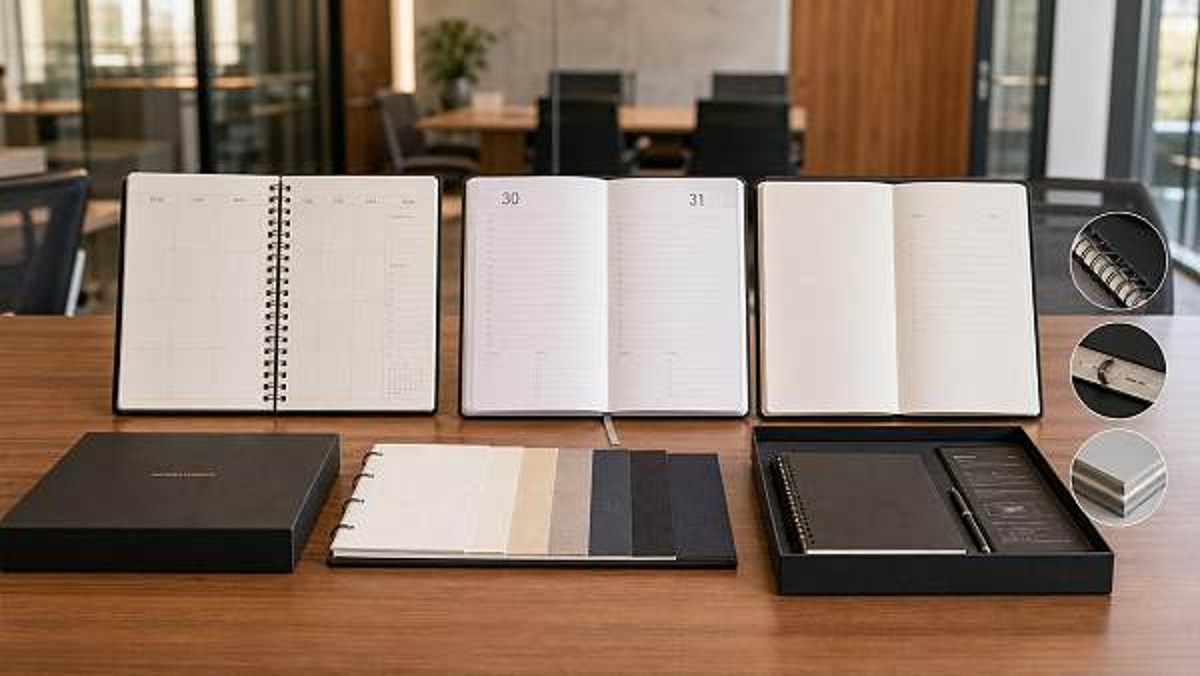
- Page layout: Choose daily, weekly, monthly, or hybrid structures based on how users make decisions and record commitments.
- Paper weight and opacity: Thicker paper reduces ink show-through and supports premium pens, which matters for executive and luxury gifting.
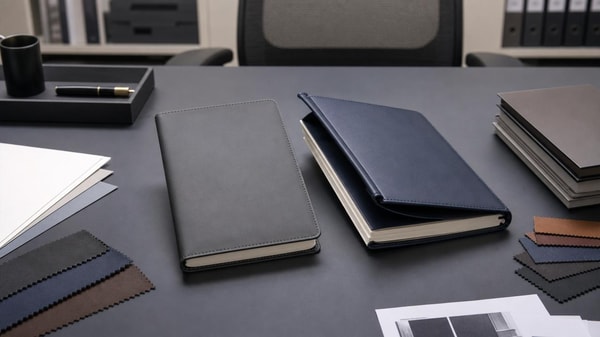
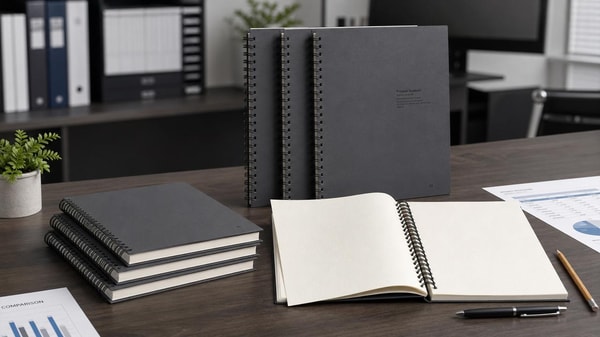
- Binding method: Wire-o allows flat opening, while casebound formats deliver a more formal presentation for high-end branding.
- Cover durability: PU, coated board, fabric-like finishes, or hard covers should be selected according to transport frequency and brand image.
- Functional extras: Ribbon markers, elastic closures, note pages, index tabs, pockets, and QR-linked resource pages can extend utility.
Branding should support the user experience, not interrupt it. A logo placed on the cover, back page, or opening spread is often sufficient. When every page carries heavy promotional elements, usability drops. The most successful custom printed planners feel like good tools first and branded items second.
How much customization is too much?
A practical rule is to customize the planner in places that add value: introductory pages, annual calendars, industry reference sections, company contact information, or team planning templates. Over-customization becomes risky when it narrows the planner to one campaign or one department, making leftover inventory difficult to reuse.
How should buyers compare materials, construction, and perceived value?
When researching custom printed planners, buyers often struggle to compare samples fairly because a planner’s perceived value depends on several linked specifications. The table below offers a more structured material and construction comparison for sourcing discussions.
The best specification set depends on context. For mass internal distribution, durability and cost stability may matter more than luxurious cover treatments. For premium gifting, tactile finish and presentation can justify higher unit pricing if the planner supports client retention or executive relationship building.
What should procurement teams check before placing an order?
A common mistake is approving artwork before confirming the operational details that determine delivery success. With custom printed planners, procurement teams should treat the project as both a print product and a managed supply item. That means checking technical fit, order economics, packaging needs, and timing risks early.
Pre-order checklist for informed buyers
- Confirm intended users and their planning habits before choosing page layout.
- Request paper, cover, and finish samples, not just digital mockups.
- Check minimum order quantities and whether mixed variants are possible for different departments or markets.
- Review production lead time, proofing timeline, and shipping windows, especially for year-end campaigns and event deadlines.
- Ask about carton packing, individual wrapping, barcode labeling, and drop-shipment requirements if planners support multi-site distribution.
- Clarify sustainability preferences or documentation expectations when buyers need paper chain-of-custody visibility or environmental positioning.
GCT’s sourcing perspective is particularly useful here because many buyers are not simply ordering office stationery. They are coordinating planners as part of wider commercial programs involving branded merchandise, hospitality presentation, institutional onboarding, or luxury retail packaging standards. The specification must fit the broader business environment.
Lead time and supply chain considerations
Lead times vary by binding complexity, finishing method, and shipping destination. Date-sensitive planners also carry calendar risk: a delayed dated planner loses value quickly, while undated custom printed planners provide more scheduling flexibility. For buyers managing international procurement, factory communication, proof approval, and freight planning should be treated as core decision factors, not administrative details.
How do budget, alternatives, and ROI compare?
Not every project needs a premium specification. Some organizations need cost-efficient custom printed planners for broad distribution, while others need fewer units with stronger presentation impact. The most useful budget analysis compares expected retention, audience value, and replacement options rather than only unit price.
Cost drivers buyers should understand
- Format size and page count directly influence paper consumption and shipping weight.
- Hard covers, sewn binding, foil stamping, and added accessories increase unit cost but may improve perceived value.
- Smaller runs often have higher per-unit costs, especially when multiple custom inserts or region-specific versions are required.
- Custom packaging and fulfillment services can be worthwhile if planners are sent to multiple offices, clients, or event locations.
Alternatives such as notebooks, desk pads, or digital planning tools may appear cheaper or more modern, but they do not always deliver the same routine-based visibility. A notebook is flexible but less structured. A digital app is scalable but may not create the same tactile brand association. Custom printed planners sit in a useful middle ground when the goal is long-term practical engagement.
Are there compliance or sustainability issues to consider?
Although planners are relatively low-risk printed goods, commercial buyers still need to think about material declarations, packaging suitability, and responsible sourcing expectations. This matters more when planners enter institutional procurement systems, education supply channels, or premium brand environments with formal supplier review procedures.
- Ask whether paper sourcing can align with recognized responsible forestry frameworks when sustainability is part of the brief.
- Confirm that inks, adhesives, and cover materials are suitable for the destination market and intended usage environment.
- Check packaging efficiency if planners are part of larger international shipments where carton optimization affects freight cost.
- For children’s or educational distribution, use extra caution on materials, edge finishing, and durability requirements.
In practical terms, compliance in this category is less about claiming special status and more about maintaining documentation discipline. Buyers should request clear material information and keep records aligned with internal procurement standards.
FAQ: common questions about custom printed planners
How do I choose between dated and undated custom printed planners?
Choose dated planners when the campaign starts on a fixed calendar cycle and the audience values immediate structure. Choose undated versions when launch timing is uncertain, distribution is global, or leftover stock risk is a concern. Undated custom printed planners are often safer for event programs and long sales cycles because they remain usable after shipping delays.
What planner size is most practical for business gifting?
A5 is often the most versatile because it balances writing space and portability. Larger desk planners suit office-based teams, while smaller formats work for travel or conference packs. The right size depends on whether users will carry the planner daily or keep it in a fixed work setting.
What are the most common mistakes when sourcing custom printed planners?
The main mistakes are choosing an attractive cover with a weak internal layout, ignoring user habits, underestimating lead time, and approving production without physical samples. Another frequent issue is forcing too much promotion into the design, which reduces perceived usefulness and lowers retention.
Can custom printed planners support premium brand positioning?
Yes, if the planner feels refined and relevant. Premium positioning usually comes from material harmony, restrained branding, thoughtful page design, and polished finishing rather than from adding every possible decorative feature. In luxury and hospitality contexts, subtlety often performs better than visual overload.
Why choose us for sourcing guidance and project planning?
For buyers researching custom printed planners across diverse commercial sectors, the real value is not only product access but informed evaluation. GCT brings together sourcing intelligence, commercial scenario awareness, and category-specific judgment across office and educational supplies, hospitality environments, leisure operations, premium retail, and related branded programs.
That means conversations can go beyond basic printing options. Buyers can discuss planner format selection, cover and paper recommendations, estimated delivery windows, sample review priorities, customization depth, packaging logic, and how planner choices fit a broader procurement or brand experience strategy.
If you are comparing custom printed planners for employee kits, client gifting, academic distribution, event programs, or premium branded merchandise, you can contact us to review practical specifications, suitable format options, expected production timelines, sample support, certification-related questions, and quotation planning for your target market.
Search News
Hot Articles
Popular Tags
Need ExpertConsultation?
Connect with our specialized leisureengineering team for procurementstrategies.
Recommended News
 May 04, 2026PU Leather Journals: Why Some Covers Peel Too SoonPU leather journals can look elegant and affordable, but why do some peel so quickly? Discover the real causes, warning signs, and smarter buying tips before you choose.● Institutional Buyer
 May 04, 2026Retractable Badge Reels: The Small Item That Fails FirstRetractable badge reels fail faster than many workplace accessories. Learn what causes breakage, how to source durable options, and how to cut replacement costs.● Institutional Buyer
 May 04, 2026Id Card Holders Wholesale: Hard Shell or Soft Vinyl?Id card holders wholesale guide: compare hard shell vs soft vinyl for durability, cost, branding, and daily use to choose the best bulk option for offices, schools, events, and more.● Institutional Buyer
 May 04, 2026Office Laminating Machines: The Heat Settings People OverlookOffice laminating machines perform best when heat settings match pouch thickness, paper type, and speed. Learn how proper temperature control reduces bubbles, curl, waste, and rework.● Institutional Buyer
 May 04, 2026Custom Printed Lanyards: Which Material Holds Up Best?Custom printed lanyards: discover which materials last longest, keep logos sharp, and deliver better value for events, offices, schools, and premium commercial use.● Institutional Buyer
 May 04, 2026Why Wholesale Spiral Notebooks Vary So Much in Paper FeelWholesale spiral notebooks can look alike yet feel completely different. Learn what paper weight, fiber, coating, and sourcing standards mean for writing quality and smarter bulk buying.● Institutional Buyer
 May 04, 2026Binding Machines Wholesale: Small Price Gaps, Big Quality RisksBinding machines wholesale buyers face hidden quality risks behind small price gaps. Learn how to compare durability, compliance, and total cost before you order.● Institutional Buyer
 May 04, 2026Custom Printed Planners That People Actually Keep UsingCustom printed planners that people actually keep using—learn how to choose the right format, materials, and branding to boost retention, usability, and long-term brand value.● Institutional Buyer
 May 02, 2026Wholesale chef coats that hold shape after repeated industrial washingWholesale chef coats that stay sharp after repeated industrial washing. Compare fabrics, stitching, and supplier standards to choose durable uniforms that protect brand image and reduce replacement costs.● Institutional Buyer
 May 02, 2026What makes non slip chef shoes comfortable for 12-hour shiftsNon slip chef shoes for 12-hour shifts should deliver lasting support, cushioning, breathability, and grip. Learn what buyers and chefs should compare before choosing.● Institutional Buyer
 May 02, 2026Kenya Marathon Record Break Sparks Carbon-Plate Shoe Export Surge to AfricaKenya Marathon Record Break sparks surge in carbon-plate shoe exports to Africa—urgent bilingual labeling compliance needed for EAC markets.● Institutional Buyer
 May 01, 2026Custom Hotel Uniforms: Where Fit Problems Usually StartCustom hotel uniforms often fail at the fit-planning stage. Learn where sizing issues start, how to compare suppliers, and how to avoid costly reorders with smarter sourcing.● Institutional Buyer
 Apr 28, 2026How to Shortlist an Office Supplies WholesalerOffice supplies wholesaler selection starts with the right criteria. Learn how to compare an office supplies supplier, distributor, or manufacturer for cost, quality, compliance, and scalable B2B sourcing.● Institutional Buyer
 Apr 28, 20262026 Office Supplies Supplier Trends to WatchExplore 2026 office supplies supplier trends and learn how every office supplies wholesaler, distributor, and manufacturer can improve sourcing, compliance, fulfillment, and OEM growth.● Institutional Buyer
 Apr 28, 2026What to Check Before Choosing an ExporterOffice supplies supplier and exporter checklist: compare quality, compliance, lead times, MOQ, and service to choose a reliable office supplies manufacturer or wholesaler with confidence.● Institutional Buyer
 Apr 28, 2026Can an Office Supplies Producer Improve MarginsCan an office supplies producer improve margins? Learn how an office supplies manufacturer, supplier, and exporter boosts profit through smarter sourcing, lean production, and OEM value.● Institutional Buyer
 Apr 28, 2026How Bulk Suppliers Handle Custom PackingOffice supplies supplier insights: learn how an office supplies wholesaler, distributor, or OEM manufacturer manages custom packing to reduce risk, control cost, and improve delivery.● Institutional Buyer
 Apr 28, 2026Office Supplies OEM Manufacturer Pros and ConsOffice supplies OEM manufacturer pros and cons explained for every office supplies supplier, wholesaler, distributor, and B2B buyer—compare cost, quality, MOQ, and delivery before sourcing.● Institutional Buyer
 Apr 28, 2026Who Needs an Office Supplies B2B SupplierOffice supplies supplier guide for procurement teams, distributors, and institutions. Learn when to choose an office supplies wholesaler or manufacturer for stable supply and better B2B sourcing.● Institutional Buyer
 Apr 28, 2026How to Avoid Risks With Office Supplies FactoriesOffice supplies supplier risk guide: learn how to vet an office supplies manufacturer, wholesaler, distributor, or factory for quality, compliance, OEM reliability, and on-time delivery.● Institutional Buyer
 Apr 27, 2026Office Supplies Manufacturer MOQ ExplainedOffice supplies manufacturer MOQ explained: compare an office supplies supplier, wholesaler, distributor, OEM manufacturer, and factory to reduce cost, improve flexibility, and source smarter.● Institutional Buyer
 Apr 27, 2026Distributor or Supplier for Fast ReordersOffice supplies supplier or distributor for fast reorders? Compare lead times, stock stability, and bulk supply options to choose a reliable office supplies B2B supplier.● Institutional Buyer
 Apr 27, 2026How Wholesalers Cut Office Supply CostsOffice supplies supplier and office supplies wholesaler solutions help cut costs through bulk buying, OEM options, and smarter sourcing. Compare distributors and manufacturers to save more.● Institutional Buyer
 Apr 27, 2026Office Supplies Supplier Pricing Red FlagsOffice supplies supplier pricing red flags explained: compare an office supplies wholesaler, distributor, or manufacturer, spot hidden risks, and choose a reliable B2B partner with confidence.● Institutional Buyer