Mesh Office Chairs OEM Orders: Specs That Cause Rework
In mesh office chairs OEM projects, small specification gaps can trigger costly rework, delivery delays, and approval issues across large-fitout schedules. For project managers and engineering leads, understanding which chair specs most often fail at the sourcing stage is critical to protecting timelines, compliance, and budget. This guide outlines the hidden problem areas buyers should verify before production begins.
Why mesh office chairs OEM orders are getting harder to approve
The sourcing environment around mesh office chairs OEM has changed. Buyers are no longer reviewing office seating as a simple catalog item. In commercial fit-out projects, the chair is now part of a broader performance package that includes ergonomics, fire safety, durability, sustainability expectations, installation timing, and visual consistency across large batches. That shift is increasing the number of specification disputes that appear late in the sampling or mass production stage.
For project managers, this means rework rarely comes from one dramatic mistake. It usually starts with a small mismatch between what the bid documents imply, what the factory interprets, and what the end user expects after mock-up review. A mesh back that feels acceptable in a showroom may fail after long-hour testing. A frame finish that looks correct under warm lighting may clash under the cooler lighting used in the final office environment. A gas lift that passes a basic function test may still fail required certification documentation.
The result is a clear trend: more OEM chair projects are being delayed not by manufacturing capacity alone, but by incomplete specification control. In the current market, the winners in mesh office chairs OEM are not only low-cost suppliers. They are manufacturers and buyers who align technical details earlier, document them better, and verify them against real project conditions before tooling, upholstery cutting, and carton printing begin.
The strongest market signals behind rising rework risk
Several industry changes are pushing spec accuracy higher on the priority list. First, workplace standards are evolving. Hybrid offices still require fewer seats in some markets, but the seats being purchased are expected to support longer focused work, shared use, and a stronger design identity. Second, cross-border sourcing has become more documentation-heavy. Buyers want evidence for compliance, material performance, and consistency across production lots. Third, commercial projects are under tighter handover pressure, so any approval reset can affect multiple trades, from flooring protection plans to final occupancy schedules.
These changes affect mesh office chairs OEM orders in a practical way: older, loosely written specs are no longer enough. Phrases such as “high-quality mesh,” “standard black base,” or “ergonomic armrest” sound clear during inquiry, but they are too open to interpretation once engineering drawings, test standards, and supplier substitutions enter the process.
The specs in mesh office chairs OEM orders that most often trigger rework
The most common failures in mesh office chairs OEM sourcing are not random. They cluster around a few technical areas where buyer assumptions and factory defaults differ. Project teams should treat the following items as critical control points.
1. Mesh material definition is often too vague
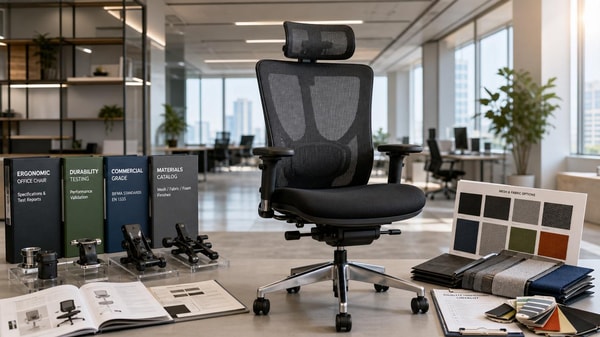
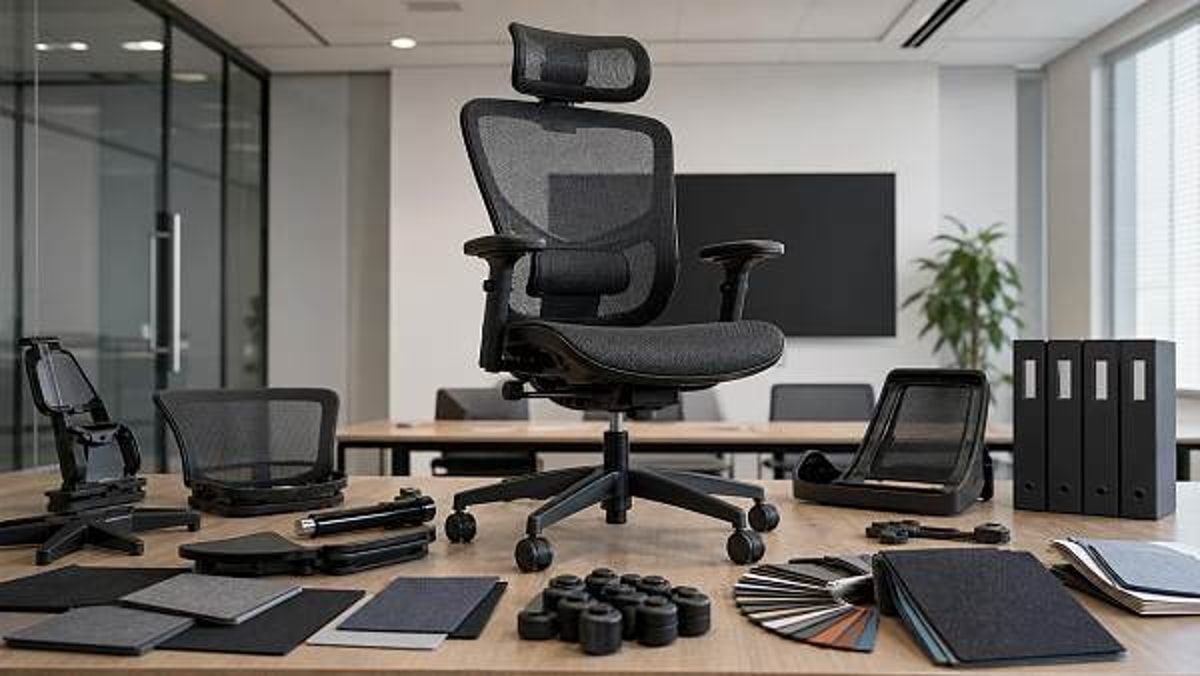
Many rework cases begin with mesh itself. Buyers specify the color but not the yarn composition, elasticity, abrasion level, flame behavior, or transparency. Factories may substitute a visually similar mesh with different stretch recovery or hand feel. That becomes a problem when the sample chair feels supportive, but the bulk order sags faster or reflects light differently across workstations.
A safer approach is to define mesh by approved sample code, tensile behavior, color reference under agreed lighting, and any relevant fire or chemical standard. If the project includes executive areas and open office zones, make sure the mesh expectation is not being generalized across different use cases.
2. Lumbar support performance is described by appearance, not function
In many mesh office chairs OEM programs, the drawing shows a lumbar pad or support frame, but the specification never defines adjustment range, pressure feel, lock positions, or user-size suitability. As a result, the chair may match the rendering yet fail mock-up testing. This is especially common in projects where designers sign off visually, while user committees review function later.
Engineering leads should require functional descriptions, not only assembly drawings. If user trials are planned, agree in advance which body-size range and sitting duration will be used to assess acceptance.
3. Armrest, mechanism, and base options are under-specified
OEM quotations often list “3D armrest,” “synchro mechanism,” or “nylon base,” but these labels can hide major differences. Arm pad softness, width adjustment tolerance, mechanism tension steps, and base load rating all affect user satisfaction and product compliance. Rework begins when procurement assumes one performance level and production uses another within the same commercial description.
This area deserves version control. For every core component, project teams should match the approved sample to a bill of materials reference, not just a marketing name.
4. Dimensional tolerances are ignored until installation planning
Seat width, back height, armrest outer span, and under-desk clearance matter more today because workstation layouts are denser and more standardized. A chair that is within factory tolerance can still become a project problem if armrests hit table aprons or if seat height does not align with specified desk ergonomics. In large office rollouts, even small dimensional variations can create visible inconsistency row by row.
5. Certification scope does not match the actual destination requirement
Another major trigger in mesh office chairs OEM orders is assuming that one test report covers all project needs. A supplier may hold valid test documents, but for a different configuration, older revision, or another market standard. If the ordered chair changes the armrest, base, foam, or fabric component, the certificate trail may no longer be sufficient for submittal approval.
This issue has become more visible as buyers ask for deeper documentation review earlier in procurement. Certificates should be checked against the exact configuration being purchased, not the closest family resemblance.
Who feels the impact first when specifications are incomplete
The cost of spec gaps does not fall on one team alone. In commercial furniture sourcing, each stakeholder experiences the problem differently, which is why unresolved issues tend to escalate quickly.
Why these specification problems are increasing now
Three drivers stand out. First, customization has moved from branding extras to core product configuration. Buyers expect custom colors, project packaging, and tailored mechanisms, which raises engineering complexity. Second, sourcing teams are working across more regions and time zones, so assumptions remain unchallenged longer. Third, cost pressure encourages substitution discussions, but substitution control is often weaker than design control. Once approved samples and production materials begin to diverge, rework risk grows fast.
This is why mesh office chairs OEM should be treated as a controlled specification exercise, not a routine reorder. Even when a factory has stable production capability, project-specific interpretation errors can still create nonconforming output.
How project teams should judge a supplier before mass production
A useful shift in buyer behavior is moving away from asking only whether a supplier can produce the chair. The better question is whether the supplier can control version accuracy across the project lifecycle. In practical terms, that means reviewing how the factory manages approved samples, BOM coding, incoming material verification, test document matching, and carton marking control.
For mesh office chairs OEM programs, a capable supplier should be able to show where each project variable is frozen, who approves substitutions, and how production confirms that the mesh, mechanism, base, casters, and labels all match the released specification. If the process depends too heavily on salesperson memory or informal chat confirmations, rework probability remains high regardless of factory size.
A more reliable pre-production checklist for mesh office chairs OEM
Before releasing a purchase order to production, project managers and engineering leads should confirm several items in writing. The goal is not more paperwork for its own sake. The goal is to remove ambiguity before materials are committed.
- Approved sample code matches the quoted configuration exactly.
- Mesh specification includes color reference, material behavior, and permitted substitution limits.
- Mechanism, gas lift, armrest, base, and caster versions are identified by part code.
- Dimensions critical to workstation integration are listed with tolerance ranges.
- Required certifications are confirmed for the final sold configuration and destination market.
- Carton labeling, assembly instructions, and spare parts policy are approved before packing begins.
- Golden sample retention and inspection checkpoints are agreed for bulk production.
What to watch next in the mesh office seating market
Looking ahead, the most important change is that office chair sourcing will become more evidence-based. Buyers will continue asking for better traceability, clearer sustainability claims, and more measurable ergonomic validation. That does not mean every project will become highly technical, but it does mean vague product language will lose value faster. In this environment, mesh office chairs OEM suppliers that invest in technical documentation, controlled sampling, and structured communication will gain trust more easily than those competing only on price.
For project teams, the implication is straightforward: future risk will come less from not finding a supplier and more from selecting one whose documentation discipline is weaker than the project’s approval requirements. That is an operational issue, not just a purchasing issue.
Final judgment points before you commit
If your organization is evaluating mesh office chairs OEM opportunities, the most useful next step is to test where uncertainty still exists. Ask whether the approved appearance also defines function. Ask whether the test documents match the exact configuration. Ask whether material substitutions are formally controlled. Ask whether dimensions have been reviewed against actual workstation conditions, not only product drawings.
Those questions help teams judge whether a sourcing program is ready for production or still exposed to hidden rework. In a market where commercial buyers expect faster delivery and fewer errors, the real advantage is no longer only manufacturing speed. It is specification clarity that protects the schedule from the beginning.
Search News
Hot Articles
Popular Tags
Need ExpertConsultation?
Connect with our specialized leisureengineering team for procurementstrategies.
Recommended News
 May 04, 2026Ergonomic Office Chairs Wholesale: Comfort Claims vs Real SupportErgonomic office chairs wholesale: learn how to verify real support beyond comfort claims with fit, adjustability, durability, and compliance insights for smarter commercial buying.● Institutional Buyer
 May 04, 2026Modular Office Workstations: Flexibility Can Add Setup CostsModular office workstations can improve flexibility, but setup costs often rise through installation, power, data, and rework. Learn when the added investment truly pays off.● Institutional Buyer
 May 04, 2026Steel Filing Cabinets: Why Some Drawers Jam Too EarlySteel filing cabinets often jam early due to weak slides, poor leveling, overload, or lock issues. Discover what to check before buying and how to avoid costly drawer failures.● Institutional Buyer
 May 04, 2026Office Network Racks: Airflow Problems Start With Bad PlanningOffice network racks can fail early when airflow is ignored. Learn the key planning checklist to prevent overheating, reduce maintenance risks, and build a more reliable office network.● Institutional Buyer
 May 04, 2026Office Partitions Wholesale: Open Plan Savings, Closed Office NeedsOffice partitions wholesale helps project managers cut fit-out costs, speed delivery, and balance open-plan efficiency with private office performance. Explore smarter commercial workspace solutions.● Institutional Buyer
 May 04, 2026Conference Room Tables: Common Layout Mistakes to AvoidConference room tables can make or break meeting flow. Discover common layout mistakes to avoid and plan smarter spaces for collaboration, AV integration, and professional results.● Institutional Buyer
 May 04, 2026Mobile Pedestals Wholesale: Why Drawer Slides Matter MoreMobile pedestals wholesale buyers should look beyond price—drawer slides shape durability, load capacity, and maintenance costs. Learn what to compare before ordering.● Institutional Buyer
 May 04, 2026Height Adjustable Standing Desks: Stability Matters More Than SpeedHeight adjustable standing desks should be judged by stability, not just speed. Learn how stronger frames improve safety, user confidence, and long-term value in commercial spaces.● Institutional Buyer
 May 04, 2026Executive Office Desks: When Looks Start to Hurt FunctionExecutive office desks should do more than look impressive. Discover how to balance prestige, ergonomics, storage, and tech support for smarter office buying decisions.● Institutional Buyer
 May 04, 2026Server Cabinets Wholesale: How to Avoid Ordering the Wrong DepthServer cabinets wholesale guide: avoid costly depth mistakes by checking usable internal space, rail fit, cable clearance, and expansion needs before placing bulk orders.● Institutional Buyer
 May 04, 2026Commercial Paper Shredders and the Hidden Cost of DowntimeCommercial paper shredders do more than destroy documents—they protect uptime, compliance, and budgets. Discover how to avoid hidden downtime costs and choose smarter for busy workplaces.● Institutional Buyer
 May 04, 2026Mesh Office Chairs OEM Orders: Specs That Cause ReworkMesh office chairs OEM projects often face rework from vague specs, certification gaps, and component mismatches. Learn what to verify before production to avoid delays and protect budgets.● Institutional Buyer
 May 04, 2026Stackable Visitor Chairs That Save Space Without Looking CheapStackable visitor chairs that save space without looking cheap—discover how to choose stylish, durable seating for offices, schools, and hospitality spaces.● Institutional Buyer
 May 04, 2026What Makes Commercial Acoustic Panels Worth the Cost?Commercial acoustic panels help buyers balance cost with performance, compliance, durability, and design. Learn what makes them worth the investment across offices, schools, hotels, and more.● Institutional Buyer
 May 04, 2026Biometric Time Attendance Systems: Where Accuracy Gains FadeBiometric time attendance systems deliver stronger tracking, but where do accuracy gains fade? Explore real-world limits, privacy risks, and smarter deployment choices.● Institutional Buyer
 May 03, 2026Commercial trash cans: capacity, liners, and lid design all matterCommercial trash cans impact cleanliness, labor, and guest experience. Learn how capacity, liner fit, and lid design help buyers choose smarter, cleaner, cost-effective solutions.● Institutional Buyer
 May 03, 2026Wet and dry vacuum cleaners: when tank size slows teams downWet and dry vacuum cleaners can boost flexibility, but the wrong tank size cuts productivity. Learn how to choose capacity that reduces downtime, labor costs, and workflow friction.● Institutional Buyer
 May 03, 2026Commercial floor scrubbers: ride-on or walk-behind for large sitesCommercial floor scrubbers for large sites: compare ride-on and walk-behind models by productivity, maneuverability, labor efficiency, and cost to choose the best fit.● Institutional Buyer
 May 03, 2026Decorative room dividers that improve layout without blocking lightDecorative room dividers improve layout, define zones, and preserve natural light in modern interiors. Explore stylish, flexible solutions for commercial and hospitality spaces.● Institutional Buyer
 May 03, 2026Why wholesale ironing boards vary so much in frame qualityWholesale ironing boards vary in frame quality due to steel grade, weld strength, stability, coating, and QC. Learn what smart buyers should check before placing bulk orders.● Institutional Buyer
 Apr 30, 2026Contract furniture specs that reduce replacement cyclesContract furniture specs that cut replacement cycles: learn how durability, cleanability, compliance, and serviceable design help buyers lower lifecycle costs and protect brand standards.● Institutional Buyer
 Apr 28, 2026Luxury Furniture Materials That Age Well and Those That Do NotLuxury furniture guide for hotel furniture, custom furniture, hotel beds, hotel chairs, hotel tables, and park benches—learn which materials age well, cut lifecycle costs, and protect premium spaces.● Institutional Buyer
 Apr 28, 2026Custom Furniture Orders Go Wrong When Samples Skip Real TestingCustom furniture mistakes start when samples skip real testing. Learn how hotel furniture, hotel beds, hotel chairs, hotel tables, luxury furniture and park benches avoid costly failures.● Institutional Buyer
 Apr 28, 2026Are Park Benches With Backrests Always the Better Choice?Park benches with backrests are not always best. Explore how custom furniture choices align with luxury furniture, hotel furniture, hotel chairs, hotel tables, and hotel equipment needs.● Institutional Buyer