Decorative room dividers that improve layout without blocking light
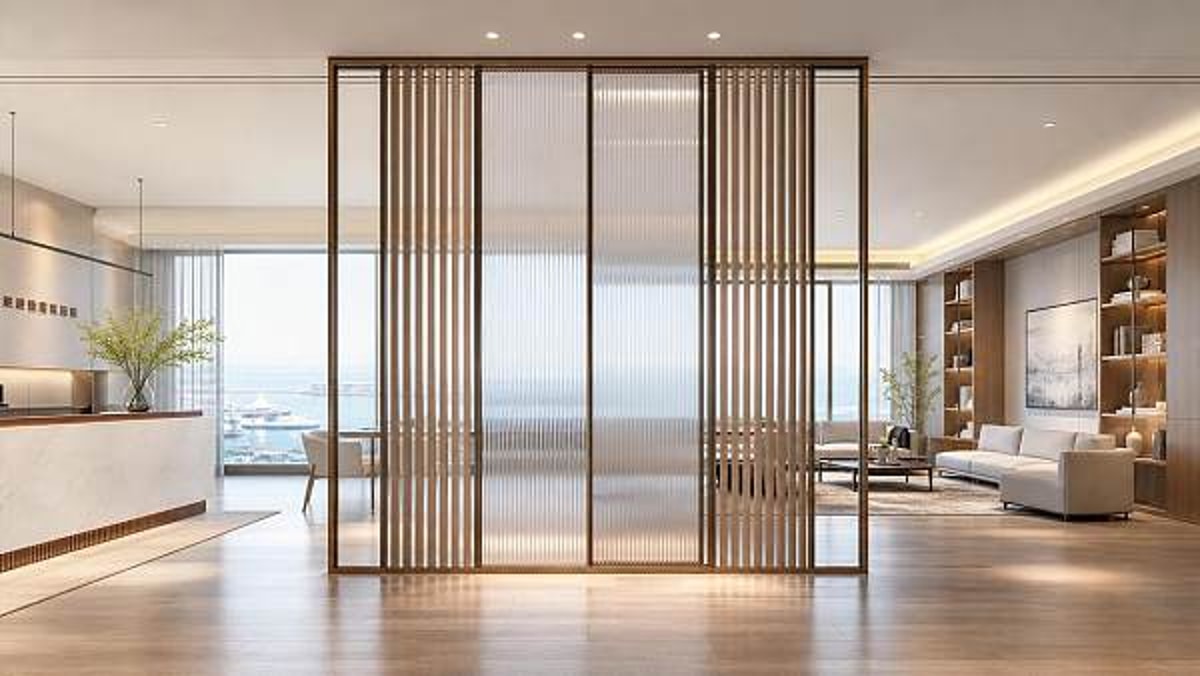
Decorative room dividers offer a smart way to redefine interiors, improve layout, and preserve natural light without making spaces feel closed off. For designers, buyers, and project planners researching flexible solutions, understanding how these dividers balance function, aesthetics, and spatial flow is essential when creating modern commercial or hospitality environments that feel both open and well organized.
Understanding decorative room dividers in modern interior planning
Decorative room dividers are semi-open or visually expressive partitions used to define zones without fully enclosing them. Unlike permanent walls, they are designed to support layout flexibility, improve circulation, and contribute to the visual language of a space. In commercial interiors, they often act as a bridge between architecture and furnishing: part spatial tool, part design feature.
Their growing relevance reflects a broader shift in how businesses shape customer and user experiences. Hotels want lobbies that feel open yet organized. Offices need collaborative environments with selective privacy. Educational and retail settings benefit from adaptive layouts that can evolve without expensive structural changes. In each of these cases, decorative room dividers help establish boundaries while allowing daylight, sightlines, and a sense of openness to remain intact.
This is why decorative room dividers are no longer seen as merely ornamental screens. They are increasingly evaluated as strategic design elements that influence comfort, perception, acoustics, brand expression, and operational efficiency. For information researchers and project teams, the key question is not only what these dividers look like, but how they perform in real commercial environments.
Why the market is paying closer attention
Across the sectors covered by Global Commercial Trade, spatial flexibility has become a decisive planning priority. Experiential consumption, premiumized interiors, and multi-use commercial footprints all demand solutions that support both aesthetics and function. Decorative room dividers answer this need by creating subtle transitions instead of hard separations.
Several market forces are behind this interest. First, natural light has become a design and wellness asset. Daylit spaces are associated with comfort, productivity, and higher perceived quality. Second, many commercial operators seek adaptable layouts that can accommodate shifting occupancy patterns, events, or service formats. Third, brand environments increasingly rely on layered visual storytelling. A divider with the right material, finish, or pattern can reinforce identity without overwhelming the overall scheme.
From a sourcing perspective, buyers are also looking beyond basic cost. They want products that combine design integrity, international compliance, durability, and supply reliability. In this environment, decorative room dividers are judged not just by appearance but by fire safety considerations, cleanability, installation requirements, material traceability, and OEM or customization potential.
Core benefits of decorative room dividers without blocking light
The main appeal of decorative room dividers lies in their ability to improve layout while maintaining visual openness. This balance creates a set of practical benefits that matter across commercial sectors.
- They define functional zones such as waiting, dining, collaboration, display, or relaxation areas.
- They preserve daylight penetration, especially when using slatted, perforated, glass, mesh, or open-frame formats.
- They reduce the visual heaviness associated with solid walls and keep interiors feeling larger.
- They support wayfinding by signaling transitions between public, semi-private, and private zones.
- They provide decorative value, helping spaces feel curated rather than merely partitioned.
- They can improve acoustic comfort when paired with suitable materials, though they are not full soundproofing systems.
When properly specified, decorative room dividers create a more nuanced layout strategy. Instead of dividing space into isolated boxes, they allow a project team to tune visibility, permeability, and user experience according to the needs of each zone.
Industry overview: where these dividers create the most value
The value of decorative room dividers varies by setting, but the underlying goal is similar: improve spatial structure without sacrificing openness or light quality.
This cross-sector relevance explains why decorative room dividers are often included early in concept design discussions rather than treated as a late-stage accessory. They affect both the look and the operating logic of a space.
Common types and how they support light flow
Not all decorative room dividers perform the same way. Material choice, openness ratio, and structural style directly influence how much light passes through and how strong the separation feels.
For projects where daylight preservation is a core priority, translucent glass, vertical slats, or patterned openwork systems often outperform solid decorative panels. The visual impression remains layered, but the space still benefits from brightness and depth.
How decorative room dividers influence user experience
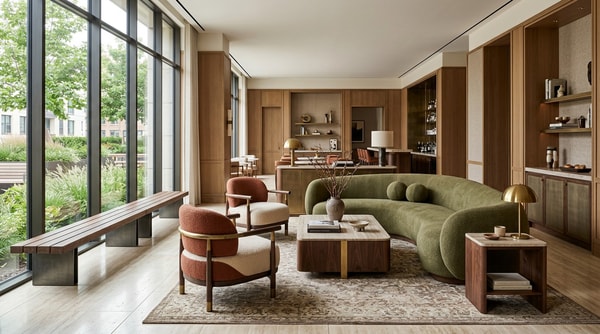
The role of decorative room dividers extends beyond layout. They shape how users interpret and move through a space. A guest entering a hotel lounge may feel more at ease when seating is subtly sheltered by a screen rather than fully exposed. An office worker may experience better concentration when collaboration zones are partially framed. A shopper may perceive a boutique as more exclusive when displays unfold through layered thresholds instead of a single open field.
These effects matter because commercial environments increasingly compete on experience, not just utility. A divider that lets light pass while managing privacy can create emotional comfort. It can also reduce visual clutter by screening service points, equipment, or circulation overlaps. In premium settings, this contributes to a sense of refinement; in high-traffic settings, it contributes to orientation and control.
Key specification factors for project teams and buyers
When evaluating decorative room dividers for commercial use, the most effective approach is to match design intent with operational reality. A divider may look impressive in a rendering but perform poorly if maintenance, safety, or installation conditions are not considered.
- Material suitability: Wood, metal, glass, acrylic, composite panels, and textile systems each offer different durability and finish qualities.
- Fire and safety compliance: Commercial spaces may require specific fire ratings, edge treatments, impact resistance, or local code alignment.
- Maintenance demands: Hospitality and retail spaces often need surfaces that resist fingerprints, staining, corrosion, or wear.
- Installation method: Ceiling-hung, floor-mounted, freestanding, and modular systems affect flexibility and building coordination.
- Light and visibility balance: The opening size, finish reflectivity, and placement relative to windows all shape actual performance.
- Customization potential: Pattern, color, branding integration, and dimension control are often critical for premium commercial projects.
For global sourcing teams, supplier credibility is equally important. Verified production capability, finish consistency, packaging standards, and export experience can determine whether a decorative room divider remains a strong concept or becomes a practical project asset.
Practical guidance for selecting the right solution
A useful way to narrow options is to begin with the intended function of the divider. If the objective is visual zoning only, lightweight open-frame systems may be sufficient. If the goal includes selective privacy, fluted glass or denser perforation patterns may be better. If branding matters, custom-cut motifs, material pairings, or integrated lighting may justify a more tailored specification.
Project teams should also study the divider in relation to traffic and sightlines. A beautiful screen can create bottlenecks if placed without regard to circulation. Likewise, a transparent divider may preserve light but fail to screen operational clutter if positioned incorrectly. Testing through mockups, sample panels, or digital visualization can prevent these issues before final installation.
In many cases, the most successful decorative room dividers are those that feel integrated rather than added on. They respond to flooring transitions, furniture layouts, brand palettes, and lighting design. This integration is especially important in high-value environments such as luxury retail, smart campus projects, and premium hospitality spaces, where every element contributes to the overall commercial experience.
Conclusion: a flexible design tool with lasting commercial relevance
Decorative room dividers have become an important solution for spaces that need structure without visual heaviness. They help define layout, preserve natural light, support brand expression, and improve the way users experience commercial interiors. Their value is strongest when selection goes beyond style alone and includes performance, compliance, maintenance, and sourcing reliability.
For researchers, designers, and commercial buyers, understanding decorative room dividers through both design and operational lenses leads to better decisions. In a market where flexible, experience-driven environments matter more than ever, these dividers offer a practical and elegant way to shape space without closing it off. For organizations exploring future-ready interior solutions across hospitality, office, education, retail, and leisure sectors, they remain a highly relevant category worth evaluating carefully.
Search News
Hot Articles
Popular Tags
Need ExpertConsultation?
Connect with our specialized leisureengineering team for procurementstrategies.
Recommended News
 May 03, 2026Commercial trash cans: capacity, liners, and lid design all matterCommercial trash cans impact cleanliness, labor, and guest experience. Learn how capacity, liner fit, and lid design help buyers choose smarter, cleaner, cost-effective solutions.● Institutional Buyer
 May 03, 2026Wet and dry vacuum cleaners: when tank size slows teams downWet and dry vacuum cleaners can boost flexibility, but the wrong tank size cuts productivity. Learn how to choose capacity that reduces downtime, labor costs, and workflow friction.● Institutional Buyer
 May 03, 2026Commercial floor scrubbers: ride-on or walk-behind for large sitesCommercial floor scrubbers for large sites: compare ride-on and walk-behind models by productivity, maneuverability, labor efficiency, and cost to choose the best fit.● Institutional Buyer
 May 03, 2026Decorative room dividers that improve layout without blocking lightDecorative room dividers improve layout, define zones, and preserve natural light in modern interiors. Explore stylish, flexible solutions for commercial and hospitality spaces.● Institutional Buyer
 May 03, 2026Why wholesale ironing boards vary so much in frame qualityWholesale ironing boards vary in frame quality due to steel grade, weld strength, stability, coating, and QC. Learn what smart buyers should check before placing bulk orders.● Institutional Buyer
 Apr 30, 2026Contract furniture specs that reduce replacement cyclesContract furniture specs that cut replacement cycles: learn how durability, cleanability, compliance, and serviceable design help buyers lower lifecycle costs and protect brand standards.● Institutional Buyer
 Apr 28, 2026Luxury Furniture Materials That Age Well and Those That Do NotLuxury furniture guide for hotel furniture, custom furniture, hotel beds, hotel chairs, hotel tables, and park benches—learn which materials age well, cut lifecycle costs, and protect premium spaces.● Institutional Buyer
 Apr 28, 2026Custom Furniture Orders Go Wrong When Samples Skip Real TestingCustom furniture mistakes start when samples skip real testing. Learn how hotel furniture, hotel beds, hotel chairs, hotel tables, luxury furniture and park benches avoid costly failures.● Institutional Buyer
 Apr 28, 2026Are Park Benches With Backrests Always the Better Choice?Park benches with backrests are not always best. Explore how custom furniture choices align with luxury furniture, hotel furniture, hotel chairs, hotel tables, and hotel equipment needs.● Institutional Buyer
 Apr 28, 2026How to Tell if Custom Furniture Is Worth the Extra Lead TimeCustom furniture, hotel furniture, hotel beds, hotel chairs, hotel tables, park benches and luxury furniture—learn when longer lead times deliver better value, durability and ROI.● Institutional Buyer
 Apr 28, 2026Custom Furniture Delays Often Start at the Drawing StageCustom furniture delays often begin in drawings. Learn how hotel furniture, luxury furniture, hotel beds, hotel chairs, hotel tables, and park benches avoid costly sourcing delays.● Institutional Buyer
 Apr 28, 2026When Does Luxury Furniture Feel Premium and When Is It Overpriced?Luxury furniture, hotel furniture, custom furniture, hotel beds, hotel chairs, hotel tables, and park benches: learn when premium quality delivers value vs overpriced design, with smart sourcing tips.● Institutional Buyer
 Apr 28, 2026Luxury Furniture Trends Shaping Premium Interiors in 2026Explore 2026 luxury furniture trends, from custom furniture and hotel furniture to hotel beds, hotel chairs, hotel tables, and park benches—smart sourcing for premium interiors.● Institutional Buyer
 Apr 28, 2026Park Benches: Which Materials Need Less Maintenance Outdoors?Park benches made of aluminum, recycled plastic, and stainless steel need less upkeep outdoors. Ideal for luxury furniture, custom furniture, hotel furniture, and resort projects.● Institutional Buyer
 Apr 28, 2026What Makes Park Benches Hold Up Better in High-Traffic Areas?Park benches built for heavy use need smart materials, strong design, and low upkeep. Discover how they compare with luxury furniture, custom furniture, hotel furniture, and hotel equipment.● Institutional Buyer
 Apr 21, 2026What size hotel desks work in compact guest roomsHotel desks for compact guest rooms: discover the right hotel furniture sizes, layouts, and hospitality procurement tips to maximize space, comfort, and luxury furniture appeal.● Institutional Buyer
 Apr 21, 2026Hotel desks with built in power are now expectedHotel desks with built in power are redefining hotel furniture and hotel room furniture. Explore smarter commercial furniture choices for hospitality procurement and better guest satisfaction.● Institutional Buyer
 Apr 23, 2026Commercial Furniture Buying Mistakes to AvoidCommercial furniture buying mistakes can impact hotel tables, amusement equipment, playground borders, sensory playground safety, and more. Learn how to source smarter and avoid costly errors.● Institutional Buyer
 Apr 23, 2026Commercial Furniture Materials That Hold Up Better OutdoorsCommercial furniture that lasts outdoors: compare hotel tables, amusement equipment, playground borders, sensory playground seating, and playground safety-focused materials.● Institutional Buyer
 Apr 23, 2026Custom Furniture or Stock Which WinsCompare custom furniture vs stock for hotels and leisure park projects. From hotel beds, catering equipment, and soundproofing materials to playground swings and theme park rides, find the best-fit solution.● Institutional Buyer
 Apr 20, 2026Commercial furniture upholstery stains that won’t lift—even with pro cleanersCommercial furniture stains won’t lift? Discover stain-resistant solutions for hotel beds, park benches, luxury furniture & more—backed by lab data & real-world performance.● Institutional Buyer
 Apr 19, 2026Commercial furniture fire ratings that change mid-projectCommercial furniture fire ratings—especially for hotel beds, park benches, hotel chairs, and luxury custom furniture—can shift mid-project. Avoid delays, cost overruns, and non-compliance with real-time, E-E-A-T–validated fire safety intelligence.● Institutional Buyer
 Apr 17, 2026Why commercial furniture specs matter more than price in 2026Commercial furniture, playground borders, sensory playgrounds & more—why specs trump price in 2026 for safety, ROI & brand trust. Discover how.● Institutional Buyer
 Apr 17, 2026Office furniture & equip: How ‘modular’ claims fall apart after three reconfigurationscommercial furniture, playground safety & sensory playground systems—why 'modular' fails after 3 reconfigurations. Get data-backed validation for amusement equipment, hotel tables & educational supplies.● Institutional Buyer