Bakery display cases: glass fogging, lighting, and product appeal
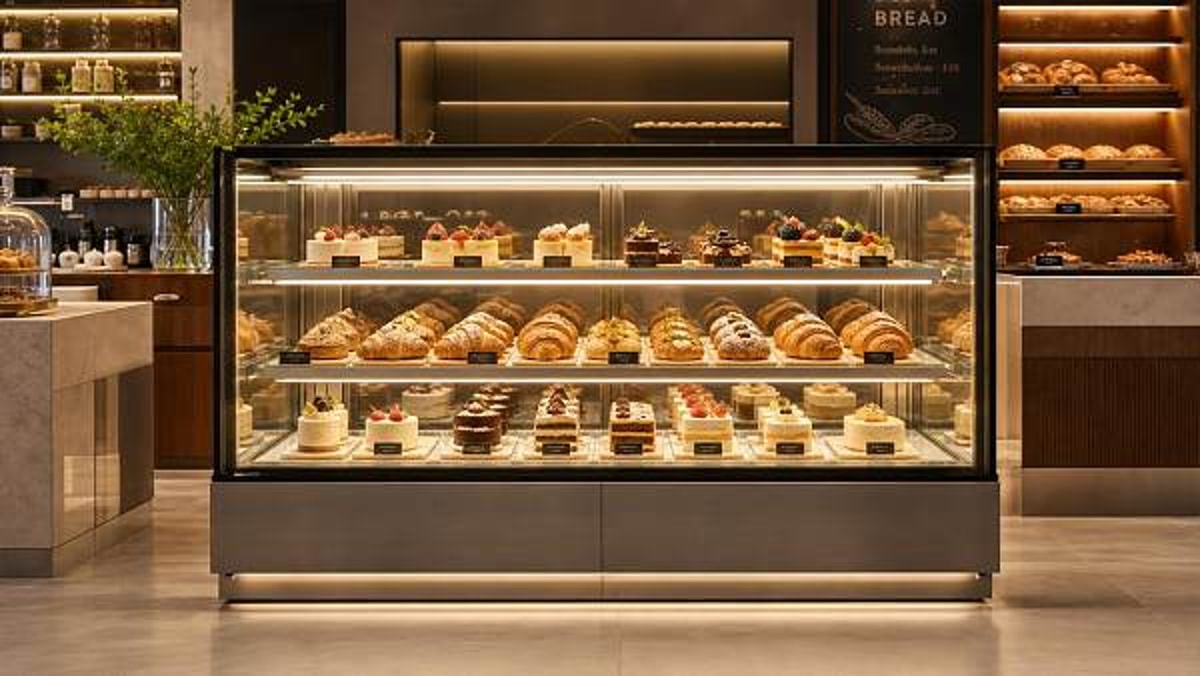
Bakery display cases do far more than present pastries—they directly affect visibility, freshness perception, and sales performance. For technical evaluators, issues such as glass fogging, lighting quality, and temperature stability are critical when assessing case efficiency and product appeal. This article explores how design and operating factors influence performance, helping buyers compare solutions that balance aesthetics, hygiene, and commercial reliability.
Why a checklist approach works better for evaluating bakery display cases
For technical assessment teams, bakery display cases should not be judged mainly by appearance or catalog specifications. In real commercial use, product appeal depends on a chain of linked factors: anti-fog performance, lighting placement, airflow control, glass geometry, shelf materials, temperature recovery, drainage, and service access. A case that looks premium on the showroom floor may underperform during peak store traffic, frequent door opening, or humid site conditions.
A checklist-based review helps evaluators compare options consistently across suppliers. It also reduces the risk of overlooking practical issues that affect operating costs and merchandising results. In sourcing terms, this method is especially valuable for multi-site retail groups, hospitality operators, and project developers who need repeatable standards across regions and store formats.
First priority: confirm the operating environment before comparing technical details
Before reviewing individual models of bakery display cases, technical teams should first document the actual operating environment. Fogging, lighting effectiveness, and product appearance can vary significantly depending on climate, product type, and service style. A unit that performs well in a dry indoor mall may behave differently in a humid street-facing bakery or hotel buffet line.
- Confirm ambient temperature and relative humidity during normal and peak hours.
- Identify whether the case will hold ambient bakery items, chilled desserts, or mixed categories.
- Check expected door-opening frequency or whether the unit is open-front, rear-service, or self-service.
- Record the available power supply, installation tolerances, and cleaning constraints.
- Assess exposure to sunlight, HVAC drafts, entrance doors, or steam sources from nearby food equipment.
This first step creates the baseline for fair comparison. Without it, anti-fog glass, LED systems, and refrigeration performance may be assessed out of context.
Core checklist: how to judge glass fogging performance
Glass fogging is one of the fastest ways to reduce the selling power of bakery display cases. Even minor condensation weakens visibility, lowers the perceived freshness of cakes and pastries, and creates a maintenance burden for staff. Technical evaluators should look beyond broad anti-fog claims and ask how the solution performs under measurable conditions.
Key fogging checks
- Glass type: Determine whether the unit uses single, double, or heated glass. Double glazing and heated front glass can reduce condensation risk, but they add cost and energy load.
- Airflow design: Verify whether air curtains, discharge vents, or fan placement direct humid air toward the glass. Poor airflow often causes edge fogging or localized misting.
- Frame thermal bridges: Metal frame sections can create cold spots that trigger condensation. Ask for thermal design details, especially around corners and lower front panels.
- Door and gasket sealing: On rear-service units, worn or weak seals can pull moisture into the case and destabilize internal conditions.
- Defrost strategy: In refrigerated bakery display cases, poorly controlled defrost cycles may lead to temporary fogging after restart.
- Drainage management: Condensate must be controlled so that moisture does not migrate to visible glass or shelf surfaces.
A practical supplier question is simple: under what ambient temperature and humidity was the anti-fog performance validated, and for how long? Technical buyers should request test conditions instead of relying on generic marketing language.
Lighting checklist: what improves product appeal without damaging quality
Lighting is not just a visual upgrade. In bakery display cases, it influences color perception, gloss, texture definition, and even customer assumptions about freshness. However, the wrong lighting specification can create glare, distort product color, or add unwanted heat load.
What technical evaluators should verify
- Color temperature: Warm white often flatters bread and pastries, while neutral white may better present cream cakes or packaged desserts. The best choice depends on the product mix.
- Color rendering: High CRI lighting helps preserve the natural tones of fruit toppings, chocolate glazing, and baked crusts. Low CRI can make products look dull or gray.
- Beam direction: Top lighting alone may leave shadows under shelf lips. Side or integrated shelf lighting can improve uniformity.
- Glare control: Bright reflections on curved or angled glass reduce visibility and interfere with customer viewing from different heights.
- Heat emission: Lighting should not raise product surface temperature or increase compressor workload in chilled units.
- Maintenance access: Evaluate how easily drivers, strips, or modules can be replaced without dismantling major components.
The strongest solutions combine visual appeal with stable thermal performance. This is especially important when bakery display cases are used for premium patisserie lines where small visual differences directly affect conversion.
Temperature stability and freshness perception: the hidden commercial driver
Customers cannot measure temperature, but they immediately react to signs of instability: sweating packaging, soft icing, drying pastry edges, or inconsistent sheen. For technical teams, temperature stability should be reviewed as both a food control issue and a product appeal issue. In many projects, this becomes the deciding factor between visually similar bakery display cases.
Key assessment points include pull-down time, recovery after door opening, shelf-to-shelf temperature variation, fan noise, and the effect of product loading patterns. If a case is intended for mixed products, ask whether upper and lower shelf zones behave differently. Uneven cooling may not fail a broad specification, but it can shorten display life for delicate items.
Comparison table: practical evaluation standards for bakery display cases
The following table gives a fast comparison framework for technical evaluators reviewing bakery display cases across suppliers or project bids.
Different applications require different priorities
Not all bakery display cases should be judged by the same weighting. Evaluators should adjust priorities based on use case, merchandising strategy, and service format.
Retail bakery storefront
Visibility, anti-fog performance, and strong visual merchandising typically take priority. Cases near entrances need extra review for humidity swings and external drafts. Product-facing lighting quality is especially important because impulse buying is driven by first-glance appeal.
Hotel buffet and hospitality service
Here, the balance shifts toward presentation consistency, hygiene access, and low noise. If the case is integrated into luxury hospitality interiors, finish quality, glass clarity, and elegant lighting become part of brand perception. GCT-style sourcing evaluations should also include after-sales support and finish customization for project alignment.
Institutional or multi-site chain deployment
Repeatability matters most. Technical teams should compare standardization of parts, lead times, electrical conformity, documentation quality, and consistency across model ranges. In these environments, bakery display cases must support reliable maintenance and simplified training, not just premium aesthetics.
Commonly overlooked risks that affect long-term performance
- Showroom bias: Units are often demonstrated in stable indoor conditions that do not reflect real humidity or customer traffic.
- Ignoring cleaning chemistry: Some coatings, trims, or sealants degrade if cleaning agents are too aggressive.
- Overlooking reflection patterns: A case can have clear glass but poor readability due to surrounding spotlights or window positioning.
- Underestimating service access: If replacing LEDs or controllers requires excessive disassembly, maintenance costs rise quickly.
- Assuming all bakery products behave the same: Bread, laminated pastries, mousse cakes, and chocolate desserts respond differently to light and temperature exposure.
Execution advice: what to request from suppliers before approval
To make evaluation more objective, technical buyers should request specific proof points rather than general brochures. This is especially relevant when comparing OEM or ODM offers for bakery display cases sourced across multiple markets.
- Ask for operating test conditions covering temperature, humidity, and duration.
- Request lighting specifications including CRI, color temperature, and expected service life.
- Review technical drawings showing airflow paths, vent placement, and service access points.
- Confirm material details for shelves, frames, seals, and glass treatments.
- Check compliance documents, electrical standards, and regional safety suitability.
- Require spare parts planning and after-sales response commitments.
Where possible, a pilot installation or controlled site trial is the most reliable way to validate bakery display cases before larger procurement decisions.
FAQ for technical evaluators
Are heated glass panels always necessary?
No. They are useful in humid environments or chilled applications with frequent exposure to warm air, but they should be evaluated against energy consumption, visibility gains, and the actual site profile.
What lighting specification matters most for bakery display cases?
There is no single metric, but a balanced combination of high color rendering, suitable color temperature, low glare, and low heat output usually produces the best commercial result.
How should product appeal be tested objectively?
Use real products under expected operating conditions, compare multiple viewing angles, observe after several hours of operation, and include both staff and customer-facing review criteria.
Final decision guide and next-step questions
The best bakery display cases are not simply the brightest or most visually striking. They are the units that maintain clear glass, stable product presentation, efficient hygiene routines, and dependable serviceability under real operating conditions. For technical evaluators, the most effective decision path is to prioritize measurable checks over visual impressions: confirm the site environment, test fogging resistance, verify lighting performance, and review maintenance practicality.
If a project is moving toward supplier engagement, the next discussion should focus on five points: required temperature range, ambient humidity exposure, preferred lighting effect, expected maintenance access, and compliance or customization needs. For larger sourcing programs, it is also wise to clarify lead time, spare parts coverage, project references, and whether the supplier can align design, performance, and long-term support with the commercial goals of the installation.
Search News
Hot Articles
Popular Tags
Need ExpertConsultation?
Connect with our specialized leisureengineering team for procurementstrategies.
Recommended News
 May 03, 2026Commercial pizza ovens that save labor may cost more to ventCommercial pizza ovens can cut labor, but venting, code compliance, and installation may raise total costs. See the key checks before you buy.● Hospitality Sourcing Dir
 May 03, 2026Commercial juicers: cold press or centrifugal for daily serviceCommercial juicers: compare cold press and centrifugal models for daily service. Discover the best fit for speed, juice quality, yield, cleaning, and operating costs.● Hospitality Sourcing Dir
 May 03, 2026Commercial water boilers: recovery time matters more than listed capacityCommercial water boilers perform best when recovery time matches peak demand. Learn why faster reheating beats listed capacity for reliable, efficient commercial hot water service.● Hospitality Sourcing Dir
 May 03, 2026Cotton candy machines wholesale: small details that affect cleaning timeCotton candy machines wholesale guide: discover the small design details that cut cleaning time, reduce labor costs, and improve hygiene for busy commercial operations.● Hospitality Sourcing Dir
 May 03, 2026Dough sheeters wholesale: thickness control is where quality showsDough sheeters wholesale buyers: see why thickness control defines real quality, repeatability, and long-term value. Compare key evaluation points for smarter sourcing.● Hospitality Sourcing Dir
 May 03, 2026Slushy machines wholesale: what causes flavor crossover problemsSlushy machines wholesale buyers should understand what causes flavor crossover, from poor sealing to weak cleaning design, to protect drink quality and choose more reliable equipment.● Hospitality Sourcing Dir
 May 03, 2026Commercial bread slicers: slice consistency affects more than looksCommercial bread slicers do more than improve appearance—they boost portion control, reduce waste, and support faster service. Learn what drives slice consistency before you buy.● Hospitality Sourcing Dir
 May 03, 2026Wood fired pizza ovens need more space than most plans allowWood fired pizza ovens often require more space than expected. Learn how to avoid redesigns, protect workflow, and plan compliant, high-performance hospitality projects.● Hospitality Sourcing Dir
 May 03, 2026Commercial pizza ovens: gas or electric for steady outputCommercial pizza ovens: compare gas vs. electric for steady output, faster recovery, precise control, and smarter installation choices across real kitchen scenarios.● Hospitality Sourcing Dir
 May 03, 2026Commercial popcorn machines: kettle size vs serving rush realityCommercial popcorn machines should be chosen by real rush-hour output, not kettle size alone. Learn how to match serving peaks, staffing, and workflow for smarter buying.● Hospitality Sourcing Dir
 May 03, 2026Commercial insect killers: indoor placement changes results fastCommercial insect killers perform very differently based on indoor placement. Discover how small positioning changes can boost control, reduce pest activity, and improve operational results fast.● Hospitality Sourcing Dir
 May 03, 2026Hotel & Catering Equipment lists often hide installation costsHotel & Catering Equipment lists often hide installation costs. Learn where budgets slip, what to verify early, and how to compare total installed value before approval.● Hospitality Sourcing Dir
 May 03, 2026Bakery display cases: glass fogging, lighting, and product appealBakery display cases guide: compare anti-fog glass, lighting quality, and temperature stability to boost product appeal, hygiene, and sales with smarter sourcing decisions.● Hospitality Sourcing Dir
 May 03, 2026Commercial milkshake mixers: when motor power changes drink textureCommercial milkshake mixers directly shape texture, aeration, and consistency. Learn how motor power affects shake quality and choose the right mixer for your menu and volume.● Hospitality Sourcing Dir
 May 03, 2026Hot dog rollers that clean faster can cut downtime more than expectedHot dog rollers that clean faster can reduce downtime, improve sanitation, and save labor. Learn which features matter most before you buy for busy commercial service.● Hospitality Sourcing Dir
 May 03, 2026Conveyor pizza ovens or deck ovens for high-volume service?Conveyor pizza ovens vs deck ovens: discover which option delivers better throughput, consistency, labor efficiency, and site-fit for high-volume commercial pizza service.● Hospitality Sourcing Dir
 May 03, 2026Shawarma machines commercial buyers compare heat control firstShawarma machines commercial buyers compare heat control first. Learn how gas, electric, and multi-zone systems affect consistency, efficiency, safety, and sourcing decisions.● Hospitality Sourcing Dir
 May 02, 2026Stainless steel GN pans with reinforced corners last longer in busy kitchensStainless steel GN pans with reinforced corners help busy kitchens reduce warping, improve hygiene, and cut replacement costs. See why buyers choose longer-lasting performance.● Hospitality Sourcing Dir
 May 02, 2026Commercial induction cookers: power ratings that mislead first-time buyersCommercial induction cookers are not as simple as wattage labels suggest. Learn how to compare real performance, efficiency, pan fit, and reliability before you buy.● Hospitality Sourcing Dir
 May 02, 2026Beverage dispensers wholesale: what causes dripping after heavy useBeverage dispensers wholesale guide: learn what causes dripping after heavy use, how to spot seal, valve, and pressure issues, and choose durable suppliers with confidence.● Hospitality Sourcing Dir
 May 02, 2026Disposable wooden cutlery and the taste issue customers noticeDisposable wooden cutlery can affect taste, texture, and customer perception. Learn what causes woody aftertaste, how to test suppliers, and how to choose better options.● Hospitality Sourcing Dir
 May 02, 2026Sushi display cases: curved glass looks better, but is it practical?Sushi display cases with curved glass look premium, but are they practical? Compare visibility, cleaning, temperature control, and ROI before you buy.● Hospitality Sourcing Dir
 May 02, 2026Vacuum sealing machines food businesses can scale withVacuum sealing machines food businesses can scale with improve shelf life, workflow, and cost control. Explore reliable, compliant solutions for growing food operations.● Hospitality Sourcing Dir
 May 02, 2026Chafing fuel gel bulk: storage and burn-time issues to check firstChafing fuel gel bulk buyers should check storage stability, seal integrity, and real burn-time performance first. Reduce waste, avoid service disruption, and source with more confidence.● Hospitality Sourcing Dir