Commercial patio umbrellas need more than UV fabric outdoors
For project managers, selecting commercial patio umbrellas is about far more than choosing UV-resistant fabric. In demanding outdoor environments, structural strength, wind stability, corrosion resistance, and long-term maintenance all directly affect safety, lifecycle cost, and project success. This article explores the performance factors that matter most when specifying reliable umbrella solutions for commercial spaces.
Why UV Fabric Alone Is Not Enough for Commercial Patio Umbrellas
Many buyers start with canopy fabric because UV resistance is easy to market and simple to compare. For commercial patio umbrellas, however, the fabric is only one layer of outdoor performance. Project managers responsible for hotels, school campuses, restaurant terraces, leisure parks, office courtyards, and retail hospitality zones must evaluate the full system, not just the visible textile.
In real projects, failure rarely starts with faded fabric alone. It often begins with a weak mast, a poorly designed base, inconsistent powder coating, water intrusion at joints, or hardware that loosens after repeated opening and closing. When umbrellas are installed in high-traffic public environments, these weaknesses quickly become safety issues, maintenance burdens, and budget overruns.
This is especially important in experience-driven commercial sectors. A luxury hotel needs visual refinement and weather durability. A smart campus needs easy maintenance and risk control. A leisure venue needs stable shade in open windy areas. In all of these settings, commercial patio umbrellas function as both operational equipment and part of the customer experience.
- They must protect guests from sun exposure while maintaining a clean, premium appearance over time.
- They must withstand repeated daily use by staff, guests, or tenants with different handling habits.
- They must align with site conditions such as coastal corrosion, wind tunnels between buildings, poolside humidity, or foodservice cleaning routines.
What Project Managers Should Evaluate Before Specifying Commercial Patio Umbrellas
A practical specification process starts by identifying risk, operating frequency, and site exposure. Instead of asking only which umbrella looks best, project managers should ask how the umbrella will perform after one peak season, after two rainy periods, and after hundreds of open-close cycles.
Key performance categories
- Frame material: Aluminum, steel, fiberglass, or hybrid structures behave differently under wind load, corrosion exposure, and transport handling.
- Wind response: Vent design, rib flexibility, connection strength, and anchoring determine whether the umbrella remains stable or becomes a liability.
- Base and fixing method: Freestanding, in-ground, bolt-down, and integrated deck solutions have different implications for safety and mobility.
- Corrosion resistance: Poolside chlorides, sea air, fertilizers, and urban pollution accelerate coating and hardware degradation.
- Serviceability: Replaceable canopies, standard hardware, spare part access, and cleaning compatibility affect long-term ownership cost.
For multi-site procurement, consistency matters just as much as performance. A project can suffer when sample quality looks strong but production batches vary in finish, fabric tension, or hardware fit. This is where a sourcing partner such as GCT adds value by helping buyers compare suppliers based on capability, process maturity, and suitability for commercial environments rather than brochure claims alone.
How Different Commercial Environments Change the Right Umbrella Specification
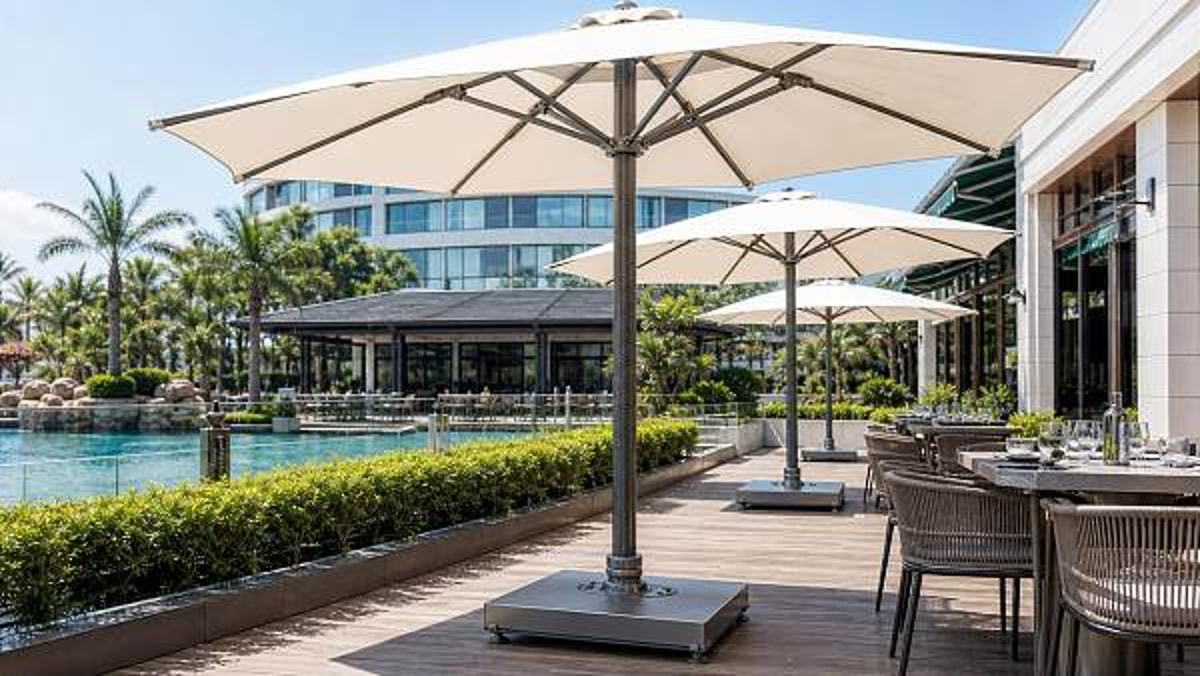
Commercial patio umbrellas should be selected by environment, not by catalog photo. The same model may perform adequately in a sheltered café courtyard but fail quickly in a rooftop lounge or beachfront dining area. The table below helps project managers connect site conditions with specification priorities.
The main lesson is simple: site context changes the definition of value. A lower-priced umbrella may look acceptable during handover, but in a harsh environment it can produce faster fabric replacement, frame rust, hardware failure, and more labor hours. For project managers under schedule and budget pressure, fit-for-purpose selection is usually more economical than chasing a low initial unit price.
Material Comparison: Frame, Hardware, and Canopy as a System
When comparing commercial patio umbrellas, it is useful to treat the product as a system of interdependent parts. A high-grade canopy cannot compensate for low-grade fasteners, and a heavy base cannot fully correct weak rib geometry. The comparison below highlights what buyers should examine during sourcing and technical review.
For project teams, this system view supports better bid comparisons. Two suppliers may both claim outdoor-grade commercial patio umbrellas, yet one may offer a better total package because its joints are stronger, its spare parts are easier to source, and its corrosion treatment is more suitable for the site. This is why technical clarification should go deeper than fabric samples and finish color cards.
Which Technical Parameters Matter Most in Outdoor Commercial Use?
Wind stability and structural integrity
Wind is one of the biggest reasons commercial patio umbrellas fail. Project managers should request clear information on recommended operating conditions, closing procedures, base requirements, and whether the design includes venting or flexible rib behavior. Even where local regulations do not require a formal site-specific engineering review, understanding wind exposure is essential for public safety.
Corrosion resistance and finish durability
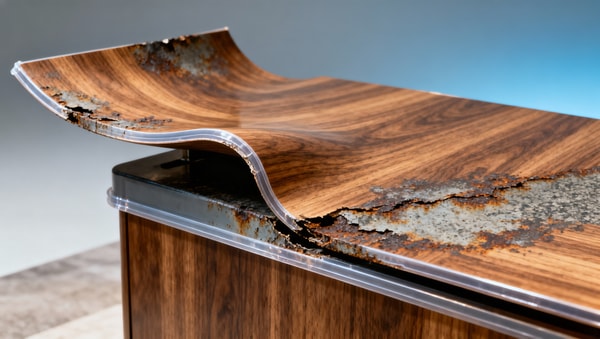
Outdoor commercial projects often face mixed exposure: moisture, salt, chlorinated water, cleaning chemicals, and airborne pollutants. Ask not only what coating is used, but also how edges, drilled points, welds, and hardware interfaces are protected. Premature corrosion usually begins at these vulnerable points, not on the most visible flat surface.
Maintenance cycle and replacement planning
Good sourcing decisions consider the full maintenance cycle. Can the canopy be replaced without changing the frame? Are ribs or crank parts field-replaceable? Does the supplier support repeat orders for matching colors and dimensions? In commercial operations, a product that can be repaired efficiently often delivers better value than one that appears cheaper at first purchase.
- Request an exploded parts view or maintenance guide during technical review.
- Confirm expected cleaning methods and whether detergents or pool chemicals affect finish performance.
- Check whether storage covers, anchor kits, and replacement canopies are standard or optional items.
Procurement Guide: How to Compare Commercial Patio Umbrellas Without Missing Hidden Risks
A strong procurement process should convert broad design intent into a practical decision framework. This is particularly useful when multiple stakeholders are involved, such as operations, design, facilities, safety teams, and finance. The goal is to compare commercial patio umbrellas in a way that reduces uncertainty before order placement.
Recommended evaluation steps
- Define the site condition by exposure level, operating frequency, and public safety sensitivity.
- Set mandatory criteria for dimensions, anchoring method, corrosion resistance expectations, and serviceability.
- Ask suppliers for detailed technical data, finish descriptions, spare part support, and lead time confirmation.
- Review samples and production consistency, not just showroom units or edited photos.
- Evaluate installation method, storage procedures, and the labor burden during seasonal changeovers.
GCT supports this process by helping buyers interpret supplier information in a commercial context. Instead of sorting through fragmented claims across many vendors, project teams can use focused sourcing intelligence to identify which manufacturers align with their environment, quality level, and delivery timeline. This is valuable when projects involve OEM, custom finishes, or multi-country sourcing decisions.
Cost, Alternatives, and Lifecycle Thinking
Initial purchase cost is only one part of the budget. For commercial patio umbrellas, lifecycle cost includes installation, maintenance labor, replacement canopies, downtime, storage, and risk exposure. A project manager who compares only unit prices may underestimate the true operational impact over several seasons.
Where hidden costs often appear
- Frequent canopy replacement because the fabric performs well in UV tests but not in stain-heavy foodservice conditions.
- Unexpected base upgrades after installation because the original specification did not match local wind exposure.
- Labor-intensive maintenance caused by non-standard hardware or difficult part access.
- Aesthetic inconsistency when replacement parts or fabrics are no longer available in matching finishes.
In some locations, alternative shade strategies may also deserve review, such as fixed structures, retractable systems, or mixed shade planning. Yet umbrellas remain attractive because they are flexible, scalable, and less disruptive to install. The right decision is not whether umbrellas are cheap or expensive, but whether they are the right shading tool for the operating model and site risk.
Standards, Compliance, and Documentation Questions Buyers Should Ask
Commercial buyers increasingly need documentation support, especially for hospitality groups, institutional sites, and large developments with formal approval processes. While exact requirements vary by country and project type, asking for clear technical and compliance information can prevent delays during specification and handover.
Not every project needs the same document set, but every project benefits from clarity. GCT helps buyers navigate these documentation expectations across commercial categories and international sourcing channels, reducing confusion between what is promotional, what is operational, and what is truly necessary for specification confidence.
Common Mistakes When Buying Commercial Patio Umbrellas
Mistake 1: Treating all outdoor sites as equal
A shaded internal courtyard and a seafront deck are not comparable. Using the same umbrella specification for both often leads to uneven performance and unplanned replacements.
Mistake 2: Focusing on color and fabric swatch only
Fabric matters, but frame joints, hardware quality, and anchoring method often determine whether the umbrella remains safe and serviceable in commercial use.
Mistake 3: Ignoring maintenance and spare parts
If replacement canopies or mechanical parts are hard to obtain, even minor wear can force complete unit replacement. That is a costly outcome for large projects.
Mistake 4: Underestimating lead time and customization impact
Custom dimensions, branded colors, or special base configurations can affect production planning. Early sourcing alignment is critical when the umbrella package is tied to opening dates or phased project delivery.
FAQ: Practical Questions from Commercial Buyers
How should project managers choose commercial patio umbrellas for windy areas?
Start with the site, not the catalog. Review exposure, surrounding building effects, and operating procedures. Look at venting, rib design, mast strength, and base or anchor strategy together. Also confirm when umbrellas must be closed and how staff will manage that process in daily operations.
What matters more: fabric quality or frame quality?
Both matter, but frame and fixing quality usually have greater safety implications. A premium fabric on a weak frame does not create a commercial-grade solution. The best commercial patio umbrellas balance canopy durability, structural integrity, and maintainability.
Are commercial patio umbrellas suitable for hospitality and institutional projects at the same time?
Yes, but not usually with one universal configuration. Hospitality projects may prioritize aesthetics and guest experience, while institutional projects may prioritize simple maintenance, tamper resistance, and budget control. The sourcing brief should reflect those differences.
What should buyers ask suppliers before placing an order?
Ask about frame material, coating process, hardware type, recommended base solution, replacement parts, cleaning guidance, lead time, packaging for transit, and any available technical documentation. If the order includes customization, confirm approval drawings and repeat-order consistency.
Why Work With GCT When Sourcing Commercial Patio Umbrellas
For project managers, the challenge is rarely finding suppliers. The challenge is filtering suppliers, comparing commercial suitability, and reducing sourcing risk under real delivery pressure. GCT supports buyers across hospitality, education, leisure, office, and specialty commercial sectors by turning fragmented market options into focused sourcing intelligence.
Because GCT works at the intersection of commercial design, procurement logic, and global supply analysis, buyers can move from broad product search to sharper decision-making. That includes evaluating which commercial patio umbrellas fit a five-star outdoor lounge, which are practical for campus-scale deployment, and which suppliers are better prepared for custom or repeat commercial programs.
- Consult us on parameter confirmation such as frame material, anchoring method, canopy requirements, and site suitability.
- Discuss product selection for hotels, restaurants, campuses, leisure spaces, and mixed-use commercial developments.
- Review delivery timelines, customization feasibility, sample support, and repeat-order consistency before final sourcing decisions.
- Clarify documentation expectations, maintenance concerns, and commercial budget trade-offs with a sourcing-oriented perspective.
If you are planning an outdoor commercial project and need a more reliable path to specifying commercial patio umbrellas, GCT can help you compare options with greater precision. Reach out with your site conditions, quantity plan, desired appearance, certification questions, or quotation targets, and we can help shape a sourcing brief that is practical, commercially informed, and aligned with project delivery needs.
Search News
Hot Articles
Popular Tags
Need ExpertConsultation?
Connect with our specialized leisureengineering team for procurementstrategies.
Recommended News
 May 03, 2026Hotel pool lounge chairs: materials that survive sun and chlorineHotel pool lounge chairs buying guide: compare aluminum, resin, sling, and hardware materials that resist sun, chlorine, and heavy use for longer life and lower maintenance.● Hospitality Sourcing Dir
 May 03, 2026Outdoor rattan dining sets: which weave lasts in commercial useOutdoor rattan dining sets: discover which commercial weave lasts longest. Compare flat vs half-round options for durability, cleaning efficiency, and lower lifecycle cost.● Hospitality Sourcing Dir
 May 03, 2026Commercial patio umbrellas need more than UV fabric outdoorsCommercial patio umbrellas need more than UV fabric. Discover how wind stability, corrosion resistance, frame strength, and maintenance impact safer, longer-lasting outdoor projects.● Hospitality Sourcing Dir
 May 02, 2026Folding event tables that stay stable on uneven banquet floorsFolding event tables that stay stable on uneven banquet floors help reduce wobble, speed setup, and improve guest experience. Discover key features buyers should compare.● Hospitality Sourcing Dir
 May 02, 2026Banquet chairs wholesale: stacking height can change storage costsBanquet chairs wholesale decisions should consider stacking height, because smarter storage, faster handling, and lower transport costs can significantly improve long-term venue profitability.● Hospitality Sourcing Dir
 May 02, 2026When wholesale melamine plates look premium and when they do notWholesale melamine plates can look refined or cheap. Learn how finish, weight, design, and supplier quality affect premium appeal before you source for hospitality or retail.● Hospitality Sourcing Dir
 May 01, 2026Restaurant Booth Seating That Saves Space Without Feeling TightRestaurant booth seating that saves space without feeling cramped—discover smart dimensions, durable specs, and layout tips to boost comfort, traffic flow, and revenue.● Hospitality Sourcing Dir
 May 01, 2026How to Choose Commercial Bar Stools for High-Traffic VenuesCommercial bar stools for high-traffic venues: learn how to compare durability, safety, comfort, maintenance, and supplier reliability to choose seating that lasts and performs.● Hospitality Sourcing Dir
 Apr 28, 2026Why Hotel Tables Often Fail at Edges, Bases, and Surface FinishHotel tables often fail at edges, bases, and surface finish. Compare hotel furniture, custom furniture, luxury furniture, hotel chairs, hotel beds, and hotel equipment before you buy.● Hospitality Sourcing Dir
 Apr 28, 2026Hotel Tables With Stone Tops or Wood Tops: Which Performs Better?Hotel tables with stone tops or wood tops? Compare ROI, durability, and style across hotel furniture, custom furniture, hotel chairs, and hotel beds to choose smarter.● Hospitality Sourcing Dir
 Apr 28, 2026The Best Hotel Chairs Balance Comfort, Stackability, and DurabilityHotel chairs that balance comfort, stackability, and durability. Explore hotel furniture, custom furniture, hotel tables, hotel beds, and luxury furniture solutions for hospitality buyers.● Hospitality Sourcing Dir
 Apr 28, 2026Hotel Chairs: What Causes Wobbling, Cracks, and Early Wear?Hotel chairs buying guide: learn what causes wobbling, cracks, and early wear, and how to compare hotel furniture, custom furniture, hotel tables, hotel beds, and luxury furniture for lasting value.● Hospitality Sourcing Dir
 Apr 21, 2026Hotel tables that stay stable on uneven flooringHotel tables that stay stable on uneven flooring: a practical guide for hospitality procurement covering hotel furniture, commercial furniture, luxury furniture, and specs that reduce wobble, risk, and maintenance.● Hospitality Sourcing Dir
 Apr 21, 2026Round or rectangular hotel tables for tighter layouts?Hotel tables for tight layouts: compare round vs rectangular hotel furniture for better flow, seating, and hospitality procurement decisions. Find the best fit for compact hotel room furniture.● Hospitality Sourcing Dir
 Apr 21, 2026Why hotel chairs fail early in banquet spacesHotel chairs in banquet spaces fail early due to stacking, impact, and weak specs. Learn how hotel furniture and commercial furniture choices cut costs and improve hospitality procurement.● Hospitality Sourcing Dir
 Apr 21, 2026Hotel chairs that look elegant and still hold upHotel chairs that blend luxury furniture appeal with commercial furniture durability. Discover how hotel furniture works with hotel tables, hotel desks, and hotel room furniture for smarter hospitality procurement.● Hospitality Sourcing Dir
 Apr 23, 2026How to Choose Commercial Furniture That LastsCommercial furniture buying guide for hotels, schools, and leisure venues—covering hotel tables, playground safety, sensory playgrounds, and durable amusement equipment.● Hospitality Sourcing Dir
 Apr 23, 2026When Commercial Furniture Fails in High-Traffic VenuesLearn why commercial furniture fails in busy venues and how to choose safer hotel tables, playground borders, sensory playground solutions, amusement equipment, and hotel equipment that last.● Hospitality Sourcing Dir
 Apr 20, 2026Hotel tables with edge seams that trap moisture and moldHotel tables, park benches & commercial furniture with mold-trapping edge seams? Discover seamless, moisture-resistant hotel furniture solutions—luxury, custom, and compliant.● Hospitality Sourcing Dir
 Apr 20, 2026Hotel chairs rated for 100,000 cycles—but tested how?Discover how top hotel chairs, park benches & commercial furniture are truly tested for 100,000 cycles—backed by BIFMA, EN & GB/T standards. Get verified luxury furniture insights.● Hospitality Sourcing Dir
 Apr 19, 2026Hotel tables that warp under daily cleaning chemicalsHotel tables, hotel chairs, hotel beds & park benches—discover why chemical warping fails luxury furniture & commercial furniture specs. Get expert OEM insights on durable hotel furniture & equipment.● Hospitality Sourcing Dir
 Apr 19, 2026Hotel chairs with hidden wear patterns no one tests forHotel chairs, luxury furniture & commercial furniture buyers: uncover hidden wear patterns in hotel chairs, hotel beds, and custom furniture—before failure hits ROI.● Hospitality Sourcing Dir
 Apr 18, 2026Custom furniture quoting errors—how small measurement gaps become big cost overrunsAvoid costly overruns: Fix custom furniture quoting errors before they derail hotel beds, theme park rides, playground structures & soundproofing materials.● Hospitality Sourcing Dir
 Apr 17, 2026Restaurant furniture that handles spills, scratches, and constant turnoverCommercial furniture built for spills, scratches & turnover—ideal for playground borders, sensory playgrounds, hotel tables, amusement equipment & more.● Hospitality Sourcing Dir