Commercial pizza ovens that save labor may cost more to vent
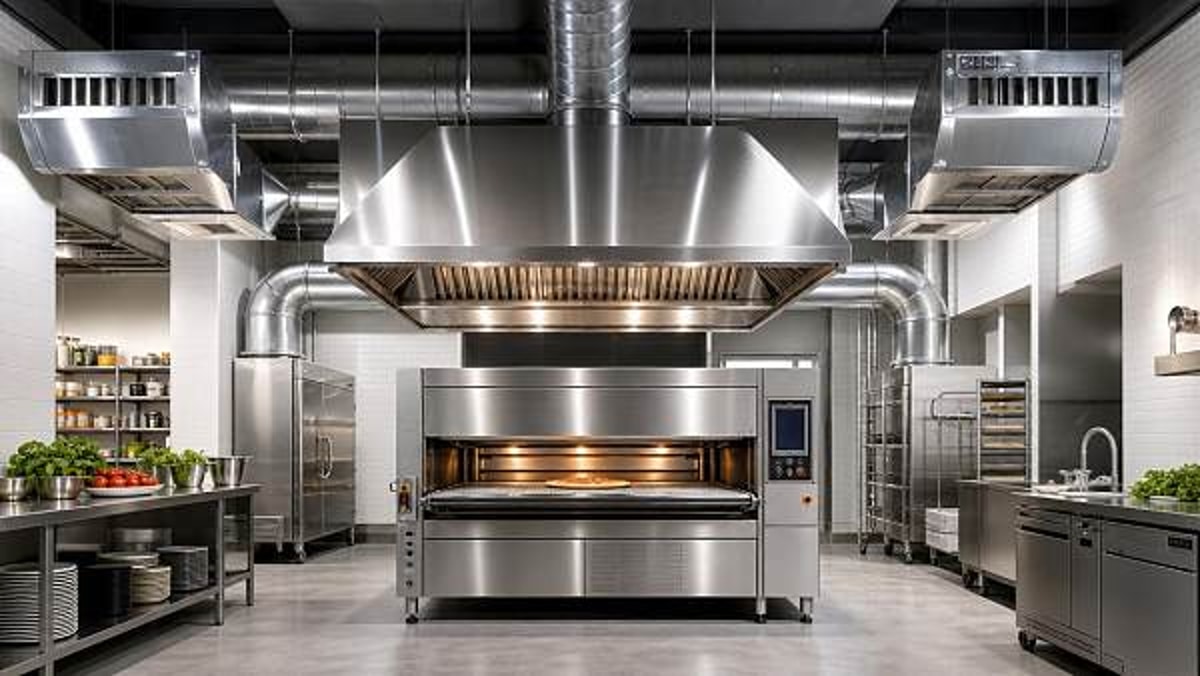
Choosing commercial pizza ovens is no longer just about baking speed or labor savings. For project managers and engineering leads, the real cost often appears in ventilation design, code compliance, and installation complexity. Understanding why labor-saving commercial pizza ovens may require more expensive venting helps teams balance kitchen efficiency, capital budgets, and long-term operational performance before finalizing equipment specifications.
A checklist-based approach is the fastest way to evaluate this issue because ventilation cost is rarely driven by a single specification. In real projects, labor-saving commercial pizza ovens may reduce headcount, shorten training time, and improve consistency, yet they can also increase exhaust volume, trigger larger hood requirements, demand make-up air upgrades, or introduce fire protection changes. For project managers, the right question is not simply “Which oven is most efficient?” but “Which oven creates the lowest total project burden once venting, utilities, approvals, and lifecycle performance are included?”
Start Here: The First Items to Confirm Before Comparing Commercial Pizza Ovens
Before reviewing brands, capacities, or automation features, confirm the items that most directly affect vent cost. This prevents teams from choosing a high-productivity unit that later causes redesign, delayed permit approval, or unexpected MEP scope expansion.
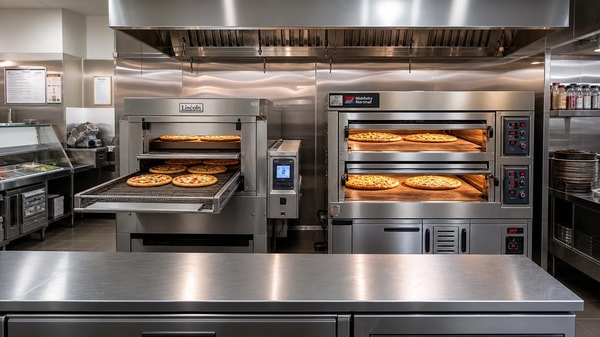
- Identify the oven category: deck, conveyor, impingement, rotating, or high-speed hybrid. Different heat-transfer methods produce different grease, smoke, heat, and exhaust profiles.
- Verify whether the model is truly ventless, conditionally ventless, or requires a Type I or Type II hood under local code.
- Confirm the menu mix, especially cheese load, fatty toppings, par-baked products, and throughput peaks. These factors influence grease-laden vapor and smoke generation.
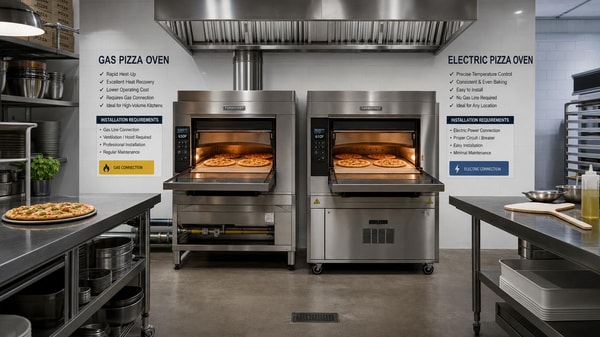
- Check fuel type and input rating. Gas-fired commercial pizza ovens often create more complex venting and combustion air considerations than electric alternatives.
- Review local authority requirements early. Manufacturer claims do not override local building, mechanical, fire, and health regulations.
- Assess ceiling height, roof path, shaft access, and distance to discharge. A “cheap oven” can become expensive if the duct run is difficult.
Why Labor-Saving Commercial Pizza Ovens Can Raise Ventilation Costs
The labor-saving value of modern commercial pizza ovens usually comes from automation, higher throughput, easier loading, programmable cooking profiles, and reduced operator judgment. However, these same features can increase venting cost in several practical ways.
1. Higher throughput means more exhaust demand
A conveyor or impingement unit can produce more pizzas per hour than a traditional oven with less manual effort. That sounds ideal for labor planning, but more output can also mean more heat release, more moisture, and more grease-laden effluent during peak service. The hood and duct system may need to be sized for the actual production intensity, not just the footprint of the appliance.
2. Faster recovery often means higher heat rejection
Commercial pizza ovens designed to recover quickly between orders often operate with stronger burners, airflow systems, or thermal mass strategies. Even when cooking results improve, the kitchen can experience a larger heat burden. This may increase both exhaust and conditioned make-up air requirements, which affects HVAC scope well beyond the hood itself.
3. Automated formats may trigger larger integrated systems
Some labor-saving layouts group pizza ovens with finishing stations, warmers, ingredient rails, or adjacent fry and prep equipment in a compact line. Once appliances are combined under a shared hood, the vent package can become more expensive than the oven comparison originally suggested.
4. “Ventless” claims may still carry conditions
Some ventless commercial pizza ovens depend on tested menu limitations, filter maintenance, air clearance rules, and specific room conditions. If the project changes the menu, throughput, or placement, local inspectors may require additional measures. A ventless path is only cost-saving when the full operational conditions remain valid after handover.
Core Checklist: How to Judge Vent Cost Before Final Specification
Use the following checklist to compare commercial pizza ovens from a total-project perspective rather than a purchase-price perspective.
Different Project Scenarios Require Different Checks
New build hospitality or foodservice projects
In a new build, commercial pizza ovens can often be integrated more efficiently because duct routing, roof curbs, and make-up air systems are planned from the start. Even so, teams should avoid overconfidence. High-capacity ovens may still enlarge fan sizes, curb dimensions, noise control measures, and energy demand. The checklist priority here is coordination between kitchen consultant, MEP engineer, architect, and fire protection specialist before equipment schedules are frozen.
Retrofit projects in existing kitchens
Retrofits are where vent cost escalates fastest. Existing shaft capacity, undersized make-up air, roof loading limits, and restricted working hours can turn a simple oven replacement into a major mechanical project. For retrofit sites, project managers should treat commercial pizza ovens as a building systems decision, not only a culinary equipment decision.
Mall, airport, campus, and mixed-use locations
These environments often impose stricter landlord or operator standards for odor control, discharge location, noise, and fire safety. A model that is straightforward in a standalone restaurant may become difficult in a shared commercial property. The best practice is to request landlord design criteria and base-building capacities before selecting among commercial pizza ovens.
Commonly Overlooked Cost Drivers
The biggest budgeting mistakes usually come from items excluded from the initial equipment quote. These should be flagged early in procurement reviews.
- Make-up air conditioning. Exhausting more air usually means replacing more air, and in hot or cold climates that replacement air must often be conditioned.
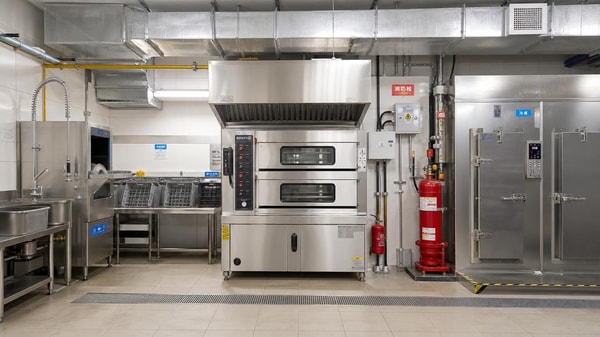
- Fire suppression integration. Some hood systems require suppression redesign, detection updates, or interlock coordination with gas shutoff and alarms.
- Roof and structural work. Fans, curbs, penetrations, and duct supports can add structural review and installation cost.
- Odor and emission treatment. Carbon filtration, pollution control units, or enhanced discharge requirements may be needed in dense urban or premium hospitality settings.
- Cleaning access and downtime. Labor-saving commercial pizza ovens lose value if grease management and duct cleaning are difficult or disruptive.
- Electrical coordination for automation. Touchscreen controls, conveyors, and sensors may simplify labor but still require upgraded circuits and controls integration.
A Practical Decision Standard for Project Managers
When comparing commercial pizza ovens, use a three-part decision standard. First, measure labor impact: how many staff hours, training demands, and operational inconsistencies can the oven remove? Second, measure vent impact: what new hood, duct, fan, make-up air, and compliance scope does the oven create? Third, measure project impact: what does the equipment do to schedule, approvals, and fit-out risk?
If a labor-saving oven reduces one operator during peak periods but forces a major ventilation upgrade, the return on investment may still be positive in a high-volume site, but weak in a low-volume or short-lease location. That is why the correct metric is not equipment price alone. It is total installed cost plus operational benefit over the lease or asset life.
Execution Checklist: What to Prepare Before Supplier Discussions
To get reliable proposals from manufacturers, dealers, or sourcing partners, prepare a concise technical brief. Without this, suppliers may recommend commercial pizza ovens that fit production targets but not building constraints.
- Target output per hour and expected peak order pattern
- Planned menu and topping profile
- Available gas and electrical capacities
- Existing hood type, if any, and current exhaust volumes
- Ceiling conditions, roof path, landlord restrictions, and discharge limits
- Local code authority or consultant comments already received
- Required opening date and construction phasing constraints
Risk Reminders Before You Lock the Specification
Do not assume that all commercial pizza ovens with similar dimensions have similar vent requirements. Do not accept “ventless” marketing language without certification details and local approval review. Do not separate kitchen equipment selection from MEP coordination. And do not wait until permit submission to verify whether a labor-saving oven changes hood type, suppression scope, or make-up air capacity.
For international sourcing and multi-site rollouts, these checks matter even more. Equivalent models can perform differently across jurisdictions, and a design that works in one country or municipality may require a different ventilation strategy elsewhere. This is where disciplined, data-backed sourcing support adds value: not only finding commercial pizza ovens that improve operations, but matching them to the realities of compliance, construction, and long-term asset performance.
FAQ for Faster Decision-Making
Are electric commercial pizza ovens always cheaper to vent?
Not always. Electric models may simplify combustion-related issues, but menu type, throughput, grease output, and local code can still require substantial ventilation.
Do labor-saving features justify higher vent cost?
Sometimes yes, especially in high-volume locations where staffing pressure is severe. The decision should be based on installed cost, labor savings, uptime, and expected sales throughput together.
What is the most common mistake in selecting commercial pizza ovens?
Treating the oven as a standalone purchase instead of a system decision involving ventilation, power, fire safety, cleaning access, and permit risk.
Next Step: Prioritize the Right Questions Before Buying
For project managers and engineering leads, the best procurement path is to compare commercial pizza ovens using a vent-and-installation checklist before evaluating headline productivity claims. Prioritize oven classification, code pathway, menu conditions, utility availability, and roof or duct constraints. Then request suppliers to clarify certified vent requirements, peak production assumptions, cleaning needs, and total installation impacts.
If your team needs to move forward, prepare site drawings, utility data, menu details, target throughput, and local approval constraints first. Those five inputs will do more to identify the right commercial pizza ovens than any brochure comparison. From there, discussions around technical fit, sourcing options, project timeline, budget alignment, OEM or ODM adaptation, and cross-market compliance become faster, more accurate, and far less risky.
Search News
Hot Articles
Popular Tags
Need ExpertConsultation?
Connect with our specialized leisureengineering team for procurementstrategies.
Recommended News
 May 03, 2026Commercial pizza ovens that save labor may cost more to ventCommercial pizza ovens can cut labor, but venting, code compliance, and installation may raise total costs. See the key checks before you buy.● Hospitality Sourcing Dir
 May 03, 2026Commercial juicers: cold press or centrifugal for daily serviceCommercial juicers: compare cold press and centrifugal models for daily service. Discover the best fit for speed, juice quality, yield, cleaning, and operating costs.● Hospitality Sourcing Dir
 May 03, 2026Commercial water boilers: recovery time matters more than listed capacityCommercial water boilers perform best when recovery time matches peak demand. Learn why faster reheating beats listed capacity for reliable, efficient commercial hot water service.● Hospitality Sourcing Dir
 May 03, 2026Cotton candy machines wholesale: small details that affect cleaning timeCotton candy machines wholesale guide: discover the small design details that cut cleaning time, reduce labor costs, and improve hygiene for busy commercial operations.● Hospitality Sourcing Dir
 May 03, 2026Dough sheeters wholesale: thickness control is where quality showsDough sheeters wholesale buyers: see why thickness control defines real quality, repeatability, and long-term value. Compare key evaluation points for smarter sourcing.● Hospitality Sourcing Dir
 May 03, 2026Slushy machines wholesale: what causes flavor crossover problemsSlushy machines wholesale buyers should understand what causes flavor crossover, from poor sealing to weak cleaning design, to protect drink quality and choose more reliable equipment.● Hospitality Sourcing Dir
 May 03, 2026Commercial bread slicers: slice consistency affects more than looksCommercial bread slicers do more than improve appearance—they boost portion control, reduce waste, and support faster service. Learn what drives slice consistency before you buy.● Hospitality Sourcing Dir
 May 03, 2026Wood fired pizza ovens need more space than most plans allowWood fired pizza ovens often require more space than expected. Learn how to avoid redesigns, protect workflow, and plan compliant, high-performance hospitality projects.● Hospitality Sourcing Dir
 May 03, 2026Commercial pizza ovens: gas or electric for steady outputCommercial pizza ovens: compare gas vs. electric for steady output, faster recovery, precise control, and smarter installation choices across real kitchen scenarios.● Hospitality Sourcing Dir
 May 03, 2026Commercial popcorn machines: kettle size vs serving rush realityCommercial popcorn machines should be chosen by real rush-hour output, not kettle size alone. Learn how to match serving peaks, staffing, and workflow for smarter buying.● Hospitality Sourcing Dir
 May 03, 2026Commercial insect killers: indoor placement changes results fastCommercial insect killers perform very differently based on indoor placement. Discover how small positioning changes can boost control, reduce pest activity, and improve operational results fast.● Hospitality Sourcing Dir
 May 03, 2026Hotel & Catering Equipment lists often hide installation costsHotel & Catering Equipment lists often hide installation costs. Learn where budgets slip, what to verify early, and how to compare total installed value before approval.● Hospitality Sourcing Dir
 May 03, 2026Bakery display cases: glass fogging, lighting, and product appealBakery display cases guide: compare anti-fog glass, lighting quality, and temperature stability to boost product appeal, hygiene, and sales with smarter sourcing decisions.● Hospitality Sourcing Dir
 May 03, 2026Commercial milkshake mixers: when motor power changes drink textureCommercial milkshake mixers directly shape texture, aeration, and consistency. Learn how motor power affects shake quality and choose the right mixer for your menu and volume.● Hospitality Sourcing Dir
 May 03, 2026Hot dog rollers that clean faster can cut downtime more than expectedHot dog rollers that clean faster can reduce downtime, improve sanitation, and save labor. Learn which features matter most before you buy for busy commercial service.● Hospitality Sourcing Dir
 May 03, 2026Conveyor pizza ovens or deck ovens for high-volume service?Conveyor pizza ovens vs deck ovens: discover which option delivers better throughput, consistency, labor efficiency, and site-fit for high-volume commercial pizza service.● Hospitality Sourcing Dir
 May 03, 2026Shawarma machines commercial buyers compare heat control firstShawarma machines commercial buyers compare heat control first. Learn how gas, electric, and multi-zone systems affect consistency, efficiency, safety, and sourcing decisions.● Hospitality Sourcing Dir
 May 02, 2026Stainless steel GN pans with reinforced corners last longer in busy kitchensStainless steel GN pans with reinforced corners help busy kitchens reduce warping, improve hygiene, and cut replacement costs. See why buyers choose longer-lasting performance.● Hospitality Sourcing Dir
 May 02, 2026Commercial induction cookers: power ratings that mislead first-time buyersCommercial induction cookers are not as simple as wattage labels suggest. Learn how to compare real performance, efficiency, pan fit, and reliability before you buy.● Hospitality Sourcing Dir
 May 02, 2026Beverage dispensers wholesale: what causes dripping after heavy useBeverage dispensers wholesale guide: learn what causes dripping after heavy use, how to spot seal, valve, and pressure issues, and choose durable suppliers with confidence.● Hospitality Sourcing Dir
 May 02, 2026Disposable wooden cutlery and the taste issue customers noticeDisposable wooden cutlery can affect taste, texture, and customer perception. Learn what causes woody aftertaste, how to test suppliers, and how to choose better options.● Hospitality Sourcing Dir
 May 02, 2026Sushi display cases: curved glass looks better, but is it practical?Sushi display cases with curved glass look premium, but are they practical? Compare visibility, cleaning, temperature control, and ROI before you buy.● Hospitality Sourcing Dir
 May 02, 2026Vacuum sealing machines food businesses can scale withVacuum sealing machines food businesses can scale with improve shelf life, workflow, and cost control. Explore reliable, compliant solutions for growing food operations.● Hospitality Sourcing Dir
 May 02, 2026Chafing fuel gel bulk: storage and burn-time issues to check firstChafing fuel gel bulk buyers should check storage stability, seal integrity, and real burn-time performance first. Reduce waste, avoid service disruption, and source with more confidence.● Hospitality Sourcing Dir