Dough sheeters wholesale: thickness control is where quality shows
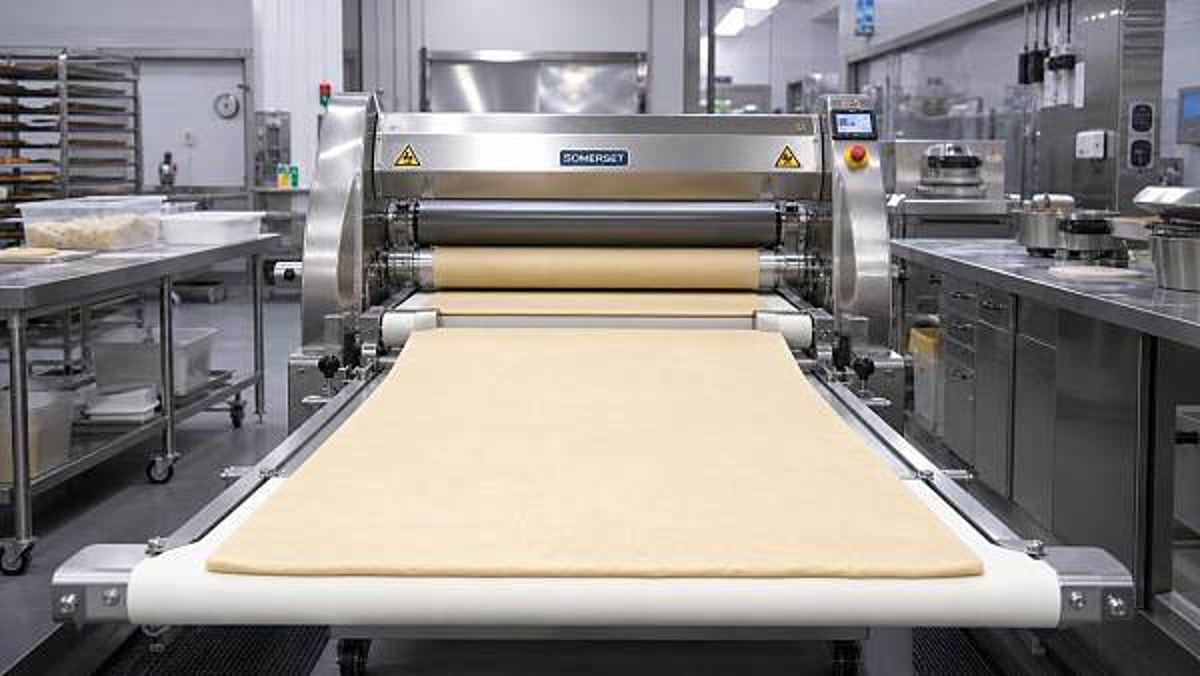
In dough sheeters wholesale, thickness control is the clearest marker of product quality, process stability, and end-use consistency. For technical evaluators, the real comparison starts beyond frame size or output claims: it lies in calibration precision, roller tolerance, repeatability, and control responsiveness. This article examines how thickness performance reveals manufacturing standards and helps buyers assess long-term commercial value with greater confidence.
Why application differences matter before comparing dough sheeters wholesale offers
Technical assessment of dough sheeters wholesale equipment often fails when buyers compare machines as if all dough processes were identical. In reality, a pastry commissary, an in-store bakery, a hotel kitchen, and an industrial frozen dough line place very different demands on thickness stability. A machine that performs well in one environment may create waste, operator frustration, or inconsistent sheet quality in another.
This is why thickness control should be reviewed in context. The same nominal reduction range can produce very different outcomes depending on dough hydration, fat content, batch size, ambient temperature, production rhythm, and operator skill. For wholesale buyers, especially those sourcing across borders through a B2B platform such as Global Commercial Trade, the better question is not only “What is the minimum thickness?” but “How reliably does the machine hold the target thickness in my actual use case?”
For technical evaluators, scenario-based review also improves communication with procurement, operations, and maintenance teams. Thickness control affects yield, lamination quality, final product texture, training time, cleaning intervals, and spare-parts planning. In other words, it is not just a machine specification; it is a cross-functional quality signal.
Where dough sheeters wholesale decisions usually appear in real business scenarios
The keyword dough sheeters wholesale covers a wide sourcing spectrum. Buyers may be replacing aging assets, building a central kitchen, upgrading manual processes, or preparing for retail expansion. Each scenario changes what “good thickness control” means in practice.
Scenario 1: Hotel and catering pastry production
Luxury hotels and premium catering teams usually need versatility more than maximum throughput. Their dough sheeters must handle croissant dough, tart bases, puff pastry, and specialty items with quick adjustment between recipes. Here, thickness repeatability at low to medium volumes matters more than headline output. Evaluators should focus on fine adjustment accuracy, smooth roller movement, easy sanitation, and low operator dependency.
Scenario 2: Retail bakery chains and supermarket commissaries
Chain environments care about product consistency across locations. If one store sheeter produces uneven laminated dough while another produces balanced layers, standardization suffers. In dough sheeters wholesale sourcing for this segment, thickness control must support repeatable SOPs, quick staff training, and low adjustment drift across shifts. Digital readouts, indexed settings, and simple recalibration routines become highly valuable.
Scenario 3: Industrial or semi-industrial frozen dough production
In larger-scale operations, thickness variation compounds into measurable cost. It affects baking performance, freezing behavior, packaging fit, and finished product weight. Technical buyers in this scenario should examine roller parallelism, load stability, motor consistency, and integration compatibility with upstream mixers and downstream cutters. A small deviation repeated over thousands of cycles can become a major quality and yield issue.
Scenario 4: Artisan bakeries scaling up from manual methods
Smaller operators moving into semi-automated production often prioritize ease of use and product feel. They may not need the most advanced control system, but they do need a machine that preserves dough structure while giving predictable thickness reduction. In this use case, the risk is buying a machine with industrial features that operators do not use, while overlooking practical items such as ergonomic feeding, belt tracking, and cleanup access.
A practical comparison table for thickness control by application
The table below helps technical evaluators compare dough sheeters wholesale options based on operating context rather than generic catalog claims.
How thickness control reveals manufacturing quality
For technical evaluators reviewing dough sheeters wholesale suppliers, thickness control is a practical proxy for broader manufacturing quality. It exposes whether the builder has invested in precision machining, assembly discipline, stable drive systems, and credible quality inspection.
First, roller parallelism is fundamental. If rollers are not consistently aligned across the full working width, one side of the dough sheet will compress differently from the other. This leads to visual inconsistency, uneven lamination, and variable bake results. A supplier that cannot explain roller alignment tolerances or verification methods should be treated cautiously.
Second, the responsiveness of the adjustment mechanism matters. Mechanical backlash, weak locking systems, or unstable servo response can produce drift after setting changes. In commercial kitchens and bakery plants, such drift is often mistaken for operator error when it is actually a design or build issue.
Third, repeatability across cycles is more important than isolated test results. A supplier may demonstrate one successful pass at target thickness, but technical buyers should ask for repeated runs under realistic dough conditions. Reliable dough sheeters wholesale programs should include evidence of consistency, not only capability.
Finally, good thickness control often correlates with better maintenance planning. Machines built with stable bearings, durable belts, clear adjustment references, and accessible service points tend to hold calibration longer. That translates into lower downtime and fewer surprise quality deviations.
What different technical evaluators should prioritize
Not every evaluator measures value in the same way. In dough sheeters wholesale projects, aligning evaluation criteria with stakeholder priorities improves selection quality.
For process engineers
Focus on repeatability, calibration method, throughput stability, and compatibility with process flow. Request tolerance data, sample testing standards, and failure-mode explanations. If the machine will support laminated dough products, verify whether thickness reduction remains stable across multiple passes rather than only at the final setting.
For quality teams
Look at variation control, finished product consistency, and inspection traceability. Ask how the supplier validates roller gap accuracy and whether there are documented test procedures before shipment. The most useful suppliers can connect machine control to practical quality outcomes, not just to mechanical specifications.
For maintenance managers
Assess how easily the machine retains thickness accuracy over time. Review wear points, lubrication access, belt tensioning, spare-parts availability, and remote support capability. A sheeter that performs well when new but requires frequent recalibration can become costly in distributed operations.
For procurement and sourcing teams
Do not reduce comparison to price, frame size, or output per hour. In dough sheeters wholesale sourcing, the lower-cost option may create hidden losses through scrap, inconsistency, excess labor, or service delays. Supplier credibility, documentation quality, OEM/ODM capability, and after-sales structure are central to technical value.
Scenario-based selection advice: when to choose simple, advanced, or customized solutions
A simple mechanical model may be the right choice when product range is narrow, production volume is modest, and skilled staff are stable. In this scenario, a durable build and dependable roller setting can outperform a feature-heavy machine that complicates operation.
An advanced model with digital thickness control makes sense when multiple operators, frequent recipe changes, or multi-site standardization are involved. It is particularly suitable for bakery chains, smart campuses, and hospitality groups seeking repeatable production outcomes with less operator interpretation.
Customized dough sheeters wholesale programs become relevant when product geometry, integration needs, or hygiene requirements differ from standard commercial patterns. Examples include central factories producing branded premium pastry lines, export-focused frozen dough suppliers, or institutional kitchens with unusual space constraints. Here, buyers should confirm whether customization affects calibration reliability, service lead time, and spare-parts continuity.
Common misjudgments in dough sheeters wholesale evaluation
One common mistake is treating minimum thickness as the top quality indicator. In many applications, stable mid-range settings are more important than an extreme minimum that is rarely used. Another mistake is assuming control precision on the interface guarantees actual sheet precision. Displays can be exact even when the mechanical system is not.
A third misjudgment is testing only one dough type. A machine that handles standard dough well may struggle with butter-rich, high-hydration, or temperature-sensitive formulations. Technical evaluators should test representative recipes or at least demand performance evidence in similar use cases.
Buyers also frequently underestimate operator reality. If production relies on mixed-skill teams, the machine must support predictable results with limited adjustment complexity. In application terms, a slightly less sophisticated sheeter with clearer controls may deliver better business value than a more advanced machine that depends on expert handling.
Key questions to ask suppliers before shortlisting
To make dough sheeters wholesale comparison more objective, technical evaluators should request direct answers to a few scenario-linked questions.
- What is the verified tolerance range at commonly used production thicknesses, not only at extremes?
- How is roller gap calibrated, and how often is recalibration typically required?
- Can the supplier provide application references for hotel kitchens, commissaries, or frozen dough lines similar to ours?
- What data or test records are available to demonstrate repeatability over multiple runs?
- How do ambient temperature, dough type, and operator changeovers affect thickness performance?
- What spare parts and technical support are available in our target market?
FAQ for technical evaluators reviewing dough sheeters wholesale
Is digital thickness display always better?
Not always. It is better only when the displayed value corresponds to real and stable roller positioning. Technical evaluators should verify calibration logic and repeatability, not interface sophistication alone.
Which scenario benefits most from high repeatability?
Bakery chains, frozen dough producers, and multi-shift commercial operations gain the most because small inconsistencies multiply across volume, locations, and staff changes.
When should buyers request customized dough sheeters wholesale solutions?
Customization is justified when standard machines cannot meet product format, hygiene, automation, or layout requirements. However, custom design should still be judged by thickness stability, not by novelty alone.
Final assessment: match thickness control to your operating scene
The best dough sheeters wholesale decision is rarely the machine with the largest body, the fastest brochure speed, or the lowest quoted price. It is the machine whose thickness control remains accurate, repeatable, and manageable within your actual production environment. For technical evaluators, that means judging performance through scenario fit: recipe diversity, operator profile, volume pattern, quality standard, and maintenance reality.
If your organization is comparing multiple suppliers, build the shortlist around use-case evidence first. Ask for application-specific validation, thickness consistency data, and practical support commitments. When sourcing through a professional B2B intelligence and trade platform, this approach helps transform product comparison into a more strategic decision about process control, quality assurance, and long-term commercial reliability.
For teams preparing the next step, the most effective action is to map your own production scene before requesting quotations: define target dough types, working thickness ranges, operator skill levels, sanitation demands, and expected daily cycles. Once those conditions are clear, dough sheeters wholesale evaluation becomes faster, more objective, and far more likely to deliver lasting value.
Search News
Hot Articles
Popular Tags
Need ExpertConsultation?
Connect with our specialized leisureengineering team for procurementstrategies.
Recommended News
 May 03, 2026Commercial pizza ovens that save labor may cost more to ventCommercial pizza ovens can cut labor, but venting, code compliance, and installation may raise total costs. See the key checks before you buy.● Hospitality Sourcing Dir
 May 03, 2026Commercial juicers: cold press or centrifugal for daily serviceCommercial juicers: compare cold press and centrifugal models for daily service. Discover the best fit for speed, juice quality, yield, cleaning, and operating costs.● Hospitality Sourcing Dir
 May 03, 2026Commercial water boilers: recovery time matters more than listed capacityCommercial water boilers perform best when recovery time matches peak demand. Learn why faster reheating beats listed capacity for reliable, efficient commercial hot water service.● Hospitality Sourcing Dir
 May 03, 2026Cotton candy machines wholesale: small details that affect cleaning timeCotton candy machines wholesale guide: discover the small design details that cut cleaning time, reduce labor costs, and improve hygiene for busy commercial operations.● Hospitality Sourcing Dir
 May 03, 2026Dough sheeters wholesale: thickness control is where quality showsDough sheeters wholesale buyers: see why thickness control defines real quality, repeatability, and long-term value. Compare key evaluation points for smarter sourcing.● Hospitality Sourcing Dir
 May 03, 2026Slushy machines wholesale: what causes flavor crossover problemsSlushy machines wholesale buyers should understand what causes flavor crossover, from poor sealing to weak cleaning design, to protect drink quality and choose more reliable equipment.● Hospitality Sourcing Dir
 May 03, 2026Commercial bread slicers: slice consistency affects more than looksCommercial bread slicers do more than improve appearance—they boost portion control, reduce waste, and support faster service. Learn what drives slice consistency before you buy.● Hospitality Sourcing Dir
 May 03, 2026Wood fired pizza ovens need more space than most plans allowWood fired pizza ovens often require more space than expected. Learn how to avoid redesigns, protect workflow, and plan compliant, high-performance hospitality projects.● Hospitality Sourcing Dir
 May 03, 2026Commercial pizza ovens: gas or electric for steady outputCommercial pizza ovens: compare gas vs. electric for steady output, faster recovery, precise control, and smarter installation choices across real kitchen scenarios.● Hospitality Sourcing Dir
 May 03, 2026Commercial popcorn machines: kettle size vs serving rush realityCommercial popcorn machines should be chosen by real rush-hour output, not kettle size alone. Learn how to match serving peaks, staffing, and workflow for smarter buying.● Hospitality Sourcing Dir
 May 03, 2026Commercial insect killers: indoor placement changes results fastCommercial insect killers perform very differently based on indoor placement. Discover how small positioning changes can boost control, reduce pest activity, and improve operational results fast.● Hospitality Sourcing Dir
 May 03, 2026Hotel & Catering Equipment lists often hide installation costsHotel & Catering Equipment lists often hide installation costs. Learn where budgets slip, what to verify early, and how to compare total installed value before approval.● Hospitality Sourcing Dir
 May 03, 2026Bakery display cases: glass fogging, lighting, and product appealBakery display cases guide: compare anti-fog glass, lighting quality, and temperature stability to boost product appeal, hygiene, and sales with smarter sourcing decisions.● Hospitality Sourcing Dir
 May 03, 2026Commercial milkshake mixers: when motor power changes drink textureCommercial milkshake mixers directly shape texture, aeration, and consistency. Learn how motor power affects shake quality and choose the right mixer for your menu and volume.● Hospitality Sourcing Dir
 May 03, 2026Hot dog rollers that clean faster can cut downtime more than expectedHot dog rollers that clean faster can reduce downtime, improve sanitation, and save labor. Learn which features matter most before you buy for busy commercial service.● Hospitality Sourcing Dir
 May 03, 2026Conveyor pizza ovens or deck ovens for high-volume service?Conveyor pizza ovens vs deck ovens: discover which option delivers better throughput, consistency, labor efficiency, and site-fit for high-volume commercial pizza service.● Hospitality Sourcing Dir
 May 03, 2026Shawarma machines commercial buyers compare heat control firstShawarma machines commercial buyers compare heat control first. Learn how gas, electric, and multi-zone systems affect consistency, efficiency, safety, and sourcing decisions.● Hospitality Sourcing Dir
 May 02, 2026Stainless steel GN pans with reinforced corners last longer in busy kitchensStainless steel GN pans with reinforced corners help busy kitchens reduce warping, improve hygiene, and cut replacement costs. See why buyers choose longer-lasting performance.● Hospitality Sourcing Dir
 May 02, 2026Commercial induction cookers: power ratings that mislead first-time buyersCommercial induction cookers are not as simple as wattage labels suggest. Learn how to compare real performance, efficiency, pan fit, and reliability before you buy.● Hospitality Sourcing Dir
 May 02, 2026Beverage dispensers wholesale: what causes dripping after heavy useBeverage dispensers wholesale guide: learn what causes dripping after heavy use, how to spot seal, valve, and pressure issues, and choose durable suppliers with confidence.● Hospitality Sourcing Dir
 May 02, 2026Disposable wooden cutlery and the taste issue customers noticeDisposable wooden cutlery can affect taste, texture, and customer perception. Learn what causes woody aftertaste, how to test suppliers, and how to choose better options.● Hospitality Sourcing Dir
 May 02, 2026Sushi display cases: curved glass looks better, but is it practical?Sushi display cases with curved glass look premium, but are they practical? Compare visibility, cleaning, temperature control, and ROI before you buy.● Hospitality Sourcing Dir
 May 02, 2026Vacuum sealing machines food businesses can scale withVacuum sealing machines food businesses can scale with improve shelf life, workflow, and cost control. Explore reliable, compliant solutions for growing food operations.● Hospitality Sourcing Dir
 May 02, 2026Chafing fuel gel bulk: storage and burn-time issues to check firstChafing fuel gel bulk buyers should check storage stability, seal integrity, and real burn-time performance first. Reduce waste, avoid service disruption, and source with more confidence.● Hospitality Sourcing Dir