Hotel & Catering Equipment lists often hide installation costs
Hotel & Catering Equipment lists can look straightforward at first glance, but hidden installation costs often turn well-planned budgets into project risks. For project managers and engineering leads, understanding what is included, excluded, and likely to surface later is essential to keeping timelines, compliance, and total procurement costs under control.
Why hidden installation costs are becoming a bigger issue in Hotel & Catering Equipment projects
A notable shift is taking place across commercial hospitality fit-outs: procurement teams are no longer evaluating Hotel & Catering Equipment only by unit price, brand, or lead time. They are increasingly forced to assess the full installed cost. This change is driven by tighter project financing, more complex compliance requirements, accelerated opening schedules, and the growing overlap between kitchen equipment, MEP systems, digital controls, and sustainability targets.
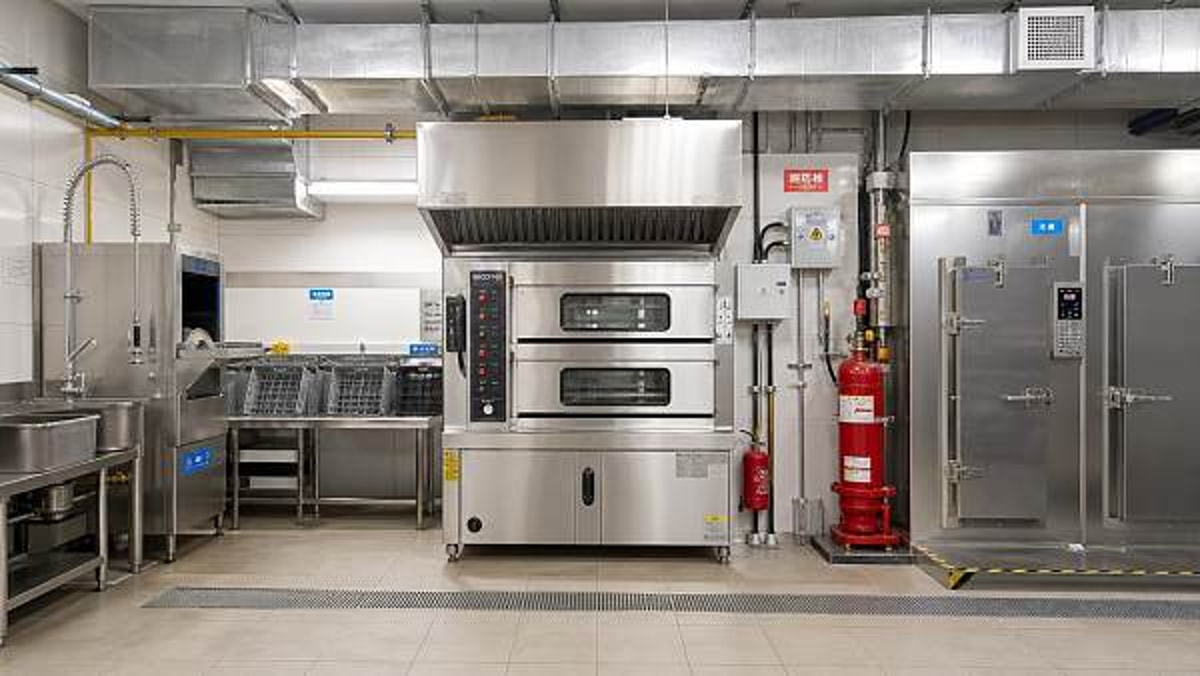
In the past, many buyers accepted equipment schedules as mostly product-based documents. Today, however, the installation layer is often where budget instability appears. A combi oven may require upgraded power supply, a dishwashing line may trigger drainage modification, a cold room may need reinforced flooring, and a ventilation-heavy cooking line may affect fire suppression, duct routing, and commissioning. None of these are unusual, but many are omitted, vaguely described, or split across vendors in ways that make cost ownership unclear.
For project managers and engineering leads, the trend matters because hidden costs are no longer isolated incidents. They are becoming a recurring pattern in hotel openings, restaurant refurbishments, resort expansions, institutional kitchens, and mixed-use hospitality developments. In other words, Hotel & Catering Equipment procurement has become less about buying items and more about coordinating interfaces.
The strongest market signals behind this change
Several signals explain why installation-related surprises are showing up more often in Hotel & Catering Equipment lists. First, equipment itself is more advanced. Smart controls, energy monitoring modules, water-saving systems, remote diagnostics, and integrated safety features improve operations, but they also expand installation scope. Second, hospitality developers are under pressure to optimize back-of-house efficiency in smaller footprints, which increases the need for customized layouts, nonstandard routing, and tighter tolerances on site.
Third, international sourcing has become more common. While this can improve price competitiveness and expand sourcing options, it can also widen the gap between product specifications and local installation realities. Voltage differences, certification gaps, connection standards, packing assumptions, and local authority requirements can all produce extra work after delivery. Finally, more stakeholders are now involved in equipment decisions, including operators, consultants, designers, FM teams, and compliance reviewers. This creates better oversight in theory, but in practice it can fragment responsibility unless the project team actively maps every interface.
Where Hotel & Catering Equipment lists most often hide cost exposure
The most common issue is not deliberate concealment. It is incomplete scope definition. Equipment lists may identify model numbers and quantities accurately while failing to specify who is responsible for unloading, final positioning, utility connection, builder’s work, startup, testing, staff training, and authority sign-off support. This creates a gap between “equipment supplied” and “equipment operational.”
For Hotel & Catering Equipment, hidden installation costs often appear in seven areas: site readiness, MEP upgrades, ventilation and extraction coordination, civil modifications, specialist labor, commissioning, and post-install adjustments. A freezer may fit the room on paper but still require door-frame alteration. A cooking line may be supplied complete but still need balancing with the exhaust canopy and fire system. A bar installation may appear simple until drainage slopes and ice machine ventilation create redesign needs.
Another rising area of exposure is software and controls activation. As kitchens and service environments become more connected, setup may involve firmware checks, network access, dashboard configuration, and operator permissions. These tasks can be billed separately or assigned ambiguously between manufacturer, distributor, installer, and in-house IT support.
Common exclusions that deserve early review
Project teams should review whether the Hotel & Catering Equipment quote includes delivery to final point of use, lifting equipment, removal of packaging, anchoring, anti-vibration measures, grease management accessories, local code adaptation, testing under load, calibration, and operator handover documentation. If any of these are outside supplier scope, they should be costed elsewhere before budget approval, not after equipment lands on site.
Who feels the impact most across the project chain
The impact of hidden installation costs is uneven, but it is especially significant for project managers, engineering leads, procurement heads, and operators preparing for opening. Each group sees the issue from a different angle. Procurement may believe savings were achieved at tender stage, while engineering absorbs the cost of adaptation. Operators may inherit delayed handover, incomplete training, or systems that technically function but do not perform well under service conditions.
Why the problem is intensifying in multi-vendor and global sourcing models
As sourcing becomes more global, Hotel & Catering Equipment buyers often benefit from broader product access and competitive pricing. Yet this also increases the number of handoff points. One company may manufacture the item, another may export it, a regional distributor may handle warranty, and a local subcontractor may install it. Every additional party can create uncertainty around responsibility for final fit, accessories, code compliance, or startup.
This matters especially in hospitality projects where opening dates are commercially sensitive. Delays in one foodservice zone can affect training, trial service, revenue planning, and even brand launch campaigns. A low purchase price loses its value quickly if installation ambiguity leads to field modifications, emergency subcontracting, or failed inspection. For that reason, total cost transparency is becoming a stronger buying criterion than nominal equipment price alone.
This is also where B2B intelligence and sourcing platforms add value. Buyers increasingly need more than product catalogs. They need verified capability information, specification discipline, and clearer visibility into what suppliers can support beyond shipment. In the Hotel & Catering Equipment sector, mature sourcing now depends on how well the commercial offer aligns with real project execution.
How project teams should adjust their evaluation framework
The most effective response is to shift from item-based comparison to installed-outcome comparison. Instead of asking only, “Which supplier offers the best equipment price?” teams should ask, “Which offer gives the clearest path to compliant, on-time, fully operational delivery?” This changes tender behavior. It pushes bidders to define assumptions, identify exclusions, and confirm interface responsibilities before award.
For Hotel & Catering Equipment packages, a stronger framework usually includes utility schedules, installation matrices, access reviews, startup ownership, training obligations, spare parts visibility, and warranty activation conditions. It also helps to separate unavoidable site-dependent costs from avoidable scope ambiguity. Not every change order is a procurement failure, but vague documentation often is.
Signals worth monitoring over the next planning cycle
Looking ahead, several signals deserve close attention. One is the growing demand for pre-engineered installation packages, where suppliers provide clearer connection data, accessory bundles, and startup support. Another is stronger buyer interest in local technical support, even when equipment is sourced internationally. A third signal is the gradual shift toward more measurable procurement accountability, with teams tracking not only purchase savings but also variation cost, commissioning success, and time to operational readiness.
There is also a wider governance trend at play. Owners and developers increasingly want procurement decisions to be evidence-based and lifecycle-aware. In that environment, Hotel & Catering Equipment decisions that ignore installation complexity may face more internal challenge. This does not mean buyers should avoid global sourcing or innovative equipment. It means they should evaluate offers with stronger execution discipline.
Practical judgment questions before approving any Hotel & Catering Equipment list
Before signing off, project leaders should confirm five things. First, does the listed price reflect supply only, or supply plus positioning, connection, testing, and handover? Second, are utility loads and connection points validated against actual site conditions? Third, which party owns interface coordination with ventilation, drainage, electrical, gas, fire protection, and controls? Fourth, are compliance approvals and commissioning deliverables clearly allocated? Fifth, what costs will appear if installation cannot proceed exactly as assumed?
These questions are increasingly central because Hotel & Catering Equipment procurement is now a cross-functional decision, not an isolated purchasing event. The more complex the project, the more valuable early clarity becomes.
A smarter sourcing direction for project-driven buyers
The broader direction of the market is clear: equipment lists that look competitive on paper but hide installation exposure are losing credibility. Buyers, especially project managers and engineering leaders, are moving toward sourcing models that combine product quality with execution transparency. In this environment, the strongest Hotel & Catering Equipment suppliers are not only those with attractive catalogs, but those able to support realistic planning, verified specifications, and clearer scope ownership.
If your organization wants to judge how this trend affects current or upcoming projects, focus first on three checkpoints: where scope boundaries remain vague, where technical interfaces are still unverified, and where supplier support after delivery is assumed rather than documented. Those answers will usually reveal whether an equipment list is truly cost-effective or simply incomplete.
Search News
Hot Articles
Popular Tags
Need ExpertConsultation?
Connect with our specialized leisureengineering team for procurementstrategies.
Recommended News
 May 03, 2026Commercial pizza ovens that save labor may cost more to ventCommercial pizza ovens can cut labor, but venting, code compliance, and installation may raise total costs. See the key checks before you buy.● Hospitality Sourcing Dir
 May 03, 2026Commercial juicers: cold press or centrifugal for daily serviceCommercial juicers: compare cold press and centrifugal models for daily service. Discover the best fit for speed, juice quality, yield, cleaning, and operating costs.● Hospitality Sourcing Dir
 May 03, 2026Commercial water boilers: recovery time matters more than listed capacityCommercial water boilers perform best when recovery time matches peak demand. Learn why faster reheating beats listed capacity for reliable, efficient commercial hot water service.● Hospitality Sourcing Dir
 May 03, 2026Cotton candy machines wholesale: small details that affect cleaning timeCotton candy machines wholesale guide: discover the small design details that cut cleaning time, reduce labor costs, and improve hygiene for busy commercial operations.● Hospitality Sourcing Dir
 May 03, 2026Dough sheeters wholesale: thickness control is where quality showsDough sheeters wholesale buyers: see why thickness control defines real quality, repeatability, and long-term value. Compare key evaluation points for smarter sourcing.● Hospitality Sourcing Dir
 May 03, 2026Slushy machines wholesale: what causes flavor crossover problemsSlushy machines wholesale buyers should understand what causes flavor crossover, from poor sealing to weak cleaning design, to protect drink quality and choose more reliable equipment.● Hospitality Sourcing Dir
 May 03, 2026Commercial bread slicers: slice consistency affects more than looksCommercial bread slicers do more than improve appearance—they boost portion control, reduce waste, and support faster service. Learn what drives slice consistency before you buy.● Hospitality Sourcing Dir
 May 03, 2026Wood fired pizza ovens need more space than most plans allowWood fired pizza ovens often require more space than expected. Learn how to avoid redesigns, protect workflow, and plan compliant, high-performance hospitality projects.● Hospitality Sourcing Dir
 May 03, 2026Commercial pizza ovens: gas or electric for steady outputCommercial pizza ovens: compare gas vs. electric for steady output, faster recovery, precise control, and smarter installation choices across real kitchen scenarios.● Hospitality Sourcing Dir
 May 03, 2026Commercial popcorn machines: kettle size vs serving rush realityCommercial popcorn machines should be chosen by real rush-hour output, not kettle size alone. Learn how to match serving peaks, staffing, and workflow for smarter buying.● Hospitality Sourcing Dir
 May 03, 2026Commercial insect killers: indoor placement changes results fastCommercial insect killers perform very differently based on indoor placement. Discover how small positioning changes can boost control, reduce pest activity, and improve operational results fast.● Hospitality Sourcing Dir
 May 03, 2026Hotel & Catering Equipment lists often hide installation costsHotel & Catering Equipment lists often hide installation costs. Learn where budgets slip, what to verify early, and how to compare total installed value before approval.● Hospitality Sourcing Dir
 May 03, 2026Bakery display cases: glass fogging, lighting, and product appealBakery display cases guide: compare anti-fog glass, lighting quality, and temperature stability to boost product appeal, hygiene, and sales with smarter sourcing decisions.● Hospitality Sourcing Dir
 May 03, 2026Commercial milkshake mixers: when motor power changes drink textureCommercial milkshake mixers directly shape texture, aeration, and consistency. Learn how motor power affects shake quality and choose the right mixer for your menu and volume.● Hospitality Sourcing Dir
 May 03, 2026Hot dog rollers that clean faster can cut downtime more than expectedHot dog rollers that clean faster can reduce downtime, improve sanitation, and save labor. Learn which features matter most before you buy for busy commercial service.● Hospitality Sourcing Dir
 May 03, 2026Conveyor pizza ovens or deck ovens for high-volume service?Conveyor pizza ovens vs deck ovens: discover which option delivers better throughput, consistency, labor efficiency, and site-fit for high-volume commercial pizza service.● Hospitality Sourcing Dir
 May 03, 2026Shawarma machines commercial buyers compare heat control firstShawarma machines commercial buyers compare heat control first. Learn how gas, electric, and multi-zone systems affect consistency, efficiency, safety, and sourcing decisions.● Hospitality Sourcing Dir
 May 02, 2026Stainless steel GN pans with reinforced corners last longer in busy kitchensStainless steel GN pans with reinforced corners help busy kitchens reduce warping, improve hygiene, and cut replacement costs. See why buyers choose longer-lasting performance.● Hospitality Sourcing Dir
 May 02, 2026Commercial induction cookers: power ratings that mislead first-time buyersCommercial induction cookers are not as simple as wattage labels suggest. Learn how to compare real performance, efficiency, pan fit, and reliability before you buy.● Hospitality Sourcing Dir
 May 02, 2026Beverage dispensers wholesale: what causes dripping after heavy useBeverage dispensers wholesale guide: learn what causes dripping after heavy use, how to spot seal, valve, and pressure issues, and choose durable suppliers with confidence.● Hospitality Sourcing Dir
 May 02, 2026Disposable wooden cutlery and the taste issue customers noticeDisposable wooden cutlery can affect taste, texture, and customer perception. Learn what causes woody aftertaste, how to test suppliers, and how to choose better options.● Hospitality Sourcing Dir
 May 02, 2026Sushi display cases: curved glass looks better, but is it practical?Sushi display cases with curved glass look premium, but are they practical? Compare visibility, cleaning, temperature control, and ROI before you buy.● Hospitality Sourcing Dir
 May 02, 2026Vacuum sealing machines food businesses can scale withVacuum sealing machines food businesses can scale with improve shelf life, workflow, and cost control. Explore reliable, compliant solutions for growing food operations.● Hospitality Sourcing Dir
 May 02, 2026Chafing fuel gel bulk: storage and burn-time issues to check firstChafing fuel gel bulk buyers should check storage stability, seal integrity, and real burn-time performance first. Reduce waste, avoid service disruption, and source with more confidence.● Hospitality Sourcing Dir