Wood fired pizza ovens need more space than most plans allow
Wood fired pizza ovens often demand far more room than early layouts account for, creating serious challenges for project managers balancing performance, compliance, ventilation, and workflow. In commercial builds, underestimating clearances, service access, and structural support can trigger costly redesigns. Understanding how wood fired pizza ovens affect space planning is essential to keeping hospitality projects on schedule, on budget, and operationally efficient.
Why space planning changes dramatically from one project scenario to another
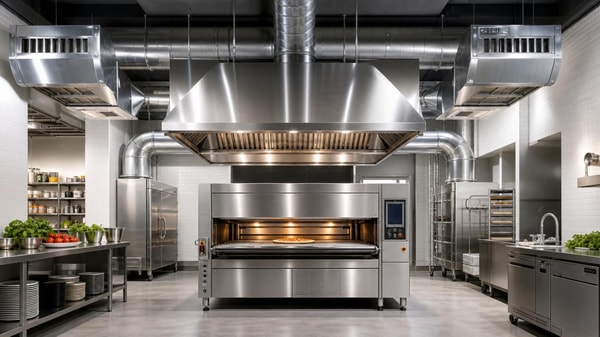
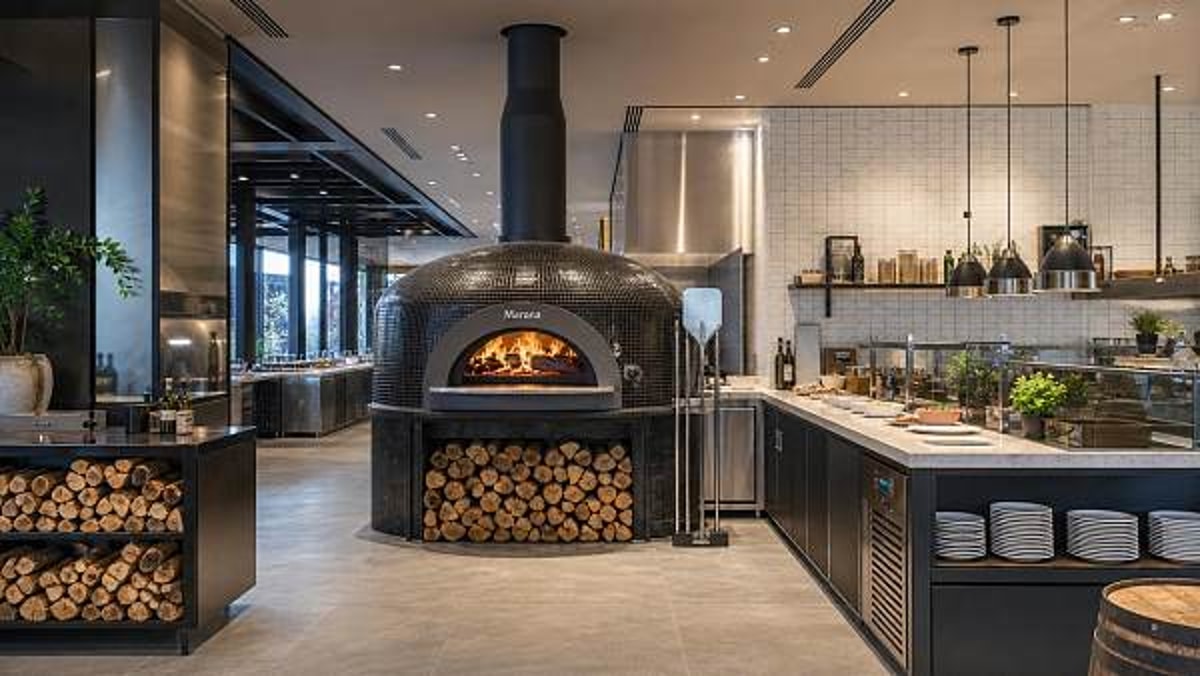
For project managers, the main issue is rarely the oven alone. The true challenge is how wood fired pizza ovens reshape the surrounding commercial environment. A compact restaurant in a dense city center faces different constraints than a resort terrace, a food hall stall, or a mixed-use hospitality venue. In each case, the oven footprint is only the starting point. The real space demand comes from insulation thickness, fire-rated separation, chimney routing, fuel storage, operator circulation, prep zones, ash handling, and maintenance access.
This is why many standard kitchen plans fail. Generic layouts often allocate space based on appliance dimensions rather than operational envelope. A wood fired pizza oven may appear manageable on paper, but once teams add landing counters, combustion air, exhaust systems, loading clearances, safety setbacks, and customer viewing zones, the installation can occupy significantly more area than expected. In commercial projects, that gap can affect MEP coordination, structural loads, front-of-house design, and permitting timelines.
For B2B buyers and developers, the question is not simply whether wood fired pizza ovens fit. The better question is: in which operating scenario do they create value without compromising throughput, code compliance, staff safety, and guest experience?
Typical application scenarios where wood fired pizza ovens create planning pressure
Wood fired pizza ovens appear across multiple commercial settings, but their suitability changes with service style, building conditions, and brand positioning. Project leaders should evaluate the installation as part of a complete service model rather than a decorative centerpiece.
Scenario 1: Urban restaurant projects need ruthless footprint discipline
In city-center restaurants, wood fired pizza ovens are often selected to support premium positioning, but these projects are also the most vulnerable to space underestimation. Lease lines are fixed, ceiling penetrations may be heavily regulated, and neighboring occupancies can limit exhaust routing or fire protection options. In such settings, the oven’s visible dome is usually less problematic than the hidden systems behind it.
Project managers should validate six dimensions early: installed footprint, rear and side access, chimney path, fresh air supply, adjacent prep area, and wood storage volume. If any of these are unresolved at concept stage, the oven can force redesign of counters, dish return flow, cold prep placement, or even dining seat count. For small-format restaurants, wood fired pizza ovens are best suited where the concept specifically depends on artisanal differentiation and where the building can accept dedicated ventilation infrastructure.
What to prioritize in this scenario
- Map the full operating radius, not just the equipment dimensions.
- Confirm whether wood delivery, ash removal, and flue cleaning can occur without disrupting guest areas.
- Check landlord and local code requirements before finalizing the kitchen line.
Scenario 2: Hotels and upscale hospitality venues must balance theatre with infrastructure
In hotels, wood fired pizza ovens are often chosen for their sensory impact. Fire, aroma, and handcrafted preparation can elevate a signature restaurant, rooftop lounge, poolside concept, or all-day dining venue. However, hospitality projects involve more stakeholders than standalone restaurants. Brand teams want visual drama, operators need consistency, engineers need compliant ventilation, and owners want long-term maintainability.
This makes space planning more complex. A hotel project may have sufficient square footage overall, but the oven still competes with circulation routes, buffet positioning, show-kitchen sightlines, and acoustic expectations. If the oven is installed in an open display area, project managers also need to consider guest proximity, heat release, smoke control, and cleaning standards. In luxury hospitality, the cost of a spatial mismatch is not only construction-related; it can also weaken the guest journey that justified the installation.
Wood fired pizza ovens fit best in hotel settings when the concept has strong experiential value, a stable menu strategy, and enough support space for prep, staging, and fuel handling outside the guest-facing zone.
Scenario 3: Outdoor, resort, and leisure environments gain flexibility but add hidden space demands
Outdoor applications seem easier because they reduce some interior constraints, yet they introduce a different set of planning realities. Resorts, amusement and leisure venues, beach clubs, and event terraces often deploy wood fired pizza ovens to create casual premium dining with strong visual engagement. These settings can be highly effective because the oven supports both food production and entertainment value.
Still, outdoor space is not automatically usable space. Teams must account for weather enclosures, non-combustible surrounds, covered fuel storage, night service lighting, staff travel distance, pest control, and contingency plans during rain or high winds. A remote oven station may also increase the need for nearby refrigeration, handwashing, and holding counters, which expands the overall footprint beyond the oven zone itself.
For project managers in resorts or entertainment complexes, wood fired pizza ovens work best when the oven station is designed as a self-contained service node rather than treated as a decorative add-on to an existing terrace.
Scenario 4: Food halls, mixed-use retail, and constrained commercial developments require caution
In food halls and mixed commercial developments, wood fired pizza ovens can be a compelling tenant feature, but these are among the toughest environments for successful integration. Shared MEP systems, strict tenancy rules, limited back-of-house support, and public queue pressure can quickly erode the operational advantages of a wood-fired concept. Even when the customer-facing stall looks generous, the support infrastructure may be too limited for fuel, ash, prep, and maintenance needs.
This is where scenario-based judgment matters most. If the development offers dedicated extraction capacity, service corridors, and code-approved fuel handling, wood fired pizza ovens may be viable. If not, project leaders should challenge the concept early rather than forcing it into an unsuitable shell. In some projects, the desire for authenticity can be met through alternative oven technologies or a different kitchen arrangement that protects throughput and compliance.
How requirements differ by project type
The same equipment category can create very different planning consequences depending on project goals. The table below helps project managers compare the practical decision criteria behind wood fired pizza ovens.
Common misjudgments that cause expensive redesigns
Across commercial sectors, several mistakes repeat. First, teams measure the oven shell but ignore service space. Second, they treat ventilation as a later engineering problem instead of a first-stage planning variable. Third, they forget structural implications, especially for upper floors, rooftops, and retrofit projects. Fourth, they overlook how wood fired pizza ovens influence labor flow: one operator loading, one finishing, one plating, and one runner can create congestion if circulation is undersized.
Another frequent error is assuming that visible front-of-house value automatically outweighs back-of-house inefficiency. In reality, an oven that attracts guests but slows production, complicates cleaning, or creates safety bottlenecks may damage the business case. Project managers should therefore evaluate the oven not as a visual object, but as a workflow center with technical dependencies.
A practical fit-check before approving wood fired pizza ovens
Before locking specifications, project teams should run a structured fit-check. Confirm the total installed footprint including clearances. Validate vertical and horizontal exhaust routing. Review structural loading and floor reinforcement needs. Define wood receiving, dry storage, and ash disposal procedures. Simulate service flow during peak periods. Check cleaning access and future maintenance paths. Finally, align the installation with the commercial promise of the venue: authenticity, showmanship, premium menu pricing, or destination dining.
If two or more of these items remain unresolved, the project is not yet ready for final approval. That discipline protects budgets and avoids late-stage compromises that reduce both safety and customer experience.
FAQ for project managers evaluating space impact
Are wood fired pizza ovens only suitable for large venues?
No, but smaller venues need far tighter planning. A compact restaurant can succeed with wood fired pizza ovens if the concept is built around them and the building can support ventilation, storage, and safe circulation.
Which scenario is most likely to underestimate required space?
Food hall and retrofit urban projects are especially vulnerable because shared infrastructure and fixed shells leave little room for adjustment once construction begins.
What is the most overlooked requirement?
The operational envelope around wood fired pizza ovens: prep, landing, fuel handling, ash management, staff movement, and maintenance access often consume more area than decision-makers expect.
Final decision guidance for complex commercial projects
Wood fired pizza ovens can be an exceptional fit for hospitality, leisure, and premium foodservice environments, but only when the surrounding space strategy is realistic. For project managers and engineering leads, the smartest approach is scenario-first planning. Identify the operating model, guest experience target, compliance limits, and support infrastructure before selecting the oven. In the right setting, wood fired pizza ovens strengthen brand value and commercial performance. In the wrong setting, they create avoidable redesign costs, workflow inefficiency, and approval delays.
If your team is assessing a hotel, restaurant, resort, food hall, or mixed-use development, use the project scenario to guide every decision: not just oven size, but ventilation, access, staffing, safety, storage, and lifecycle maintenance. That is the most reliable way to determine whether wood fired pizza ovens truly fit the space you have—and the business outcome you need.
Search News
Hot Articles
Popular Tags
Need ExpertConsultation?
Connect with our specialized leisureengineering team for procurementstrategies.
Recommended News
 May 03, 2026Commercial pizza ovens that save labor may cost more to ventCommercial pizza ovens can cut labor, but venting, code compliance, and installation may raise total costs. See the key checks before you buy.● Hospitality Sourcing Dir
 May 03, 2026Commercial juicers: cold press or centrifugal for daily serviceCommercial juicers: compare cold press and centrifugal models for daily service. Discover the best fit for speed, juice quality, yield, cleaning, and operating costs.● Hospitality Sourcing Dir
 May 03, 2026Commercial water boilers: recovery time matters more than listed capacityCommercial water boilers perform best when recovery time matches peak demand. Learn why faster reheating beats listed capacity for reliable, efficient commercial hot water service.● Hospitality Sourcing Dir
 May 03, 2026Cotton candy machines wholesale: small details that affect cleaning timeCotton candy machines wholesale guide: discover the small design details that cut cleaning time, reduce labor costs, and improve hygiene for busy commercial operations.● Hospitality Sourcing Dir
 May 03, 2026Dough sheeters wholesale: thickness control is where quality showsDough sheeters wholesale buyers: see why thickness control defines real quality, repeatability, and long-term value. Compare key evaluation points for smarter sourcing.● Hospitality Sourcing Dir
 May 03, 2026Slushy machines wholesale: what causes flavor crossover problemsSlushy machines wholesale buyers should understand what causes flavor crossover, from poor sealing to weak cleaning design, to protect drink quality and choose more reliable equipment.● Hospitality Sourcing Dir
 May 03, 2026Commercial bread slicers: slice consistency affects more than looksCommercial bread slicers do more than improve appearance—they boost portion control, reduce waste, and support faster service. Learn what drives slice consistency before you buy.● Hospitality Sourcing Dir
 May 03, 2026Wood fired pizza ovens need more space than most plans allowWood fired pizza ovens often require more space than expected. Learn how to avoid redesigns, protect workflow, and plan compliant, high-performance hospitality projects.● Hospitality Sourcing Dir
 May 03, 2026Commercial pizza ovens: gas or electric for steady outputCommercial pizza ovens: compare gas vs. electric for steady output, faster recovery, precise control, and smarter installation choices across real kitchen scenarios.● Hospitality Sourcing Dir
 May 03, 2026Commercial popcorn machines: kettle size vs serving rush realityCommercial popcorn machines should be chosen by real rush-hour output, not kettle size alone. Learn how to match serving peaks, staffing, and workflow for smarter buying.● Hospitality Sourcing Dir
 May 03, 2026Commercial insect killers: indoor placement changes results fastCommercial insect killers perform very differently based on indoor placement. Discover how small positioning changes can boost control, reduce pest activity, and improve operational results fast.● Hospitality Sourcing Dir
 May 03, 2026Hotel & Catering Equipment lists often hide installation costsHotel & Catering Equipment lists often hide installation costs. Learn where budgets slip, what to verify early, and how to compare total installed value before approval.● Hospitality Sourcing Dir
 May 03, 2026Bakery display cases: glass fogging, lighting, and product appealBakery display cases guide: compare anti-fog glass, lighting quality, and temperature stability to boost product appeal, hygiene, and sales with smarter sourcing decisions.● Hospitality Sourcing Dir
 May 03, 2026Commercial milkshake mixers: when motor power changes drink textureCommercial milkshake mixers directly shape texture, aeration, and consistency. Learn how motor power affects shake quality and choose the right mixer for your menu and volume.● Hospitality Sourcing Dir
 May 03, 2026Hot dog rollers that clean faster can cut downtime more than expectedHot dog rollers that clean faster can reduce downtime, improve sanitation, and save labor. Learn which features matter most before you buy for busy commercial service.● Hospitality Sourcing Dir
 May 03, 2026Conveyor pizza ovens or deck ovens for high-volume service?Conveyor pizza ovens vs deck ovens: discover which option delivers better throughput, consistency, labor efficiency, and site-fit for high-volume commercial pizza service.● Hospitality Sourcing Dir
 May 03, 2026Shawarma machines commercial buyers compare heat control firstShawarma machines commercial buyers compare heat control first. Learn how gas, electric, and multi-zone systems affect consistency, efficiency, safety, and sourcing decisions.● Hospitality Sourcing Dir
 May 02, 2026Stainless steel GN pans with reinforced corners last longer in busy kitchensStainless steel GN pans with reinforced corners help busy kitchens reduce warping, improve hygiene, and cut replacement costs. See why buyers choose longer-lasting performance.● Hospitality Sourcing Dir
 May 02, 2026Commercial induction cookers: power ratings that mislead first-time buyersCommercial induction cookers are not as simple as wattage labels suggest. Learn how to compare real performance, efficiency, pan fit, and reliability before you buy.● Hospitality Sourcing Dir
 May 02, 2026Beverage dispensers wholesale: what causes dripping after heavy useBeverage dispensers wholesale guide: learn what causes dripping after heavy use, how to spot seal, valve, and pressure issues, and choose durable suppliers with confidence.● Hospitality Sourcing Dir
 May 02, 2026Disposable wooden cutlery and the taste issue customers noticeDisposable wooden cutlery can affect taste, texture, and customer perception. Learn what causes woody aftertaste, how to test suppliers, and how to choose better options.● Hospitality Sourcing Dir
 May 02, 2026Sushi display cases: curved glass looks better, but is it practical?Sushi display cases with curved glass look premium, but are they practical? Compare visibility, cleaning, temperature control, and ROI before you buy.● Hospitality Sourcing Dir
 May 02, 2026Vacuum sealing machines food businesses can scale withVacuum sealing machines food businesses can scale with improve shelf life, workflow, and cost control. Explore reliable, compliant solutions for growing food operations.● Hospitality Sourcing Dir
 May 02, 2026Chafing fuel gel bulk: storage and burn-time issues to check firstChafing fuel gel bulk buyers should check storage stability, seal integrity, and real burn-time performance first. Reduce waste, avoid service disruption, and source with more confidence.● Hospitality Sourcing Dir