Shawarma machines commercial buyers compare heat control first
For technical evaluators, comparing shawarma machines commercial options starts with one decisive factor: heat control. Precise, stable heating affects cooking consistency, energy efficiency, food safety, and long-term equipment reliability. Before assessing capacity, build quality, or supplier claims, buyers need to understand how different heating systems perform under real commercial conditions and which specifications truly support dependable, high-volume operation.
Why heat control comes first in shawarma machines commercial selection
In foodservice procurement, many teams compare motor power, stainless steel grade, or visible machine size before examining the heating system. That sequence often creates expensive mistakes. For shawarma machines commercial buyers, heat control directly shapes meat texture, slice consistency, holding safety, grease management, and service speed during rush hours.
A machine with uneven burner coverage may leave one side undercooked while over-browning the outer layer. A unit with weak temperature responsiveness may struggle when the operator changes skewer load from chicken to beef or from lunch traffic to late-night demand. Technical evaluators therefore need to read beyond sales terms such as “high efficiency” or “fast roasting” and focus on measurable heating behavior.
- Stable radiant or contact heat helps maintain a predictable cooking surface, reducing waste from burnt edges and raw inner layers.
- Segmented heat zones allow partial activation during off-peak periods, improving energy control without shutting down the machine.
- Accurate adjustment supports multiple proteins, different marinades, and variable skewer diameters common in hotel, catering, and quick-service kitchens.
- Reliable heat output lowers maintenance stress on motors, reflectors, and surrounding components exposed to repeated thermal cycles.
Which heating systems are most common in shawarma machines commercial equipment?
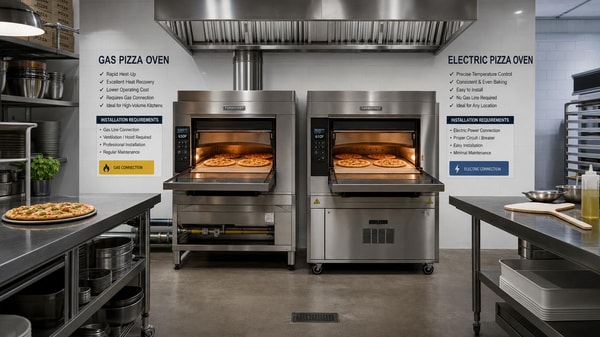
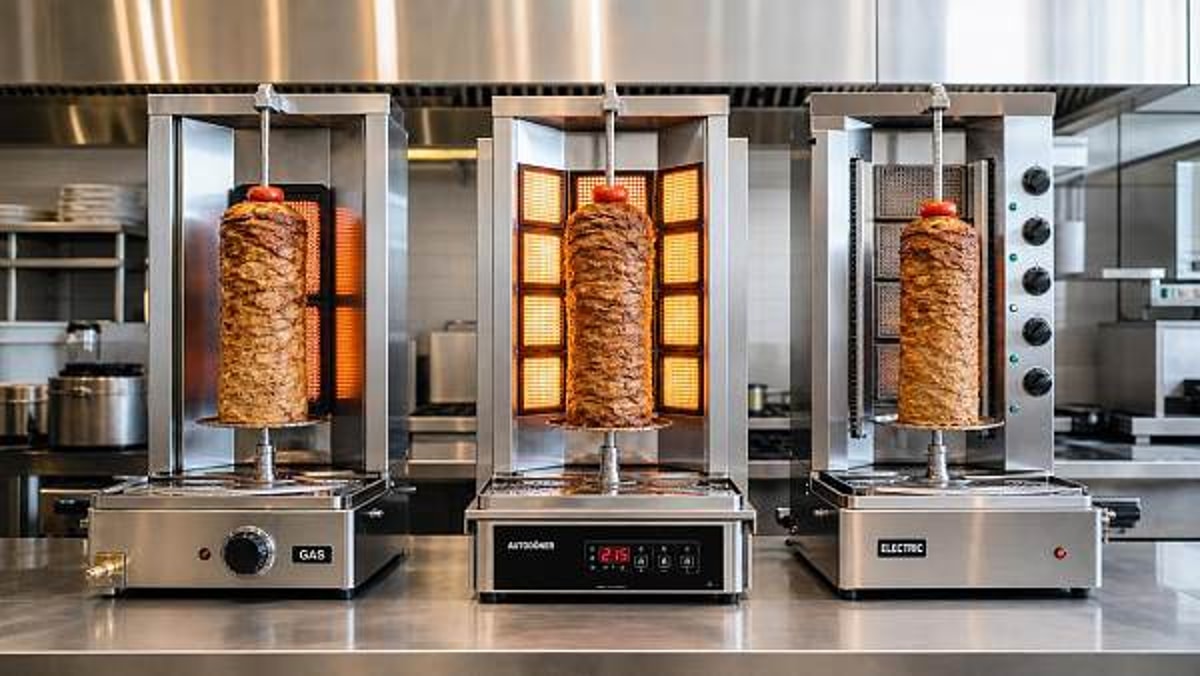
The most common configurations in shawarma machines commercial equipment are gas-fired systems and electric heating systems. Within each type, the buyer should further assess burner arrangement, number of heat zones, spacing between heat source and meat stack, insulation quality, and adjustment precision. These details matter more than the broad gas-versus-electric label.
The comparison below helps technical evaluation teams screen the first round of supplier offers before moving into sample review, compliance checks, and operating cost analysis.
For many buyers, the best answer is not simply gas or electric. It is the system that delivers repeatable browning at the required throughput within the site’s utility, ventilation, and compliance limits. GCT sourcing support often begins by translating site conditions into a realistic shortlist, which helps technical teams avoid reviewing unsuitable machines.
What heat control specifications should technical evaluators check first?
Core parameters that influence cooking stability
Supplier quotations for shawarma machines commercial units may list power, dimensions, and skewer capacity, but technical approval should go deeper. Evaluators should ask how the machine maintains useful cooking heat over time, not just peak temperature at startup. A unit that reaches temperature quickly but cannot recover after repeated slicing may create service interruptions.
- Number of burners or heating elements and whether they are independently adjustable.
- Effective heating height relative to maximum meat stack height, which affects top-to-bottom cooking uniformity.
- Distance adjustment between heat source and rotating skewer to match different product diameters.
- Thermal shielding and reflector design, which influence heat direction rather than simply heat quantity.
- Recovery behavior after slicing cycles, especially when operators repeatedly trim the outer crust during peak service.
Operational details often overlooked
Technical teams also need to verify whether control knobs provide meaningful modulation or only coarse high-medium-low positions. Fine adjustment matters when the kitchen serves chicken, lamb, and mixed meats with different fat release and browning patterns. Heat control that is too blunt pushes the operator into manual workarounds, which increases inconsistency.
Another overlooked issue is heat distribution as the skewer diameter shrinks through service. At opening, a large cone sits close to the burners; later, the remaining core may receive different exposure. Machines with adaptable spacing or better zone control handle this transition more predictably.
How to compare shawarma machines commercial models by application scenario
A technical evaluator should not judge every machine against the same ideal. Site type changes the correct balance between output, control precision, utility cost, footprint, and operator skill level. The table below maps common commercial scenarios to practical heat control priorities.
This scenario-based approach is especially useful for cross-border sourcing. GCT works with buyers who may be comparing machines from different manufacturing regions, each with different assumptions about gas type, kitchen ventilation, and operator workflow. Mapping requirements to use case first reduces confusion later in the approval cycle.
Procurement checklist: how technical evaluators can avoid weak specifications
Questions to send suppliers before sample approval
When reviewing shawarma machines commercial offers, technical staff should request more than a brochure. A disciplined question list helps expose whether the supplier understands commercial operating demands or is only presenting generic catalog data.
- Ask for the heating configuration in detail: number of zones, control method, and effective roasting height.
- Confirm utility requirements: gas category or electrical voltage, frequency, and load profile relevant to the installation market.
- Check whether components exposed to heat are easy to replace, including burners, elements, switches, reflectors, and motor assemblies.
- Request cleaning and grease handling details, since poor drainage or hard-to-access trays will affect hygiene and maintenance time.
- Verify available documentation for installation, operation, spare parts, and applicable conformity declarations where required.
Common red flags in commercial quotations
- Power or gas consumption figures are provided without explaining actual heat zoning or duty cycle behavior.
- Maximum capacity is stated, but the heating height appears shorter than the advertised meat stack.
- The supplier cannot clarify whether the machine is intended for continuous commercial use or lighter intermittent use.
- No clear information is available on spare parts lead time, especially for export projects with after-sales obligations.
Cost, efficiency, and alternatives: what matters beyond purchase price?
Technical evaluators are frequently pressured to narrow sourcing decisions based on initial price. That approach is risky for shawarma machines commercial procurement because operating cost, reject rate, maintenance intervals, and installation constraints often outweigh the invoice difference between two shortlisted units.
A lower-cost machine may use more energy because it lacks effective reflectors or precise zone control. It may also increase labor burden if operators need constant manual repositioning to compensate for uneven roasting. Over months of service, these hidden costs can surpass the original savings.
Alternatives should also be assessed carefully. Some buyers consider compact grill solutions or pre-cooked protein systems when full vertical roasting is impractical. Those options may reduce installation complexity, but they also change product texture, visual appeal, and menu authenticity. The right decision depends on service concept, throughput target, and brand positioning.
Standards, safety, and compliance points buyers should not ignore
Commercial food equipment sourcing is rarely only a performance issue. It also involves electrical safety, gas safety, food-contact materials, and installation conformity. For global buyers, the same shawarma machines commercial model may require different documentation depending on destination market and site type.
Technical teams should assess compliance in a practical way. Instead of asking for broad claims, ask which standards or declarations are available for the target market and which components are sourced from traceable supply chains. Stainless steel specification, wiring quality, gas valve design, and grounding provisions all deserve review.
- Review whether food-contact surfaces are suitable for commercial foodservice use and easy to clean.
- Confirm gas models match local fuel category and pressure conditions before shipment.
- Check electrical protection, plug or hardwire requirements, and compatibility with local voltage and frequency.
- Validate documentation needs early when the equipment is intended for hotels, institutions, or chain-store rollout programs.
This is where a sourcing partner with multi-sector commercial experience adds value. GCT helps buyers connect technical expectations, supplier communication, and market-specific documentation so approvals move faster and fewer issues appear at installation stage.
FAQ: practical questions about shawarma machines commercial buying
How do I know if a machine has enough heat control for mixed-protein menus?
Look for independent heat zones, adjustable distance between burner and meat, and a control range fine enough to manage chicken, beef, or lamb separately. If the supplier cannot explain how the machine handles different fat content and browning speed, the control system may be too basic for multi-menu operations.
Is electric always better for indoor commercial use?
Not always. Electric shawarma machines commercial models can simplify installation where gas is restricted, but the right choice depends on local power availability, ventilation design, desired output, and operating hours. A heavy-demand site may still prefer gas if the kitchen infrastructure supports it and faster recovery is needed.
What is the most common specification mistake in procurement?
One common mistake is approving a machine based on maximum skewer weight without checking effective heating height and heat zoning. A large skewer on paper does not guarantee uniform roasting in practice. Another frequent issue is ignoring destination utility compatibility until after order confirmation.
How should buyers compare suppliers if test cooking is not available?
Use structured technical comparison. Request detailed photos of the heating assembly, parts list, control interface, grease management layout, and installation documentation. Compare serviceability, zone configuration, and compliance readiness, not just front-view appearance or quoted capacity.
Why work with GCT when evaluating shawarma machines commercial projects?
Technical evaluation teams often face a familiar challenge: too many supplier claims, too little structured comparability, and tight timelines for approval. GCT supports buyers by turning fragmented product information into a sourcing framework aligned with real commercial use cases across hospitality, catering, institutional foodservice, and experience-driven retail environments.
Our strength is not limited to listing suppliers. We help buyers assess heating logic, installation implications, operating fit, documentation readiness, and sourcing risks in a way that supports internal procurement decisions. This is especially useful for groups managing cross-border projects, multiple site formats, or custom specification needs.
- Parameter confirmation for heating type, zone design, utility requirement, and expected throughput.
- Product selection support based on hotel, kiosk, quick-service, catering, or institutional application.
- Lead time and delivery planning for rollout projects or urgent replacement procurement.
- Custom solution discussion for voltage adaptation, configuration changes, or project-specific compliance needs.
- Sample coordination, quotation comparison, and supplier communication support for more efficient approval cycles.
If your team is now comparing shawarma machines commercial options, contact GCT with your target market, utility conditions, expected serving volume, preferred heating type, and certification requirements. We can help you narrow the shortlist, clarify technical risks, and move from broad inquiry to practical sourcing decisions with greater confidence.
Search News
Hot Articles
Popular Tags
Need ExpertConsultation?
Connect with our specialized leisureengineering team for procurementstrategies.
Recommended News
 May 03, 2026Commercial pizza ovens that save labor may cost more to ventCommercial pizza ovens can cut labor, but venting, code compliance, and installation may raise total costs. See the key checks before you buy.● Hospitality Sourcing Dir
 May 03, 2026Commercial juicers: cold press or centrifugal for daily serviceCommercial juicers: compare cold press and centrifugal models for daily service. Discover the best fit for speed, juice quality, yield, cleaning, and operating costs.● Hospitality Sourcing Dir
 May 03, 2026Commercial water boilers: recovery time matters more than listed capacityCommercial water boilers perform best when recovery time matches peak demand. Learn why faster reheating beats listed capacity for reliable, efficient commercial hot water service.● Hospitality Sourcing Dir
 May 03, 2026Cotton candy machines wholesale: small details that affect cleaning timeCotton candy machines wholesale guide: discover the small design details that cut cleaning time, reduce labor costs, and improve hygiene for busy commercial operations.● Hospitality Sourcing Dir
 May 03, 2026Dough sheeters wholesale: thickness control is where quality showsDough sheeters wholesale buyers: see why thickness control defines real quality, repeatability, and long-term value. Compare key evaluation points for smarter sourcing.● Hospitality Sourcing Dir
 May 03, 2026Slushy machines wholesale: what causes flavor crossover problemsSlushy machines wholesale buyers should understand what causes flavor crossover, from poor sealing to weak cleaning design, to protect drink quality and choose more reliable equipment.● Hospitality Sourcing Dir
 May 03, 2026Commercial bread slicers: slice consistency affects more than looksCommercial bread slicers do more than improve appearance—they boost portion control, reduce waste, and support faster service. Learn what drives slice consistency before you buy.● Hospitality Sourcing Dir
 May 03, 2026Wood fired pizza ovens need more space than most plans allowWood fired pizza ovens often require more space than expected. Learn how to avoid redesigns, protect workflow, and plan compliant, high-performance hospitality projects.● Hospitality Sourcing Dir
 May 03, 2026Commercial pizza ovens: gas or electric for steady outputCommercial pizza ovens: compare gas vs. electric for steady output, faster recovery, precise control, and smarter installation choices across real kitchen scenarios.● Hospitality Sourcing Dir
 May 03, 2026Commercial popcorn machines: kettle size vs serving rush realityCommercial popcorn machines should be chosen by real rush-hour output, not kettle size alone. Learn how to match serving peaks, staffing, and workflow for smarter buying.● Hospitality Sourcing Dir
 May 03, 2026Commercial insect killers: indoor placement changes results fastCommercial insect killers perform very differently based on indoor placement. Discover how small positioning changes can boost control, reduce pest activity, and improve operational results fast.● Hospitality Sourcing Dir
 May 03, 2026Hotel & Catering Equipment lists often hide installation costsHotel & Catering Equipment lists often hide installation costs. Learn where budgets slip, what to verify early, and how to compare total installed value before approval.● Hospitality Sourcing Dir
 May 03, 2026Bakery display cases: glass fogging, lighting, and product appealBakery display cases guide: compare anti-fog glass, lighting quality, and temperature stability to boost product appeal, hygiene, and sales with smarter sourcing decisions.● Hospitality Sourcing Dir
 May 03, 2026Commercial milkshake mixers: when motor power changes drink textureCommercial milkshake mixers directly shape texture, aeration, and consistency. Learn how motor power affects shake quality and choose the right mixer for your menu and volume.● Hospitality Sourcing Dir
 May 03, 2026Hot dog rollers that clean faster can cut downtime more than expectedHot dog rollers that clean faster can reduce downtime, improve sanitation, and save labor. Learn which features matter most before you buy for busy commercial service.● Hospitality Sourcing Dir
 May 03, 2026Conveyor pizza ovens or deck ovens for high-volume service?Conveyor pizza ovens vs deck ovens: discover which option delivers better throughput, consistency, labor efficiency, and site-fit for high-volume commercial pizza service.● Hospitality Sourcing Dir
 May 03, 2026Shawarma machines commercial buyers compare heat control firstShawarma machines commercial buyers compare heat control first. Learn how gas, electric, and multi-zone systems affect consistency, efficiency, safety, and sourcing decisions.● Hospitality Sourcing Dir
 May 02, 2026Stainless steel GN pans with reinforced corners last longer in busy kitchensStainless steel GN pans with reinforced corners help busy kitchens reduce warping, improve hygiene, and cut replacement costs. See why buyers choose longer-lasting performance.● Hospitality Sourcing Dir
 May 02, 2026Commercial induction cookers: power ratings that mislead first-time buyersCommercial induction cookers are not as simple as wattage labels suggest. Learn how to compare real performance, efficiency, pan fit, and reliability before you buy.● Hospitality Sourcing Dir
 May 02, 2026Beverage dispensers wholesale: what causes dripping after heavy useBeverage dispensers wholesale guide: learn what causes dripping after heavy use, how to spot seal, valve, and pressure issues, and choose durable suppliers with confidence.● Hospitality Sourcing Dir
 May 02, 2026Disposable wooden cutlery and the taste issue customers noticeDisposable wooden cutlery can affect taste, texture, and customer perception. Learn what causes woody aftertaste, how to test suppliers, and how to choose better options.● Hospitality Sourcing Dir
 May 02, 2026Sushi display cases: curved glass looks better, but is it practical?Sushi display cases with curved glass look premium, but are they practical? Compare visibility, cleaning, temperature control, and ROI before you buy.● Hospitality Sourcing Dir
 May 02, 2026Vacuum sealing machines food businesses can scale withVacuum sealing machines food businesses can scale with improve shelf life, workflow, and cost control. Explore reliable, compliant solutions for growing food operations.● Hospitality Sourcing Dir
 May 02, 2026Chafing fuel gel bulk: storage and burn-time issues to check firstChafing fuel gel bulk buyers should check storage stability, seal integrity, and real burn-time performance first. Reduce waste, avoid service disruption, and source with more confidence.● Hospitality Sourcing Dir