Wholesale toilet paper rolls: what affects true cost per use
For procurement teams, evaluating wholesale toilet paper rolls goes far beyond unit price. True cost per use depends on roll length, ply strength, absorbency, dispenser compatibility, labor efficiency, and supplier consistency. This guide breaks down the key factors that influence long-term value, helping buyers make smarter sourcing decisions that balance budget, performance, and operational reliability.
Why is the lowest price for wholesale toilet paper rolls often not the lowest real cost?
This is the first question most buyers should ask. In commercial procurement, the invoice price per case is only one layer of the decision. The true cost per use of wholesale toilet paper rolls is shaped by how many usable sheets each roll delivers, how often staff must replace rolls, how much product users consume per visit, and how consistently the paper performs across high-traffic environments.
A cheaper roll may seem attractive during sourcing, but if it tears too easily, dissolves poorly, or forces users to take more sheets each time, the actual consumption rate climbs. In hotels, offices, schools, restaurants, malls, and public facilities, that difference can translate into substantial annual spend. Procurement teams that focus only on case price may overlook labor costs, storage turnover, restroom complaints, dispenser jams, and emergency replenishment purchases.
That is why experienced buyers compare wholesale toilet paper rolls using cost per usable sheet, cost per 1,000 uses, and service efficiency metrics rather than just price per roll. In strategic sourcing, value comes from stable performance, not simply a low number on the quote.
What product specifications most affect true cost per use?
Several technical details directly influence whether wholesale toilet paper rolls deliver cost control or hidden waste. Procurement professionals should look beyond packaging claims and evaluate specifications in practical operating terms.
1. Roll length and sheet count
Longer rolls generally reduce replacement frequency, which lowers housekeeping or maintenance labor. However, buyers must verify whether the stated roll length reflects full usable product or includes a larger core size that reduces actual tissue volume. Comparing nominal roll size without checking sheet dimensions can distort the analysis.
2. Ply and basis strength
Two-ply or three-ply products often cost more upfront, but stronger paper can reduce consumption because users need fewer sheets. In premium hospitality or executive office settings, softness and strength also affect brand perception. In institutional settings, excessive ply may increase cost without clear functional benefit, so use case matters.
3. Absorbency and softness
Absorbency affects how many sheets users need per occasion. Softness influences user satisfaction and can reduce overuse caused by poor tactile quality. A rough, thin product may trigger higher pull rates, especially in guest-facing environments where comfort expectations are high.
4. Core size and dispenser fit
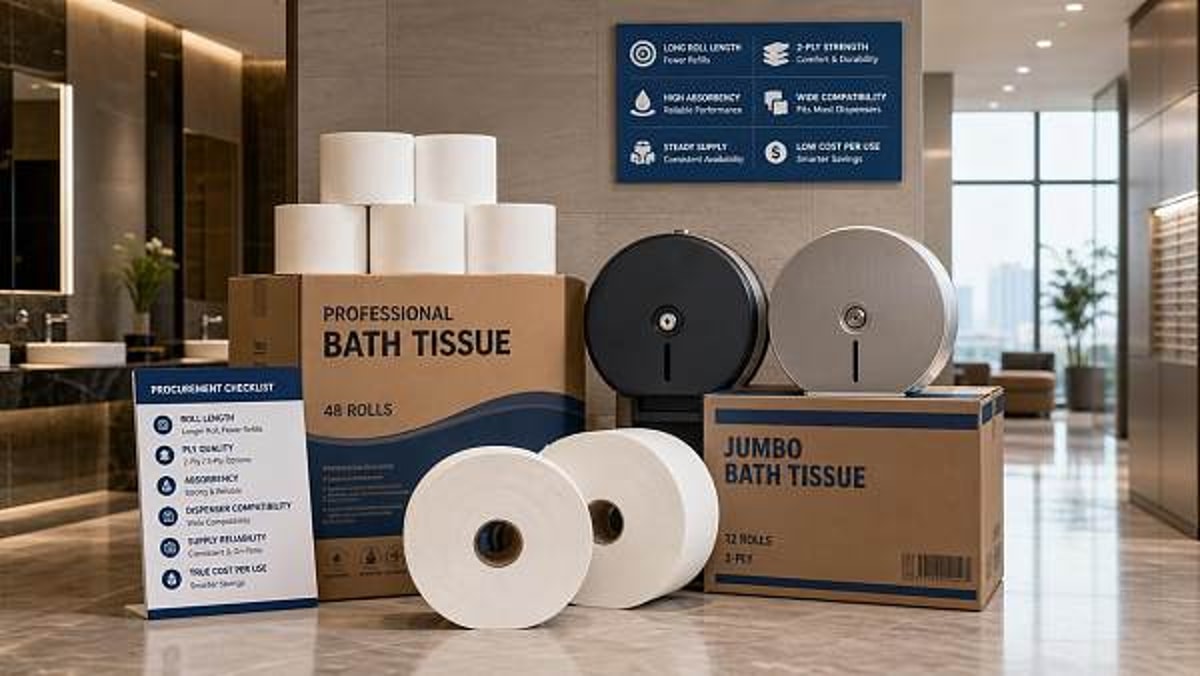
Not all wholesale toilet paper rolls are compatible with all commercial dispensers. A mismatch can create waste, partial roll disposal, or equipment replacement costs. Dispenser compatibility is especially important for jumbo rolls, coreless systems, and controlled-dispense formats.
5. Paper quality consistency
Even when the specification sheet looks competitive, inconsistent manufacturing quality can drive up operational problems. Rolls that vary in perforation, winding tension, or sheet separation can increase usage, cause dispenser issues, and undermine buyer confidence.
How should procurement teams compare wholesale toilet paper rolls in a practical way?
A practical comparison should combine price, performance, and operating impact. Instead of asking which roll is cheapest, ask which option produces the best outcome over a full replenishment cycle. The table below provides a simple evaluation framework for buyers.
For multi-site buyers, this approach is especially important. A roll that works well in one small office may not perform the same way in a hotel chain, campus, airport, or foodservice network. Procurement decisions should reflect traffic volume, user expectations, maintenance capacity, and storage limitations.
Which usage scenarios change the economics of wholesale toilet paper rolls?
Not every facility should buy the same specification. The best wholesale toilet paper rolls for one environment may be inefficient in another. Context changes everything.
Hotels and upscale hospitality
Guest comfort matters, so paper softness, clean appearance, and premium feel carry branding value. In these settings, true cost per use includes reputation impact and guest satisfaction, not just consumption metrics. Slightly higher-grade rolls may reduce complaints and better align with service standards.
Office buildings and educational campuses
Here, the balance often shifts toward durability, moderate comfort, and labor efficiency. Longer jumbo rolls can reduce replacement frequency in high-traffic restrooms, while controlled-dispense systems may limit overconsumption. Procurement teams should prioritize stable product performance across large user populations.
Restaurants, retail, and entertainment venues
Traffic can be uneven and peak-driven. During rush periods, downtime from empty dispensers becomes expensive because it affects customer experience and staff workload. In such cases, wholesale toilet paper rolls with higher capacity and reliable dispenser behavior may outperform cheaper alternatives.
Industrial or public institutions
These sites often focus heavily on cost containment and robustness. Yet going too low in quality can backfire through overuse and maintenance complaints. The right target is functional efficiency, not minimum specification.
What hidden costs do buyers commonly miss when sourcing wholesale toilet paper rolls?
Hidden costs often erode the expected savings from a low bid. One of the most common is labor. If staff must replace rolls more often, clear dispenser jams, or handle user complaints, the real operating cost rises. In a large facility portfolio, even small service inefficiencies create measurable expense.
Another overlooked factor is storage and logistics. Bulkier packaging, lower sheet density, or shorter rolls may require more warehouse space and more frequent deliveries. That affects freight planning, stock rotation, and safety inventory levels. Buyers should calculate whether the product improves or complicates internal logistics.
Quality variation between batches is another risk. A supplier may provide acceptable samples but fail to maintain production consistency at scale. For commercial buyers, this can create uneven user experience across locations and trigger unplanned supplier changes. Procurement should therefore assess manufacturing reliability, not just sample performance.
Finally, there is the cost of poor fit with sustainability or brand requirements. Increasingly, institutional and hospitality buyers evaluate recycled content, fiber sourcing, certifications, and packaging waste. If a product conflicts with ESG goals or guest expectations, the cheapest option can become strategically expensive.
How can buyers test and validate before committing to a supplier?
The best way to validate wholesale toilet paper rolls is through a controlled site trial. Procurement teams should test at representative locations rather than relying only on factory claims or distributor descriptions. A useful trial tracks consumption per restroom, refill frequency, user feedback, dispenser performance, and product consistency over several weeks.
Ask suppliers for detailed specifications, sample rolls from actual production lots, and documentation on capacity, material composition, packaging configuration, and lead times. If the sourcing volume is substantial, request quality control information and evidence of production stability. For private label or OEM sourcing, confirm whether the manufacturer can keep the same sheet size, embossing, ply performance, and packaging standard over time.
Buyers should also compare landed cost, not just ex-works or headline quoted price. Freight, import handling, tariff exposure, pallet efficiency, and reorder flexibility all matter. In global sourcing, a strong supplier is one that can balance price competitiveness with continuity, documentation quality, and responsive issue resolution.
What are the most common mistakes when comparing wholesale toilet paper rolls?
One common mistake is comparing rolls by outer size instead of actual usable paper volume. Another is assuming higher ply automatically means better value. In reality, the right choice depends on the facility type, user behavior, and dispenser system. Buyers also make errors when they ignore janitorial feedback. Maintenance teams often identify operational issues long before they appear in formal cost reports.
A further mistake is changing suppliers based only on short-term price movement. If the new source introduces quality variation, delayed shipments, or customer complaints, any savings can disappear quickly. Procurement teams should evaluate wholesale toilet paper rolls as part of a broader commercial reliability framework, especially when supporting hospitality, institutional, and multi-location environments.
What should procurement teams confirm before placing a larger order?
Before scaling a purchase, confirm six points: exact sheet dimensions, total usable roll length, dispenser compatibility, packaging count per case, batch consistency standards, and realistic lead times. It is also wise to verify claims related to softness, strength, recycled content, and compliance documentation where relevant to the end-use environment.
For buyers managing hospitality groups, office portfolios, or institutional procurement programs, the smartest sourcing decision is usually the one that protects both budget and operational smoothness. Wholesale toilet paper rolls should be evaluated as an ongoing service input, not a simple commodity line item. When procurement measures cost per use, labor impact, user experience, and supplier stability together, better long-term value becomes much easier to identify.
If you need to move from evaluation to implementation, the best next discussion points are practical: Which roll format fits your current dispensers, what usage profile defines your sites, what quality tolerance is acceptable, what reorder cycle supports your inventory model, and what supplier capabilities are needed for long-term consistency, OEM customization, or global delivery support?
Search News
Hot Articles
Popular Tags
Need ExpertConsultation?
Connect with our specialized leisureengineering team for procurementstrategies.
Recommended News
 May 03, 2026Hotel room minibar fridges: silent operation is not enoughHotel room minibar fridges now require more than silent operation. Explore how energy efficiency, design fit, compliance, and lifecycle value shape smarter hotel sourcing.● Hospitality Sourcing Dir
 May 03, 2026HVAC systems for hotels: poor zoning raises energy bills quietlyHVAC systems for hotels can silently inflate energy bills when zoning is weak. Learn how smarter controls cut costs, improve guest comfort, and protect long-term hotel asset value.● Hospitality Sourcing Dir
 May 03, 2026Wooden coat hangers hotel projects should not overlook finish qualityWooden coat hangers hotel buyers should not ignore finish quality. Learn how smoothness, coating safety, and color consistency reduce complaints, protect brand image, and lower replacement costs.● Hospitality Sourcing Dir
 May 03, 2026Artificial plants for hotels: where they look premium, not fakeArtificial plants for hotels that look premium, not fake—discover how luxury properties use realistic faux greenery to elevate ambiance, cut maintenance, and protect brand consistency.● Hospitality Sourcing Dir
 May 03, 2026Commercial hand dryers can lower waste, but noise still mattersCommercial hand dryers reduce paper waste and maintenance costs, but noise can shape comfort and brand perception. Discover how to choose the right model for every commercial space.● Hospitality Sourcing Dir
 May 03, 2026Hotel hair dryers wall mounted: safety features worth checkingHotel hair dryers wall mounted: discover the safety features buyers should check first, from overheat protection to tamper resistance, for safer, smarter hotel sourcing.● Hospitality Sourcing Dir
 May 03, 2026Smart hotel room controls work best when systems talk to each otherSmart hotel room controls work best when HVAC, lighting, access, and service platforms connect seamlessly. Learn how interoperability improves efficiency, guest experience, and long-term scalability.● Hospitality Sourcing Dir
 May 03, 2026Automatic soap dispensers: battery life is not the only issueAutomatic soap dispensers are about more than battery life. Discover how sensor accuracy, refill compatibility, maintenance, and durability impact hygiene, cost, and user experience.● Hospitality Sourcing Dir
 May 03, 2026What hotels often miss when sourcing illuminated makeup mirrorsIlluminated makeup mirrors hotel buyers often miss key specs that affect guest satisfaction, maintenance, and brand value. Discover what to check before sourcing.● Hospitality Sourcing Dir
 May 03, 2026Commercial air purifiers: HEPA ratings that matter in hotelsCommercial air purifiers for hotels: learn which HEPA ratings truly matter for guest rooms, lobbies, and wellness zones to improve comfort, compliance, and smarter buying.● Hospitality Sourcing Dir
 May 03, 2026Wholesale toilet paper rolls: what affects true cost per useWholesale toilet paper rolls are not just about low case price. Learn what affects true cost per use, from sheet strength to dispenser fit, and source smarter for long-term savings.● Hospitality Sourcing Dir
 May 02, 2026Memory foam hotel mattresses: when soft comfort leads to faster saggingMemory foam hotel mattresses may feel luxurious at first, but can soft comfort cause faster sagging? Discover how buyers can reduce risk, improve durability, and protect hotel ROI.● Hospitality Sourcing Dir
 May 02, 2026Electronic hotel door locks: battery alerts are often less simple than they seemElectronic hotel door locks battery alerts are more complex than they appear. Learn how firmware, usage, and environment affect reliability, maintenance efficiency, and smarter sourcing.● Hospitality Sourcing Dir
 May 02, 2026Hotel housekeeping carts: the layout detail that saves minutes on every floorHotel housekeeping carts can save minutes on every floor. Discover how smarter cart layout improves workflow, reduces labor strain, and supports faster, more consistent room turnover.● Hospitality Sourcing Dir
 May 02, 2026Wholesale hotel safes: keypad reliability matters more than extra featuresWholesale hotel safes should be judged by keypad reliability first. Discover the checklist that helps buyers reduce lockouts, maintenance costs, and guest complaints.● Hospitality Sourcing Dir
 May 02, 2026Hotel lobby chandeliers: how size mistakes affect the whole arrival experienceHotel lobby chandeliers can make or break first impressions. Learn how sizing mistakes affect luxury, circulation, and brand value—and how to choose the right scale.● Hospitality Sourcing Dir
 May 02, 2026Industrial ironing machines: steam output is not the only thing to compareIndustrial ironing machines should be compared by more than steam output. Discover how temperature control, pressure stability, efficiency, and durability affect real commercial performance.● Hospitality Sourcing Dir
 May 02, 2026Blackout curtains for hotels that block light without trapping heatBlackout curtains for hotels that block light without trapping heat—discover smarter fabrics, thermal comfort benefits, and sourcing tips for better guest sleep and hotel performance.● Hospitality Sourcing Dir
 May 02, 2026Hotel luggage carts: why wheel quality matters more than frame finishHotel luggage carts perform best when wheel quality comes first. Discover how better casters reduce noise, protect floors, improve handling, and lower long-term hotel maintenance costs.● Hospitality Sourcing Dir
 May 02, 2026Custom printed hotel key cards: PVC or wood for a better guest feel?Custom printed hotel key cards: compare PVC and wood to find the best mix of guest feel, durability, sustainability, and brand impact for smarter hotel sourcing.● Hospitality Sourcing Dir
 May 02, 2026Commercial laundry equipment sizing mistakes that raise utility billsCommercial laundry equipment sizing mistakes can quietly drive up water, energy, and labor costs. Learn the biggest planning errors and how smarter sizing protects budgets and efficiency.● Hospitality Sourcing Dir
 May 02, 2026Why some wholesale bath towels for hotels wear out too fastWholesale bath towels for hotels can wear out fast due to fiber quality, GSM, weave, and laundering mismatch. Learn how to choose durable towels that cut replacement costs and protect guest experience.● Hospitality Sourcing Dir
 May 01, 2026Hotel Desks That Work for Both Business Guests and Small RoomsHotel desks for compact rooms: learn how to choose durable, space-saving, business-friendly designs that improve guest satisfaction and simplify hotel procurement.● Hospitality Sourcing Dir
 May 01, 2026Hotel Slippers in Bulk: Cheap Pairs Can Hurt Guest PerceptionHotel slippers bulk choices affect more than cost. Discover how cheap pairs can damage guest perception, comfort, and brand value—and how smarter sourcing improves reviews.● Hospitality Sourcing Dir