Smart hotel room controls work best when systems talk to each other
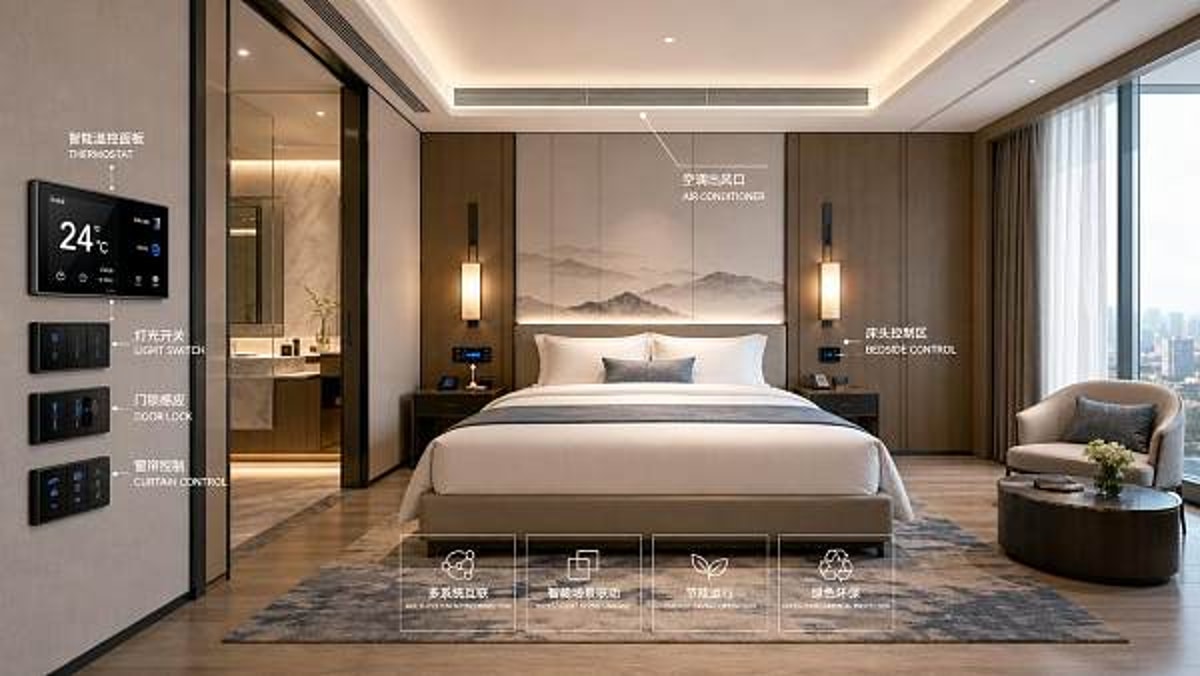
Smart hotel room controls deliver the greatest value when HVAC, lighting, access, and guest service platforms work as one connected ecosystem. For technical evaluators, system interoperability is not just a convenience issue—it directly affects integration cost, data visibility, energy performance, and long-term scalability. This article explores why connected controls are essential for modern hospitality projects and how to assess them with confidence.
Why interoperability has become the defining shift in hospitality controls
A major change is taking place in hotel technology strategy. In the past, many properties treated guestroom systems as separate packages: one vendor for thermostats, another for lighting scenes, another for door locks, and another for service requests. That model is now under pressure. Owners want lower operating costs, operators want better service consistency, and guests expect rooms to respond instantly and intuitively. As a result, smart hotel room controls are no longer being judged only by device features. They are being judged by how well systems talk to each other.
This trend matters because disconnected systems create hidden friction. Engineering teams lose visibility into room status, IT teams face middleware complexity, and management cannot easily connect occupancy, energy use, and guest behavior into one decision layer. For technical evaluators, the market signal is clear: future-ready smart hotel room controls must support integration by design, not as an expensive afterthought.
The shift is especially visible in new builds, premium renovations, mixed-use hospitality projects, and multi-property groups trying to standardize technology across brands and regions. In these environments, interoperability is becoming a core selection criterion alongside cybersecurity, maintenance requirements, and guest experience design.
The strongest market signals behind connected room ecosystems
Several forces are pushing the industry toward more integrated smart hotel room controls. None of them act alone. Together, they are reshaping what buyers expect from room automation platforms and from the suppliers that support them.
These signals explain why technical evaluation has expanded beyond product comparison. A thermostat may perform well on its own, but if it cannot exchange reliable data with occupancy sensors, the property management system, or lighting controls, its real-world value is limited. The same applies to locks, curtain motors, bedside panels, and voice interfaces.
What is driving the change in smart hotel room controls
The first driver is energy performance. Hotels operate continuously, and guestroom energy waste remains one of the most controllable cost areas. When smart hotel room controls connect room access, occupancy state, and HVAC response, the building can shift automatically between occupied, unoccupied, and standby modes. That is much harder to achieve when systems are isolated.
The second driver is the move toward software-centric operations. Hotel groups increasingly expect technology stacks to produce usable data, not just automate individual devices. If room systems cannot share data structures or event triggers, analytics become fragmented. Technical evaluators therefore need to ask not only what a device controls, but what events it can publish, consume, and log.
The third driver is guest experience compression. Travelers may not consciously notice every technical layer, but they immediately notice inconsistency. A room that unlocks by mobile key but fails to trigger arrival scenes, or a room that dims lights without adjusting climate response, feels unfinished. Market expectations are moving from “smart features” to “coordinated experiences.”
The fourth driver is retrofit practicality. Many hotels cannot replace all systems at once. They need smart hotel room controls that can coexist with legacy infrastructure while still supporting future integration. This creates demand for platforms with flexible protocols, gateway options, strong API documentation, and realistic migration paths.
How the impact differs across stakeholders
The consequences of poor interoperability are not evenly distributed. Different teams feel the problem in different ways, which is why evaluation should include more than one department.
For B2B decision environments, this multi-stakeholder effect is critical. A system that appears cost-effective at procurement stage may become expensive if engineering support, guest complaint handling, and data integration are considered over the full lifecycle. That is why smart hotel room controls should be evaluated as an operational platform, not as a basket of room devices.
The new evaluation standard: beyond features toward system behavior
A noticeable market change is that feature lists are losing decision power. More technical buyers now focus on system behavior under real operating conditions. This means asking whether smart hotel room controls can handle event sequencing, exception logic, and cross-platform coordination without creating brittle dependencies.
For example, when a guest checks in early, can the room move from deep setback to comfort mode automatically? When housekeeping enters, can the room distinguish staff access from guest occupancy? When balcony doors open, can HVAC respond without generating nuisance alerts? These practical logic chains determine whether the control ecosystem supports operations or complicates them.
This is also where protocol decisions matter. Evaluators do not always need every layer to be fully open, but they do need clarity about gateways, APIs, supported standards, command latency, and fallback behavior. In hospitality, reliable integration is often more important than flashy user interfaces.
Signals that a control platform may scale well
As the market matures, certain indicators are becoming more useful than broad marketing claims. Technical evaluators reviewing smart hotel room controls should pay close attention to the following signals:
- Clear support for room status logic that combines access, occupancy, and service modes.
- Documented integration methods for PMS, BMS, lock systems, and guest-facing applications.
- Remote diagnostics and event logging that help engineering teams identify root causes.
- Upgrade paths that do not require replacing all in-room hardware during future expansion.
- Vendor evidence from live hospitality deployments, especially multi-property or brand-standard projects.
- Cybersecurity and user permission structures appropriate for networked operational technology.
These signals are more meaningful than isolated claims about intelligence or automation. In practice, scalable smart hotel room controls are those that remain manageable when the property adds more rooms, more data points, more service logic, and more brand-specific requirements.
Where many projects still go wrong
Despite stronger market awareness, common evaluation mistakes remain. One is approving systems based on a successful demo without testing cross-system exceptions. Another is assuming that “compatible” means fully interoperable. In many projects, compatibility only covers basic command exchange, not coordinated workflows, synchronized status handling, or consistent data mapping.
A second mistake is underestimating operational ownership. Smart hotel room controls sit at the intersection of IT, engineering, guest experience, and procurement. If the evaluation process is dominated by only one function, important risk factors can be missed. Hotels often discover too late that a technically elegant solution is difficult for on-site teams to support.
A third mistake is treating retrofit and new-build projects the same way. Retrofit environments require more tolerance for mixed protocols, phased installation, and temporary coexistence with older systems. Buyers should therefore judge vendor readiness against the project context, not against an idealized clean-slate scenario.
What technical evaluators should prioritize next
The next phase of decision-making should focus less on standalone product selection and more on integration confidence. A practical approach is to map the room journey first: booking, check-in, entry, occupied stay, service visit, vacancy, maintenance alert, and check-out. Then test how smart hotel room controls behave at each stage and what data they generate for downstream systems.
It is also wise to request scenario-based demonstrations rather than generic feature presentations. Ask vendors to show how their smart hotel room controls react to occupancy conflicts, delayed check-out, maintenance mode, or network interruption. Real project performance often depends on these edge cases.
What this trend means for sourcing and strategic planning
For organizations involved in commercial hospitality sourcing, the broader implication is that room controls can no longer be assessed in isolation from the property’s digital operating model. Procurement teams, specifiers, and technical consultants increasingly need supplier partners who can prove not only manufacturing capability, but also integration maturity, documentation quality, and project coordination discipline.
This aligns with the wider commercial market shift toward higher-trust, evidence-based sourcing. In premium hospitality projects, interoperability claims should be supported by implementation references, system architecture clarity, and lifecycle support commitments. That is especially important for international buyers comparing OEM, ODM, and branded control solutions across multiple sourcing regions.
A practical decision lens for the months ahead
The direction of travel is clear: smart hotel room controls are moving from isolated convenience tools to connected infrastructure for guest experience, energy strategy, and operational intelligence. The more hotel systems need to cooperate, the more valuable interoperability becomes. For technical evaluators, the right question is no longer “Does this room control system have enough features?” It is “Will this system still work well when it must coordinate with everything else?”
If your organization wants to judge the impact of this trend on upcoming projects, focus on a few critical questions: Which room systems must exchange live status data? Which workflows depend on reliable event sequencing? How much legacy infrastructure must remain in place? Which vendor can support both current deployment and future expansion without locking the property into a rigid architecture? Answering those questions will provide a far stronger basis for selecting smart hotel room controls that perform well not just at launch, but across the full asset lifecycle.
Search News
Hot Articles
Popular Tags
Need ExpertConsultation?
Connect with our specialized leisureengineering team for procurementstrategies.
Recommended News
 May 03, 2026Hotel room minibar fridges: silent operation is not enoughHotel room minibar fridges now require more than silent operation. Explore how energy efficiency, design fit, compliance, and lifecycle value shape smarter hotel sourcing.● Hospitality Sourcing Dir
 May 03, 2026HVAC systems for hotels: poor zoning raises energy bills quietlyHVAC systems for hotels can silently inflate energy bills when zoning is weak. Learn how smarter controls cut costs, improve guest comfort, and protect long-term hotel asset value.● Hospitality Sourcing Dir
 May 03, 2026Wooden coat hangers hotel projects should not overlook finish qualityWooden coat hangers hotel buyers should not ignore finish quality. Learn how smoothness, coating safety, and color consistency reduce complaints, protect brand image, and lower replacement costs.● Hospitality Sourcing Dir
 May 03, 2026Artificial plants for hotels: where they look premium, not fakeArtificial plants for hotels that look premium, not fake—discover how luxury properties use realistic faux greenery to elevate ambiance, cut maintenance, and protect brand consistency.● Hospitality Sourcing Dir
 May 03, 2026Commercial hand dryers can lower waste, but noise still mattersCommercial hand dryers reduce paper waste and maintenance costs, but noise can shape comfort and brand perception. Discover how to choose the right model for every commercial space.● Hospitality Sourcing Dir
 May 03, 2026Hotel hair dryers wall mounted: safety features worth checkingHotel hair dryers wall mounted: discover the safety features buyers should check first, from overheat protection to tamper resistance, for safer, smarter hotel sourcing.● Hospitality Sourcing Dir
 May 03, 2026Smart hotel room controls work best when systems talk to each otherSmart hotel room controls work best when HVAC, lighting, access, and service platforms connect seamlessly. Learn how interoperability improves efficiency, guest experience, and long-term scalability.● Hospitality Sourcing Dir
 May 03, 2026Automatic soap dispensers: battery life is not the only issueAutomatic soap dispensers are about more than battery life. Discover how sensor accuracy, refill compatibility, maintenance, and durability impact hygiene, cost, and user experience.● Hospitality Sourcing Dir
 May 03, 2026What hotels often miss when sourcing illuminated makeup mirrorsIlluminated makeup mirrors hotel buyers often miss key specs that affect guest satisfaction, maintenance, and brand value. Discover what to check before sourcing.● Hospitality Sourcing Dir
 May 03, 2026Commercial air purifiers: HEPA ratings that matter in hotelsCommercial air purifiers for hotels: learn which HEPA ratings truly matter for guest rooms, lobbies, and wellness zones to improve comfort, compliance, and smarter buying.● Hospitality Sourcing Dir
 May 03, 2026Wholesale toilet paper rolls: what affects true cost per useWholesale toilet paper rolls are not just about low case price. Learn what affects true cost per use, from sheet strength to dispenser fit, and source smarter for long-term savings.● Hospitality Sourcing Dir
 May 02, 2026Memory foam hotel mattresses: when soft comfort leads to faster saggingMemory foam hotel mattresses may feel luxurious at first, but can soft comfort cause faster sagging? Discover how buyers can reduce risk, improve durability, and protect hotel ROI.● Hospitality Sourcing Dir
 May 02, 2026Electronic hotel door locks: battery alerts are often less simple than they seemElectronic hotel door locks battery alerts are more complex than they appear. Learn how firmware, usage, and environment affect reliability, maintenance efficiency, and smarter sourcing.● Hospitality Sourcing Dir
 May 02, 2026Hotel housekeeping carts: the layout detail that saves minutes on every floorHotel housekeeping carts can save minutes on every floor. Discover how smarter cart layout improves workflow, reduces labor strain, and supports faster, more consistent room turnover.● Hospitality Sourcing Dir
 May 02, 2026Wholesale hotel safes: keypad reliability matters more than extra featuresWholesale hotel safes should be judged by keypad reliability first. Discover the checklist that helps buyers reduce lockouts, maintenance costs, and guest complaints.● Hospitality Sourcing Dir
 May 02, 2026Hotel lobby chandeliers: how size mistakes affect the whole arrival experienceHotel lobby chandeliers can make or break first impressions. Learn how sizing mistakes affect luxury, circulation, and brand value—and how to choose the right scale.● Hospitality Sourcing Dir
 May 02, 2026Industrial ironing machines: steam output is not the only thing to compareIndustrial ironing machines should be compared by more than steam output. Discover how temperature control, pressure stability, efficiency, and durability affect real commercial performance.● Hospitality Sourcing Dir
 May 02, 2026Blackout curtains for hotels that block light without trapping heatBlackout curtains for hotels that block light without trapping heat—discover smarter fabrics, thermal comfort benefits, and sourcing tips for better guest sleep and hotel performance.● Hospitality Sourcing Dir
 May 02, 2026Hotel luggage carts: why wheel quality matters more than frame finishHotel luggage carts perform best when wheel quality comes first. Discover how better casters reduce noise, protect floors, improve handling, and lower long-term hotel maintenance costs.● Hospitality Sourcing Dir
 May 02, 2026Custom printed hotel key cards: PVC or wood for a better guest feel?Custom printed hotel key cards: compare PVC and wood to find the best mix of guest feel, durability, sustainability, and brand impact for smarter hotel sourcing.● Hospitality Sourcing Dir
 May 02, 2026Commercial laundry equipment sizing mistakes that raise utility billsCommercial laundry equipment sizing mistakes can quietly drive up water, energy, and labor costs. Learn the biggest planning errors and how smarter sizing protects budgets and efficiency.● Hospitality Sourcing Dir
 May 02, 2026Why some wholesale bath towels for hotels wear out too fastWholesale bath towels for hotels can wear out fast due to fiber quality, GSM, weave, and laundering mismatch. Learn how to choose durable towels that cut replacement costs and protect guest experience.● Hospitality Sourcing Dir
 May 01, 2026Hotel Desks That Work for Both Business Guests and Small RoomsHotel desks for compact rooms: learn how to choose durable, space-saving, business-friendly designs that improve guest satisfaction and simplify hotel procurement.● Hospitality Sourcing Dir
 May 01, 2026Hotel Slippers in Bulk: Cheap Pairs Can Hurt Guest PerceptionHotel slippers bulk choices affect more than cost. Discover how cheap pairs can damage guest perception, comfort, and brand value—and how smarter sourcing improves reviews.● Hospitality Sourcing Dir