Hotel hair dryers wall mounted: safety features worth checking
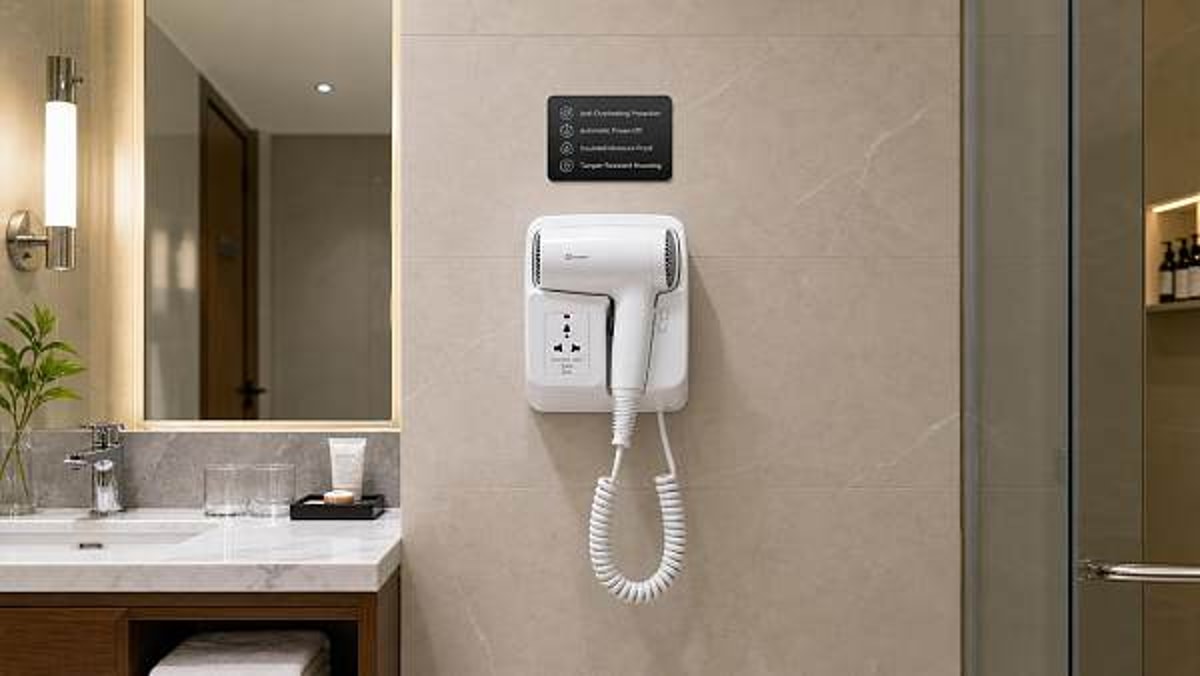
When specifying hotel hair dryers wall mounted for guest bathrooms, procurement teams need more than a sleek appearance or competitive pricing. Safety features such as overheating protection, automatic shut-off, electrical insulation, and tamper-resistant design directly affect guest protection, compliance, and long-term maintenance costs. This guide highlights the key safety points worth checking before making a reliable commercial purchasing decision.
Why safety priorities change from one hotel scenario to another
For procurement professionals, the right choice of hotel hair dryers wall mounted depends heavily on where and how the unit will be used. A compact business hotel with rapid room turnover does not face the same operating conditions as a beachfront resort, a family-focused property, or a luxury wellness destination. Moisture exposure, guest demographics, maintenance staffing, expected usage frequency, and local electrical regulations all shape which safety features deserve the highest priority.
This is why a simple specification sheet rarely tells the full story. Two models may look similar in wattage and finish, yet differ greatly in thermal control, housing durability, grounding design, internal wiring protection, or vandal resistance. For B2B buyers, the purchasing decision should connect safety engineering to the real guest environment, because poor scenario fit often leads to service calls, damaged walls, overheating incidents, and avoidable replacement cycles.
Common hotel application scenarios and what buyers should check first
Before comparing brands, it helps to map hotel hair dryers wall mounted to the operating context. The table below gives procurement teams a practical starting point for scenario-based evaluation.
Safety features worth checking in high-turnover business hotels
In business hotels, guest stays are short, room cleaning cycles are fast, and staff often need equipment that works reliably with minimal intervention. In this scenario, hotel hair dryers wall mounted should have dependable automatic shut-off when the handle is returned to the holder or after a defined inactive interval. This reduces the risk of units being left energized by distracted travelers rushing to meetings or flights.
Overheating protection is equally important. Repeated back-to-back use can raise internal temperatures quickly, especially if air inlets become partially blocked by dust or bathroom lint. Buyers should ask whether the device includes a thermal cut-out, thermostat, or dual-stage protection mechanism. It is also useful to confirm how the unit resets after overheating. A model that resets safely without internal damage can reduce maintenance cost across large room inventories.
Cable strain relief matters more than many procurement teams expect. In high-turnover properties, cords and handles receive constant pulling. A wall-mounted dryer with reinforced cable entry, durable handle docking, and secure bracket attachment will usually outperform a lower-cost product that passes a sample inspection but fails during real guest use.
What to prioritize in humid resort, spa, and poolside-adjacent environments
Resorts and wellness hotels create a different risk profile for hotel hair dryers wall mounted. Guests may return from pools, spas, or beaches with wet hands, and bathrooms often remain humid for extended periods. Here, electrical insulation, moisture resistance, and installation suitability for damp areas become central buying criteria rather than secondary technical details.
Procurement teams should verify the material quality of the outer housing and internal insulation barriers. Double-insulated designs can provide an extra level of safety if correctly engineered and certified. Buyers should also ask suppliers about sealing around switches, handle joints, and wall interfaces, because moisture ingress often starts at these weak points.
It is also wise to confirm compatibility with local bathroom electrical requirements. In some markets, installation location relative to sinks, showers, or bathtubs is tightly regulated. A compliant wall-mounted hair dryer is not just a product issue; it is a product-plus-installation issue. GCT-style sourcing discipline means checking the certificate, the wiring specification, and the installer guidance together rather than in isolation.
Family-oriented properties: reducing misuse and accidental contact risks
In family hotels, serviced apartments, and leisure properties where children are common guests, safety evaluation should go beyond standard electrical protection. Hotel hair dryers wall mounted need to minimize accidental activation, reduce hot-surface exposure, and limit opportunities for improper handling.
Cool-touch housing is a valuable feature in this setting. Even when the air outlet becomes warm, the body and handle should remain safe to touch during normal use. Tamper-resistant mounting also deserves attention. Children may pull, swing, or play with cords, so the wall plate, holder, and screw system should resist loosening over time. A unit that appears secure at installation but gradually shifts under repeated force can create both safety and maintenance concerns.
Another useful consideration is cable management. A controlled extension cord or partially coiled design can reduce tripping hazards and prevent the cable from reaching wet zones unnecessarily. For buyers working on family-friendly refurbishment projects, these details often deliver greater risk reduction than simply choosing a lower wattage product.
Luxury and extended-use guest rooms: comfort cannot replace safety engineering
Luxury hotels often prioritize guest experience, quiet performance, and refined bathroom design. However, premium appearance should never distract from the commercial safety core of hotel hair dryers wall mounted. In upscale rooms, guests may use dryers for longer styling sessions, increasing thermal load and operating duration. This makes motor quality, temperature regulation, and airflow consistency especially important.
Procurement buyers should ask whether the product maintains stable performance without excessive external heat build-up. Higher-end finishes, metallic accents, and compact designer housings can look attractive, but they must still support safe heat dissipation. Requesting cycle-test data, internal component information, and evidence of commercial-grade durability is a better sourcing practice than relying on appearance-led sampling alone.
Noise should be reviewed in parallel with safety. Some low-noise designs restrict airflow in ways that may increase internal heat if not properly engineered. In premium settings, the best unit is one that combines guest comfort, easy housekeeping, and robust protective systems without compromising certification integrity.
Budget, transit, and high-volume properties: where durability becomes a safety issue
For economy hotels, airport hotels, worker accommodations, and large-volume chains, product abuse and maintenance limitations are common realities. In these scenarios, hotel hair dryers wall mounted should be assessed as a risk-control asset, not only a guest amenity. Impact-resistant casings, anti-theft screws, reinforced brackets, and simple one-hand operation can prevent frequent minor failures that later become safety hazards.
A cracked housing, loose holder, or exposed internal cable may begin as a durability complaint but soon turns into an electrical concern. This is why total cost of ownership matters. A slightly more expensive commercial model with stronger mechanical design may prove safer and cheaper over a multi-year rollout than an entry product with weak mounting hardware.
Procurement teams should also examine replacement part availability. If handles, brackets, or switch modules can be replaced quickly, hotel engineering departments can maintain safe operating condition without replacing the entire unit fleet.
Core technical checkpoints every buyer should verify before approval
Across all scenarios, several technical checks should sit on every sourcing checklist for hotel hair dryers wall mounted. First, confirm recognized product certifications relevant to the destination market. Depending on project geography, this may include CE, UKCA, ETL, UL, GS, or other accepted marks. Certifications should match the exact product configuration rather than a similar family model.
Second, review rated voltage, frequency compatibility, insulation class, grounding or double-insulation design, and bathroom-use restrictions. Third, evaluate the fire behavior of housing materials and whether the product includes thermal fuse protection in addition to standard temperature control. Fourth, ask for installation instructions that clearly define wall type, fixing method, circuit requirements, and safe clearance recommendations.
Finally, do not ignore maintenance access. Filters or air inlets that are impossible to clean can accelerate overheating. A safe design is not only about factory construction; it is also about whether hotel staff can keep the unit in safe condition over time.
A practical comparison checklist for procurement teams
The following comparison matrix helps buyers align hotel hair dryers wall mounted with project needs instead of relying on brochure claims.
Common purchasing mistakes when specifying wall-mounted hotel dryers
One common mistake is treating all hotel hair dryers wall mounted as interchangeable because they share a similar visual format. In reality, internal safety architecture varies widely. Another error is focusing only on power output and unit price while ignoring installation environment, replacement logistics, and cleaning workload.
Buyers also sometimes approve products based on residential-style samples that are not engineered for commercial occupancy. This can lead to higher failure rates in guest rooms, especially where use frequency is high. A further risk is assuming that certification alone guarantees suitability. If the installation method, bathroom zone, or local voltage condition is mismatched, a certified unit can still become a poor procurement choice.
The strongest sourcing outcome comes from pairing supplier documentation with project-specific questions: Who will use it, how often, in what humidity level, under which local electrical code, and with what maintenance resources?
FAQ for buyers evaluating hotel hair dryers wall mounted
Are wall-mounted hotel hair dryers safer than drawer-stored units?
They can be safer in many commercial settings because fixed placement reduces cable damage, limits theft, and supports controlled shut-off behavior. However, safety depends on product quality and compliant installation, not mounting style alone.
Which single feature should never be skipped?
If one feature must be prioritized, it is reliable overheat protection. That said, the best procurement decision combines thermal safety, insulation, and mechanical durability rather than relying on one specification.
Do luxury hotels need different safety standards?
The safety baseline should remain rigorous for all properties, but luxury hotels often need stronger thermal stability and extended-use performance because guests may operate the dryer for longer periods.
How to move from product comparison to a safer final sourcing decision
For procurement teams, the best approach is to shortlist hotel hair dryers wall mounted according to scenario fit first, then compare pricing second. Map each property type to its risk profile, verify certifications for the target market, review installation constraints, and ask suppliers for evidence of commercial durability. If possible, test pilot units in a live operating environment before chain-wide deployment.
In a sourcing landscape where guest expectations, liability concerns, and operating efficiency all matter, safety features are not minor technical details. They are purchasing criteria that directly influence brand reputation, maintenance costs, and compliance confidence. By matching the right safety features to the right hotel scenario, buyers can make more resilient, lower-risk decisions and specify hotel hair dryers wall mounted with greater long-term certainty.
Search News
Hot Articles
Popular Tags
Need ExpertConsultation?
Connect with our specialized leisureengineering team for procurementstrategies.
Recommended News
 May 03, 2026Hotel room minibar fridges: silent operation is not enoughHotel room minibar fridges now require more than silent operation. Explore how energy efficiency, design fit, compliance, and lifecycle value shape smarter hotel sourcing.● Hospitality Sourcing Dir
 May 03, 2026HVAC systems for hotels: poor zoning raises energy bills quietlyHVAC systems for hotels can silently inflate energy bills when zoning is weak. Learn how smarter controls cut costs, improve guest comfort, and protect long-term hotel asset value.● Hospitality Sourcing Dir
 May 03, 2026Wooden coat hangers hotel projects should not overlook finish qualityWooden coat hangers hotel buyers should not ignore finish quality. Learn how smoothness, coating safety, and color consistency reduce complaints, protect brand image, and lower replacement costs.● Hospitality Sourcing Dir
 May 03, 2026Artificial plants for hotels: where they look premium, not fakeArtificial plants for hotels that look premium, not fake—discover how luxury properties use realistic faux greenery to elevate ambiance, cut maintenance, and protect brand consistency.● Hospitality Sourcing Dir
 May 03, 2026Commercial hand dryers can lower waste, but noise still mattersCommercial hand dryers reduce paper waste and maintenance costs, but noise can shape comfort and brand perception. Discover how to choose the right model for every commercial space.● Hospitality Sourcing Dir
 May 03, 2026Hotel hair dryers wall mounted: safety features worth checkingHotel hair dryers wall mounted: discover the safety features buyers should check first, from overheat protection to tamper resistance, for safer, smarter hotel sourcing.● Hospitality Sourcing Dir
 May 03, 2026Smart hotel room controls work best when systems talk to each otherSmart hotel room controls work best when HVAC, lighting, access, and service platforms connect seamlessly. Learn how interoperability improves efficiency, guest experience, and long-term scalability.● Hospitality Sourcing Dir
 May 03, 2026Automatic soap dispensers: battery life is not the only issueAutomatic soap dispensers are about more than battery life. Discover how sensor accuracy, refill compatibility, maintenance, and durability impact hygiene, cost, and user experience.● Hospitality Sourcing Dir
 May 03, 2026What hotels often miss when sourcing illuminated makeup mirrorsIlluminated makeup mirrors hotel buyers often miss key specs that affect guest satisfaction, maintenance, and brand value. Discover what to check before sourcing.● Hospitality Sourcing Dir
 May 03, 2026Commercial air purifiers: HEPA ratings that matter in hotelsCommercial air purifiers for hotels: learn which HEPA ratings truly matter for guest rooms, lobbies, and wellness zones to improve comfort, compliance, and smarter buying.● Hospitality Sourcing Dir
 May 03, 2026Wholesale toilet paper rolls: what affects true cost per useWholesale toilet paper rolls are not just about low case price. Learn what affects true cost per use, from sheet strength to dispenser fit, and source smarter for long-term savings.● Hospitality Sourcing Dir
 May 02, 2026Memory foam hotel mattresses: when soft comfort leads to faster saggingMemory foam hotel mattresses may feel luxurious at first, but can soft comfort cause faster sagging? Discover how buyers can reduce risk, improve durability, and protect hotel ROI.● Hospitality Sourcing Dir
 May 02, 2026Electronic hotel door locks: battery alerts are often less simple than they seemElectronic hotel door locks battery alerts are more complex than they appear. Learn how firmware, usage, and environment affect reliability, maintenance efficiency, and smarter sourcing.● Hospitality Sourcing Dir
 May 02, 2026Hotel housekeeping carts: the layout detail that saves minutes on every floorHotel housekeeping carts can save minutes on every floor. Discover how smarter cart layout improves workflow, reduces labor strain, and supports faster, more consistent room turnover.● Hospitality Sourcing Dir
 May 02, 2026Wholesale hotel safes: keypad reliability matters more than extra featuresWholesale hotel safes should be judged by keypad reliability first. Discover the checklist that helps buyers reduce lockouts, maintenance costs, and guest complaints.● Hospitality Sourcing Dir
 May 02, 2026Hotel lobby chandeliers: how size mistakes affect the whole arrival experienceHotel lobby chandeliers can make or break first impressions. Learn how sizing mistakes affect luxury, circulation, and brand value—and how to choose the right scale.● Hospitality Sourcing Dir
 May 02, 2026Industrial ironing machines: steam output is not the only thing to compareIndustrial ironing machines should be compared by more than steam output. Discover how temperature control, pressure stability, efficiency, and durability affect real commercial performance.● Hospitality Sourcing Dir
 May 02, 2026Blackout curtains for hotels that block light without trapping heatBlackout curtains for hotels that block light without trapping heat—discover smarter fabrics, thermal comfort benefits, and sourcing tips for better guest sleep and hotel performance.● Hospitality Sourcing Dir
 May 02, 2026Hotel luggage carts: why wheel quality matters more than frame finishHotel luggage carts perform best when wheel quality comes first. Discover how better casters reduce noise, protect floors, improve handling, and lower long-term hotel maintenance costs.● Hospitality Sourcing Dir
 May 02, 2026Custom printed hotel key cards: PVC or wood for a better guest feel?Custom printed hotel key cards: compare PVC and wood to find the best mix of guest feel, durability, sustainability, and brand impact for smarter hotel sourcing.● Hospitality Sourcing Dir
 May 02, 2026Commercial laundry equipment sizing mistakes that raise utility billsCommercial laundry equipment sizing mistakes can quietly drive up water, energy, and labor costs. Learn the biggest planning errors and how smarter sizing protects budgets and efficiency.● Hospitality Sourcing Dir
 May 02, 2026Why some wholesale bath towels for hotels wear out too fastWholesale bath towels for hotels can wear out fast due to fiber quality, GSM, weave, and laundering mismatch. Learn how to choose durable towels that cut replacement costs and protect guest experience.● Hospitality Sourcing Dir
 May 01, 2026Hotel Desks That Work for Both Business Guests and Small RoomsHotel desks for compact rooms: learn how to choose durable, space-saving, business-friendly designs that improve guest satisfaction and simplify hotel procurement.● Hospitality Sourcing Dir
 May 01, 2026Hotel Slippers in Bulk: Cheap Pairs Can Hurt Guest PerceptionHotel slippers bulk choices affect more than cost. Discover how cheap pairs can damage guest perception, comfort, and brand value—and how smarter sourcing improves reviews.● Hospitality Sourcing Dir