Automatic soap dispensers: battery life is not the only issue
When evaluating automatic soap dispensers, battery life often gets the most attention—but it is far from the only factor that affects long-term performance. For buyers comparing options for hotels, offices, schools, or public facilities, issues like sensor accuracy, refill compatibility, maintenance demands, and hygiene standards can have a much greater impact on value, reliability, and user experience.
Understanding automatic soap dispensers beyond power consumption
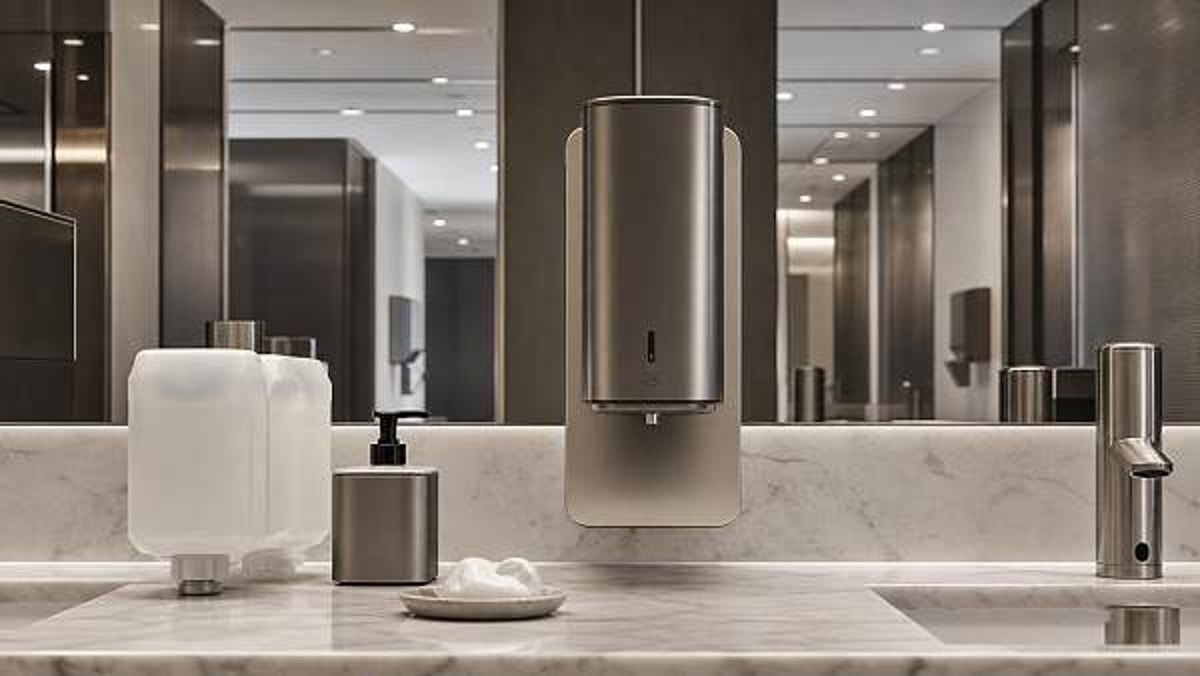
Automatic soap dispensers are touch-free dispensing devices designed to release a measured amount of soap, sanitizer, or wash liquid when a user’s hand is detected by a sensor. In commercial spaces, they are no longer seen as simple convenience products. They are part of a larger hygiene system that influences facility image, labor efficiency, user satisfaction, and health protection. For information researchers exploring the category, it is useful to view automatic soap dispensers as operating assets rather than as isolated bathroom accessories.
This shift in perspective matters because the environments where these units are installed are diverse and demanding. A luxury hotel restroom, a school washroom, a hospital-adjacent office corridor, and a high-traffic entertainment venue all create different stress conditions. Sensor-triggered performance, soap viscosity handling, refill management, and housing durability may determine success more than battery capacity alone. In many projects, a dispenser that lasts longer on paper but clogs, leaks, or frustrates users can generate higher total cost over time.
Why the market pays close attention to this category
The rise of touch-free infrastructure across commercial environments has elevated automatic soap dispensers from optional upgrades to standard expectations. Since hygiene has become closely linked with brand trust, operators in hospitality, education, office management, and public services now evaluate washroom and handwashing systems more strategically. The dispenser is often one of the first physical touchpoints users notice in a restroom or shared washing area, so performance failures become highly visible.
For sourcing specialists, this category also reflects a broader procurement challenge seen across commercial equipment markets: a product may appear standardized, yet actual outcomes depend on hidden variables. GCT’s sector-focused approach is especially relevant here because decision-makers need more than basic product descriptions. They need sourcing intelligence tied to compliance, user flow, maintenance workloads, and brand positioning. Automatic soap dispensers sit at the intersection of hygiene technology, facility design, and ongoing operations, which is why informed evaluation is essential.
The factors that matter more than many buyers expect
Sensor accuracy and response consistency
A touch-free dispenser only creates value if it works predictably. Poor sensor calibration can cause false triggers, delayed dispensing, or no dispensing at all. In low-traffic executive spaces, this may be an irritation. In a stadium, airport lounge, or school corridor, it becomes a service failure. The best automatic soap dispensers maintain stable detection across changing light conditions, hand positions, and user heights.
Refill compatibility and supply continuity
Refill design affects purchasing flexibility and operating stability. Some dispensers are closed-cartridge systems that support hygiene control and dosing consistency, while others allow bulk refilling for lower consumable cost. Neither model is universally better. The key question is whether the chosen system fits the operator’s refill supply chain, labor capability, and contamination risk tolerance. If replacement cartridges are difficult to source internationally or if bulk-fill systems are prone to residue buildup, long-term value quickly declines.
Dispensing control and soap format suitability
Liquid soap, foam soap, and gel sanitizer do not behave the same way. Automatic soap dispensers should be matched to the intended formulation, because pump design, nozzle shape, and dose volume all affect user satisfaction and waste rates. Over-dispensing increases refill costs and creates sink mess. Under-dispensing leads to repeat triggers and poor hygiene outcomes. In premium hospitality settings, even the feel of the dispensing action can shape perception of quality.
Maintenance burden and cleaning access
Maintenance is often underestimated during product selection. Units that require frequent recalibration, difficult battery changes, awkward reservoir access, or specialized tools impose hidden labor costs. Surfaces that trap dried soap, seams that collect grime, and poorly sealed compartments can make cleaning inefficient. In commercial environments, easy serviceability is not a minor preference; it directly affects operational continuity.
Housing durability and vandal resistance
In high-traffic or lightly supervised spaces, physical durability matters as much as electronics. Plastic bodies may work well in guest suites or controlled office areas, while metal housings or reinforced engineering polymers may be more appropriate in schools, transport hubs, or public venues. Mounting stability, lock design, impact resistance, and leak prevention are all practical indicators of life-cycle performance.
Industry overview: how priorities change by commercial environment
Different sectors evaluate automatic soap dispensers through different operational lenses. The table below outlines the most common priorities.
Business value: why better specification improves outcomes
Choosing the right automatic soap dispensers can create measurable business value in several ways. First, touch-free performance supports a stronger hygiene narrative, which is especially important in hospitality, specialty retail, and corporate environments where trust and presentation influence perception. Second, optimized dosing and refill planning can reduce consumable waste. Third, lower maintenance complexity helps facility teams protect service quality with less intervention.
There is also a procurement intelligence benefit. Buyers who understand the relationship between dispenser design and operating conditions are better able to compare OEM and ODM offerings, validate supplier claims, and avoid specification mismatches. This is highly aligned with GCT’s mission of helping commercial buyers source solutions that balance aesthetics, compliance, and supply chain reliability. In practical terms, the most successful sourcing decisions often come from evaluating the dispenser as part of the entire handwashing ecosystem rather than as a standalone item.
Common application categories and what they require
Not all automatic soap dispensers should be assessed using the same criteria. Application category influences what “good performance” looks like.
Practical evaluation points for information researchers and buyers
If you are researching automatic soap dispensers for future sourcing, planning, or benchmarking, it helps to organize assessment around a few practical checkpoints rather than marketing claims alone.
Start with use conditions. Estimate user volume, supervision level, refill frequency, and likely abuse or misuse. Then verify technical fit. Ask what soap formats are supported, how dosage is controlled, whether there is anti-leak design, and how the sensor behaves in real-world settings. Next, look at maintenance implications. Review battery access, refill replacement time, spare part availability, and cleaning requirements. Finally, check standards and supplier credibility. Commercial projects benefit from documented testing, stable production quality, and transparent OEM or ODM capability.
This approach helps separate products that look similar online but perform very differently in operation. It also supports smarter conversations with global sourcing partners, especially when the project requires design customization, multi-country deployment, or alignment with broader facility standards.
Frequently overlooked details that influence long-term success
Several details are often missed during early comparison. One is installation context. Wall material, sink placement, splash exposure, and traffic direction can all affect performance. Another is refill ecosystem lock-in. A low-cost dispenser may create future dependence on a narrow cartridge supply channel. A third is user behavior. Children, travelers, and first-time visitors may interact differently with touch-free systems, so intuitive activation matters. Even noise level can be important in premium or quiet spaces.
Battery life still deserves attention, but it should be interpreted correctly. Long battery duration is valuable only when it comes with stable output, easy replacement, and clear low-power indication. Otherwise, power efficiency becomes a headline feature that distracts from more costly weaknesses.
A balanced path forward for commercial decision-makers
For most organizations, the right way to evaluate automatic soap dispensers is to combine hygiene expectations, design goals, maintenance reality, and sourcing resilience into one decision framework. This is especially true across global commercial projects, where a product must perform consistently in different markets and under varied usage patterns. The best results usually come from pilot testing in representative environments, comparing refill models carefully, and validating supplier support before scaling deployment.
As commercial spaces continue to prioritize experience and operational efficiency, automatic soap dispensers will remain a visible and functional part of facility strategy. Buyers and researchers who look beyond battery claims are better positioned to identify solutions that truly support hygiene, reduce service friction, and strengthen the overall commercial experience. For organizations seeking higher-confidence sourcing decisions, a structured, evidence-based review is the most reliable next step.
Search News
Hot Articles
Popular Tags
Need ExpertConsultation?
Connect with our specialized leisureengineering team for procurementstrategies.
Recommended News
 May 03, 2026Hotel room minibar fridges: silent operation is not enoughHotel room minibar fridges now require more than silent operation. Explore how energy efficiency, design fit, compliance, and lifecycle value shape smarter hotel sourcing.● Hospitality Sourcing Dir
 May 03, 2026HVAC systems for hotels: poor zoning raises energy bills quietlyHVAC systems for hotels can silently inflate energy bills when zoning is weak. Learn how smarter controls cut costs, improve guest comfort, and protect long-term hotel asset value.● Hospitality Sourcing Dir
 May 03, 2026Wooden coat hangers hotel projects should not overlook finish qualityWooden coat hangers hotel buyers should not ignore finish quality. Learn how smoothness, coating safety, and color consistency reduce complaints, protect brand image, and lower replacement costs.● Hospitality Sourcing Dir
 May 03, 2026Artificial plants for hotels: where they look premium, not fakeArtificial plants for hotels that look premium, not fake—discover how luxury properties use realistic faux greenery to elevate ambiance, cut maintenance, and protect brand consistency.● Hospitality Sourcing Dir
 May 03, 2026Commercial hand dryers can lower waste, but noise still mattersCommercial hand dryers reduce paper waste and maintenance costs, but noise can shape comfort and brand perception. Discover how to choose the right model for every commercial space.● Hospitality Sourcing Dir
 May 03, 2026Hotel hair dryers wall mounted: safety features worth checkingHotel hair dryers wall mounted: discover the safety features buyers should check first, from overheat protection to tamper resistance, for safer, smarter hotel sourcing.● Hospitality Sourcing Dir
 May 03, 2026Smart hotel room controls work best when systems talk to each otherSmart hotel room controls work best when HVAC, lighting, access, and service platforms connect seamlessly. Learn how interoperability improves efficiency, guest experience, and long-term scalability.● Hospitality Sourcing Dir
 May 03, 2026Automatic soap dispensers: battery life is not the only issueAutomatic soap dispensers are about more than battery life. Discover how sensor accuracy, refill compatibility, maintenance, and durability impact hygiene, cost, and user experience.● Hospitality Sourcing Dir
 May 03, 2026What hotels often miss when sourcing illuminated makeup mirrorsIlluminated makeup mirrors hotel buyers often miss key specs that affect guest satisfaction, maintenance, and brand value. Discover what to check before sourcing.● Hospitality Sourcing Dir
 May 03, 2026Commercial air purifiers: HEPA ratings that matter in hotelsCommercial air purifiers for hotels: learn which HEPA ratings truly matter for guest rooms, lobbies, and wellness zones to improve comfort, compliance, and smarter buying.● Hospitality Sourcing Dir
 May 03, 2026Wholesale toilet paper rolls: what affects true cost per useWholesale toilet paper rolls are not just about low case price. Learn what affects true cost per use, from sheet strength to dispenser fit, and source smarter for long-term savings.● Hospitality Sourcing Dir
 May 02, 2026Memory foam hotel mattresses: when soft comfort leads to faster saggingMemory foam hotel mattresses may feel luxurious at first, but can soft comfort cause faster sagging? Discover how buyers can reduce risk, improve durability, and protect hotel ROI.● Hospitality Sourcing Dir
 May 02, 2026Electronic hotel door locks: battery alerts are often less simple than they seemElectronic hotel door locks battery alerts are more complex than they appear. Learn how firmware, usage, and environment affect reliability, maintenance efficiency, and smarter sourcing.● Hospitality Sourcing Dir
 May 02, 2026Hotel housekeeping carts: the layout detail that saves minutes on every floorHotel housekeeping carts can save minutes on every floor. Discover how smarter cart layout improves workflow, reduces labor strain, and supports faster, more consistent room turnover.● Hospitality Sourcing Dir
 May 02, 2026Wholesale hotel safes: keypad reliability matters more than extra featuresWholesale hotel safes should be judged by keypad reliability first. Discover the checklist that helps buyers reduce lockouts, maintenance costs, and guest complaints.● Hospitality Sourcing Dir
 May 02, 2026Hotel lobby chandeliers: how size mistakes affect the whole arrival experienceHotel lobby chandeliers can make or break first impressions. Learn how sizing mistakes affect luxury, circulation, and brand value—and how to choose the right scale.● Hospitality Sourcing Dir
 May 02, 2026Industrial ironing machines: steam output is not the only thing to compareIndustrial ironing machines should be compared by more than steam output. Discover how temperature control, pressure stability, efficiency, and durability affect real commercial performance.● Hospitality Sourcing Dir
 May 02, 2026Blackout curtains for hotels that block light without trapping heatBlackout curtains for hotels that block light without trapping heat—discover smarter fabrics, thermal comfort benefits, and sourcing tips for better guest sleep and hotel performance.● Hospitality Sourcing Dir
 May 02, 2026Hotel luggage carts: why wheel quality matters more than frame finishHotel luggage carts perform best when wheel quality comes first. Discover how better casters reduce noise, protect floors, improve handling, and lower long-term hotel maintenance costs.● Hospitality Sourcing Dir
 May 02, 2026Custom printed hotel key cards: PVC or wood for a better guest feel?Custom printed hotel key cards: compare PVC and wood to find the best mix of guest feel, durability, sustainability, and brand impact for smarter hotel sourcing.● Hospitality Sourcing Dir
 May 02, 2026Commercial laundry equipment sizing mistakes that raise utility billsCommercial laundry equipment sizing mistakes can quietly drive up water, energy, and labor costs. Learn the biggest planning errors and how smarter sizing protects budgets and efficiency.● Hospitality Sourcing Dir
 May 02, 2026Why some wholesale bath towels for hotels wear out too fastWholesale bath towels for hotels can wear out fast due to fiber quality, GSM, weave, and laundering mismatch. Learn how to choose durable towels that cut replacement costs and protect guest experience.● Hospitality Sourcing Dir
 May 01, 2026Hotel Desks That Work for Both Business Guests and Small RoomsHotel desks for compact rooms: learn how to choose durable, space-saving, business-friendly designs that improve guest satisfaction and simplify hotel procurement.● Hospitality Sourcing Dir
 May 01, 2026Hotel Slippers in Bulk: Cheap Pairs Can Hurt Guest PerceptionHotel slippers bulk choices affect more than cost. Discover how cheap pairs can damage guest perception, comfort, and brand value—and how smarter sourcing improves reviews.● Hospitality Sourcing Dir