Outdoor rattan dining sets: which weave lasts in commercial use
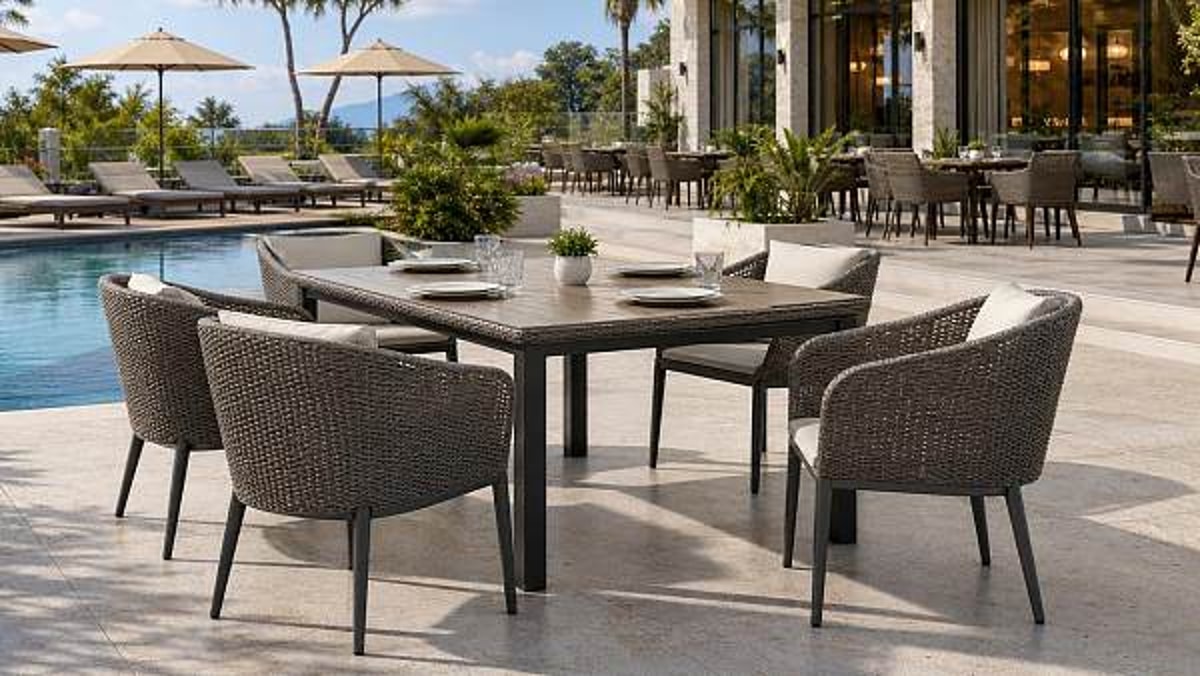
For procurement teams specifying outdoor rattan dining sets for hotels, restaurants, and high-traffic venues, weave durability is not a cosmetic detail—it directly affects lifecycle cost, guest experience, and replacement risk. This guide compares the weaves that perform best in commercial use, helping buyers assess material strength, weather resistance, maintenance demands, and long-term value before placing large-volume orders.
In commercial buying, the question is rarely whether outdoor rattan dining sets look attractive on day one. The more important question is how the weave will perform after 12, 24, or 36 months of UV exposure, frequent cleaning, heavy guest turnover, and furniture movement across terraces, pool decks, and restaurant patios. For buyers managing CAPEX, operating budgets, and brand standards, weave construction deserves the same scrutiny as frame material, finish quality, and lead time.
The strongest purchasing decisions balance four factors: structural longevity, maintenance workload, visual consistency, and supplier reliability. A lower unit price can become expensive if the weave splits within one season, fades unevenly, or traps dirt in ways that increase housekeeping hours. By contrast, a commercial-grade specification can often extend replacement cycles by 2 to 4 years, reducing disruption and protecting the guest-facing environment.
Why weave type matters more in commercial settings
Residential outdoor furniture may be used a few times per week. In hospitality and foodservice environments, the same chair can be occupied dozens of times per day during peak season. That change in duty cycle alters the procurement logic. Outdoor rattan dining sets in commercial use face repeated loading, frequent chair stacking or repositioning, and more aggressive cleaning with detergents, sanitizers, and pressure-rinsing practices.
A weave that looks dense and refined in a showroom may still fail under commercial conditions if the strands are too thin, if tension is inconsistent, or if the pattern concentrates stress around seat edges and arm contact points. In many projects, the first visible failures appear in 6 to 18 months at high-friction zones, not across the entire chair. Buyers should therefore evaluate not just material type, but also weave geometry and how the supplier reinforces load-bearing areas.
The main commercial stress factors
- UV exposure for 8 to 10 hours per day in open-air venues
- Humidity swings, rainfall, and poolside chlorine contact
- Daily cleaning cycles ranging from 1 to 3 times
- Guest turnover creating repeated abrasion on seat fronts and backs
- Operational movement by staff during setup, breakdown, and floor cleaning
What procurement should inspect before approval
At the sampling stage, ask for a full chair, not only a material swatch. Visual samples do not reveal whether the outdoor rattan dining sets maintain even tension, smooth edge finishing, and secure fastening around curves. A practical test period of 2 to 4 weeks in a live or simulated environment can reveal squeaking, strand movement, surface whitening, and dirt retention patterns that are invisible in static showroom evaluation.
The table below outlines the most common weave categories used in outdoor rattan dining sets and how they usually perform in commercial applications.
For most commercial dining environments, flat and half-round weaves are the safest specifications. They tend to offer the best balance between durability, cleaning efficiency, and appearance retention. Round and decorative patterns may still work well, but usually in lower-impact zones or where design priorities justify higher maintenance and replacement planning.
Which weave usually lasts longest in outdoor rattan dining sets
When buyers ask which weave lasts longest, the practical answer is this: commercial-grade flat polyethylene weave and well-made half-round polyethylene weave usually outperform decorative round constructions in high-use dining operations. The reason is not only material chemistry, but also how force is distributed across the seat, back, and frame contact points.
In outdoor rattan dining sets, flat weave often creates a tighter, more stable surface with fewer protruding edges. That matters when chairs are slid in and out of tables 50 to 100 times per day. Half-round weave follows closely, especially when the strand thickness is robust and the backing structure is properly tensioned. Both can deliver multi-season performance if paired with powder-coated aluminum frames and UV-stabilized synthetic fiber.
Material matters as much as pattern
Natural rattan is generally unsuitable for exposed commercial outdoor use. It may work in covered indoor-outdoor spaces, but in open weather conditions it absorbs moisture, dries unevenly, and degrades much faster than synthetic alternatives. For hospitality procurement, high-density PE rattan is the most common baseline because it resists cracking, fading, and moisture better over a 3- to 5-year commercial cycle.
Commercial durability indicators to request from suppliers
- UV-stabilized synthetic weave suitable for year-round outdoor use
- Aluminum frame wall thickness commonly in the 1.2 mm to 2.0 mm range
- Reinforced weave density at seat edge and lumbar contact zones
- Color consistency across production batches of 100 to 500 units
- Replacement strand or repair support for post-installation service
Another overlooked issue is elasticity. If the weave is too rigid, it may snap under repeated stress. If it is too soft, it can sag and distort. Buyers should look for controlled flexibility that returns to shape after load. In commercial seating, this middle ground often delivers the best long-term result.
How different venue types change the best weave choice
Not every project needs the same specification. A resort pool bar, an all-day dining terrace, and a rooftop restaurant have different exposure levels, guest behavior, and housekeeping methods. Procurement teams should match outdoor rattan dining sets to the real operating environment rather than buying one universal design for every site.
High-turnover restaurants and cafés
For venues with rapid table turns, flat weave is often the strongest choice. It speeds wiping, reduces crumb retention, and supports faster reset time between covers. If the venue processes 150 to 300 diners per day, even a cleaning time difference of 20 to 30 seconds per chair can have a visible labor impact over a season.
Hotels, resorts, and premium terraces
Half-round weave is frequently preferred where visual warmth matters as much as durability. It offers a more residential-luxury appearance while still performing well commercially. In upper-tier hospitality, this can support design consistency across dining, lounge, and pool areas, reducing the need for multiple furniture languages across the property.
Coastal and poolside projects
Salt air, chlorine, and strong sun make coastal projects more demanding. In these settings, buyers should prioritize tightly woven synthetic material, drainage-friendly seat design, and corrosion-resistant frames. A beautiful weave will not last if the underlying frame fails within 18 to 24 months. Weave and frame must be specified together.
The following matrix helps procurement teams align weave selection with application intensity.
This comparison shows why there is no single best answer for every commercial project. However, the safest all-around options for large-scale outdoor rattan dining sets remain commercial-grade flat and half-round synthetic weaves, particularly when housekeeping efficiency and lifecycle value are central to the brief.
How to evaluate sample quality before placing a volume order
Before issuing a purchase order for 50, 100, or 500 units, procurement teams should establish a clear approval checklist. Too many buyers assess outdoor rattan dining sets mainly on appearance and unit cost, then discover avoidable issues after installation. A disciplined sample review can significantly reduce claims, returns, and site-level dissatisfaction.
A practical 6-point inspection checklist
- Check strand thickness consistency across the full chair, not just the front-facing side.
- Press the seat and back under moderate load to identify over-stretching or unstable tension.
- Inspect corners, arm joints, and underside fastening where failures often start first.
- Wipe with a damp cloth and mild cleaner to see whether the surface releases dirt easily.
- Compare 3 to 5 units side by side for color match, weave spacing, and frame alignment.
- Ask for packaging details to reduce transit scuffing and deformation during export shipment.
Questions buyers should ask the supplier
Request the expected lead time for both sampling and bulk production. In many international sourcing programs, samples take 7 to 21 days, while volume orders require 30 to 60 days depending on quantity and season. Also confirm whether spare chairs, replacement weave material, or matching components can be supplied after the first shipment. This matters when projects roll out in phases across multiple sites.
If the supplier supports OEM or ODM customization, clarify which elements can be changed without destabilizing the structure. Color, cushion fabric, and minor dimension changes are common. Major frame geometry changes can alter weave tension and should be prototyped carefully before commercial approval.
Maintenance, repair, and lifecycle cost considerations
The longest-lasting outdoor rattan dining sets are not only those made from durable weave, but also those that are easy to maintain within real staffing conditions. A procurement team should estimate total ownership cost over at least 3 years, including cleaning labor, repair frequency, spare stock, and the operational cost of replacing units during service periods.
Maintenance reality in busy venues
A weave with deep texture may require brushes, compressed air, or extra hand cleaning to remove food debris and dust. That can be acceptable in a boutique venue with limited covers, but expensive at scale in a 200-seat resort restaurant. Flat surfaces generally reduce cleaning steps and help maintain a more uniform appearance across the furniture fleet.
Repairability vs replacement
Some outdoor rattan dining sets can be repaired locally if a limited section of the weave loosens or breaks. Others are effectively non-repairable once visible damage occurs. Buyers should decide in advance whether the project strategy is repair-first or replace-first. For large hospitality groups, keeping 3% to 5% spare units in local storage is often more practical than waiting for international replenishment after seasonal damage.
Common procurement mistake
One frequent mistake is selecting a highly decorative weave for a high-turnover dining terrace because it photographs well during concept approval. Six months later, the venue may face slower cleaning, inconsistent wear, and mismatched replacements. Procurement performance improves when visual ambition is balanced with operational discipline from the start.
Final buying guidance for procurement teams
If the priority is long service life in demanding commercial dining environments, start with synthetic flat weave or synthetic half-round weave on a corrosion-resistant aluminum frame. Then verify comfort, cleaning efficiency, sample consistency, and after-sales support. For many hotel, restaurant, and resort buyers, that combination offers the most dependable path to lower lifecycle cost and fewer in-service issues.
Outdoor rattan dining sets should be specified as operational assets, not only as design objects. The right weave choice can reduce maintenance friction, extend replacement intervals, and preserve the visual standard expected in premium guest environments. It also helps procurement teams avoid hidden costs tied to premature failure, emergency replenishment, and brand inconsistency across locations.
For sourcing teams evaluating commercial outdoor furniture across hospitality and related sectors, GCT supports smarter decisions with industry-focused buying guidance, supplier evaluation insight, and practical specification frameworks. To discuss a project, compare commercial weave options, or obtain a tailored sourcing approach for outdoor rattan dining sets, contact us today and get a solution aligned with your venue, budget, and service demands.
Search News
Hot Articles
Popular Tags
Need ExpertConsultation?
Connect with our specialized leisureengineering team for procurementstrategies.
Recommended News
 May 03, 2026Hotel pool lounge chairs: materials that survive sun and chlorineHotel pool lounge chairs buying guide: compare aluminum, resin, sling, and hardware materials that resist sun, chlorine, and heavy use for longer life and lower maintenance.● Hospitality Sourcing Dir
 May 03, 2026Outdoor rattan dining sets: which weave lasts in commercial useOutdoor rattan dining sets: discover which commercial weave lasts longest. Compare flat vs half-round options for durability, cleaning efficiency, and lower lifecycle cost.● Hospitality Sourcing Dir
 May 03, 2026Commercial patio umbrellas need more than UV fabric outdoorsCommercial patio umbrellas need more than UV fabric. Discover how wind stability, corrosion resistance, frame strength, and maintenance impact safer, longer-lasting outdoor projects.● Hospitality Sourcing Dir
 May 02, 2026Folding event tables that stay stable on uneven banquet floorsFolding event tables that stay stable on uneven banquet floors help reduce wobble, speed setup, and improve guest experience. Discover key features buyers should compare.● Hospitality Sourcing Dir
 May 02, 2026Banquet chairs wholesale: stacking height can change storage costsBanquet chairs wholesale decisions should consider stacking height, because smarter storage, faster handling, and lower transport costs can significantly improve long-term venue profitability.● Hospitality Sourcing Dir
 May 02, 2026When wholesale melamine plates look premium and when they do notWholesale melamine plates can look refined or cheap. Learn how finish, weight, design, and supplier quality affect premium appeal before you source for hospitality or retail.● Hospitality Sourcing Dir
 May 01, 2026Restaurant Booth Seating That Saves Space Without Feeling TightRestaurant booth seating that saves space without feeling cramped—discover smart dimensions, durable specs, and layout tips to boost comfort, traffic flow, and revenue.● Hospitality Sourcing Dir
 May 01, 2026How to Choose Commercial Bar Stools for High-Traffic VenuesCommercial bar stools for high-traffic venues: learn how to compare durability, safety, comfort, maintenance, and supplier reliability to choose seating that lasts and performs.● Hospitality Sourcing Dir
 Apr 28, 2026Why Hotel Tables Often Fail at Edges, Bases, and Surface FinishHotel tables often fail at edges, bases, and surface finish. Compare hotel furniture, custom furniture, luxury furniture, hotel chairs, hotel beds, and hotel equipment before you buy.● Hospitality Sourcing Dir
 Apr 28, 2026Hotel Tables With Stone Tops or Wood Tops: Which Performs Better?Hotel tables with stone tops or wood tops? Compare ROI, durability, and style across hotel furniture, custom furniture, hotel chairs, and hotel beds to choose smarter.● Hospitality Sourcing Dir
 Apr 28, 2026The Best Hotel Chairs Balance Comfort, Stackability, and DurabilityHotel chairs that balance comfort, stackability, and durability. Explore hotel furniture, custom furniture, hotel tables, hotel beds, and luxury furniture solutions for hospitality buyers.● Hospitality Sourcing Dir
 Apr 28, 2026Hotel Chairs: What Causes Wobbling, Cracks, and Early Wear?Hotel chairs buying guide: learn what causes wobbling, cracks, and early wear, and how to compare hotel furniture, custom furniture, hotel tables, hotel beds, and luxury furniture for lasting value.● Hospitality Sourcing Dir
 Apr 21, 2026Hotel tables that stay stable on uneven flooringHotel tables that stay stable on uneven flooring: a practical guide for hospitality procurement covering hotel furniture, commercial furniture, luxury furniture, and specs that reduce wobble, risk, and maintenance.● Hospitality Sourcing Dir
 Apr 21, 2026Round or rectangular hotel tables for tighter layouts?Hotel tables for tight layouts: compare round vs rectangular hotel furniture for better flow, seating, and hospitality procurement decisions. Find the best fit for compact hotel room furniture.● Hospitality Sourcing Dir
 Apr 21, 2026Why hotel chairs fail early in banquet spacesHotel chairs in banquet spaces fail early due to stacking, impact, and weak specs. Learn how hotel furniture and commercial furniture choices cut costs and improve hospitality procurement.● Hospitality Sourcing Dir
 Apr 21, 2026Hotel chairs that look elegant and still hold upHotel chairs that blend luxury furniture appeal with commercial furniture durability. Discover how hotel furniture works with hotel tables, hotel desks, and hotel room furniture for smarter hospitality procurement.● Hospitality Sourcing Dir
 Apr 23, 2026How to Choose Commercial Furniture That LastsCommercial furniture buying guide for hotels, schools, and leisure venues—covering hotel tables, playground safety, sensory playgrounds, and durable amusement equipment.● Hospitality Sourcing Dir
 Apr 23, 2026When Commercial Furniture Fails in High-Traffic VenuesLearn why commercial furniture fails in busy venues and how to choose safer hotel tables, playground borders, sensory playground solutions, amusement equipment, and hotel equipment that last.● Hospitality Sourcing Dir
 Apr 20, 2026Hotel tables with edge seams that trap moisture and moldHotel tables, park benches & commercial furniture with mold-trapping edge seams? Discover seamless, moisture-resistant hotel furniture solutions—luxury, custom, and compliant.● Hospitality Sourcing Dir
 Apr 20, 2026Hotel chairs rated for 100,000 cycles—but tested how?Discover how top hotel chairs, park benches & commercial furniture are truly tested for 100,000 cycles—backed by BIFMA, EN & GB/T standards. Get verified luxury furniture insights.● Hospitality Sourcing Dir
 Apr 19, 2026Hotel tables that warp under daily cleaning chemicalsHotel tables, hotel chairs, hotel beds & park benches—discover why chemical warping fails luxury furniture & commercial furniture specs. Get expert OEM insights on durable hotel furniture & equipment.● Hospitality Sourcing Dir
 Apr 19, 2026Hotel chairs with hidden wear patterns no one tests forHotel chairs, luxury furniture & commercial furniture buyers: uncover hidden wear patterns in hotel chairs, hotel beds, and custom furniture—before failure hits ROI.● Hospitality Sourcing Dir
 Apr 18, 2026Custom furniture quoting errors—how small measurement gaps become big cost overrunsAvoid costly overruns: Fix custom furniture quoting errors before they derail hotel beds, theme park rides, playground structures & soundproofing materials.● Hospitality Sourcing Dir
 Apr 17, 2026Restaurant furniture that handles spills, scratches, and constant turnoverCommercial furniture built for spills, scratches & turnover—ideal for playground borders, sensory playgrounds, hotel tables, amusement equipment & more.● Hospitality Sourcing Dir