Conveyor pizza ovens or deck ovens for high-volume service?
For project managers planning high-volume foodservice operations, choosing between conveyor pizza ovens and deck ovens affects throughput, consistency, labor efficiency, and installation requirements. This guide compares both options from a practical, commercial perspective, helping you evaluate which oven type better supports large-scale pizza production, workflow reliability, and long-term operational performance.
Why is the choice between conveyor pizza ovens and deck ovens such a critical project decision?
In high-volume service, the oven is not just a cooking appliance. It is a production control point that shapes kitchen layout, staffing, ticket times, utility planning, product consistency, and even brand positioning. For project managers, the decision between conveyor pizza ovens and deck ovens often influences far more than menu execution. It can affect the number of staff needed per shift, the speed of service during peak demand, and the level of operator skill required to maintain output quality.
Conveyor pizza ovens are typically selected when the business model depends on repeatable throughput, simplified training, and predictable bake times. Deck ovens, by contrast, are often preferred where product character, crust variation, artisan presentation, or direct bake control matters more than maximum automation. Neither option is universally better. The right answer depends on production goals, menu complexity, and site conditions.
For commercial projects in hotels, food courts, stadiums, quick-service chains, institutional catering, and entertainment venues, this choice should be treated as an operations strategy question rather than a simple equipment purchase.
What is the real operational difference between conveyor pizza ovens and deck ovens?
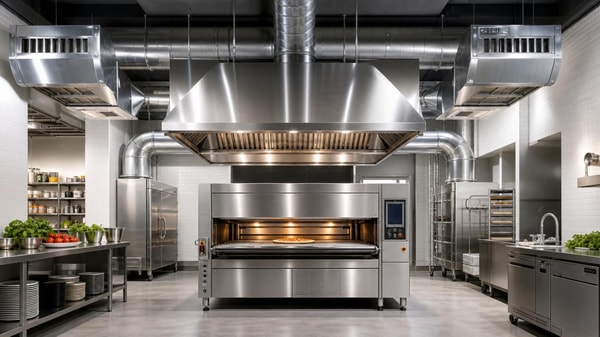
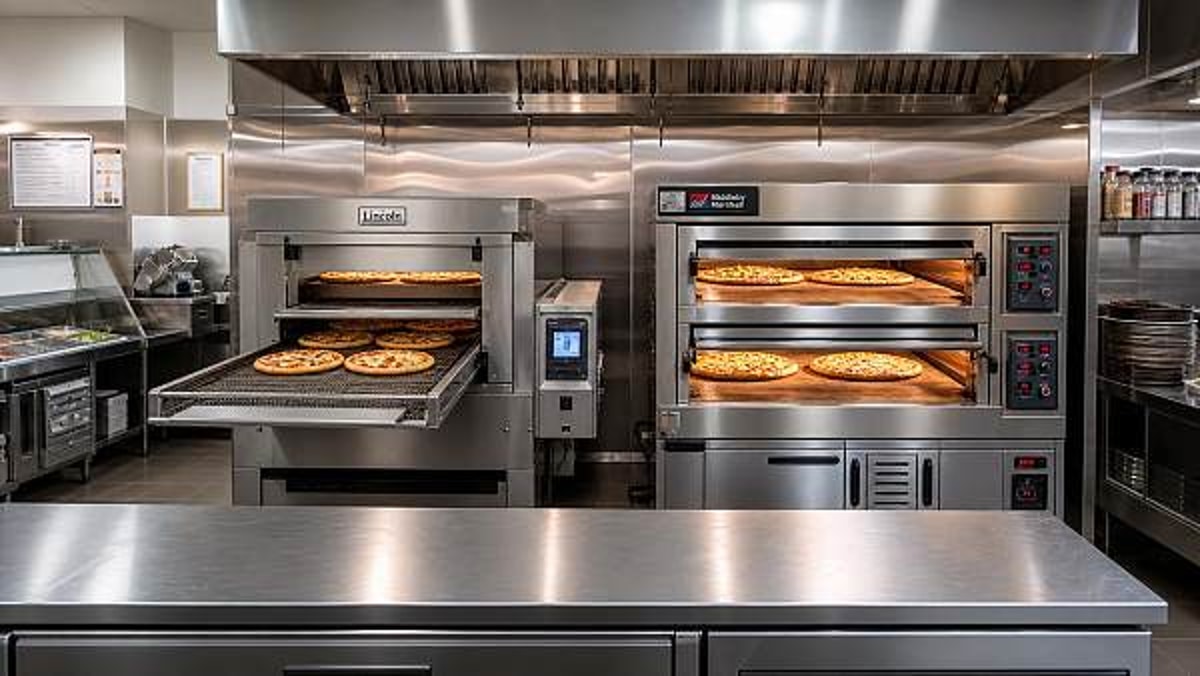
The core difference lies in how each oven manages heat and operator involvement. Conveyor pizza ovens move pizzas through a controlled baking chamber at a preset speed and temperature profile. Once properly calibrated, they deliver highly standardized results. This is especially useful in multi-shift environments where operator experience varies.
Deck ovens use stone or metal decks and rely more heavily on manual loading, positioning, rotation, and timing. They give chefs more direct control over the bake, which can help achieve specific crust textures, char patterns, or moisture balance. However, that flexibility comes with greater dependence on staff skill and continuous attention.
From a project delivery perspective, conveyor pizza ovens support process engineering. Deck ovens support craft control. If your service model needs a stable, measurable output every hour, conveyor systems often align better with commercial KPIs. If your brand sells authenticity and handcrafted differentiation, a deck format may support the concept more effectively.
Quick comparison table for project evaluation
The table below summarizes the most common questions project managers ask when comparing conveyor pizza ovens with deck ovens for high-volume operations.
Which oven type performs better for high-volume pizza production?
If the question is purely about high-volume pizza production, conveyor pizza ovens usually have the advantage. Their design allows a continuous flow of product without requiring constant loading decisions, repositioning, or manual bake adjustments. In busy operations, that means more pizzas can move through the oven with fewer disruptions and less performance variation between shifts.
This matters in settings such as chain restaurants, campus dining, transport hubs, family entertainment centers, and hotel banquet support kitchens. In these environments, production is often measured by hourly output, order turn time, and consistency across hundreds of covers. Conveyor pizza ovens are well suited to these objectives because they help reduce human variability.
Deck ovens can still support high volume, especially in experienced hands and with a focused menu. However, volume from a deck setup is more sensitive to labor quality, oven loading discipline, and the kitchen team’s ability to monitor multiple pizzas at once. A skilled team can produce excellent results, but scaling that performance across locations or across long operating hours is more difficult.
For project managers responsible for performance guarantees, conveyor pizza ovens generally offer a safer route when the target is repeatable large-scale output rather than chef-led differentiation.
How do labor, training, and workflow change the decision?
Labor planning is one of the most underestimated parts of oven selection. A deck oven may appear attractive based on product quality or traditional appeal, but the real question is whether the operation can consistently supply trained staff who understand loading patterns, hot spots, bake timing, and recovery behavior during rush periods.
Conveyor pizza ovens reduce that dependency. Staff can be trained more quickly, process variance is lower, and the oven is easier to integrate into a line-based production workflow. This can be especially important in regions with high staff turnover, seasonal demand, or mixed-skill teams. For project managers overseeing multiple units, standardized training can lower opening risk and improve rollout speed.
Deck ovens demand a more attentive kitchen culture. Operators must judge doneness visually, rotate products where needed, and protect deck space efficiency. That can work extremely well in chef-driven concepts, but it may become an operational vulnerability in high-volume environments where recruitment and retention are difficult.
In short, if the kitchen workflow depends on predictable staffing and fast onboarding, conveyor pizza ovens often create a stronger operational foundation.
What installation, utility, and site planning issues should be confirmed before specifying an oven?
Project teams should never compare oven types only by menu outcome. Installation conditions can completely change the feasibility of a choice. Conveyor pizza ovens may require more linear space, clear infeed and discharge zones, and careful coordination with adjacent prep and boxing stations. Their footprint can affect circulation, pass design, and service-line ergonomics.
Deck ovens often appear compact in some layouts, but they may involve significant structural weight, floor loading considerations, thermal management, and operator clearance in front of the oven. Depending on the model, utility demand, ventilation requirements, and heat rejection may also influence mechanical planning.
For both options, project managers should verify:
- Available gas or electrical capacity and future expansion allowance
- Ventilation, hood compliance, and local fire safety standards
- Equipment access path, delivery dimensions, and installation sequence
- Cleaning access, maintenance zones, and spare parts availability
- How the oven integrates with dough prep, topping assembly, and finished product flow
This is where a sourcing-led approach becomes valuable. In global commercial procurement, the best oven is not only the one with the right bake profile, but the one that can be installed, serviced, and operated reliably within the project’s actual site constraints.
Are there common mistakes buyers make when comparing conveyor pizza ovens and deck ovens?
Yes, and many of them happen early in the specification stage. One common mistake is choosing a deck oven because it produces a visually desirable pizza during a demo, without testing whether that result can be maintained during a three-hour peak. Another is selecting conveyor pizza ovens based only on rated capacity while ignoring menu variation, recovery time, or the complexity of loading patterns during mixed orders.
A second mistake is treating output claims as directly comparable across brands and technologies. Real-world performance depends on pizza size, dough hydration, topping load, desired crust finish, and the team’s actual service rhythm. Demo conditions are often cleaner and more controlled than live operations.
A third mistake is failing to match the oven to the brand promise. If the concept markets itself around handcrafted, premium, stone-baked identity, a purely efficiency-driven choice may weaken perceived value. On the other hand, if the operation promises speed, consistency, and delivery volume, choosing a labor-intensive deck format may create avoidable service risk.
Finally, some buyers overlook after-sales support. Conveyor pizza ovens and deck ovens both require maintenance planning, but the impact of downtime in a high-volume operation can be severe. Service network quality, replacement part lead time, and technical documentation should be part of the procurement scorecard, not an afterthought.
So, which oven should a project manager choose for a large commercial operation?
The answer depends on what success looks like for the project. If success means fast service, scalable operations, lower training complexity, and strong output consistency, conveyor pizza ovens are usually the better fit. They are especially effective for chain growth, institutional foodservice, entertainment venues, hotel all-day dining support, and any concept where production must remain stable across variable labor conditions.
If success means sensory differentiation, artisan positioning, and direct chef control over crust texture and finish, deck ovens may be the stronger choice, provided the labor model can support them. They often suit premium casual concepts, visible show kitchens, boutique hospitality venues, and operations where product narrative is part of the guest experience.
In some cases, hybrid strategies also work. A flagship venue may use deck ovens for signature dine-in products while a back-of-house or secondary production zone relies on conveyor pizza ovens for volume and speed. For larger mixed-use developments, this combination can align both brand expression and operational resilience.
A practical selection checklist
What should be clarified before moving into procurement, budgeting, or supplier discussions?
Before issuing specifications or requesting quotations, project managers should align internal stakeholders around a few practical questions. What is the expected hourly pizza volume at peak and at sustained operating load? Is the menu standardized or chef-variable? What labor skill level is realistic six months after opening, not only during launch? How much installation space is truly available once prep, circulation, and packaging are included? What are the local code requirements for ventilation, fire protection, and utilities? And what level of technical support can the supplier provide in the project’s actual market?
These answers usually reveal whether conveyor pizza ovens or deck ovens are better aligned with the business case. For international buyers and commercial developers, it is also wise to compare OEM capability, compliance documentation, lead times, and after-sales infrastructure. A good sourcing decision balances product performance with service continuity, expansion readiness, and total operational risk.
If you need to confirm a specific solution, parameters, budget direction, project timeline, or cooperation model, start by discussing production targets, kitchen layout constraints, utility conditions, menu style, staffing assumptions, and the supplier’s long-term support capacity. Those are the questions that turn an oven choice into a reliable commercial outcome.
Search News
Hot Articles
Popular Tags
Need ExpertConsultation?
Connect with our specialized leisureengineering team for procurementstrategies.
Recommended News
 May 03, 2026Commercial pizza ovens that save labor may cost more to ventCommercial pizza ovens can cut labor, but venting, code compliance, and installation may raise total costs. See the key checks before you buy.● Hospitality Sourcing Dir
 May 03, 2026Commercial juicers: cold press or centrifugal for daily serviceCommercial juicers: compare cold press and centrifugal models for daily service. Discover the best fit for speed, juice quality, yield, cleaning, and operating costs.● Hospitality Sourcing Dir
 May 03, 2026Commercial water boilers: recovery time matters more than listed capacityCommercial water boilers perform best when recovery time matches peak demand. Learn why faster reheating beats listed capacity for reliable, efficient commercial hot water service.● Hospitality Sourcing Dir
 May 03, 2026Cotton candy machines wholesale: small details that affect cleaning timeCotton candy machines wholesale guide: discover the small design details that cut cleaning time, reduce labor costs, and improve hygiene for busy commercial operations.● Hospitality Sourcing Dir
 May 03, 2026Dough sheeters wholesale: thickness control is where quality showsDough sheeters wholesale buyers: see why thickness control defines real quality, repeatability, and long-term value. Compare key evaluation points for smarter sourcing.● Hospitality Sourcing Dir
 May 03, 2026Slushy machines wholesale: what causes flavor crossover problemsSlushy machines wholesale buyers should understand what causes flavor crossover, from poor sealing to weak cleaning design, to protect drink quality and choose more reliable equipment.● Hospitality Sourcing Dir
 May 03, 2026Commercial bread slicers: slice consistency affects more than looksCommercial bread slicers do more than improve appearance—they boost portion control, reduce waste, and support faster service. Learn what drives slice consistency before you buy.● Hospitality Sourcing Dir
 May 03, 2026Wood fired pizza ovens need more space than most plans allowWood fired pizza ovens often require more space than expected. Learn how to avoid redesigns, protect workflow, and plan compliant, high-performance hospitality projects.● Hospitality Sourcing Dir
 May 03, 2026Commercial pizza ovens: gas or electric for steady outputCommercial pizza ovens: compare gas vs. electric for steady output, faster recovery, precise control, and smarter installation choices across real kitchen scenarios.● Hospitality Sourcing Dir
 May 03, 2026Commercial popcorn machines: kettle size vs serving rush realityCommercial popcorn machines should be chosen by real rush-hour output, not kettle size alone. Learn how to match serving peaks, staffing, and workflow for smarter buying.● Hospitality Sourcing Dir
 May 03, 2026Commercial insect killers: indoor placement changes results fastCommercial insect killers perform very differently based on indoor placement. Discover how small positioning changes can boost control, reduce pest activity, and improve operational results fast.● Hospitality Sourcing Dir
 May 03, 2026Hotel & Catering Equipment lists often hide installation costsHotel & Catering Equipment lists often hide installation costs. Learn where budgets slip, what to verify early, and how to compare total installed value before approval.● Hospitality Sourcing Dir
 May 03, 2026Bakery display cases: glass fogging, lighting, and product appealBakery display cases guide: compare anti-fog glass, lighting quality, and temperature stability to boost product appeal, hygiene, and sales with smarter sourcing decisions.● Hospitality Sourcing Dir
 May 03, 2026Commercial milkshake mixers: when motor power changes drink textureCommercial milkshake mixers directly shape texture, aeration, and consistency. Learn how motor power affects shake quality and choose the right mixer for your menu and volume.● Hospitality Sourcing Dir
 May 03, 2026Hot dog rollers that clean faster can cut downtime more than expectedHot dog rollers that clean faster can reduce downtime, improve sanitation, and save labor. Learn which features matter most before you buy for busy commercial service.● Hospitality Sourcing Dir
 May 03, 2026Conveyor pizza ovens or deck ovens for high-volume service?Conveyor pizza ovens vs deck ovens: discover which option delivers better throughput, consistency, labor efficiency, and site-fit for high-volume commercial pizza service.● Hospitality Sourcing Dir
 May 03, 2026Shawarma machines commercial buyers compare heat control firstShawarma machines commercial buyers compare heat control first. Learn how gas, electric, and multi-zone systems affect consistency, efficiency, safety, and sourcing decisions.● Hospitality Sourcing Dir
 May 02, 2026Stainless steel GN pans with reinforced corners last longer in busy kitchensStainless steel GN pans with reinforced corners help busy kitchens reduce warping, improve hygiene, and cut replacement costs. See why buyers choose longer-lasting performance.● Hospitality Sourcing Dir
 May 02, 2026Commercial induction cookers: power ratings that mislead first-time buyersCommercial induction cookers are not as simple as wattage labels suggest. Learn how to compare real performance, efficiency, pan fit, and reliability before you buy.● Hospitality Sourcing Dir
 May 02, 2026Beverage dispensers wholesale: what causes dripping after heavy useBeverage dispensers wholesale guide: learn what causes dripping after heavy use, how to spot seal, valve, and pressure issues, and choose durable suppliers with confidence.● Hospitality Sourcing Dir
 May 02, 2026Disposable wooden cutlery and the taste issue customers noticeDisposable wooden cutlery can affect taste, texture, and customer perception. Learn what causes woody aftertaste, how to test suppliers, and how to choose better options.● Hospitality Sourcing Dir
 May 02, 2026Sushi display cases: curved glass looks better, but is it practical?Sushi display cases with curved glass look premium, but are they practical? Compare visibility, cleaning, temperature control, and ROI before you buy.● Hospitality Sourcing Dir
 May 02, 2026Vacuum sealing machines food businesses can scale withVacuum sealing machines food businesses can scale with improve shelf life, workflow, and cost control. Explore reliable, compliant solutions for growing food operations.● Hospitality Sourcing Dir
 May 02, 2026Chafing fuel gel bulk: storage and burn-time issues to check firstChafing fuel gel bulk buyers should check storage stability, seal integrity, and real burn-time performance first. Reduce waste, avoid service disruption, and source with more confidence.● Hospitality Sourcing Dir