Hot dog rollers that clean faster can cut downtime more than expected
For operators comparing equipment upgrades, hot dog rollers that clean faster may deliver bigger gains than their price tag suggests. Less time spent on daily maintenance can mean shorter service interruptions, steadier food safety routines, and more consistent output during busy hours. This article explores why cleaning efficiency matters, what features reduce downtime, and how to evaluate roller performance before sourcing.
Why cleaning speed matters more than many buyers expect
In many foodservice environments, hot dog rollers are treated as simple countertop equipment. Yet for convenience stores, hotel snack bars, amusement venues, cinemas, campus canteens, and catering stations, their true cost is not limited to purchase price. Daily wipe-down time, grease removal effort, and the difficulty of reaching end caps or drip zones all affect labor use and operating continuity.
That is why cleaning-focused equipment selection deserves more attention. A unit that takes even 10 to 15 fewer minutes to clean each day can return meaningful labor savings over months of use. More importantly, faster cleaning often reduces the chance that staff delay maintenance until after peak service, which can create hygiene risk and inconsistent heating performance.
- Shorter cleaning cycles help reopen the station sooner after shift changes or end-of-day maintenance.
- Simpler access to rollers and drip areas improves routine sanitation discipline, especially where staffing is lean.
- More consistent cleaning reduces carbonized residue buildup, which can affect appearance, odor, and heat transfer.
- Lower maintenance friction supports steadier output in high-turnover commercial settings.
For information researchers and sourcing teams, this shifts the question from “Which hot dog rollers cost less?” to “Which hot dog rollers reduce downtime without creating hidden labor or sanitation burdens?”
What actually makes hot dog rollers faster to clean?
Cleaning speed is not determined by one feature alone. It comes from the interaction between roller surface finish, grease management, frame geometry, control placement, splash exposure, and disassembly requirements. Buyers who only compare power rating or roller count can miss the factors that shape daily usability.
Key design details worth checking
- Non-stick or smoother roller surfaces can reduce adhesion of sugars, oils, and protein residue, making wipe-down faster.
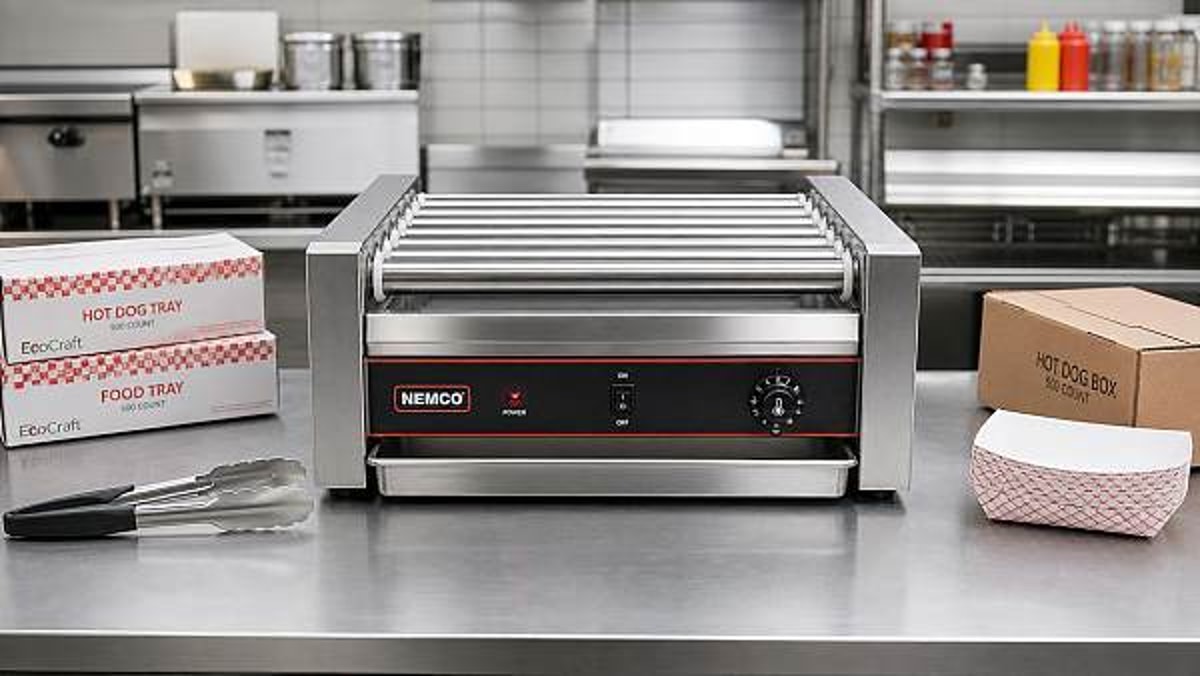
- Removable drip trays simplify grease disposal and reduce cleaning time around the base.
- Open-access side construction can improve reach to hard-to-clean end sections where debris often accumulates.
- Sealed controls or better control separation help avoid sticky buildup around switches and thermostats.
- Rounded corners and fewer exposed seams reduce trapped residue and make sanitation more repeatable.
Buyers should also ask whether cleaning requires partial disassembly, whether staff need special tools, and whether replacement parts for trays or roller components are easy to source. In global procurement, maintenance simplicity matters as much as initial convenience.
The table below helps translate design features into real operational impact when comparing hot dog rollers for commercial use.
For procurement teams, the best hot dog rollers are often not the ones with the most features, but the ones with the fewest cleaning obstacles. This difference becomes more visible in labor-intensive or high-volume operations.
Which commercial scenarios benefit most from easier-to-clean hot dog rollers?
Not every site values the same performance profile. A hotel lounge may prioritize presentation and quiet operation, while an amusement park kiosk may prioritize throughput and rapid end-of-day cleaning. Matching equipment to environment is essential if buyers want to cut downtime in a measurable way.
The following scenarios show where cleaning efficiency has the strongest business effect.
Across these scenarios, downtime is not only the moment when equipment is off. It also includes delayed cleaning, inconsistent reset between service windows, and staff attention pulled away from customer-facing tasks. That is why operators in multiple sectors now look at hot dog rollers as part of a broader workflow decision.
How to compare hot dog rollers beyond basic specifications
Many buyers begin with roller count, voltage, footprint, and price. Those are necessary checks, but they do not reveal how the machine behaves in real service. A better comparison method combines output needs, cleaning frequency, labor conditions, and supply risk.
A practical comparison framework
- Estimate average daily cleaning cycles, not just end-of-day cleaning. Some sites perform light cleaning several times.
- Match capacity to peak service, but avoid oversizing if larger units create extra unused cleaning surface.
- Assess whether staff turnover is high. Simpler cleaning design matters more where training time is limited.
- Check after-sales access to consumable or replaceable parts, especially for cross-border sourcing.
- Review electrical compatibility and regional compliance requirements before finalizing model selection.
For global buyers, sourcing intelligence also matters. A product that appears cost-effective may become more expensive if the cleaning design leads to higher labor input, longer station closure, or early replacement of worn components. This is where a sourcing partner with category knowledge can help screen options before samples or quotations are requested.
Sample comparison checklist for sourcing teams
Use the table below to compare hot dog rollers from different suppliers on a more decision-ready basis.
This approach is particularly useful in mixed commercial portfolios, where hospitality groups, educational institutions, and leisure operators may need different configurations under one procurement framework.
Technical and compliance points buyers should not ignore
Cleaning efficiency should never be evaluated in isolation. Commercial hot dog rollers also need to meet the practical standards of safe food holding, suitable construction materials, electrical compatibility, and maintainable controls. For international sourcing, even a small countertop appliance can face market-entry complications if documentation is incomplete.
Core technical areas to confirm
- Temperature stability across rollers, especially if products are held for staggered service periods.
- Material suitability for food-contact use and repeated sanitation exposure.
- Power specification, plug type, and voltage fit for the destination market.
- Ease of safe shutdown and cool-down before cleaning begins.
- Availability of supplier documentation for general compliance review and import coordination.
Depending on market destination, buyers may also need to review applicable electrical safety or foodservice equipment requirements commonly referenced by distributors, institutions, or local authorities. The exact certification pathway varies by region, so it is best to verify requirements before purchase orders are issued.
This is especially relevant for multinational hospitality procurement and public-sector projects. In those settings, the sourcing decision is rarely about one unit alone. It is about whether the supplier can support documentation clarity, production consistency, and practical deployment across multiple commercial sites.
Cost, alternatives, and the hidden value of lower cleaning labor
Some buyers hesitate when easier-to-clean hot dog rollers carry a moderate price premium. That hesitation is understandable, especially in budget-sensitive operations. However, the right comparison is not purchase price alone. It is total operating impact over expected use.
A unit that reduces routine cleaning time may help lower labor burden, shorten idle periods, improve sanitation consistency, and reduce residue-related wear. Those gains are difficult to see in a quotation sheet, but they matter in environments with daily service pressure.
When alternatives may be worth considering
- If demand is highly seasonal, a smaller roller unit with simpler maintenance may outperform a large fixed-capacity model.
- If menu variety is broader than hot dogs alone, some operators may compare rollers with other heated display or holding solutions.
- If labor availability is the biggest constraint, prioritizing easy-clean design usually brings more value than chasing the lowest unit cost.
For information-led buyers, the most useful exercise is to estimate the operational cost of cleaning time over a year. Even conservative assumptions can show that faster-cleaning hot dog rollers deserve a closer look during capital planning.
Common mistakes when sourcing hot dog rollers
Several sourcing mistakes repeat across foodservice and retail projects. Most of them happen because buyers focus on visible specifications while underestimating daily maintenance reality.
- Choosing based only on roller count without considering whether every extra roller adds avoidable cleaning time.
- Assuming all stainless or coated surfaces clean equally well under frequent use.
- Ignoring drip tray design until staff complain about spills or grease buildup.
- Treating compliance and documentation as a late-stage issue rather than a sourcing filter.
- Overlooking regional service support when importing units for multi-site operations.
Avoiding these mistakes requires cross-functional review. Operations teams should assess cleaning practicality, procurement should assess total cost and supply continuity, and technical reviewers should verify destination-market compatibility.
FAQ: what information researchers usually ask before buying
How do I know if fast-cleaning hot dog rollers are worth the higher price?
Start with cleaning frequency, labor cost, and service interruption sensitivity. If the unit is cleaned multiple times a day, used in guest-facing service, or operated by a small team, easier cleaning often brings more value than a lower upfront price. The more often the equipment is touched, the more design efficiency matters.
Which sites benefit most from this upgrade?
High-traffic retail counters, leisure venues, hotel snack stations, campuses, and institutional foodservice usually benefit the most. These environments often combine long operating hours, hygiene expectations, and staffing constraints. In such cases, hot dog rollers that clean faster support both consistency and labor control.
What should I request from suppliers during evaluation?
Ask for detailed product photos, cleaning procedure notes, removable-part information, material details, electrical specifications, and documentation relevant to the destination market. If possible, request a demonstration video showing cleanup of rollers, trays, and side areas after real use rather than unused showroom presentation.
Are larger hot dog rollers always better for commercial buyers?
No. Larger capacity helps only if peak throughput requires it. If actual demand is moderate, oversized units can increase cleaning area, energy use, and counter space pressure without adding practical value. Capacity should fit demand pattern, not just perceived commercial scale.
Why work with a sourcing intelligence partner for equipment selection
For many buyers, the challenge is not finding hot dog rollers. It is narrowing the field to equipment that fits real operating conditions, regional compliance needs, visual standards, and supply expectations. That is where a structured sourcing partner adds value.
Global Commercial Trade supports commercial buyers with category-focused market intelligence across hospitality, institutional procurement, leisure venues, and specialty retail. Instead of relying on isolated product claims, buyers can compare options through a broader sourcing lens that includes application fit, supplier readiness, documentation clarity, and practical deployment concerns.
Why choose us
If you are evaluating hot dog rollers for a hotel, campus, concession counter, cinema, or multi-site foodservice project, we can help you move faster with better sourcing visibility. You can consult us for parameter confirmation, capacity matching, cleaning-oriented product selection, delivery cycle review, OEM or customization discussions, destination-market certification considerations, sample support, and quotation comparison.
This approach is particularly useful when your team needs to compare multiple suppliers, balance budget with downtime reduction, or align equipment choices across different commercial environments. A well-selected unit can do more than heat product reliably. It can simplify labor, protect presentation standards, and reduce daily friction in ways that directly support better commercial performance.
Search News
Hot Articles
Popular Tags
Need ExpertConsultation?
Connect with our specialized leisureengineering team for procurementstrategies.
Recommended News
 May 03, 2026Commercial pizza ovens that save labor may cost more to ventCommercial pizza ovens can cut labor, but venting, code compliance, and installation may raise total costs. See the key checks before you buy.● Hospitality Sourcing Dir
 May 03, 2026Commercial juicers: cold press or centrifugal for daily serviceCommercial juicers: compare cold press and centrifugal models for daily service. Discover the best fit for speed, juice quality, yield, cleaning, and operating costs.● Hospitality Sourcing Dir
 May 03, 2026Commercial water boilers: recovery time matters more than listed capacityCommercial water boilers perform best when recovery time matches peak demand. Learn why faster reheating beats listed capacity for reliable, efficient commercial hot water service.● Hospitality Sourcing Dir
 May 03, 2026Cotton candy machines wholesale: small details that affect cleaning timeCotton candy machines wholesale guide: discover the small design details that cut cleaning time, reduce labor costs, and improve hygiene for busy commercial operations.● Hospitality Sourcing Dir
 May 03, 2026Dough sheeters wholesale: thickness control is where quality showsDough sheeters wholesale buyers: see why thickness control defines real quality, repeatability, and long-term value. Compare key evaluation points for smarter sourcing.● Hospitality Sourcing Dir
 May 03, 2026Slushy machines wholesale: what causes flavor crossover problemsSlushy machines wholesale buyers should understand what causes flavor crossover, from poor sealing to weak cleaning design, to protect drink quality and choose more reliable equipment.● Hospitality Sourcing Dir
 May 03, 2026Commercial bread slicers: slice consistency affects more than looksCommercial bread slicers do more than improve appearance—they boost portion control, reduce waste, and support faster service. Learn what drives slice consistency before you buy.● Hospitality Sourcing Dir
 May 03, 2026Wood fired pizza ovens need more space than most plans allowWood fired pizza ovens often require more space than expected. Learn how to avoid redesigns, protect workflow, and plan compliant, high-performance hospitality projects.● Hospitality Sourcing Dir
 May 03, 2026Commercial pizza ovens: gas or electric for steady outputCommercial pizza ovens: compare gas vs. electric for steady output, faster recovery, precise control, and smarter installation choices across real kitchen scenarios.● Hospitality Sourcing Dir
 May 03, 2026Commercial popcorn machines: kettle size vs serving rush realityCommercial popcorn machines should be chosen by real rush-hour output, not kettle size alone. Learn how to match serving peaks, staffing, and workflow for smarter buying.● Hospitality Sourcing Dir
 May 03, 2026Commercial insect killers: indoor placement changes results fastCommercial insect killers perform very differently based on indoor placement. Discover how small positioning changes can boost control, reduce pest activity, and improve operational results fast.● Hospitality Sourcing Dir
 May 03, 2026Hotel & Catering Equipment lists often hide installation costsHotel & Catering Equipment lists often hide installation costs. Learn where budgets slip, what to verify early, and how to compare total installed value before approval.● Hospitality Sourcing Dir
 May 03, 2026Bakery display cases: glass fogging, lighting, and product appealBakery display cases guide: compare anti-fog glass, lighting quality, and temperature stability to boost product appeal, hygiene, and sales with smarter sourcing decisions.● Hospitality Sourcing Dir
 May 03, 2026Commercial milkshake mixers: when motor power changes drink textureCommercial milkshake mixers directly shape texture, aeration, and consistency. Learn how motor power affects shake quality and choose the right mixer for your menu and volume.● Hospitality Sourcing Dir
 May 03, 2026Hot dog rollers that clean faster can cut downtime more than expectedHot dog rollers that clean faster can reduce downtime, improve sanitation, and save labor. Learn which features matter most before you buy for busy commercial service.● Hospitality Sourcing Dir
 May 03, 2026Conveyor pizza ovens or deck ovens for high-volume service?Conveyor pizza ovens vs deck ovens: discover which option delivers better throughput, consistency, labor efficiency, and site-fit for high-volume commercial pizza service.● Hospitality Sourcing Dir
 May 03, 2026Shawarma machines commercial buyers compare heat control firstShawarma machines commercial buyers compare heat control first. Learn how gas, electric, and multi-zone systems affect consistency, efficiency, safety, and sourcing decisions.● Hospitality Sourcing Dir
 May 02, 2026Stainless steel GN pans with reinforced corners last longer in busy kitchensStainless steel GN pans with reinforced corners help busy kitchens reduce warping, improve hygiene, and cut replacement costs. See why buyers choose longer-lasting performance.● Hospitality Sourcing Dir
 May 02, 2026Commercial induction cookers: power ratings that mislead first-time buyersCommercial induction cookers are not as simple as wattage labels suggest. Learn how to compare real performance, efficiency, pan fit, and reliability before you buy.● Hospitality Sourcing Dir
 May 02, 2026Beverage dispensers wholesale: what causes dripping after heavy useBeverage dispensers wholesale guide: learn what causes dripping after heavy use, how to spot seal, valve, and pressure issues, and choose durable suppliers with confidence.● Hospitality Sourcing Dir
 May 02, 2026Disposable wooden cutlery and the taste issue customers noticeDisposable wooden cutlery can affect taste, texture, and customer perception. Learn what causes woody aftertaste, how to test suppliers, and how to choose better options.● Hospitality Sourcing Dir
 May 02, 2026Sushi display cases: curved glass looks better, but is it practical?Sushi display cases with curved glass look premium, but are they practical? Compare visibility, cleaning, temperature control, and ROI before you buy.● Hospitality Sourcing Dir
 May 02, 2026Vacuum sealing machines food businesses can scale withVacuum sealing machines food businesses can scale with improve shelf life, workflow, and cost control. Explore reliable, compliant solutions for growing food operations.● Hospitality Sourcing Dir
 May 02, 2026Chafing fuel gel bulk: storage and burn-time issues to check firstChafing fuel gel bulk buyers should check storage stability, seal integrity, and real burn-time performance first. Reduce waste, avoid service disruption, and source with more confidence.● Hospitality Sourcing Dir