Commercial water boilers: recovery time matters more than listed capacity
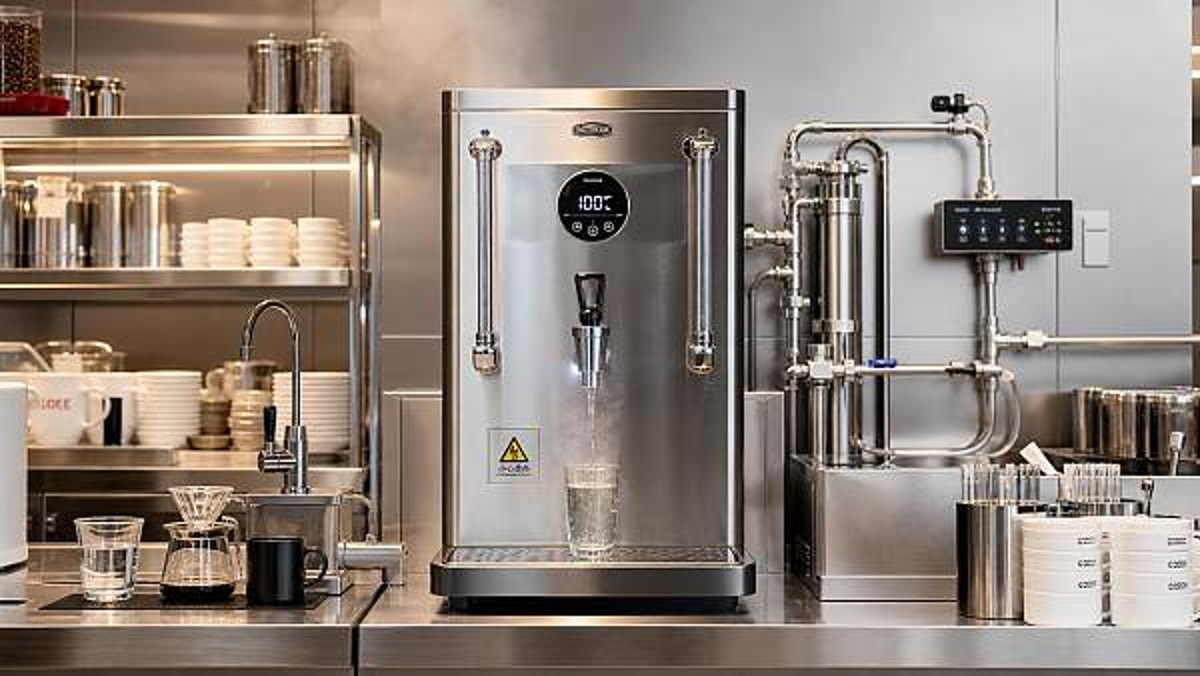
When specifying commercial water boilers, listed capacity can be misleading if recovery time is overlooked. For technical evaluators, the real question is how quickly a unit can restore hot water output under peak demand without compromising efficiency, safety, or service continuity. Understanding this performance factor is essential for selecting systems that truly match operational requirements.
Understanding what recovery time means in commercial water boilers
In practical terms, recovery time describes how fast a boiler can reheat incoming cold water and return to its usable output after draw-off. Many spec sheets highlight tank volume or hourly capacity, but those numbers alone do not explain whether a unit can support repeated demand spikes in a hotel breakfast rush, a hospital ward, a staff canteen, or a high-turnover café. For technical assessment teams, this is why recovery performance often matters more than nominal storage.
Commercial water boilers operate in environments where hot water is not consumed at a perfectly even rate. Demand is intermittent, concentrated, and highly sensitive to service timing. A system may appear sufficient on paper because it stores a large quantity of hot water, yet if its reheating cycle is slow, outlet temperature can drop during service peaks. That drop can affect beverage quality, cleaning processes, kitchen workflows, and user safety expectations.
This distinction is especially relevant in the broader commercial sector served by Global Commercial Trade, where buyers are balancing user experience, compliance, operating cost, and supply reliability. In these settings, hot water equipment is not simply a utility appliance. It is part of the operational backbone of hospitality, education, foodservice, workspace support, and premium customer environments.
Why the industry focuses on recovery performance now
The growing attention on recovery time is tied to several industry shifts. First, service models have become faster and more experience-driven. A modern hotel lounge, specialty coffee counter, or business center cannot tolerate delays caused by depleted hot water reserves. Second, energy costs and sustainability targets are forcing operators to question whether oversized storage is truly efficient. Third, commercial buyers increasingly expect validated performance data rather than broad marketing claims.
For technical evaluators, the challenge is no longer just choosing a large enough unit. It is matching recovery characteristics to the actual load profile. A building may only need moderate total daily output, but if that output is concentrated into short periods, the required heating response can be much higher than the daily average suggests. This is where the evaluation of commercial water boilers becomes more engineering-led and less brochure-led.
Another reason this topic matters is that many project teams work across international markets. Different voltage supplies, water quality conditions, inlet temperatures, ventilation constraints, and safety regulations can all influence real-world recovery performance. A boiler that performs well in one installation may behave differently elsewhere if assumptions in the original test conditions are not carefully reviewed.
Capacity versus recovery: the difference that affects service continuity
Listed capacity usually refers to stored volume, hourly output, or a manufacturer’s rated production figure under defined conditions. Recovery time, by contrast, addresses how the system behaves once that stored heat has been used. The distinction seems subtle, but it has major operational consequences. A large tank can create a false sense of security if the heat input is insufficient to replenish output quickly enough.
Consider two commercial water boilers with similar nominal hourly ratings. One may have stronger heating elements, better insulation, smarter controls, and more stable temperature management, allowing it to recover rapidly after several consecutive draws. The other may rely more heavily on stored volume and recover slowly once depleted. During a steady low-use period, both appear comparable. During a peak interval, their performance can diverge sharply.
Where recovery time creates the most business value
For technical teams, recovery time is not just a performance metric; it is a business continuity metric. In hospitality, rapid recovery supports uninterrupted breakfast, conference, and room-service periods. In education and office environments, it helps maintain service during class breaks or shift changes. In institutional settings, it supports hygiene and workflow predictability. In premium retail or guest-facing spaces, it protects customer experience by reducing waiting time and inconsistent beverage or cleaning performance.
This matters because underspecified hot water equipment often fails in a subtle way. It may not stop working entirely. Instead, it creates recurring temperature dips, service bottlenecks, user complaints, and hidden labor costs as staff work around equipment limitations. Over time, those operational frictions can outweigh any savings gained from selecting a lower-cost or lower-power model.
Commercial water boilers with strong recovery characteristics also support better asset planning. Rather than oversizing a system simply to store more hot water, a buyer may be able to choose a more balanced design with smaller footprint, lower standby losses, and better load responsiveness. For facilities where back-of-house space is limited, this can be a meaningful design advantage.
Typical commercial scenarios and their recovery demands
Different operating environments place different stresses on commercial water boilers. The best assessment method is to map hot water demand as a profile rather than a single total volume figure. This approach gives technical evaluators a more realistic basis for comparing systems.
Key technical factors that shape recovery time
Several design variables determine whether commercial water boilers recover quickly in real use. The most obvious is heating input, but power alone is not the full story. Heat transfer efficiency, insulation quality, thermostat accuracy, tank geometry, sensor placement, and control response all influence the speed and stability of recovery.
Incoming water temperature is another critical factor. In colder climates or buildings with low mains temperature, actual recovery can be slower than brochure values suggest. Scale formation also deserves attention. Hard water reduces heat transfer efficiency, increasing recovery time and energy use while shortening component life. For this reason, technical evaluators should consider local water treatment strategy as part of boiler selection, not as an afterthought.
Electrical infrastructure can further constrain performance. A site may favor a higher-output boiler, but if available power supply is limited, the expected recovery benefit may not be achievable without upgrades. Similarly, ventilation, maintenance access, and installation orientation can affect heat retention and serviceability, which indirectly influence long-term recovery consistency.
How technical evaluators should assess commercial water boilers
A sound evaluation process starts with usage modeling. Rather than asking only how many liters per hour are needed, define when the load occurs, how long the peaks last, what temperature stability is required, and what level of performance degradation is acceptable. This turns the specification into an operational document instead of a generic product request.
Next, review manufacturer data critically. Ask whether the recovery figures are based on full draw-down, partial draw cycles, or laboratory assumptions that differ from your use case. Clarify inlet water temperature, target outlet temperature, recovery threshold, and test duration. If the project is large or service-critical, request performance curves or case references from comparable commercial installations.
It is also wise to examine the boiler as part of a system. Pipe runs, recirculation, point-of-use distance, mixing requirements, and integration with filtration or treatment equipment all shape perceived performance. In many projects, complaints about “slow boilers” are partly caused by distribution losses or poor system coordination rather than by the heating vessel alone.
Common specification mistakes to avoid
One frequent mistake is selecting commercial water boilers based on maximum listed capacity while ignoring the actual demand pattern. Another is assuming daily consumption totals are enough for sizing, even when the operation is driven by short, intense usage peaks. A third is failing to account for seasonal changes in inlet water temperature.
Technical teams should also avoid evaluating only acquisition cost. A lower-priced unit with weak recovery may generate higher operating cost through energy inefficiency, user downtime, emergency service calls, or the need for supplemental equipment later. Finally, do not overlook maintenance conditions. If scale control, descaling access, or sensor service is poor, recovery performance may deteriorate faster than expected.
Practical guidance for better specification and sourcing
For most commercial projects, the best specification language combines rated output, recovery expectations, operating context, and site conditions. Instead of requesting a boiler with only a certain volume or hourly figure, define expected draw pattern, minimum acceptable recovery interval, target temperature band, local water conditions, and preferred maintenance regime. This gives suppliers a clearer basis for proposing appropriate commercial water boilers.
From a sourcing perspective, buyers should favor manufacturers or supply partners able to provide transparent test data, compliance documentation, after-sales support, and evidence from similar installations. In international B2B sourcing, strong documentation reduces the risk of selecting a unit that appears suitable in generic terms but underperforms in the final commercial environment.
This is where a specialist intelligence and sourcing platform adds value. By combining technical content, supplier visibility, and application-driven evaluation criteria, procurement teams can move beyond headline specifications and judge equipment according to service reality. That approach is increasingly important across hospitality, institutional, and premium commercial spaces where user expectations are high and operational interruptions are costly.
Conclusion
For technical evaluators, the central lesson is clear: listed capacity is only the starting point. In many real applications, recovery time is the more meaningful indicator of whether commercial water boilers will sustain service quality, efficiency, and reliability under pressure. A strong specification therefore looks beyond stored volume and asks how the unit behaves after demand spikes, under local site conditions, and across its maintenance life.
When commercial projects depend on dependable hot water, better decisions come from performance-based assessment, not from capacity labels alone. If your team is comparing systems for hospitality, office, educational, or institutional use, define the load profile first, verify recovery assumptions carefully, and source from partners that can support evidence-based evaluation.
Search News
Hot Articles
Popular Tags
Need ExpertConsultation?
Connect with our specialized leisureengineering team for procurementstrategies.
Recommended News
 May 03, 2026Commercial pizza ovens that save labor may cost more to ventCommercial pizza ovens can cut labor, but venting, code compliance, and installation may raise total costs. See the key checks before you buy.● Hospitality Sourcing Dir
 May 03, 2026Commercial juicers: cold press or centrifugal for daily serviceCommercial juicers: compare cold press and centrifugal models for daily service. Discover the best fit for speed, juice quality, yield, cleaning, and operating costs.● Hospitality Sourcing Dir
 May 03, 2026Commercial water boilers: recovery time matters more than listed capacityCommercial water boilers perform best when recovery time matches peak demand. Learn why faster reheating beats listed capacity for reliable, efficient commercial hot water service.● Hospitality Sourcing Dir
 May 03, 2026Cotton candy machines wholesale: small details that affect cleaning timeCotton candy machines wholesale guide: discover the small design details that cut cleaning time, reduce labor costs, and improve hygiene for busy commercial operations.● Hospitality Sourcing Dir
 May 03, 2026Dough sheeters wholesale: thickness control is where quality showsDough sheeters wholesale buyers: see why thickness control defines real quality, repeatability, and long-term value. Compare key evaluation points for smarter sourcing.● Hospitality Sourcing Dir
 May 03, 2026Slushy machines wholesale: what causes flavor crossover problemsSlushy machines wholesale buyers should understand what causes flavor crossover, from poor sealing to weak cleaning design, to protect drink quality and choose more reliable equipment.● Hospitality Sourcing Dir
 May 03, 2026Commercial bread slicers: slice consistency affects more than looksCommercial bread slicers do more than improve appearance—they boost portion control, reduce waste, and support faster service. Learn what drives slice consistency before you buy.● Hospitality Sourcing Dir
 May 03, 2026Wood fired pizza ovens need more space than most plans allowWood fired pizza ovens often require more space than expected. Learn how to avoid redesigns, protect workflow, and plan compliant, high-performance hospitality projects.● Hospitality Sourcing Dir
 May 03, 2026Commercial pizza ovens: gas or electric for steady outputCommercial pizza ovens: compare gas vs. electric for steady output, faster recovery, precise control, and smarter installation choices across real kitchen scenarios.● Hospitality Sourcing Dir
 May 03, 2026Commercial popcorn machines: kettle size vs serving rush realityCommercial popcorn machines should be chosen by real rush-hour output, not kettle size alone. Learn how to match serving peaks, staffing, and workflow for smarter buying.● Hospitality Sourcing Dir
 May 03, 2026Commercial insect killers: indoor placement changes results fastCommercial insect killers perform very differently based on indoor placement. Discover how small positioning changes can boost control, reduce pest activity, and improve operational results fast.● Hospitality Sourcing Dir
 May 03, 2026Hotel & Catering Equipment lists often hide installation costsHotel & Catering Equipment lists often hide installation costs. Learn where budgets slip, what to verify early, and how to compare total installed value before approval.● Hospitality Sourcing Dir
 May 03, 2026Bakery display cases: glass fogging, lighting, and product appealBakery display cases guide: compare anti-fog glass, lighting quality, and temperature stability to boost product appeal, hygiene, and sales with smarter sourcing decisions.● Hospitality Sourcing Dir
 May 03, 2026Commercial milkshake mixers: when motor power changes drink textureCommercial milkshake mixers directly shape texture, aeration, and consistency. Learn how motor power affects shake quality and choose the right mixer for your menu and volume.● Hospitality Sourcing Dir
 May 03, 2026Hot dog rollers that clean faster can cut downtime more than expectedHot dog rollers that clean faster can reduce downtime, improve sanitation, and save labor. Learn which features matter most before you buy for busy commercial service.● Hospitality Sourcing Dir
 May 03, 2026Conveyor pizza ovens or deck ovens for high-volume service?Conveyor pizza ovens vs deck ovens: discover which option delivers better throughput, consistency, labor efficiency, and site-fit for high-volume commercial pizza service.● Hospitality Sourcing Dir
 May 03, 2026Shawarma machines commercial buyers compare heat control firstShawarma machines commercial buyers compare heat control first. Learn how gas, electric, and multi-zone systems affect consistency, efficiency, safety, and sourcing decisions.● Hospitality Sourcing Dir
 May 02, 2026Stainless steel GN pans with reinforced corners last longer in busy kitchensStainless steel GN pans with reinforced corners help busy kitchens reduce warping, improve hygiene, and cut replacement costs. See why buyers choose longer-lasting performance.● Hospitality Sourcing Dir
 May 02, 2026Commercial induction cookers: power ratings that mislead first-time buyersCommercial induction cookers are not as simple as wattage labels suggest. Learn how to compare real performance, efficiency, pan fit, and reliability before you buy.● Hospitality Sourcing Dir
 May 02, 2026Beverage dispensers wholesale: what causes dripping after heavy useBeverage dispensers wholesale guide: learn what causes dripping after heavy use, how to spot seal, valve, and pressure issues, and choose durable suppliers with confidence.● Hospitality Sourcing Dir
 May 02, 2026Disposable wooden cutlery and the taste issue customers noticeDisposable wooden cutlery can affect taste, texture, and customer perception. Learn what causes woody aftertaste, how to test suppliers, and how to choose better options.● Hospitality Sourcing Dir
 May 02, 2026Sushi display cases: curved glass looks better, but is it practical?Sushi display cases with curved glass look premium, but are they practical? Compare visibility, cleaning, temperature control, and ROI before you buy.● Hospitality Sourcing Dir
 May 02, 2026Vacuum sealing machines food businesses can scale withVacuum sealing machines food businesses can scale with improve shelf life, workflow, and cost control. Explore reliable, compliant solutions for growing food operations.● Hospitality Sourcing Dir
 May 02, 2026Chafing fuel gel bulk: storage and burn-time issues to check firstChafing fuel gel bulk buyers should check storage stability, seal integrity, and real burn-time performance first. Reduce waste, avoid service disruption, and source with more confidence.● Hospitality Sourcing Dir