Wet and dry vacuum cleaners: when tank size slows teams down
Wet and dry vacuum cleaners promise flexibility on busy job sites, but the wrong tank size can quietly slow crews, disrupt cleaning cycles, and increase labor costs. For project managers balancing uptime, safety, and equipment efficiency, understanding when capacity becomes a bottleneck is essential to smarter procurement and smoother operations across commercial environments.
Understanding the role of tank size in wet and dry vacuum cleaners
Wet and dry vacuum cleaners are built to collect both liquid spills and dry debris, making them a practical tool across hotels, schools, offices, entertainment venues, workshops, and mixed-use commercial sites. Their value comes from versatility: one machine can support post-maintenance cleanup, emergency spill response, dust collection, and routine housekeeping support. Yet in project delivery and facility operations, capacity is often treated as a secondary specification behind motor power, filtration, or portability.
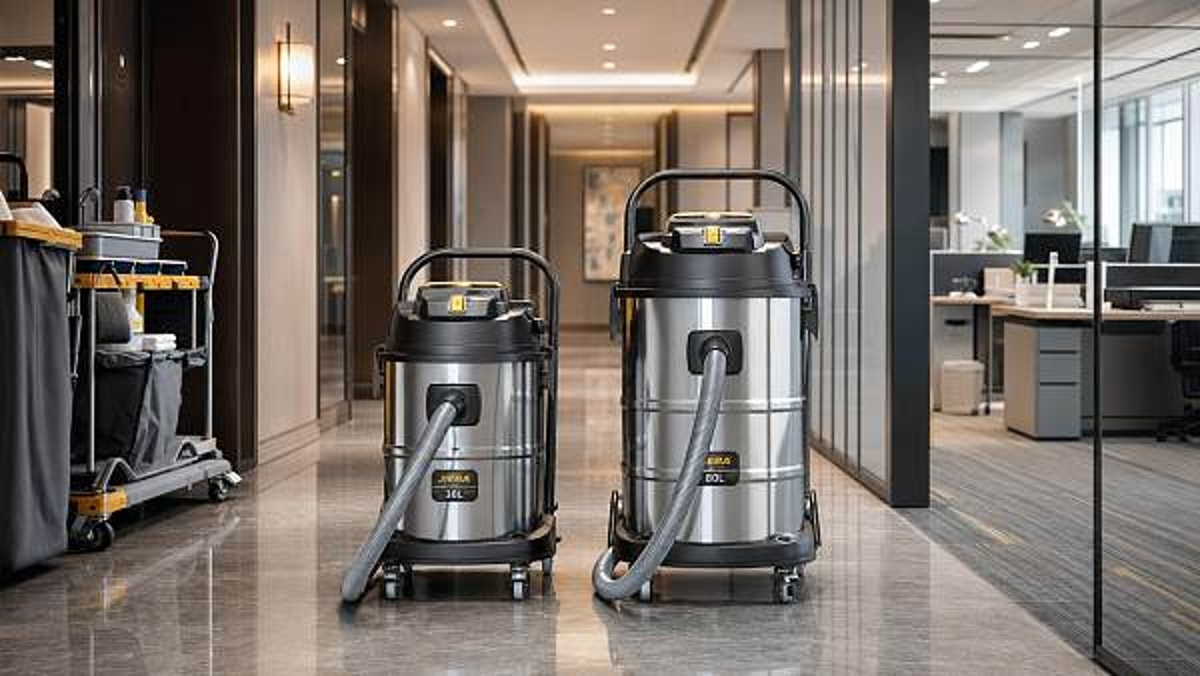
For project managers and engineering leads, tank size deserves much closer attention. A unit that is too small for the operating environment forces frequent stops for emptying, transport, and reset. A unit that is too large can become difficult to maneuver, slower to drain, harder to store, and less useful in tight commercial spaces. In other words, the issue is not whether large tanks are good or bad. The issue is when tank size begins to slow the team instead of supporting productivity.
This matters especially in commercial projects where cleaning is tied directly to safety, handover quality, customer experience, and compliance. In premium environments, such as hospitality or education projects tracked by sourcing teams through platforms like GCT, cleaning equipment is not a back-office detail. It affects labor planning, operational continuity, and the perceived standard of the site itself.
Why the industry pays attention to capacity, not just suction
In many procurement discussions, buyers compare wet and dry vacuum cleaners by wattage, airflow, hose length, filtration stage, or noise level. Those factors are important, but they do not fully explain real-world productivity. On active sites, downtime often comes from movement and interruption rather than weak suction. Every trip to empty a tank creates a chain reaction: the operator stops cleaning, travels to a disposal point, handles wet waste or mixed debris, resets the unit, and returns to the work zone. If this happens repeatedly across a shift, the loss is significant.
Commercial operations are also becoming more compressed. Turnaround windows in hotels are shorter. Educational facilities may only allow cleaning or maintenance in narrow off-hours. Leisure spaces and specialty retail locations require rapid restoration after installation or events. In such settings, the wrong capacity can increase labor requirements without appearing on the original budget sheet.
That is why experienced teams now evaluate wet and dry vacuum cleaners as part of workflow design. They ask: how much waste is generated per cleaning cycle, how far is the disposal point, how many operators share the machine, and how often must the unit move between floors or zones? These questions reveal whether tank size supports the site or quietly creates friction.
When a larger tank becomes a hidden operational drag
A common assumption is that bigger capacity automatically means fewer interruptions and therefore better efficiency. That is only partly true. Large-capacity wet and dry vacuum cleaners reduce emptying frequency, but they also introduce handling challenges that may offset the gain. Once filled with liquid, even a mobile unit can become heavy, unstable on ramps, difficult to lift over thresholds, and slower to maneuver through occupied areas.
On projects with frequent movement between rooms, elevators, service corridors, and public-facing spaces, oversized tanks can increase transfer time. In fit-out or refurbishment work, crews may need to navigate cables, temporary partitions, and uneven surfaces. The machine that looked efficient on paper may become the slowest part of the process because the operator spends more time positioning and draining it than vacuuming.
There is also the issue of incomplete loading. Many teams purchase large units “for future flexibility,” but in day-to-day operation the tank may rarely reach useful capacity before the task changes. If the operator only needs to remove light dust and occasional moisture in multiple scattered zones, a bulky vacuum can add transport burden without delivering meaningful savings in emptying cycles. In these cases, the machine’s size becomes a form of overcapacity that drains time rather than preserving it.
A practical overview of tank size trade-offs
The best tank size depends on debris volume, cleaning frequency, site layout, and the mix of wet versus dry material. The table below offers a practical planning view for project managers comparing wet and dry vacuum cleaners in commercial environments.
Where project managers see the biggest impact
The impact of capacity decisions is most visible in environments where cleaning is linked to project sequencing. In hotel fit-outs, wet and dry vacuum cleaners may support room-by-room snagging, corridor restoration, and service-area cleanup. If the unit is too large, operators lose agility in elevators and narrow guest circulation areas. If it is too small, supervisors face repeated delays that interfere with inspection timing.
In educational and office projects, cleaning often happens while other teams are still active. Machines need to move quickly between classrooms, meeting areas, and technical rooms without obstructing pathways. A moderate-capacity vacuum may outperform a larger one because it allows faster relocation and simpler handling. In amusement, leisure, and retail environments, appearance standards are high and service windows are short. Crews often need equipment that can respond immediately, not just hold more material.
For engineering project leaders, another key factor is who operates the machine. A unit that performs well with a trained technician may be inefficient for rotating support staff or outsourced teams. Weight, wheel quality, drain access, and tipping stability influence whether the theoretical capacity advantage is realized in actual use.
How to match wet and dry vacuum cleaners to commercial scenarios
Rather than choosing one universal model, many organizations benefit from aligning wet and dry vacuum cleaners to task categories. This approach reduces over-specification and improves utilization across departments.
Key evaluation points before procurement
A better procurement decision starts with measuring the work, not just comparing specifications. Project managers should estimate average waste volume per shift, ratio of liquid to dry pickup, disposal point distance, number of floor transitions, and the time cost of each emptying event. This simple operational mapping often reveals the ideal capacity range more accurately than brand brochures do.
It is also wise to assess the full handling cycle of wet and dry vacuum cleaners. How easy is the tank to detach? Is there a bottom drain? Can one operator empty it safely when full? Are the wheels suitable for thresholds, lift entries, or outdoor transfer? Capacity without ergonomic practicality can reduce effective productivity.
Filtration and material compatibility should not be overlooked either. In many commercial settings, vacuumed content is mixed: plaster dust, packaging debris, fine particles, water, or cleaning residue. A larger tank may increase collection volume, but if the filter clogs quickly or the separator is poorly designed, crews still face interruptions. For that reason, tank size should be evaluated alongside airflow consistency, maintenance access, and cleaning interval requirements.
Practical guidance for smoother operations
In most commercial environments, the most effective strategy is not to default to the largest wet and dry vacuum cleaners available. Instead, match capacity to route design and task concentration. If the site requires frequent movement, choose a smaller or medium model that operators will actually move efficiently. If cleanup is concentrated in one zone with high debris volume, a larger unit can deliver real value.
Where budgets allow, a mixed fleet often produces better outcomes than a one-size-fits-all purchase. A compact machine for rapid-response cleaning and a larger machine for heavy-duty zones can reduce labor waste across the operation. This is particularly relevant for multi-zone facilities such as hotels, campuses, entertainment venues, and specialty retail complexes, where cleaning demands differ sharply by location.
Finally, build operator feedback into the review cycle. Supervisors may focus on runtime, while frontline crews notice drag, tipping, drain inconvenience, or awkward access. Those details determine whether wet and dry vacuum cleaners improve workflow or become another underused asset parked in storage.
A strategic view for commercial sourcing teams
For sourcing and project leadership teams, tank size should be treated as an operational planning variable rather than a simple capacity upgrade. In commercial environments shaped by guest expectations, institutional standards, and compressed maintenance windows, the wrong machine can create repeated micro-delays that accumulate into measurable cost. The right machine supports safer, faster, and more predictable cleaning cycles.
When evaluating wet and dry vacuum cleaners, look beyond headline power ratings and ask how the equipment will move through the real site, how often it will be emptied, and who will use it under live conditions. That approach leads to smarter sourcing decisions, stronger labor efficiency, and a better fit between equipment capability and project demands. For commercial buyers working across hospitality, education, leisure, office, and specialty environments, that is where durable value begins.
Search News
Hot Articles
Popular Tags
Need ExpertConsultation?
Connect with our specialized leisureengineering team for procurementstrategies.
Recommended News
 May 03, 2026Commercial trash cans: capacity, liners, and lid design all matterCommercial trash cans impact cleanliness, labor, and guest experience. Learn how capacity, liner fit, and lid design help buyers choose smarter, cleaner, cost-effective solutions.● Institutional Buyer
 May 03, 2026Wet and dry vacuum cleaners: when tank size slows teams downWet and dry vacuum cleaners can boost flexibility, but the wrong tank size cuts productivity. Learn how to choose capacity that reduces downtime, labor costs, and workflow friction.● Institutional Buyer
 May 03, 2026Commercial floor scrubbers: ride-on or walk-behind for large sitesCommercial floor scrubbers for large sites: compare ride-on and walk-behind models by productivity, maneuverability, labor efficiency, and cost to choose the best fit.● Institutional Buyer
 May 03, 2026Decorative room dividers that improve layout without blocking lightDecorative room dividers improve layout, define zones, and preserve natural light in modern interiors. Explore stylish, flexible solutions for commercial and hospitality spaces.● Institutional Buyer
 May 03, 2026Why wholesale ironing boards vary so much in frame qualityWholesale ironing boards vary in frame quality due to steel grade, weld strength, stability, coating, and QC. Learn what smart buyers should check before placing bulk orders.● Institutional Buyer
 Apr 30, 2026Contract furniture specs that reduce replacement cyclesContract furniture specs that cut replacement cycles: learn how durability, cleanability, compliance, and serviceable design help buyers lower lifecycle costs and protect brand standards.● Institutional Buyer
 Apr 28, 2026Luxury Furniture Materials That Age Well and Those That Do NotLuxury furniture guide for hotel furniture, custom furniture, hotel beds, hotel chairs, hotel tables, and park benches—learn which materials age well, cut lifecycle costs, and protect premium spaces.● Institutional Buyer
 Apr 28, 2026Custom Furniture Orders Go Wrong When Samples Skip Real TestingCustom furniture mistakes start when samples skip real testing. Learn how hotel furniture, hotel beds, hotel chairs, hotel tables, luxury furniture and park benches avoid costly failures.● Institutional Buyer
 Apr 28, 2026Are Park Benches With Backrests Always the Better Choice?Park benches with backrests are not always best. Explore how custom furniture choices align with luxury furniture, hotel furniture, hotel chairs, hotel tables, and hotel equipment needs.● Institutional Buyer
 Apr 28, 2026How to Tell if Custom Furniture Is Worth the Extra Lead TimeCustom furniture, hotel furniture, hotel beds, hotel chairs, hotel tables, park benches and luxury furniture—learn when longer lead times deliver better value, durability and ROI.● Institutional Buyer
 Apr 28, 2026Custom Furniture Delays Often Start at the Drawing StageCustom furniture delays often begin in drawings. Learn how hotel furniture, luxury furniture, hotel beds, hotel chairs, hotel tables, and park benches avoid costly sourcing delays.● Institutional Buyer
 Apr 28, 2026When Does Luxury Furniture Feel Premium and When Is It Overpriced?Luxury furniture, hotel furniture, custom furniture, hotel beds, hotel chairs, hotel tables, and park benches: learn when premium quality delivers value vs overpriced design, with smart sourcing tips.● Institutional Buyer
 Apr 28, 2026Luxury Furniture Trends Shaping Premium Interiors in 2026Explore 2026 luxury furniture trends, from custom furniture and hotel furniture to hotel beds, hotel chairs, hotel tables, and park benches—smart sourcing for premium interiors.● Institutional Buyer
 Apr 28, 2026Park Benches: Which Materials Need Less Maintenance Outdoors?Park benches made of aluminum, recycled plastic, and stainless steel need less upkeep outdoors. Ideal for luxury furniture, custom furniture, hotel furniture, and resort projects.● Institutional Buyer
 Apr 28, 2026What Makes Park Benches Hold Up Better in High-Traffic Areas?Park benches built for heavy use need smart materials, strong design, and low upkeep. Discover how they compare with luxury furniture, custom furniture, hotel furniture, and hotel equipment.● Institutional Buyer
 Apr 21, 2026What size hotel desks work in compact guest roomsHotel desks for compact guest rooms: discover the right hotel furniture sizes, layouts, and hospitality procurement tips to maximize space, comfort, and luxury furniture appeal.● Institutional Buyer
 Apr 21, 2026Hotel desks with built in power are now expectedHotel desks with built in power are redefining hotel furniture and hotel room furniture. Explore smarter commercial furniture choices for hospitality procurement and better guest satisfaction.● Institutional Buyer
 Apr 23, 2026Commercial Furniture Buying Mistakes to AvoidCommercial furniture buying mistakes can impact hotel tables, amusement equipment, playground borders, sensory playground safety, and more. Learn how to source smarter and avoid costly errors.● Institutional Buyer
 Apr 23, 2026Commercial Furniture Materials That Hold Up Better OutdoorsCommercial furniture that lasts outdoors: compare hotel tables, amusement equipment, playground borders, sensory playground seating, and playground safety-focused materials.● Institutional Buyer
 Apr 23, 2026Custom Furniture or Stock Which WinsCompare custom furniture vs stock for hotels and leisure park projects. From hotel beds, catering equipment, and soundproofing materials to playground swings and theme park rides, find the best-fit solution.● Institutional Buyer
 Apr 20, 2026Commercial furniture upholstery stains that won’t lift—even with pro cleanersCommercial furniture stains won’t lift? Discover stain-resistant solutions for hotel beds, park benches, luxury furniture & more—backed by lab data & real-world performance.● Institutional Buyer
 Apr 19, 2026Commercial furniture fire ratings that change mid-projectCommercial furniture fire ratings—especially for hotel beds, park benches, hotel chairs, and luxury custom furniture—can shift mid-project. Avoid delays, cost overruns, and non-compliance with real-time, E-E-A-T–validated fire safety intelligence.● Institutional Buyer
 Apr 17, 2026Why commercial furniture specs matter more than price in 2026Commercial furniture, playground borders, sensory playgrounds & more—why specs trump price in 2026 for safety, ROI & brand trust. Discover how.● Institutional Buyer
 Apr 17, 2026Office furniture & equip: How ‘modular’ claims fall apart after three reconfigurationscommercial furniture, playground safety & sensory playground systems—why 'modular' fails after 3 reconfigurations. Get data-backed validation for amusement equipment, hotel tables & educational supplies.● Institutional Buyer