Park Benches: Which Materials Need Less Maintenance Outdoors?
Choosing the right material for park benches can significantly reduce outdoor maintenance costs while improving durability and style. For buyers sourcing hotel furniture, custom furniture, or even complementary luxury furniture for resorts, public spaces, and leisure venues, understanding material performance is essential. This guide explores which bench materials best withstand weather, wear, and commercial use, helping procurement teams make smarter long-term decisions.
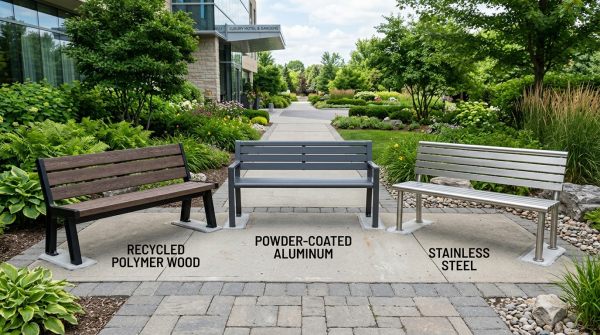
For most commercial outdoor projects, the lowest-maintenance park bench materials are powder-coated aluminum, high-quality recycled plastic, and properly specified stainless steel. These options generally outperform traditional wood and standard steel when the goal is to reduce repainting, sealing, rust treatment, and replacement frequency. However, the best choice depends on where the bench will be installed, how heavily it will be used, and how important design appearance is to the brand or property.
What Buyers Usually Want to Know First: Which Park Bench Material Requires the Least Maintenance?
If the priority is minimal upkeep in outdoor public or hospitality settings, here is the practical ranking buyers often use:
- Recycled plastic: Very low maintenance, excellent moisture resistance, no sealing or painting needed.
- Powder-coated aluminum: Low maintenance, rust-resistant, lightweight, suitable for many climates.
- Stainless steel: Low maintenance with strong durability, especially when the right grade is specified.
- Thermally modified or hardwood benches: Moderate maintenance, with better weather resistance than softwoods but still requiring care over time.
- Powder-coated mild steel or cast iron: Durable but usually needs more maintenance than aluminum or plastic, especially if coatings are damaged.
- Untreated or lightly treated wood: Highest maintenance outdoors due to moisture, cracking, fading, and surface wear.
For procurement teams, this means the answer is not simply “metal is best” or “wood looks better.” The correct decision balances maintenance burden, lifecycle cost, appearance, vandal resistance, climate exposure, and user experience.
Why Maintenance Matters More Than Initial Purchase Price
Many buyers still compare outdoor benches mainly on unit price. In commercial environments, that approach is often too narrow. A bench that costs less upfront may become more expensive over three to five years if it needs frequent repainting, refinishing, hardware replacement, or early replacement due to rust or surface failure.
Maintenance affects several business outcomes:
- Operating cost: Labor for cleaning, coating, inspection, and repair can exceed the original price gap between materials.
- Asset lifespan: Lower-maintenance materials often remain serviceable longer in exposed settings.
- Brand image: Faded, peeling, rusting, or splintered benches create a poor impression in hotels, leisure parks, campuses, and premium public spaces.
- User safety: Corrosion, loose parts, and degraded surfaces can create liability risks.
- Downtime and replacement planning: Frequent maintenance interrupts operations and complicates facility management.
For business evaluators and sourcing teams, the real question is usually: Which material gives us the lowest total cost of ownership while still matching the project’s visual and functional requirements?
How the Main Outdoor Park Bench Materials Compare
Recycled Plastic Benches
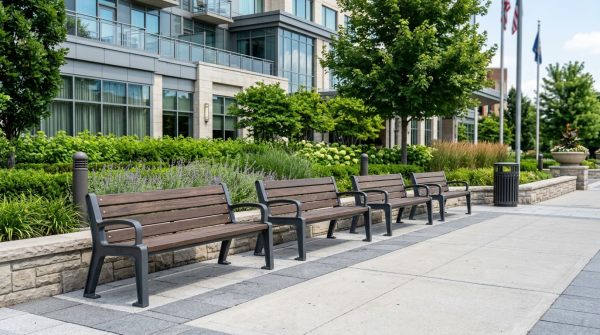
Recycled plastic is one of the most attractive options for low-maintenance outdoor seating. It resists moisture, rot, insects, and many common weather-related issues that affect wood. It does not need staining, sealing, or repainting under normal use.
Best for: parks, schools, public walkways, transport zones, family attractions, coastal settings, and high-exposure commercial sites.
Advantages:
- Very low routine maintenance
- Strong resistance to water and humidity
- No splintering like wood
- Good sustainability story for ESG-focused buyers
- Works well in high-use public settings
Points to check before buying:
- Structural reinforcement, especially for long bench spans
- UV stability and color retention
- Surface heat in hot climates
- Overall design quality, since low-grade products can look overly utilitarian
For projects where maintenance budgets are tight and weather exposure is high, recycled plastic is often among the safest sourcing decisions.
Powder-Coated Aluminum Benches
Aluminum is widely preferred in commercial outdoor furniture because it naturally resists rust and performs well in many climates. With a high-quality powder-coated finish, it offers a good balance of appearance, durability, and reduced upkeep.
Best for: hotels, resort terraces, mixed-use developments, educational campuses, and modern commercial landscapes.
Advantages:
- Low maintenance
- Good corrosion resistance
- Lighter weight than steel, which can simplify logistics and installation
- Available in contemporary designs suitable for premium environments
- Less repainting pressure than standard steel when properly finished
Points to check before buying:
- Powder coating thickness and adhesion quality
- Weld quality and joint protection
- Anchoring design, since lighter weight can be a disadvantage in unsecured public areas
- Suitability for coastal or chemically aggressive environments
For many hospitality and commercial design projects, aluminum delivers one of the best maintenance-to-aesthetics ratios.
Stainless Steel Benches
Stainless steel can be a strong low-maintenance option, especially in high-end commercial projects. It is durable, modern-looking, and easy to clean. However, not all stainless steel performs the same outdoors.
Best for: premium commercial spaces, transport hubs, modern public architecture, and luxury outdoor settings.
Advantages:
- Excellent durability
- Clean, premium appearance
- Low maintenance if correct grade is selected
- Strong resistance to impact and commercial wear
Points to check before buying:
- Use the correct stainless grade, especially in coastal environments
- Surface finish quality affects appearance and cleaning frequency
- Fingerprints and visual smudging may matter in luxury settings
- Higher upfront cost than many alternatives
Stainless steel is not automatically maintenance-free. In harsh outdoor or marine-adjacent environments, grade selection is critical. Buyers should verify specifications rather than rely on the generic label “stainless.”
Wood Benches
Wood remains popular because it feels warm, natural, and upscale. In hospitality, leisure, and luxury landscapes, it may better support the desired design language than plastic or industrial metals. But from a maintenance perspective, wood is rarely the easiest option outdoors.
Best for: boutique hotels, resort gardens, cultural spaces, heritage properties, and design-led landscapes.
Advantages:
- High aesthetic appeal
- Comfortable touch temperature in many climates
- Can elevate premium or natural design schemes
Maintenance concerns:
- Needs periodic sealing, oiling, or refinishing
- Can fade, crack, warp, or splinter
- May absorb moisture and stain over time
- Requires more attention in wet, sunny, or freeze-thaw climates
If the project demands luxury furniture appeal, wood may still be the right choice, but buyers should enter with a realistic maintenance plan and budget.
Mild Steel or Cast Iron Benches
These materials are often associated with traditional park bench design and can provide strong structural durability. However, they generally require more maintenance than aluminum or recycled plastic, especially when coatings are scratched or damaged.
Best for: municipal parks, classic urban landscapes, historic districts, and heavy-duty public installations.
Advantages:
- Strong and stable
- Difficult to move, which can help in public spaces
- Suitable for traditional aesthetics
Maintenance concerns:
- Prone to corrosion if protective finishes fail
- May need repainting or rust treatment
- Heavier shipping and installation requirements
These materials can still be viable, but they are usually not the first choice if minimizing maintenance is the primary procurement objective.
Which Material Performs Best in Different Outdoor Environments?
Maintenance needs depend heavily on site conditions. Buyers should not evaluate park benches in isolation from the installation environment.
Coastal or High-Humidity Areas
Salt air and constant moisture increase corrosion risk. Recycled plastic and marine-appropriate stainless steel are often strong options. Aluminum can also perform well, but finish quality matters. Standard steel and poorly protected hardware typically require more maintenance.
High-UV, Hot-Climate Installations
UV exposure can fade coatings, degrade lower-grade plastics, and dry out wood. Buyers should prioritize UV-stabilized recycled plastic, tested powder-coated aluminum, or wood species designed for outdoor use with a clear refinishing schedule.
Cold or Freeze-Thaw Regions
Repeated freezing and thawing can accelerate cracking, moisture intrusion, and coating failure. Recycled plastic and well-finished aluminum usually perform well. Wood requires close monitoring. Metal benches should also be checked for finish damage that can lead to corrosion over time.
High-Traffic Public Spaces
In transport nodes, campuses, parks, and leisure venues, vandal resistance and cleaning ease are major concerns. Stainless steel, heavy-duty aluminum, and reinforced recycled plastic often offer better long-term performance than decorative wood-heavy designs.
Luxury Hospitality Settings
Here, visual quality may be as important as maintenance reduction. Teak or premium hardwood may still be selected despite higher upkeep, especially when the design goal is warmth and exclusivity. In these cases, the correct decision may be to accept moderate maintenance in exchange for a stronger guest experience.
How Procurement Teams Should Evaluate “Low Maintenance” Claims
Suppliers often describe outdoor benches as weatherproof, heavy-duty, or maintenance-free. Professional buyers should test those claims with more specific questions.
Ask for the following:
- Material grade details: alloy, stainless grade, wood species, recycled content, and structural composition
- Finish specification: powder coating system, pretreatment process, UV resistance, and corrosion testing data
- Hardware specification: fastener material matters, especially outdoors
- Warranty terms: what is covered, for how long, and under which exposure conditions
- Reference projects: installations in similar climates or commercial applications
- Maintenance guidelines: realistic cleaning and inspection frequency
- Compliance and testing: load capacity, surface safety, and relevant outdoor durability standards
For sourcing teams working with OEM or ODM suppliers, it is also wise to assess whether the supplier can customize materials based on project location, usage intensity, and branding goals.
What Material Usually Offers the Best Long-Term Value?
There is no single answer for every buyer, but common commercial patterns are clear:
- Best for lowest maintenance overall: recycled plastic
- Best balance of modern appearance and low upkeep: powder-coated aluminum
- Best for premium modern projects: properly specified stainless steel
- Best for natural luxury aesthetics: hardwood, if maintenance resources are available
- Best for classic municipal styling: cast iron or steel, with planned maintenance
In other words, the most cost-effective park bench is not always the cheapest one. It is the one that fits the site, supports the brand image, and keeps maintenance burden predictable over its service life.
Practical Recommendation for Commercial Buyers
If your organization is buying park benches for hotels, resorts, public projects, campuses, or leisure venues, start with these decision rules:
- If maintenance reduction is the main priority, shortlist recycled plastic and powder-coated aluminum.
- If the environment is coastal or highly corrosive, verify stainless grade or choose a plastic-based solution.
- If the project is design-led or luxury-oriented, compare the visual value of wood against its ongoing upkeep cost.
- If the area is heavily used and publicly accessible, prioritize structural durability, anti-vandal design, and easy cleaning.
- If you are sourcing at scale, evaluate lifecycle cost rather than unit price alone.
This approach helps buyers avoid a common mistake: selecting benches based on catalog appearance without considering the real maintenance implications after installation.
Conclusion: The Best Low-Maintenance Outdoor Bench Material Depends on the Site and the Business Goal
For most outdoor commercial applications, recycled plastic, powder-coated aluminum, and correctly specified stainless steel are the leading low-maintenance park bench materials. They generally reduce refinishing, corrosion treatment, and replacement pressure compared with standard wood or untreated steel options.
Still, the best sourcing decision depends on more than weather resistance alone. Procurement teams should compare maintenance effort, lifecycle value, design expectations, climate risk, and supplier quality before making a final choice. When those factors are aligned, buyers can secure outdoor benches that not only last longer but also protect operating budgets and support a better visitor experience.
Search News
Hot Articles
- Stage Lighting & Truss2026 FIBA Women's World Cup Draw Sparks LED Timing Screen Upgrade DemandApr 28, 2026
- Pro Stage AudioKenyan Marathon WR Break Drives Demand for Timing Chips & Track SensorsApr 28, 2026
- Smart Campus Tech2026 Shanghai Smart Campus Expo: VR Teaching Devices Gain ITU & ISO/IEC 23053 CertificationApr 28, 2026
Popular Tags
Need ExpertConsultation?
Connect with our specialized leisureengineering team for procurementstrategies.
Recommended News
 Apr 28, 2026How to Tell if Custom Furniture Is Worth the Extra Lead TimeCustom furniture, hotel furniture, hotel beds, hotel chairs, hotel tables, park benches and luxury furniture—learn when longer lead times deliver better value, durability and ROI.● Institutional Buyer
 Apr 28, 2026Custom Furniture Delays Often Start at the Drawing StageCustom furniture delays often begin in drawings. Learn how hotel furniture, luxury furniture, hotel beds, hotel chairs, hotel tables, and park benches avoid costly sourcing delays.● Institutional Buyer
 Apr 28, 2026When Does Luxury Furniture Feel Premium and When Is It Overpriced?Luxury furniture, hotel furniture, custom furniture, hotel beds, hotel chairs, hotel tables, and park benches: learn when premium quality delivers value vs overpriced design, with smart sourcing tips.● Institutional Buyer
 Apr 28, 2026Luxury Furniture Trends Shaping Premium Interiors in 2026Explore 2026 luxury furniture trends, from custom furniture and hotel furniture to hotel beds, hotel chairs, hotel tables, and park benches—smart sourcing for premium interiors.● Institutional Buyer
 Apr 28, 2026Park Benches: Which Materials Need Less Maintenance Outdoors?Park benches made of aluminum, recycled plastic, and stainless steel need less upkeep outdoors. Ideal for luxury furniture, custom furniture, hotel furniture, and resort projects.● Institutional Buyer
 Apr 28, 2026What Makes Park Benches Hold Up Better in High-Traffic Areas?Park benches built for heavy use need smart materials, strong design, and low upkeep. Discover how they compare with luxury furniture, custom furniture, hotel furniture, and hotel equipment.● Institutional Buyer
 Apr 21, 2026What size hotel desks work in compact guest roomsHotel desks for compact guest rooms: discover the right hotel furniture sizes, layouts, and hospitality procurement tips to maximize space, comfort, and luxury furniture appeal.● Institutional Buyer
 Apr 21, 2026Hotel desks with built in power are now expectedHotel desks with built in power are redefining hotel furniture and hotel room furniture. Explore smarter commercial furniture choices for hospitality procurement and better guest satisfaction.● Institutional Buyer
 Apr 23, 2026Commercial Furniture Buying Mistakes to AvoidCommercial furniture buying mistakes can impact hotel tables, amusement equipment, playground borders, sensory playground safety, and more. Learn how to source smarter and avoid costly errors.● Institutional Buyer
 Apr 23, 2026Commercial Furniture Materials That Hold Up Better OutdoorsCommercial furniture that lasts outdoors: compare hotel tables, amusement equipment, playground borders, sensory playground seating, and playground safety-focused materials.● Institutional Buyer
 Apr 23, 2026Custom Furniture or Stock Which WinsCompare custom furniture vs stock for hotels and leisure park projects. From hotel beds, catering equipment, and soundproofing materials to playground swings and theme park rides, find the best-fit solution.● Institutional Buyer
 Apr 20, 2026Commercial furniture upholstery stains that won’t lift—even with pro cleanersCommercial furniture stains won’t lift? Discover stain-resistant solutions for hotel beds, park benches, luxury furniture & more—backed by lab data & real-world performance.● Institutional Buyer
 Apr 19, 2026Commercial furniture fire ratings that change mid-projectCommercial furniture fire ratings—especially for hotel beds, park benches, hotel chairs, and luxury custom furniture—can shift mid-project. Avoid delays, cost overruns, and non-compliance with real-time, E-E-A-T–validated fire safety intelligence.● Institutional Buyer
 Apr 17, 2026Why commercial furniture specs matter more than price in 2026Commercial furniture, playground borders, sensory playgrounds & more—why specs trump price in 2026 for safety, ROI & brand trust. Discover how.● Institutional Buyer
 Apr 17, 2026Office furniture & equip: How ‘modular’ claims fall apart after three reconfigurationscommercial furniture, playground safety & sensory playground systems—why 'modular' fails after 3 reconfigurations. Get data-backed validation for amusement equipment, hotel tables & educational supplies.● Institutional Buyer
 Apr 14, 2026Fuzhou Hospital's Office Supply Tender Fails Due to Lack of BiddersFuzhou Hospital's office supply tender failed due to lack of qualified bidders, exposing gaps in regional suppliers' compliance and procurement experience. Learn key considerations for international buyers evaluating Chinese vendors.● Institutional Buyer
 Apr 14, 2026Chongqing Launches Office Supplies Procurement with 2-Hour Delivery FocusChongqing's office supplies procurement (KZQ26A00105) sets new standards with 2-hour delivery focus and 60% SME quota. Discover how this 886,700 RMB tender impacts logistics and supply chains in China's evolving B2B market.● Institutional Buyer
 Apr 16, 2026Custom fabrication for office furniture: Why CAD files alone don’t guarantee fit-on-siteCustom fabrication for hotel furniture, designer eyewear & luxury watches demands real-world fit—not just CAD files. Discover why OEM manufacturing, supply chain solutions & precision matter on-site.● Institutional Buyer
 Apr 16, 2026Luxury furniture finishes that resist UV fading outdoorsDiscover UV-resistant luxury furniture finishes for park benches, music stands & outdoor playgrounds—engineered for colorfastness, compliance, and premium aesthetics under harsh sun.● Institutional Buyer
 Apr 15, 2026Luxury furniture materials that age well — and those that don’tDiscover luxury furniture materials that age gracefully—ideal for park benches, music stands, orchestral instruments & more. Avoid costly failures.● Institutional Buyer
 Apr 15, 2026Why commercial furniture specs matter more than price in 2026Commercial furniture specs—playground borders, sensory playgrounds, music accessories & more—drive safety, durability & experience in 2026. Stop choosing by price alone.● Institutional Buyer
") Apr 13, 2026Why contract furniture quotes vary by 40%—and what’s really included (or missing)Discover why hotel desks, commercial playgrounds & trampoline park manufacturer quotes vary by 40%—and what’s truly included in hospitality furniture, outdoor play structures, microphone systems & more.● Institutional Buyer
Apr 13, 2026Why contract furniture quotes vary by 40%—and what’s really included (or missing)Discover why hotel desks, commercial playgrounds & trampoline park manufacturer quotes vary by 40%—and what’s truly included in hospitality furniture, outdoor play structures, microphone systems & more.● Institutional Buyer Apr 13, 2026Contract furniture lead times in 2026: why ‘standard’ delivery now means 14+ weeksHotel desks, hospitality furniture & commercial playgrounds now face 14+ week lead times in 2026. Discover why—and how to mitigate delays for outdoor play structures, trampoline park manufacturing, stage equipment & more.● Institutional Buyer
 Apr 14, 2026Office furniture & equip that supports hybrid work—but fails silently in summer heatOffice supplies, arcade games & percussion instruments—engineered for hybrid work AND summer heat. Discover heat-resilient office furniture that won’t fail silently.● Institutional Buyer