When Does Luxury Furniture Feel Premium and When Is It Overpriced?
Luxury furniture feels premium when higher cost translates into measurable business value: better materials, stronger construction, longer service life, easier maintenance, brand alignment, and a better guest or user experience. It becomes overpriced when buyers are mainly paying for a logo, visual novelty, or marketing language without corresponding gains in durability, compliance, comfort, or lifecycle return. For commercial buyers evaluating hotel furniture, custom furniture, hotel beds, hotel chairs, hotel tables, or even high-traffic outdoor seating such as park benches, the real benchmark is not price alone—it is performance per year of use.
For procurement teams, business evaluators, and distributors, that distinction matters because “luxury” can either protect margins and strengthen positioning or quietly inflate project costs. The most reliable way to judge premium furniture is to look past styling and ask a practical question: does this piece deliver stronger commercial outcomes than a mid-market alternative?
What makes luxury furniture genuinely premium in commercial projects?
In B2B settings, premium furniture is not defined only by appearance. It earns its price when it performs better across the factors that matter most in hotels, serviced apartments, lounges, executive offices, educational premium spaces, and upscale retail environments.
1. Superior materials with commercial relevance
High-end furniture should use materials that are not only attractive but appropriate for heavy or specialized use. That may include kiln-dried hardwood frames, marine-grade plywood, high-density foam, contract-grade fabrics, top-grain leather where suitable, corrosion-resistant metals, tempered stone tops, or advanced surface finishes that resist staining and abrasion. Premium materials should improve longevity, tactile quality, and maintenance outcomes—not just visual appeal in a showroom.
2. Construction quality that extends usable life
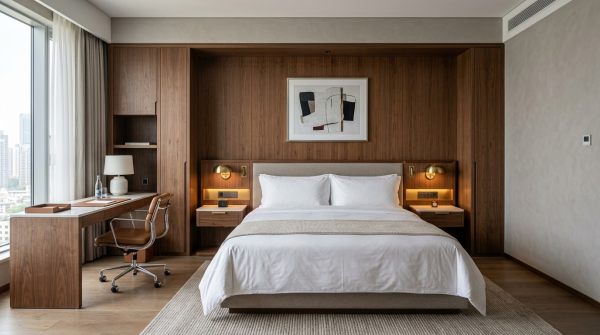
A luxury chair or hotel bed should show stronger joinery, reinforced load-bearing points, better balance, more stable hardware, and tighter quality tolerances. For hotel chairs and hotel tables, this often determines whether the product still performs after years of guest turnover, banquet handling, and housekeeping movement. A premium product should reduce breakage, wobble, sagging, and surface failure.
3. Comfort and user experience that supports the space
In hospitality, furniture influences dwell time, sleep quality, guest perception, and even review sentiment. A premium hotel bed that improves sleep consistency or a lounge chair that supports longer, more comfortable use may justify a higher purchase price because the experience directly affects brand reputation and repeat business.
4. Design coherence with the brand environment
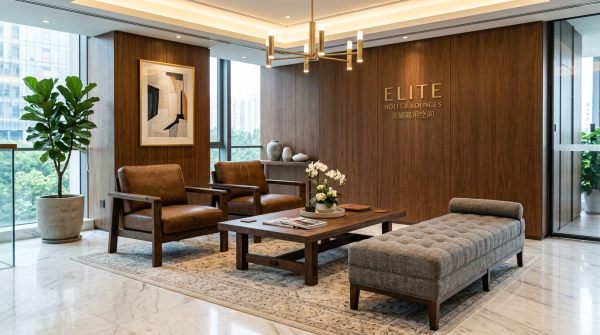
Luxury furniture should elevate the commercial setting in a way that feels intentional. In a five-star hotel or premium members’ club, furniture is part of the brand promise. If a piece helps create a distinctive, memorable environment aligned with the property’s concept, it may carry real strategic value beyond pure function.
5. Compliance, safety, and specification clarity
True premium suppliers provide clear technical specifications, fire ratings where required, finish documentation, testing information, and production consistency. For institutional and hospitality buyers, this is often a stronger indicator of value than decorative styling alone.
6. Reliable customization and supply support
Custom furniture can be worth a premium when the supplier can execute sizing, finish matching, upholstery selection, branding details, and project schedules with consistency. If custom work solves layout, identity, or operational challenges, the added cost may be justified. If customization is mostly cosmetic and introduces delays or quality risk, the premium may not be worthwhile.
When does luxury furniture become overpriced?
Luxury furniture is overpriced when the price premium is disconnected from commercial outcomes. In practice, this usually appears in a few predictable ways.
The brand premium overwhelms the product value
Some pieces command high prices mainly because of designer association or retail prestige. That may matter in a flagship suite, VIP lounge, or brand statement zone, but across large-scale procurement it can create unnecessary cost if the underlying construction and performance are only marginally better than strong contract-grade alternatives.
Materials sound impressive but add little functional value
Rare veneers, delicate stones, artisanal finishes, or highly specialized detailing can increase cost dramatically. If those materials are difficult to maintain, easy to damage, or unsuitable for commercial traffic, they may increase total cost without improving actual performance.
Design complexity creates maintenance and replacement risk
Over-engineered silhouettes, fragile edges, hard-to-source components, or non-standard upholstery systems may look exclusive but become expensive during daily operation. A luxury piece that is difficult to clean, repair, or replicate can be a poor fit for hospitality environments.
Customization is expensive but not operationally useful
Custom furniture should solve a layout issue, a branding need, or a technical requirement. If customizations are minor visual changes with long lead times, high MOQs, or uncertain quality control, the project may be paying more without meaningful return.
The furniture is specified for image, not use case
A product that works well in a residential showroom may underperform in a guest room, restaurant, lobby, or outdoor public setting. This is especially important for hotel furniture and park benches, where traffic patterns, cleaning routines, and weather exposure can quickly expose weak value.
How should procurement teams judge value instead of reacting to price alone?
The best way to assess luxury furniture is through a lifecycle and fit-for-purpose lens. A higher upfront price can be rational if it lowers replacement frequency, improves user satisfaction, or strengthens the property’s market positioning.
Use total cost of ownership, not unit cost
Compare expected lifespan, maintenance needs, repairability, warranty support, replacement part availability, and freight efficiency. A hotel chair that costs 35% more but lasts twice as long is often the better commercial decision.
Match furniture grade to zone importance
Not every area needs the same investment level. Guest-facing signature areas, presidential suites, executive lounges, and premium dining spaces may justify higher-end furniture. Back-of-house, secondary rooms, or short-cycle refresh zones may not. This approach helps buyers avoid under-specifying critical spaces and overpaying in low-impact ones.
Request technical proof
Ask for frame materials, foam density, fabric rub counts, finish specifications, testing documentation, load capacity, fire compliance, and care instructions. Premium furniture should come with premium transparency.
Evaluate maintenance realities
Procurement teams should ask housekeeping, facilities, and operators how easy a piece is to clean, move, repair, and reupholster. Furniture that looks luxurious but causes daily friction often becomes expensive very quickly.
Review sample quality and project references
A sample should reveal stitching consistency, finish evenness, hardware stability, edge detailing, and tactile quality. Project references from hotels, serviced apartments, luxury retail, or public-space installations offer more reliable insight than catalog photography.
What should buyers look for in hotel furniture, custom furniture, and outdoor seating?
Different categories carry different value triggers. A premium judgment should always be category-specific.
Hotel beds
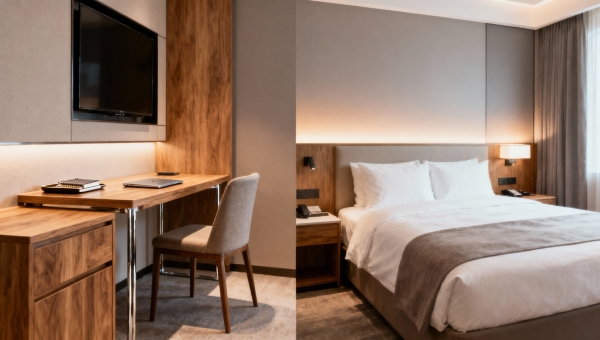
Premium hotel beds justify higher cost when they deliver mattress consistency, edge support, easy housekeeping access, stable base construction, and durability under frequent occupancy. Overpricing appears when branding or decorative framing inflates cost without improving sleep quality or serviceability.
Hotel chairs
For dining, guest room, conference, or lounge use, premium hotel chairs should offer ergonomic comfort, stain resistance, stable joints, and easy maintenance. They are overpriced when highly stylized forms compromise stackability, cleaning, or long-term structural integrity.
Hotel tables
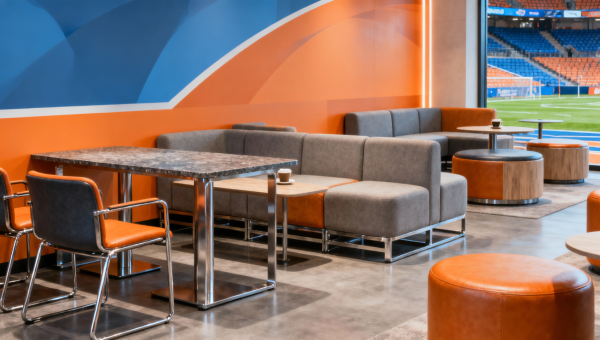
The real premium indicators are surface durability, edge resilience, base stability, and finish performance under heat, moisture, and repeated cleaning. Overpriced tables often rely on dramatic visual materials that chip, stain, or require constant care.
Custom furniture
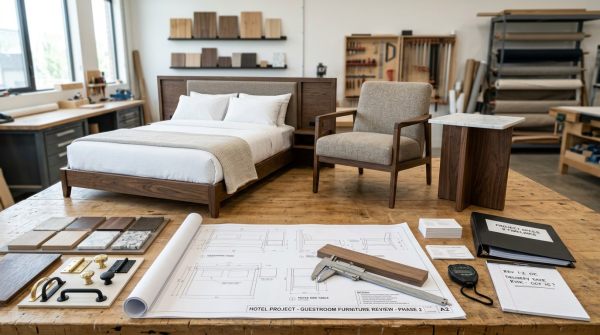
Custom furniture is truly premium when it solves layout inefficiencies, supports brand storytelling, fits unusual dimensions, or integrates technical needs. It becomes overpriced when it introduces complexity that standard or semi-custom contract solutions could meet more efficiently.
Park benches and outdoor commercial seating
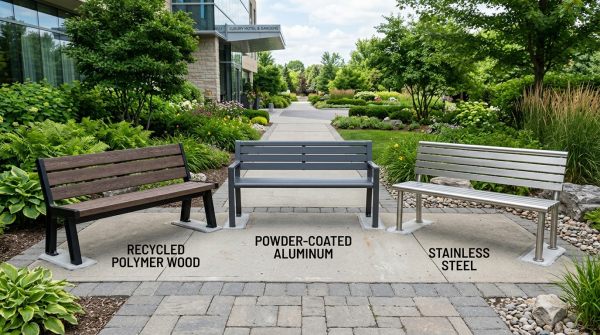
For premium outdoor pieces, weather resistance, anti-corrosion treatment, UV stability, anchoring safety, and ease of replacement matter more than decorative detail alone. A bench with luxury styling but weak environmental performance is not premium in any practical commercial sense.
Which red flags usually signal poor value in a “luxury” furniture quote?
Commercial buyers can avoid expensive mistakes by screening for common warning signs early in sourcing and evaluation.
- Vague material descriptions such as “high-quality wood” or “premium metal” without technical detail
- No clear information on fire safety, performance testing, or hospitality suitability
- Large premiums for cosmetic customization with minimal functional benefit
- Long lead times unsupported by strong project management or QC processes
- Beautiful samples but inconsistent factory capability across volume production
- Finishes or upholstery that are hard to clean, hard to repair, or likely to age poorly
- Weak warranty terms or limited after-sales support
- No meaningful case studies in comparable commercial environments
If several of these appear together, the product may be positioned as luxury but priced beyond its true operational worth.
How can distributors and sourcing teams position premium furniture more credibly?
For distributors, agents, and sourcing professionals, the market increasingly rewards evidence-based premium positioning. Buyers are more willing to pay for high-end furniture when value is documented clearly.
The strongest commercial positioning usually includes:
- Detailed specifications tied to performance outcomes
- Clear differentiation between decorative luxury and contract-grade premium quality
- Lifecycle cost comparisons against standard alternatives
- Hospitality or institutional project references
- Customization capabilities explained in practical terms
- Lead time, QC, and compliance transparency
In other words, premium furniture sells better when suppliers explain why it performs better, not simply why it looks expensive.
Final judgment: premium or overpriced?
Luxury furniture feels premium when price is supported by craftsmanship, specification depth, durability, comfort, maintenance practicality, and brand fit. It feels overpriced when the added spend is driven mostly by image, rarity language, or decorative excess without stronger commercial results.
For buyers of hotel furniture, custom furniture, hotel beds, hotel chairs, hotel tables, and park benches, the smartest approach is to separate emotional luxury from operational value. A premium piece should help a property perform better, last longer, present more credibly, and protect long-term investment. If it cannot do that, it may still be attractive—but it is not necessarily worth the premium.
Search News
Hot Articles
- Stage Lighting & Truss2026 FIBA Women's World Cup Draw Sparks LED Timing Screen Upgrade DemandApr 28, 2026
- Pro Stage AudioKenyan Marathon WR Break Drives Demand for Timing Chips & Track SensorsApr 28, 2026
- Smart Campus Tech2026 Shanghai Smart Campus Expo: VR Teaching Devices Gain ITU & ISO/IEC 23053 CertificationApr 28, 2026
Popular Tags
Need ExpertConsultation?
Connect with our specialized leisureengineering team for procurementstrategies.
Recommended News
 Apr 28, 2026How to Tell if Custom Furniture Is Worth the Extra Lead TimeCustom furniture, hotel furniture, hotel beds, hotel chairs, hotel tables, park benches and luxury furniture—learn when longer lead times deliver better value, durability and ROI.● Institutional Buyer
 Apr 28, 2026Custom Furniture Delays Often Start at the Drawing StageCustom furniture delays often begin in drawings. Learn how hotel furniture, luxury furniture, hotel beds, hotel chairs, hotel tables, and park benches avoid costly sourcing delays.● Institutional Buyer
 Apr 28, 2026When Does Luxury Furniture Feel Premium and When Is It Overpriced?Luxury furniture, hotel furniture, custom furniture, hotel beds, hotel chairs, hotel tables, and park benches: learn when premium quality delivers value vs overpriced design, with smart sourcing tips.● Institutional Buyer
 Apr 28, 2026Luxury Furniture Trends Shaping Premium Interiors in 2026Explore 2026 luxury furniture trends, from custom furniture and hotel furniture to hotel beds, hotel chairs, hotel tables, and park benches—smart sourcing for premium interiors.● Institutional Buyer
 Apr 28, 2026Park Benches: Which Materials Need Less Maintenance Outdoors?Park benches made of aluminum, recycled plastic, and stainless steel need less upkeep outdoors. Ideal for luxury furniture, custom furniture, hotel furniture, and resort projects.● Institutional Buyer
 Apr 28, 2026What Makes Park Benches Hold Up Better in High-Traffic Areas?Park benches built for heavy use need smart materials, strong design, and low upkeep. Discover how they compare with luxury furniture, custom furniture, hotel furniture, and hotel equipment.● Institutional Buyer
 Apr 21, 2026What size hotel desks work in compact guest roomsHotel desks for compact guest rooms: discover the right hotel furniture sizes, layouts, and hospitality procurement tips to maximize space, comfort, and luxury furniture appeal.● Institutional Buyer
 Apr 21, 2026Hotel desks with built in power are now expectedHotel desks with built in power are redefining hotel furniture and hotel room furniture. Explore smarter commercial furniture choices for hospitality procurement and better guest satisfaction.● Institutional Buyer
 Apr 23, 2026Commercial Furniture Buying Mistakes to AvoidCommercial furniture buying mistakes can impact hotel tables, amusement equipment, playground borders, sensory playground safety, and more. Learn how to source smarter and avoid costly errors.● Institutional Buyer
 Apr 23, 2026Commercial Furniture Materials That Hold Up Better OutdoorsCommercial furniture that lasts outdoors: compare hotel tables, amusement equipment, playground borders, sensory playground seating, and playground safety-focused materials.● Institutional Buyer
 Apr 23, 2026Custom Furniture or Stock Which WinsCompare custom furniture vs stock for hotels and leisure park projects. From hotel beds, catering equipment, and soundproofing materials to playground swings and theme park rides, find the best-fit solution.● Institutional Buyer
 Apr 20, 2026Commercial furniture upholstery stains that won’t lift—even with pro cleanersCommercial furniture stains won’t lift? Discover stain-resistant solutions for hotel beds, park benches, luxury furniture & more—backed by lab data & real-world performance.● Institutional Buyer
 Apr 19, 2026Commercial furniture fire ratings that change mid-projectCommercial furniture fire ratings—especially for hotel beds, park benches, hotel chairs, and luxury custom furniture—can shift mid-project. Avoid delays, cost overruns, and non-compliance with real-time, E-E-A-T–validated fire safety intelligence.● Institutional Buyer
 Apr 17, 2026Why commercial furniture specs matter more than price in 2026Commercial furniture, playground borders, sensory playgrounds & more—why specs trump price in 2026 for safety, ROI & brand trust. Discover how.● Institutional Buyer
 Apr 17, 2026Office furniture & equip: How ‘modular’ claims fall apart after three reconfigurationscommercial furniture, playground safety & sensory playground systems—why 'modular' fails after 3 reconfigurations. Get data-backed validation for amusement equipment, hotel tables & educational supplies.● Institutional Buyer
 Apr 14, 2026Fuzhou Hospital's Office Supply Tender Fails Due to Lack of BiddersFuzhou Hospital's office supply tender failed due to lack of qualified bidders, exposing gaps in regional suppliers' compliance and procurement experience. Learn key considerations for international buyers evaluating Chinese vendors.● Institutional Buyer
 Apr 14, 2026Chongqing Launches Office Supplies Procurement with 2-Hour Delivery FocusChongqing's office supplies procurement (KZQ26A00105) sets new standards with 2-hour delivery focus and 60% SME quota. Discover how this 886,700 RMB tender impacts logistics and supply chains in China's evolving B2B market.● Institutional Buyer
 Apr 16, 2026Custom fabrication for office furniture: Why CAD files alone don’t guarantee fit-on-siteCustom fabrication for hotel furniture, designer eyewear & luxury watches demands real-world fit—not just CAD files. Discover why OEM manufacturing, supply chain solutions & precision matter on-site.● Institutional Buyer
 Apr 16, 2026Luxury furniture finishes that resist UV fading outdoorsDiscover UV-resistant luxury furniture finishes for park benches, music stands & outdoor playgrounds—engineered for colorfastness, compliance, and premium aesthetics under harsh sun.● Institutional Buyer
 Apr 15, 2026Luxury furniture materials that age well — and those that don’tDiscover luxury furniture materials that age gracefully—ideal for park benches, music stands, orchestral instruments & more. Avoid costly failures.● Institutional Buyer
 Apr 15, 2026Why commercial furniture specs matter more than price in 2026Commercial furniture specs—playground borders, sensory playgrounds, music accessories & more—drive safety, durability & experience in 2026. Stop choosing by price alone.● Institutional Buyer
") Apr 13, 2026Why contract furniture quotes vary by 40%—and what’s really included (or missing)Discover why hotel desks, commercial playgrounds & trampoline park manufacturer quotes vary by 40%—and what’s truly included in hospitality furniture, outdoor play structures, microphone systems & more.● Institutional Buyer
Apr 13, 2026Why contract furniture quotes vary by 40%—and what’s really included (or missing)Discover why hotel desks, commercial playgrounds & trampoline park manufacturer quotes vary by 40%—and what’s truly included in hospitality furniture, outdoor play structures, microphone systems & more.● Institutional Buyer Apr 13, 2026Contract furniture lead times in 2026: why ‘standard’ delivery now means 14+ weeksHotel desks, hospitality furniture & commercial playgrounds now face 14+ week lead times in 2026. Discover why—and how to mitigate delays for outdoor play structures, trampoline park manufacturing, stage equipment & more.● Institutional Buyer
 Apr 14, 2026Office furniture & equip that supports hybrid work—but fails silently in summer heatOffice supplies, arcade games & percussion instruments—engineered for hybrid work AND summer heat. Discover heat-resilient office furniture that won’t fail silently.● Institutional Buyer