Luxury Furniture Trends Shaping Premium Interiors in 2026
Luxury furniture trends for 2026 are redefining premium interiors across hospitality, retail, and leisure spaces. From custom furniture and hotel furniture to hotel beds, hotel chairs, hotel tables, and even park benches, buyers now expect design-led performance, durability, and brand distinction. This guide explores how sourcing strategies are evolving alongside hotel equipment and amusement equipment demands, helping procurement teams and distributors identify high-value opportunities with confidence.
For B2B buyers, the shift is not only aesthetic. Premium interiors now need to support heavier traffic, shorter renovation cycles, stricter safety requirements, and stronger brand storytelling. A lounge chair in a five-star hotel, a custom banquette in a luxury retail store, or a weather-resistant park bench in a themed leisure venue must all perform under commercial conditions while reinforcing a distinct visual identity.
This is where a sourcing-led view becomes essential. Procurement teams, commercial evaluators, and distributors need more than trend forecasts. They need practical guidance on materials, lead times, OEM/ODM flexibility, lifecycle value, and fit-for-project consistency. In 2026, the most successful furniture sourcing strategies will balance premium design with commercial resilience.
Premium Interior Design Is Moving Toward Performance-Driven Luxury
Luxury furniture in 2026 is no longer defined by ornament alone. In premium hospitality, high-end mixed-use developments, and experiential retail, the strongest demand is moving toward what many buyers call performance-driven luxury. That means furniture must look refined, photograph well, and remain structurally reliable after 3 to 7 years of intensive commercial use.
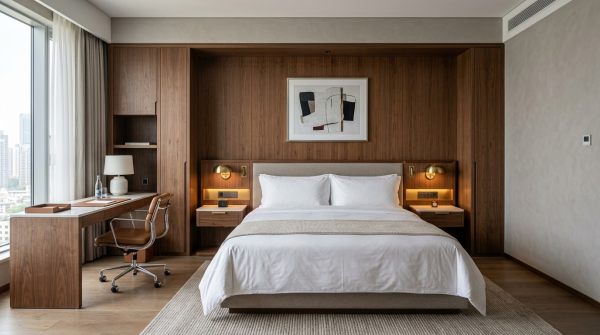
This shift is visible across product categories. Hotel beds are being specified with better edge support, layered upholstery, and easier housekeeping access. Hotel chairs are expected to combine ergonomic comfort with stain-resistant fabrics and reinforced joints. Hotel tables are increasingly selected for scratch resistance, stable bases, and compatibility with quick-turn layout changes in dining and lounge spaces.
For procurement teams, this changes the evaluation process. A premium furniture collection may appear visually aligned with a brand concept, but if its veneer chips within 12 months or its seating foam loses shape after 18 to 24 months, the total ownership cost rises quickly. In premium interiors, poor durability is not simply a maintenance issue; it becomes a guest-experience issue.
What buyers are prioritizing in 2026
Commercial buyers are increasingly evaluating furniture across 4 key layers: aesthetic fit, structural durability, maintenance efficiency, and supply reliability. In hotel projects, furniture often needs to pass through design approval, mock-up review, compliance checks, and phased installation. A supplier that performs well across all 4 layers is more valuable than one offering only a lower unit price.
- Refined materials with commercial-grade durability, such as engineered wood cores, contract fabrics, and anti-corrosion metal frames.
- Modular or semi-custom formats that allow 10 to 30 percent adaptation without restarting the full development process.
- Finish consistency across multiple SKUs, especially for hotel furniture packages that include beds, side tables, desks, chairs, and headboards.
- Faster replacement planning for high-wear components such as upholstery panels, glides, handles, and tops.
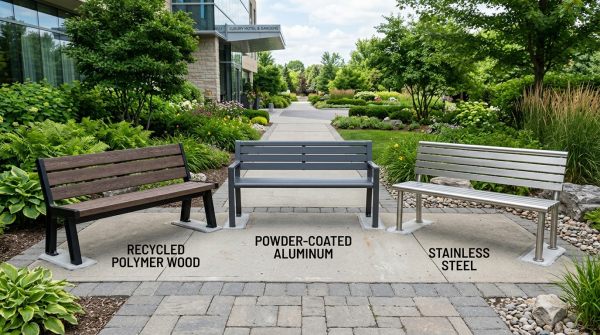
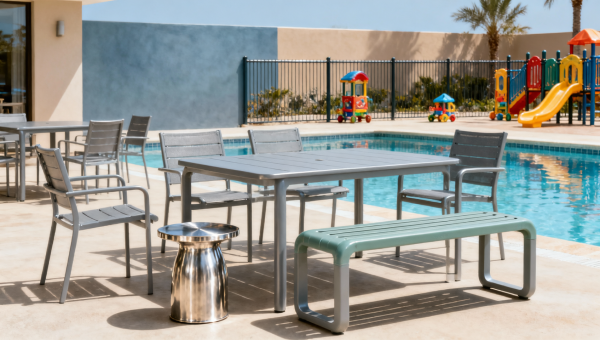
The same trend is extending into leisure environments. Premium amusement and public-space operators are upgrading park benches, outdoor lounge seating, and visitor-facing furniture to align with the same brand language used indoors. Outdoor products now need UV resistance, moisture control, and vandal-resilient construction, often with maintenance cycles planned at 6-month or 12-month intervals.
Why this matters for distributors and project developers
Distributors and commercial developers are under pressure to reduce sourcing errors. In premium projects, one weak furniture category can affect the entire perceived value of an interior package. A misaligned finish batch, unstable table base, or poorly proportioned custom sofa can delay handover, trigger redesign costs, and weaken client confidence. That is why sourcing decisions are shifting from product-by-product buying to coordinated category planning.
Key Luxury Furniture Trends Influencing Hospitality, Retail, and Leisure Projects
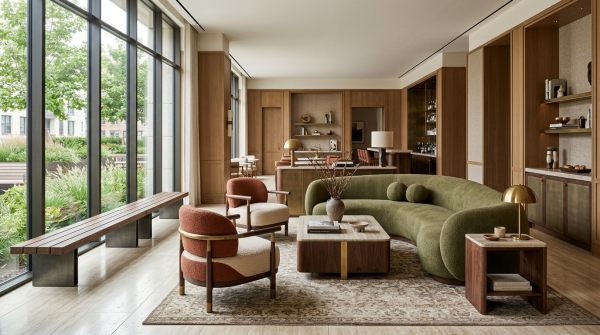
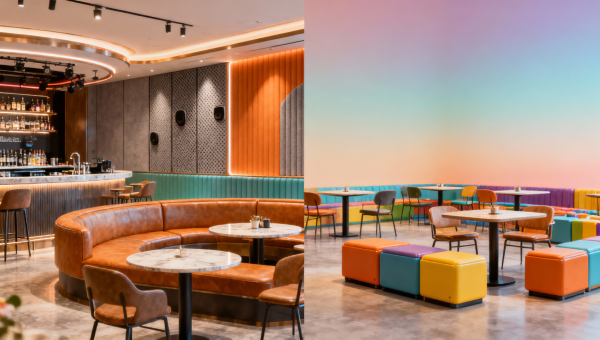
Several luxury furniture trends are shaping 2026 specifications. The first is tactile richness with visual restraint. Instead of overly decorative forms, premium interiors are favoring sculpted silhouettes, warm metals, textured wood grains, natural stone accents, and layered fabrics. This supports a quieter form of luxury that works well across guestrooms, executive lounges, boutique retail, and high-end food service spaces.
The second major trend is integrated customization. Buyers increasingly want custom furniture that reflects a property's identity without requiring fully bespoke manufacturing from the ground up. Common requests include adjusted seat heights, modified table diameters, branded stitching, custom veneer tones, and upholstery selections adapted to local climate or cleaning routines. Semi-custom programs can reduce development time by 2 to 6 weeks compared with fully original designs.
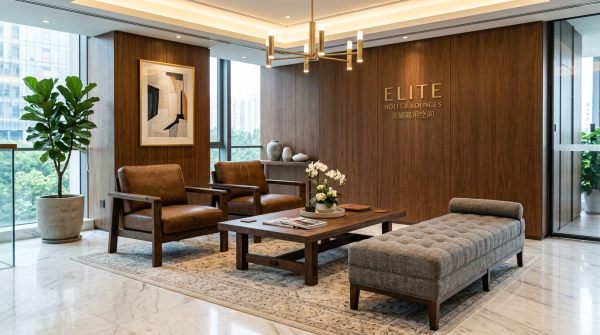
A third trend is cross-zone continuity. Premium operators want hotel chairs, hotel tables, reception furniture, outdoor seating, and even park benches to share a coherent design vocabulary. This does not mean identical products across all areas. It means consistent material logic, tonal harmony, and proportion control. Guests increasingly notice whether indoor and outdoor furniture feel like part of the same brand world.
Trend comparison by commercial application
The table below outlines how major luxury furniture trends translate into practical commercial buying decisions across different premium environments.
The key takeaway is that trend adoption should never be separated from operating conditions. A curved upholstered chair may fit a luxury concept, but in a high-turn dining zone it must still allow efficient cleaning, easy replacement planning, and stable daily use. The best trend-led sourcing decisions are those that convert design direction into practical specification rules.
Materials gaining attention
Buyers are also showing stronger interest in low-maintenance premium materials. Common selections include sintered stone tops, high-pressure laminate with luxury visual finishes, powder-coated aluminum for outdoor applications, and performance textiles with abrasion ratings suitable for commercial traffic. In premium hotel furniture packages, material coordination is often reviewed across 5 to 8 touchpoints, from headboards and bedside tables to desks and vanity stools.
How to Source Custom Furniture Without Increasing Project Risk
Custom furniture remains central to premium interiors, yet it is also one of the highest-risk categories in B2B procurement. The risk rarely comes from customization itself. It usually comes from unclear technical scope, inconsistent sampling, underestimated lead times, or poor coordination between design intent and factory capability. For hotel furniture and luxury commercial interiors, structured sourcing is the best risk control tool.
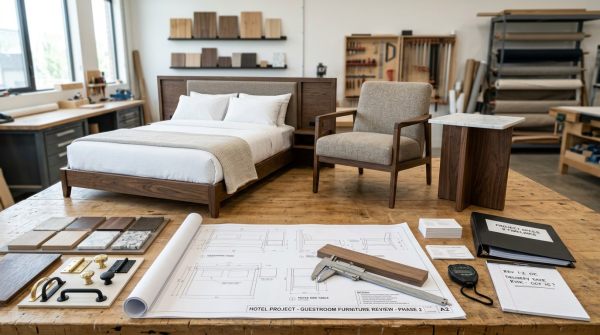
A practical sourcing process typically includes 5 stages: concept review, technical development, material confirmation, prototype or mock-up approval, and production validation. Skipping any of these stages may save 1 to 2 weeks initially, but it can create much larger delays later. For example, if table edge profiles or upholstery stitch details are not signed off before mass production, rework costs can rise sharply once installation starts.
For procurement teams, custom furniture should be evaluated by repeatability as much as by creativity. Can the supplier reproduce finish color within acceptable tolerance across 50, 200, or 500 units? Can hotel beds maintain consistent dimensions when shipped to multiple properties? Can hotel chairs be assembled or repaired efficiently on site? These are operational questions, not just design questions.
Core checkpoints for commercial furniture sourcing
The table below can be used as a quick internal framework when evaluating a supplier for premium hotel furniture, retail fixtures, or leisure seating.
These checkpoints are especially important for distributors and agents handling multiple markets. A product line that performs well in one region may require finish, fire-resistance, or packaging adjustments in another. Early technical clarification helps prevent claims, shipment delays, or local compliance friction.
Common sourcing mistakes to avoid
- Approving visuals without confirming substrate, coating method, and touchpoint durability.
- Using residential-grade assumptions for hotel beds, hotel chairs, or restaurant tables exposed to daily commercial use.
- Ignoring replacement logistics for spare parts, upholstery lots, and hardware compatibility.
- Failing to align packaging with site conditions, especially for phased deliveries and elevator-limited buildings.
In premium sourcing, control points matter more than speed alone. A disciplined process reduces downstream surprises and protects both brand experience and project margin.
Furniture Categories Seeing the Strongest Commercial Demand in 2026
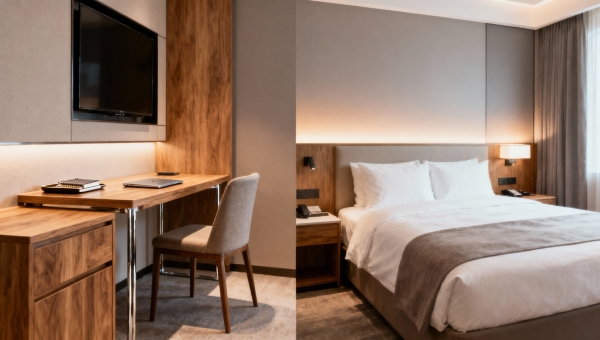
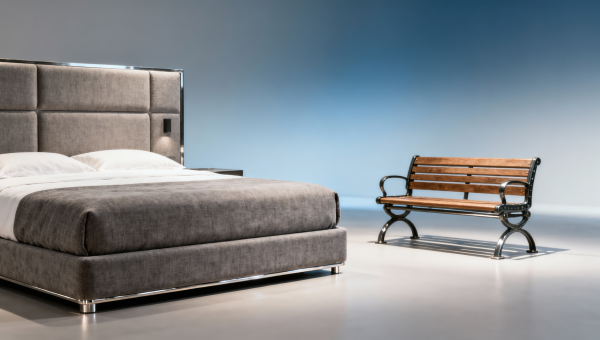
Although premium interiors are becoming more personalized, several furniture categories are consistently drawing attention from procurement teams. Hotel beds remain one of the most strategic categories because they influence guest comfort, housekeeping workflow, and room aesthetics at the same time. Common commercial specifications now focus on integrated headboards, durable edge profiles, under-bed cleaning clearance, and coordinated bedside systems.
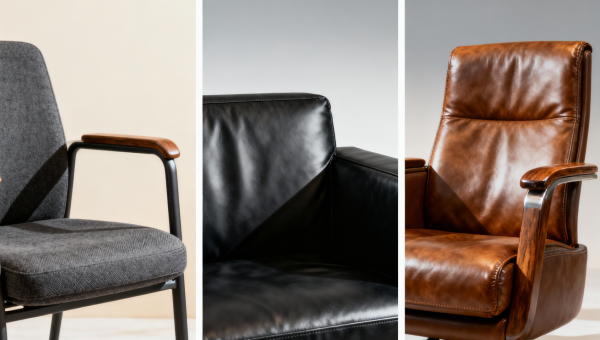
Hotel chairs are also evolving quickly. In guestrooms, buyers want compact footprints, supportive posture, and upholstery that holds shape under frequent use. In restaurants and lounges, stackability or partial modularity may be required even in premium settings, especially where floorplans shift seasonally. In many projects, seat height ranges between 450 and 480 mm remain standard, but arm profile, back angle, and glide type increasingly vary by usage zone.
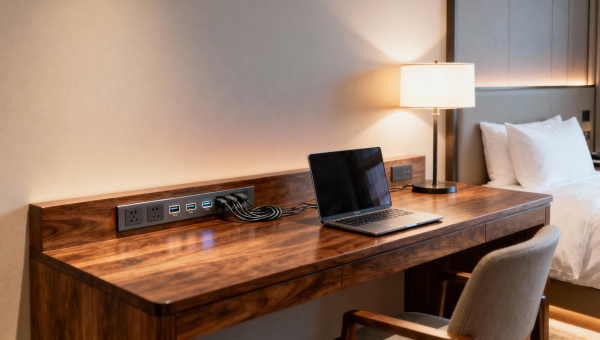
Hotel tables are under similar pressure to deliver both visual impact and operational reliability. Dining tables, cocktail tables, work desks, and side tables now need stronger finish protection because premium venues often use faster turnover and mixed-use service patterns. A table selected for a quiet luxury dining concept may still face luggage impact, mobile device charging clutter, and more frequent chemical cleaning than in earlier design cycles.
High-demand categories and selection focus
The following table summarizes which furniture categories are receiving the most attention and which technical issues buyers should prioritize during evaluation.
What stands out in 2026 is the overlap between indoor luxury and outdoor commercial durability. Park benches, for example, are no longer treated as purely functional site elements. In resorts, branded retail villages, and themed attractions, they are part of the guest journey and often specified with the same attention to form, comfort, and finish palette as indoor seating.
Where hotel equipment and furniture now intersect
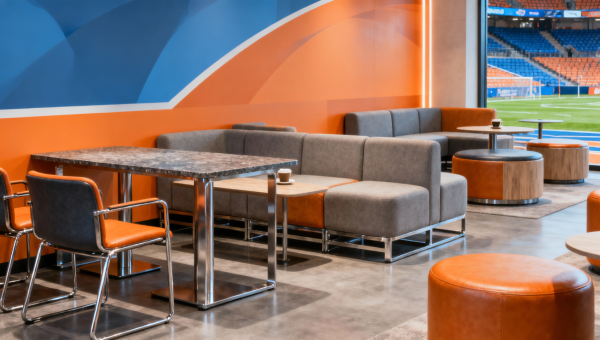
Buyers are also evaluating furniture in closer relation to hotel equipment planning. Banquette layouts affect service flow. Bed base design affects housekeeping time. Outdoor benches influence wayfinding, dwell time, and visitor movement in leisure projects. This integrated perspective is useful for commercial teams that source across both furniture and broader operating equipment categories.
Implementation, Lead Times, and After-Sales Planning for Premium Projects
Even the right luxury furniture strategy can underperform if project execution is weak. In commercial interiors, implementation quality depends on planning accuracy, packaging discipline, installation sequencing, and after-sales readiness. For premium projects, the most common issue is not whether a supplier can make a chair or table. It is whether the supplier can deliver the right batch, in the right order, with the right documentation and replacement support.
Lead times vary by complexity. Standardized commercial items may move in 4 to 8 weeks, while custom furniture packages for hotels or flagship retail spaces may require 8 to 16 weeks including sampling and approval. If materials are imported, holiday closures or multi-country logistics can add another 2 to 4 weeks. Procurement teams should map these factors early rather than treating lead time as a fixed number.
Installation should also be planned by zone, not simply by product type. A phased opening may require guestrooms first, then public areas, then outdoor furniture. Large projects often benefit from split delivery plans, pre-labeled room sets, and spare-unit buffers of 1 to 3 percent for high-risk categories. This can reduce site disruption when minor transport or installation damage occurs.
Recommended delivery and service workflow
The following workflow is widely used in premium furniture sourcing because it balances design control with delivery efficiency.
- Confirm final drawings, finish samples, and room or zone schedules before production release.
- Approve packaging standards based on freight method, storage time, and installation conditions.
- Conduct pre-shipment checks for dimensions, finish consistency, hardware completeness, and labeling.
- Organize installation sequencing by project area, with priority for revenue-generating zones.
- Maintain an after-sales list covering spare parts, touch-up materials, and response timelines.
After-sales support is especially important for distributors and agents. Commercial buyers often expect issue response within 24 to 72 hours for missing parts, assembly questions, or visible transport defects. Even when replacement production takes longer, fast technical feedback protects trust and helps keep site teams moving.
FAQ for buyers and sourcing teams
How do I choose between standard and custom furniture for a premium project?
Use standard products when speed, replacement ease, and repeat orders matter most. Choose custom furniture when the project depends on strong brand differentiation, unusual layouts, or coordinated material language across multiple zones. Many successful premium projects use a hybrid approach, keeping 60 to 80 percent standardized and customizing the most visible 20 to 40 percent.
What is a realistic lead time for hotel furniture?
For many commercial orders, 6 to 12 weeks is a practical planning range once specifications are frozen. Complex custom furniture, mixed materials, or multi-zone hospitality packages may require 12 to 16 weeks or more. Sample approval, packaging method, and shipping route all affect the final schedule.
Which metrics matter most when evaluating hotel chairs and hotel tables?
Prioritize structural stability, finish durability, maintenance ease, and consistency across batches. For seating, comfort over repeated use is critical. For tables, look closely at top resistance, edge protection, and base performance on different floor conditions. In high-turn commercial areas, maintenance labor saved over 24 months can matter as much as initial purchase price.
Luxury furniture trends in 2026 are shaping premium interiors around a clear principle: design must perform. For hospitality groups, commercial developers, and distribution partners, the strongest results come from sourcing strategies that combine refined aesthetics, category coordination, realistic lead-time planning, and long-term operational value. From custom furniture and hotel beds to hotel chairs, hotel tables, and premium outdoor seating, every specification decision now plays a role in brand perception and lifecycle cost.
Global Commercial Trade supports this decision-making process with market-focused sourcing insight built for commercial buyers navigating premium projects. If you are comparing suppliers, planning a hospitality upgrade, or building a furniture portfolio for distribution, now is the time to refine your 2026 sourcing roadmap. Contact us to discuss project requirements, request a tailored sourcing plan, or explore more solutions for premium commercial interiors.
Search News
Hot Articles
- Stage Lighting & Truss2026 FIBA Women's World Cup Draw Sparks LED Timing Screen Upgrade DemandApr 28, 2026
- Pro Stage AudioKenyan Marathon WR Break Drives Demand for Timing Chips & Track SensorsApr 28, 2026
- Smart Campus Tech2026 Shanghai Smart Campus Expo: VR Teaching Devices Gain ITU & ISO/IEC 23053 CertificationApr 28, 2026
Popular Tags
Need ExpertConsultation?
Connect with our specialized leisureengineering team for procurementstrategies.
Recommended News
 Apr 28, 2026How to Tell if Custom Furniture Is Worth the Extra Lead TimeCustom furniture, hotel furniture, hotel beds, hotel chairs, hotel tables, park benches and luxury furniture—learn when longer lead times deliver better value, durability and ROI.● Institutional Buyer
 Apr 28, 2026Custom Furniture Delays Often Start at the Drawing StageCustom furniture delays often begin in drawings. Learn how hotel furniture, luxury furniture, hotel beds, hotel chairs, hotel tables, and park benches avoid costly sourcing delays.● Institutional Buyer
 Apr 28, 2026When Does Luxury Furniture Feel Premium and When Is It Overpriced?Luxury furniture, hotel furniture, custom furniture, hotel beds, hotel chairs, hotel tables, and park benches: learn when premium quality delivers value vs overpriced design, with smart sourcing tips.● Institutional Buyer
 Apr 28, 2026Luxury Furniture Trends Shaping Premium Interiors in 2026Explore 2026 luxury furniture trends, from custom furniture and hotel furniture to hotel beds, hotel chairs, hotel tables, and park benches—smart sourcing for premium interiors.● Institutional Buyer
 Apr 28, 2026Park Benches: Which Materials Need Less Maintenance Outdoors?Park benches made of aluminum, recycled plastic, and stainless steel need less upkeep outdoors. Ideal for luxury furniture, custom furniture, hotel furniture, and resort projects.● Institutional Buyer
 Apr 28, 2026What Makes Park Benches Hold Up Better in High-Traffic Areas?Park benches built for heavy use need smart materials, strong design, and low upkeep. Discover how they compare with luxury furniture, custom furniture, hotel furniture, and hotel equipment.● Institutional Buyer
 Apr 21, 2026What size hotel desks work in compact guest roomsHotel desks for compact guest rooms: discover the right hotel furniture sizes, layouts, and hospitality procurement tips to maximize space, comfort, and luxury furniture appeal.● Institutional Buyer
 Apr 21, 2026Hotel desks with built in power are now expectedHotel desks with built in power are redefining hotel furniture and hotel room furniture. Explore smarter commercial furniture choices for hospitality procurement and better guest satisfaction.● Institutional Buyer
 Apr 23, 2026Commercial Furniture Buying Mistakes to AvoidCommercial furniture buying mistakes can impact hotel tables, amusement equipment, playground borders, sensory playground safety, and more. Learn how to source smarter and avoid costly errors.● Institutional Buyer
 Apr 23, 2026Commercial Furniture Materials That Hold Up Better OutdoorsCommercial furniture that lasts outdoors: compare hotel tables, amusement equipment, playground borders, sensory playground seating, and playground safety-focused materials.● Institutional Buyer
 Apr 23, 2026Custom Furniture or Stock Which WinsCompare custom furniture vs stock for hotels and leisure park projects. From hotel beds, catering equipment, and soundproofing materials to playground swings and theme park rides, find the best-fit solution.● Institutional Buyer
 Apr 20, 2026Commercial furniture upholstery stains that won’t lift—even with pro cleanersCommercial furniture stains won’t lift? Discover stain-resistant solutions for hotel beds, park benches, luxury furniture & more—backed by lab data & real-world performance.● Institutional Buyer
 Apr 19, 2026Commercial furniture fire ratings that change mid-projectCommercial furniture fire ratings—especially for hotel beds, park benches, hotel chairs, and luxury custom furniture—can shift mid-project. Avoid delays, cost overruns, and non-compliance with real-time, E-E-A-T–validated fire safety intelligence.● Institutional Buyer
 Apr 17, 2026Why commercial furniture specs matter more than price in 2026Commercial furniture, playground borders, sensory playgrounds & more—why specs trump price in 2026 for safety, ROI & brand trust. Discover how.● Institutional Buyer
 Apr 17, 2026Office furniture & equip: How ‘modular’ claims fall apart after three reconfigurationscommercial furniture, playground safety & sensory playground systems—why 'modular' fails after 3 reconfigurations. Get data-backed validation for amusement equipment, hotel tables & educational supplies.● Institutional Buyer
 Apr 14, 2026Fuzhou Hospital's Office Supply Tender Fails Due to Lack of BiddersFuzhou Hospital's office supply tender failed due to lack of qualified bidders, exposing gaps in regional suppliers' compliance and procurement experience. Learn key considerations for international buyers evaluating Chinese vendors.● Institutional Buyer
 Apr 14, 2026Chongqing Launches Office Supplies Procurement with 2-Hour Delivery FocusChongqing's office supplies procurement (KZQ26A00105) sets new standards with 2-hour delivery focus and 60% SME quota. Discover how this 886,700 RMB tender impacts logistics and supply chains in China's evolving B2B market.● Institutional Buyer
 Apr 16, 2026Custom fabrication for office furniture: Why CAD files alone don’t guarantee fit-on-siteCustom fabrication for hotel furniture, designer eyewear & luxury watches demands real-world fit—not just CAD files. Discover why OEM manufacturing, supply chain solutions & precision matter on-site.● Institutional Buyer
 Apr 16, 2026Luxury furniture finishes that resist UV fading outdoorsDiscover UV-resistant luxury furniture finishes for park benches, music stands & outdoor playgrounds—engineered for colorfastness, compliance, and premium aesthetics under harsh sun.● Institutional Buyer
 Apr 15, 2026Luxury furniture materials that age well — and those that don’tDiscover luxury furniture materials that age gracefully—ideal for park benches, music stands, orchestral instruments & more. Avoid costly failures.● Institutional Buyer
 Apr 15, 2026Why commercial furniture specs matter more than price in 2026Commercial furniture specs—playground borders, sensory playgrounds, music accessories & more—drive safety, durability & experience in 2026. Stop choosing by price alone.● Institutional Buyer
") Apr 13, 2026Why contract furniture quotes vary by 40%—and what’s really included (or missing)Discover why hotel desks, commercial playgrounds & trampoline park manufacturer quotes vary by 40%—and what’s truly included in hospitality furniture, outdoor play structures, microphone systems & more.● Institutional Buyer
Apr 13, 2026Why contract furniture quotes vary by 40%—and what’s really included (or missing)Discover why hotel desks, commercial playgrounds & trampoline park manufacturer quotes vary by 40%—and what’s truly included in hospitality furniture, outdoor play structures, microphone systems & more.● Institutional Buyer Apr 13, 2026Contract furniture lead times in 2026: why ‘standard’ delivery now means 14+ weeksHotel desks, hospitality furniture & commercial playgrounds now face 14+ week lead times in 2026. Discover why—and how to mitigate delays for outdoor play structures, trampoline park manufacturing, stage equipment & more.● Institutional Buyer
 Apr 14, 2026Office furniture & equip that supports hybrid work—but fails silently in summer heatOffice supplies, arcade games & percussion instruments—engineered for hybrid work AND summer heat. Discover heat-resilient office furniture that won’t fail silently.● Institutional Buyer