Luxury Furniture Materials That Age Well and Those That Do Not
In luxury furniture sourcing, material choice determines whether products gain character or quickly lose value. For buyers comparing hotel furniture, custom furniture, hotel beds, hotel chairs, hotel tables, and even park benches, understanding which materials age gracefully is essential for long-term ROI, brand image, and maintenance planning across hospitality, commercial interiors, and select amusement equipment environments.
For procurement teams, distributors, and commercial evaluators, the question is not simply whether a material looks premium on delivery day. The real test starts after 12, 24, and 60 months of use, when exposure to traffic, humidity, cleaning chemicals, UV light, and load cycles begins to reveal the true cost of material selection.
In luxury settings, aging can be an asset or a liability. Solid hardwood, full-grain leather, natural stone, and quality bronze often develop depth, patina, and visual credibility. By contrast, low-grade veneers, bonded leather, unstable engineered substrates, and poor-quality coatings may crack, fade, peel, or deform long before the furniture reaches its expected service life.
This guide is designed for B2B buyers sourcing furniture and décor for hotels, premium offices, educational institutions, retail environments, and curated leisure venues. It explains which luxury furniture materials tend to age well, which ones create avoidable lifecycle costs, and how to evaluate suppliers with a practical, specification-led approach.
Why Material Aging Matters in Commercial Luxury Furniture
In residential settings, a minor scratch or softening finish may be acceptable. In commercial interiors, material aging directly affects guest perception, maintenance labor, replacement timing, and brand consistency across multiple locations. A chair in a 5-star lobby may face 20 to 50 sitting cycles per day, while a restaurant table can be cleaned 3 to 8 times daily with chemical agents that gradually degrade weak surfaces.
For hotel furniture and custom furniture programs, procurement decisions are often made under a 3-part pressure model: design appeal, operational durability, and budget discipline. A material that saves 12% on initial purchase price can become more expensive within 18 to 36 months if it requires refinishing, panel replacement, or frequent upholstery repairs.
This issue is especially important for hotel beds, hotel chairs, and hotel tables because these categories combine visual prominence with repeated physical stress. Bed headboards face abrasion and cleaning contact. Chair arms and edges absorb impact. Tabletops encounter spills, hot items, and moisture. Even park benches in hospitality gardens or leisure parks need resistance to UV, rain, thermal movement, and public wear.
Buyers should evaluate materials not only by showroom appearance but also by how they age across 4 core dimensions: structural stability, surface integrity, color retention, and maintenance predictability. When these dimensions are measured early, long-term ownership costs become easier to forecast.
Four Commercial Risks of Poor Material Selection
- Visible wear in high-touch zones within 6 to 12 months, reducing perceived luxury value.
- Unplanned maintenance costs caused by peeling laminates, cracking finishes, or upholstery failure.
- Inconsistent replacement lots when original materials become unavailable after short production cycles.
- Brand damage when guest-facing furniture looks dated even though the property itself is still positioned as premium.
The table below shows how aging performance influences commercial sourcing decisions across key furniture categories.
The key takeaway is simple: in luxury commercial environments, the wrong material often fails first at the surface level, but the financial impact extends to labor, downtime, and reputation. Buyers who specify aging performance upfront usually reduce lifecycle disruption and improve consistency across projects.
Luxury Furniture Materials That Age Well
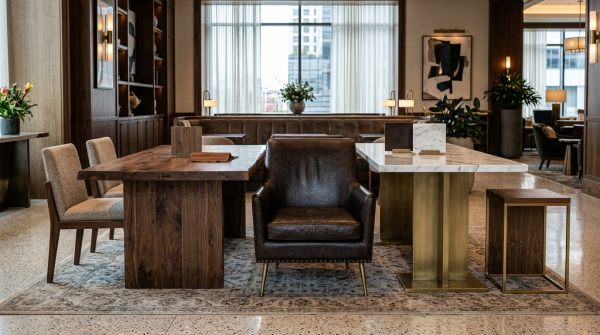
Not all premium materials behave the same over time, but several categories are widely valued because they mature rather than deteriorate. In hotel furniture, custom lounge seating, and high-end commercial tables, these materials often justify a higher initial investment because their appearance remains stable for 5 to 15 years when properly maintained.
Solid Hardwood with Stable Construction
Species such as oak, walnut, ash, and teak are favored in luxury furniture because they retain structural integrity and develop richer visual tone with use. Scratches can often be repaired, refinished, or blended rather than forcing total replacement. This matters in guest room casegoods, executive desks, and premium hotel tables where surface aging should feel intentional, not neglected.
However, buyers should still assess moisture content, joinery quality, and movement allowance. Well-made solid wood typically performs best when the wood has been kiln-dried to a commercial range, often around 8% to 12% depending on destination climate and indoor control conditions.
Full-Grain Leather and High-Performance Leather Alternatives
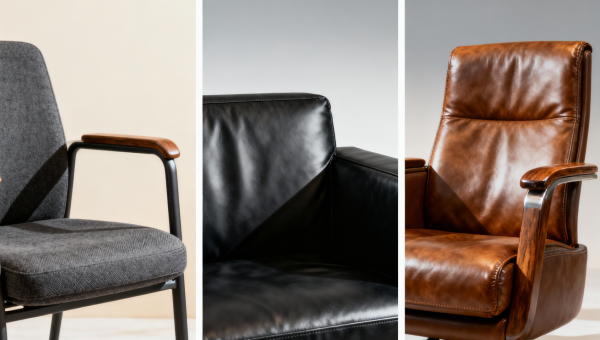
Full-grain leather can age exceptionally well in luxury seating. Instead of peeling, it tends to soften and develop character if cleaning routines are correct and exposure is balanced. In executive lounges, boutique hotel chairs, and private club interiors, this natural evolution supports a premium aesthetic.
For projects requiring stronger stain resistance or public-use durability, high-grade contract upholstery can be a practical option. Buyers should ask for abrasion performance, cleaning compatibility, and colorfastness ranges rather than relying only on appearance boards.
Natural Stone, Sintered Stone, and Metal with Patina Value
Marble, granite, and quality sintered stone can age well when sealed and specified correctly for the application. In luxury hotel tables, reception counters, and vanity surfaces, these materials offer long visual life and strong repairability in selected finishes. Honed finishes often conceal minor wear better than ultra-polished surfaces in busy zones.
Bronze, brass, and stainless steel can also mature attractively. Instead of looking damaged, they can develop a controlled patina that adds depth. This makes them suitable for decorative frames, trim details, and statement furniture in premium hospitality projects.
Best-Performing Material Types by Commercial Use
The following comparison helps buyers align aging performance with practical furniture applications.
The common factor across these materials is that visible aging appears deliberate and premium rather than accidental and cheap. That distinction is critical in luxury furniture sourcing, because commercial buyers are not simply buying durability; they are buying how durability looks over time.
Materials That Often Age Poorly in Premium Commercial Environments
Some materials perform acceptably in low-use residential furniture but become risky in hospitality and public interiors. Problems usually appear within the first 12 to 24 months, especially in projects with high occupancy, aggressive cleaning routines, or temperature fluctuation. For buyers managing multiple sites, these failures multiply quickly into replacement and service costs.
Bonded Leather and Low-Grade Synthetic Coverings
Bonded leather is one of the most common sources of disappointment in luxury-looking seating. It may resemble genuine leather at delivery, but under repeated use, body heat, friction, and cleaning chemicals often cause surface cracking or peeling. In hotel chairs and headboards, this can become visible in less than 2 years under heavy use.
Lower-grade PVC or poorly stabilized faux leather can present similar issues. These materials may be suitable for budget-focused temporary environments, but they rarely support long-term premium positioning.
Thin Veneers on Unstable Substrates
Veneer itself is not the problem. High-quality veneer on stable core construction can perform very well. The risk emerges when very thin decorative surfaces are applied to low-density boards or poorly balanced panels. Moisture ingress, weak edge treatment, and core swelling can lead to lifting, chipping, or visible bubbling.
This is particularly problematic for hotel tables, bedside units, and reception furniture where edge impacts and cleaning moisture are frequent. A low-cost panel failure often becomes impossible to repair invisibly, forcing unit replacement rather than simple restoration.
Inferior Finishes, Weak Laminates, and Low-Protection Coatings
A furniture finish can fail long before the structure does. Thin coatings may scratch easily, become cloudy under chemical exposure, or lose color under UV. In some cases, dark wood stains fade unevenly near windows after 6 to 18 months, creating patchy surfaces across otherwise expensive furniture installations.
Outdoor items such as park benches face even higher risk. If the powder coating, wood sealant, or fastener system is low grade, corrosion and surface checking can emerge after one seasonal cycle. For leisure parks and landscaped hospitality spaces, this can create both aesthetic and safety concerns.
Common Red Flags During Material Review
- Samples that look attractive but include no substrate details, finish build information, or maintenance guidance.
- Unclear answers about edge sealing, upholstery backing, or cleaning chemical resistance.
- Large price gaps of 20% to 35% without transparent explanation of construction differences.
- Surface materials promoted as “luxury” while expected replacement cycles remain under 3 years.
The lesson for B2B furniture sourcing is that visual similarity at sample stage does not guarantee equal performance. Materials that age badly often win initial approval because they photograph well, but they fail when tested by real operating conditions.
How Buyers Should Evaluate Aging Performance Before Ordering
The most effective procurement process combines design review with material validation. Instead of asking only whether the furniture matches the concept board, buyers should test whether the specification supports the intended service life. For many hotel furniture programs, a practical planning horizon is 5 to 8 years for guest rooms and 3 to 5 years for intense public-use pieces, though actual results depend on occupancy and maintenance discipline.
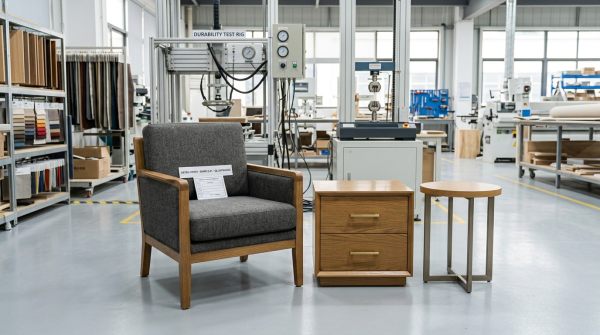
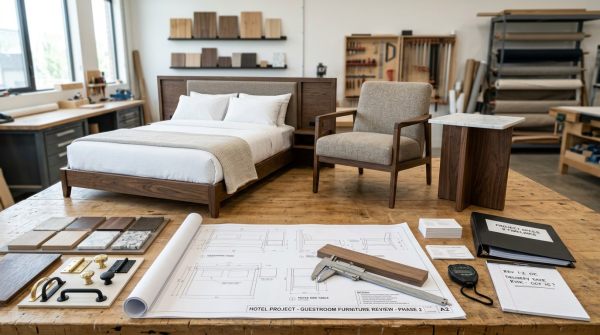
Commercial buyers should request clear information on substrate composition, finish type, upholstery grade, metal thickness where relevant, and care instructions. For custom furniture, mock-ups or sample corners are often more useful than flat chips because they reveal edge quality, joint transitions, and how materials meet in real construction.
A Practical 5-Step Review Method
- Define the use intensity: guest room, lobby, restaurant, outdoor, or mixed-use zone.
- Set expected service life and acceptable maintenance intervals, such as quarterly touch-up or annual conditioning.
- Review full construction details, not just visible finishes.
- Check compatibility with cleaning chemicals, moisture exposure, and local climate.
- Approve pre-production samples under real light conditions before mass order release.
The matrix below helps procurement teams compare material options using commercial criteria rather than appearance alone.
A disciplined review process can prevent expensive surprises after installation. For distributors and sourcing agents, this also improves client confidence because recommendations are based on measurable commercial suitability rather than subjective luxury perception.
In global sourcing, buyers should also consider lead time for replacement components. Materials with stable supply chains and repeatable finish programs are easier to manage over 24 to 60 months, especially for phased hotel rollouts and region-wide refurbishment plans.
Application-Specific Recommendations for Hotels, Custom Projects, and Outdoor Use
Material selection should always reflect the operating environment. A specification that works well in a private suite may underperform in a breakfast area, while an elegant indoor finish may fail rapidly on a park bench exposed to direct sun and rain. Commercial buyers should therefore specify by zone, not by a one-material-fits-all philosophy.
Guest Rooms and Suites
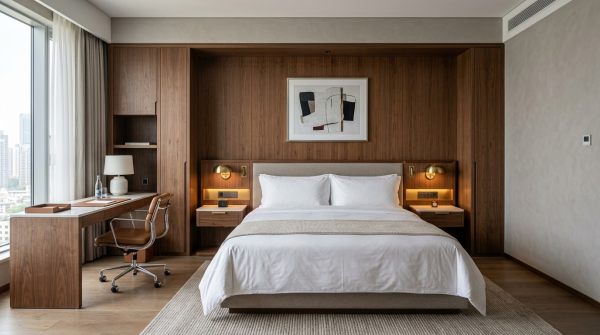
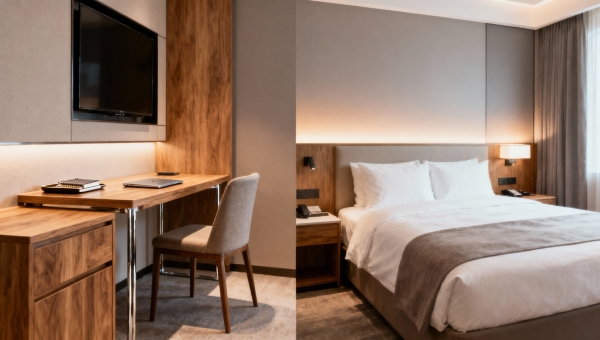
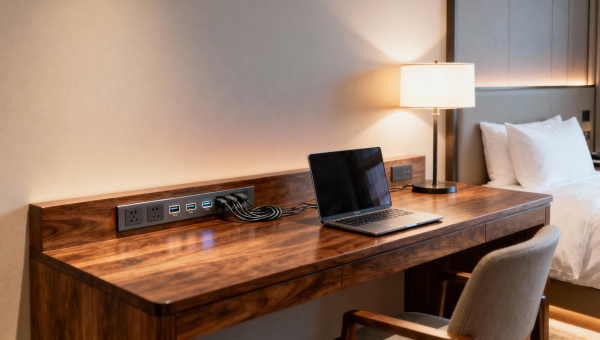
For hotel beds, side tables, writing desks, and headboards, stable wood construction, quality veneer over reliable substrate, and upholstery with strong cleaning tolerance are usually effective choices. In many projects, medium-sheen finishes outperform high-gloss surfaces because they hide micro-scratches better while still feeling upscale.
Soft-touch materials should be selected carefully. Full-grain leather works well in premium suites, while durable contract textiles may be more efficient for standard rooms where turnaround speed and stain control are operational priorities.
Lobbies, Dining Areas, and Public Zones
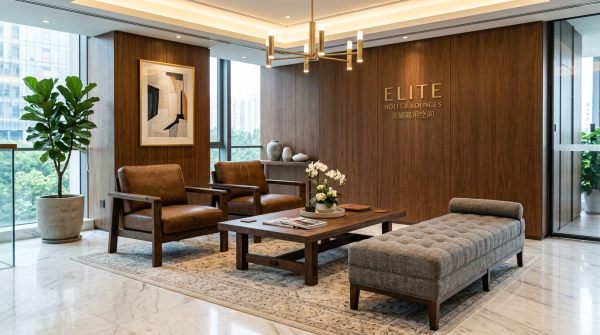
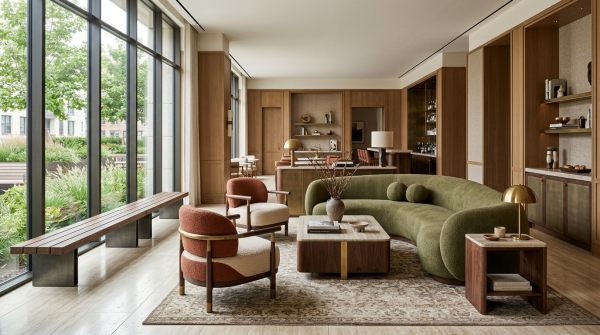
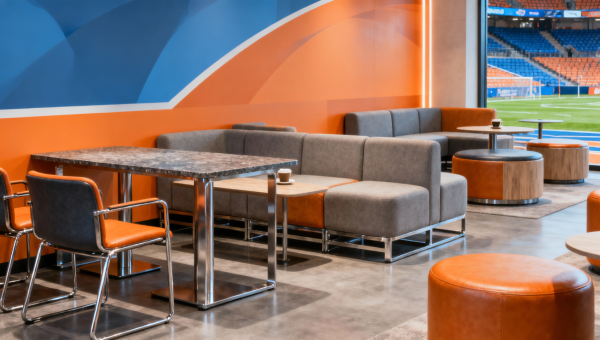
Hotel chairs and hotel tables used in public areas require stronger surface protection and higher repairability. Stone, dense hardwood, metal trim, and performance upholstery are often more practical than fragile decorative materials. In high-traffic zones, rounded edges and replaceable seat pads can extend service life by 2 to 4 years compared with fully integrated low-repair designs.
Custom furniture for lounges or branded hospitality concepts should also consider spare-part strategy. If a project uses a signature metal finish or unique leather tone, buyers should secure touch-up kits, extra yardage, or reserve material from the same production lot.
Outdoor Hospitality and Leisure Spaces
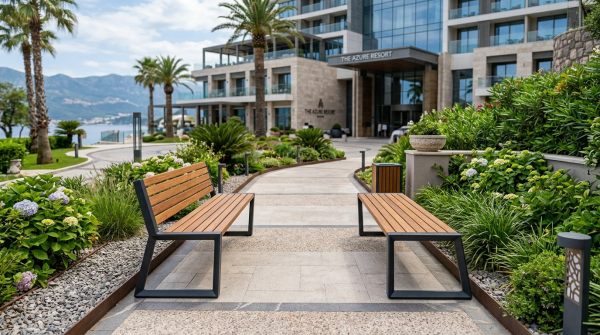
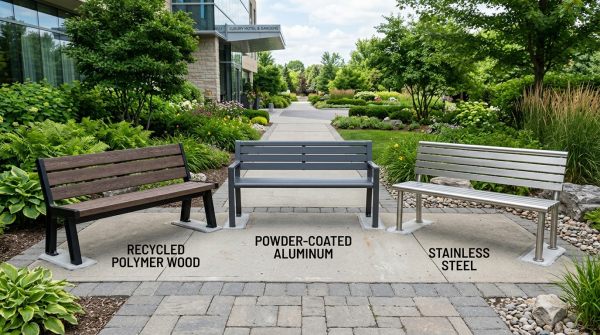
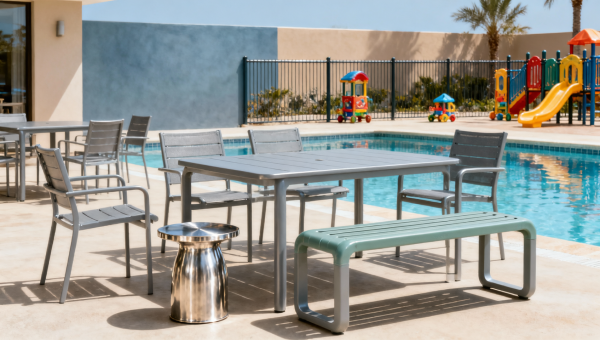
For park benches, terrace seating, and select amusement equipment waiting areas, UV stability and moisture resistance become critical. Teak, thermally modified wood, powder-coated aluminum, stainless steel, and weather-capable synthetic weaves generally outperform decorative indoor-grade materials. Drainage design and fastener quality matter as much as the visible surface.
Outdoor maintenance schedules should also be realistic. A specification that requires monthly oiling may be impractical across a 200-seat public area. In many cases, buyers are better served by materials that accept a slower weathering process but remain structurally sound and visually consistent over 3 to 5 seasons.
Zone-Based Selection Priorities
- Guest room furniture: prioritize tactile quality, stable finish, and moderate repairability.
- Dining and lobby furniture: prioritize abrasion resistance, edge protection, and easy cleaning.
- Outdoor benches and seating: prioritize UV resistance, water drainage, corrosion protection, and fastening durability.
- Custom statement pieces: prioritize material reserve planning and replacement consistency for future projects.
When buyers align luxury furniture materials with use intensity and maintenance reality, the result is not only better aging performance but also more reliable budgeting across refurbishment cycles.
Common Buyer Questions and Final Sourcing Guidance
How can buyers tell whether a material will age well or just look expensive at first?
Ask for construction details, maintenance requirements, and use-case fit. A material that ages well usually has a clear repair path, a known care routine, and a realistic commercial lifespan. If the supplier can describe appearance but not cleaning limits, substrate quality, or replacement strategy, the specification may be weak.
Are natural materials always better than engineered ones?
Not always. Natural materials often age beautifully, but only when processed and installed correctly. Some engineered surfaces outperform natural ones in stain resistance or dimensional stability. The better question is whether the material suits the traffic level, climate, cleaning method, and brand expectation of the project.
What is the most common sourcing mistake in luxury hotel furniture?
Choosing based on showroom visuals alone. The most costly mistakes usually involve thin decorative finishes, low-grade upholstery, or under-specified substrates in highly visible furniture categories. These issues often appear after installation, when correction costs are much higher than initial upgrade costs.
How should distributors and procurement teams work with suppliers?
Use a specification-led brief covering at least 6 points: application zone, expected service life, cleaning method, climate conditions, replacement strategy, and finish approval process. This creates better comparability between quotations and reduces the risk of hidden downgrades during production.
For commercial buyers, the best luxury furniture materials are those that maintain visual authority while staying manageable in service. Solid hardwood, full-grain leather, quality stone, and durable metals usually reward long-term projects with graceful aging. Bonded leather, poorly built panels, and weak finishes often create the opposite result: early degradation hidden behind an attractive first impression.
For sourcing teams evaluating hotel furniture, custom furniture, hotel beds, hotel chairs, hotel tables, and park benches, the smartest decision is to compare materials across lifecycle performance, not just unit price. If you are planning a hospitality, commercial interior, or outdoor leisure project, contact GCT to discuss sourcing options, review material suitability, and get a more reliable specification strategy for long-term value.
Search News
Hot Articles
- Stage Lighting & Truss2026 FIBA Women's World Cup Draw Sparks LED Timing Screen Upgrade DemandApr 28, 2026
- Pro Stage AudioKenyan Marathon WR Break Drives Demand for Timing Chips & Track SensorsApr 28, 2026
- Smart Campus Tech2026 Shanghai Smart Campus Expo: VR Teaching Devices Gain ITU & ISO/IEC 23053 CertificationApr 28, 2026
Popular Tags
Need ExpertConsultation?
Connect with our specialized leisureengineering team for procurementstrategies.
Recommended News
 Apr 28, 2026Luxury Furniture Materials That Age Well and Those That Do NotLuxury furniture guide for hotel furniture, custom furniture, hotel beds, hotel chairs, hotel tables, and park benches—learn which materials age well, cut lifecycle costs, and protect premium spaces.● Institutional Buyer
 Apr 28, 2026Custom Furniture Orders Go Wrong When Samples Skip Real TestingCustom furniture mistakes start when samples skip real testing. Learn how hotel furniture, hotel beds, hotel chairs, hotel tables, luxury furniture and park benches avoid costly failures.● Institutional Buyer
 Apr 28, 2026Are Park Benches With Backrests Always the Better Choice?Park benches with backrests are not always best. Explore how custom furniture choices align with luxury furniture, hotel furniture, hotel chairs, hotel tables, and hotel equipment needs.● Institutional Buyer
 Apr 28, 2026How to Tell if Custom Furniture Is Worth the Extra Lead TimeCustom furniture, hotel furniture, hotel beds, hotel chairs, hotel tables, park benches and luxury furniture—learn when longer lead times deliver better value, durability and ROI.● Institutional Buyer
 Apr 28, 2026Custom Furniture Delays Often Start at the Drawing StageCustom furniture delays often begin in drawings. Learn how hotel furniture, luxury furniture, hotel beds, hotel chairs, hotel tables, and park benches avoid costly sourcing delays.● Institutional Buyer
 Apr 28, 2026When Does Luxury Furniture Feel Premium and When Is It Overpriced?Luxury furniture, hotel furniture, custom furniture, hotel beds, hotel chairs, hotel tables, and park benches: learn when premium quality delivers value vs overpriced design, with smart sourcing tips.● Institutional Buyer
 Apr 28, 2026Luxury Furniture Trends Shaping Premium Interiors in 2026Explore 2026 luxury furniture trends, from custom furniture and hotel furniture to hotel beds, hotel chairs, hotel tables, and park benches—smart sourcing for premium interiors.● Institutional Buyer
 Apr 28, 2026Park Benches: Which Materials Need Less Maintenance Outdoors?Park benches made of aluminum, recycled plastic, and stainless steel need less upkeep outdoors. Ideal for luxury furniture, custom furniture, hotel furniture, and resort projects.● Institutional Buyer
 Apr 28, 2026What Makes Park Benches Hold Up Better in High-Traffic Areas?Park benches built for heavy use need smart materials, strong design, and low upkeep. Discover how they compare with luxury furniture, custom furniture, hotel furniture, and hotel equipment.● Institutional Buyer
 Apr 21, 2026What size hotel desks work in compact guest roomsHotel desks for compact guest rooms: discover the right hotel furniture sizes, layouts, and hospitality procurement tips to maximize space, comfort, and luxury furniture appeal.● Institutional Buyer
 Apr 21, 2026Hotel desks with built in power are now expectedHotel desks with built in power are redefining hotel furniture and hotel room furniture. Explore smarter commercial furniture choices for hospitality procurement and better guest satisfaction.● Institutional Buyer
 Apr 23, 2026Commercial Furniture Buying Mistakes to AvoidCommercial furniture buying mistakes can impact hotel tables, amusement equipment, playground borders, sensory playground safety, and more. Learn how to source smarter and avoid costly errors.● Institutional Buyer
 Apr 23, 2026Commercial Furniture Materials That Hold Up Better OutdoorsCommercial furniture that lasts outdoors: compare hotel tables, amusement equipment, playground borders, sensory playground seating, and playground safety-focused materials.● Institutional Buyer
 Apr 23, 2026Custom Furniture or Stock Which WinsCompare custom furniture vs stock for hotels and leisure park projects. From hotel beds, catering equipment, and soundproofing materials to playground swings and theme park rides, find the best-fit solution.● Institutional Buyer
 Apr 20, 2026Commercial furniture upholstery stains that won’t lift—even with pro cleanersCommercial furniture stains won’t lift? Discover stain-resistant solutions for hotel beds, park benches, luxury furniture & more—backed by lab data & real-world performance.● Institutional Buyer
 Apr 19, 2026Commercial furniture fire ratings that change mid-projectCommercial furniture fire ratings—especially for hotel beds, park benches, hotel chairs, and luxury custom furniture—can shift mid-project. Avoid delays, cost overruns, and non-compliance with real-time, E-E-A-T–validated fire safety intelligence.● Institutional Buyer
 Apr 17, 2026Why commercial furniture specs matter more than price in 2026Commercial furniture, playground borders, sensory playgrounds & more—why specs trump price in 2026 for safety, ROI & brand trust. Discover how.● Institutional Buyer
 Apr 17, 2026Office furniture & equip: How ‘modular’ claims fall apart after three reconfigurationscommercial furniture, playground safety & sensory playground systems—why 'modular' fails after 3 reconfigurations. Get data-backed validation for amusement equipment, hotel tables & educational supplies.● Institutional Buyer
 Apr 14, 2026Fuzhou Hospital's Office Supply Tender Fails Due to Lack of BiddersFuzhou Hospital's office supply tender failed due to lack of qualified bidders, exposing gaps in regional suppliers' compliance and procurement experience. Learn key considerations for international buyers evaluating Chinese vendors.● Institutional Buyer
 Apr 14, 2026Chongqing Launches Office Supplies Procurement with 2-Hour Delivery FocusChongqing's office supplies procurement (KZQ26A00105) sets new standards with 2-hour delivery focus and 60% SME quota. Discover how this 886,700 RMB tender impacts logistics and supply chains in China's evolving B2B market.● Institutional Buyer
 Apr 16, 2026Custom fabrication for office furniture: Why CAD files alone don’t guarantee fit-on-siteCustom fabrication for hotel furniture, designer eyewear & luxury watches demands real-world fit—not just CAD files. Discover why OEM manufacturing, supply chain solutions & precision matter on-site.● Institutional Buyer
 Apr 16, 2026Luxury furniture finishes that resist UV fading outdoorsDiscover UV-resistant luxury furniture finishes for park benches, music stands & outdoor playgrounds—engineered for colorfastness, compliance, and premium aesthetics under harsh sun.● Institutional Buyer
 Apr 15, 2026Luxury furniture materials that age well — and those that don’tDiscover luxury furniture materials that age gracefully—ideal for park benches, music stands, orchestral instruments & more. Avoid costly failures.● Institutional Buyer
 Apr 15, 2026Why commercial furniture specs matter more than price in 2026Commercial furniture specs—playground borders, sensory playgrounds, music accessories & more—drive safety, durability & experience in 2026. Stop choosing by price alone.● Institutional Buyer