Mobile Pedestals Wholesale: Why Drawer Slides Matter More
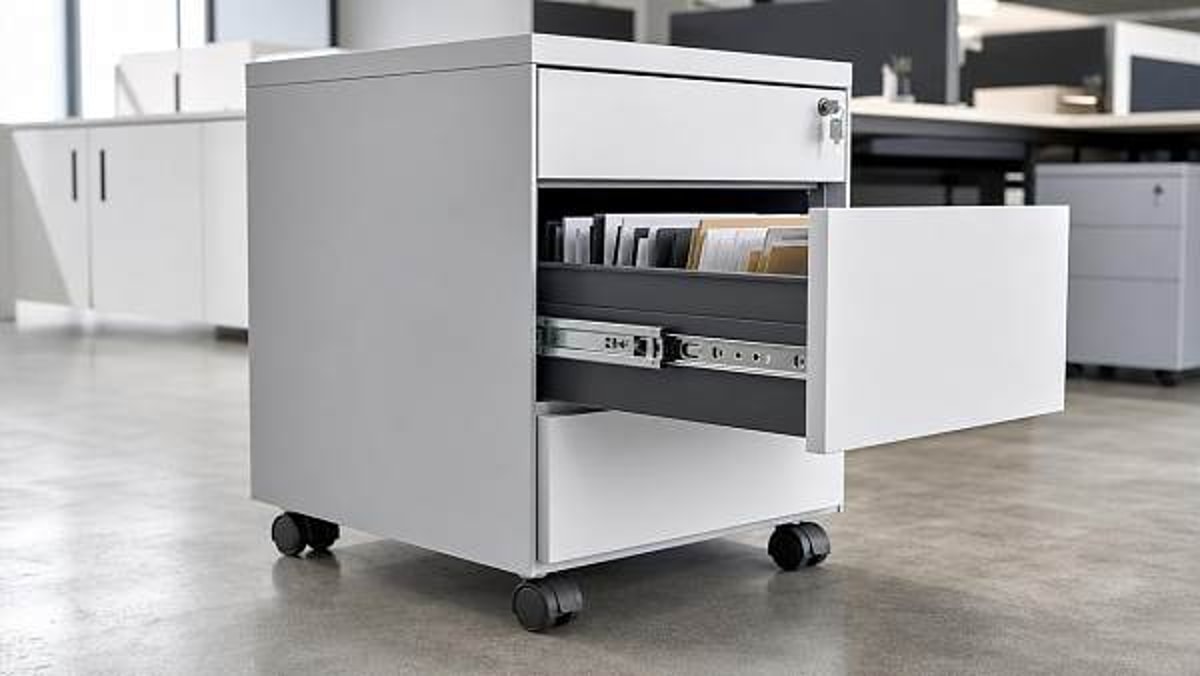
In mobile pedestals wholesale, buyers often compare size, finish, and price first—but drawer slides usually determine long-term performance. For procurement teams sourcing office storage at scale, slide quality affects durability, user experience, load capacity, and maintenance costs. Understanding why this hardware matters more can help you choose mobile pedestals that deliver stronger value across commercial projects.
For procurement professionals, a checklist-based approach is the fastest way to separate attractive quotations from dependable supply. In large office fit-outs, educational projects, and institutional purchasing, mobile pedestals are touched every day, moved frequently, overloaded occasionally, and judged constantly by end users. That means the hidden mechanism inside each drawer can have a bigger effect on lifecycle value than the visible shell. When evaluating mobile pedestals wholesale offers, it is more effective to start with the slide system, then move outward to structure, finish, locks, mobility, and service support.
Why procurement teams should review drawer slides before price
A low unit cost can look competitive at tender stage, but drawer slides directly influence return rates, complaints, replacement cycles, and furniture uptime. If slides deform, bind, loosen, or fail under repeated opening, the entire mobile pedestal becomes a service issue. In contrast, well-engineered slides help maintain smooth movement, stable loading, secure closing, and a better daily user experience even in high-traffic workspaces.
This is especially relevant in mobile pedestals wholesale procurement because volume magnifies small defects. A 2% hardware failure rate may seem minor in sampling, but across 2,000 units it becomes a measurable maintenance burden. For commercial buyers focused on total cost of ownership, drawer slides are not a minor accessory. They are a core performance component.
The core checklist for evaluating drawer slides in mobile pedestals wholesale
Before approving a supplier, procurement teams should verify these key points. Each item affects long-term reliability, user satisfaction, and project consistency.
- Slide type: Confirm whether the pedestal uses roller slides, ball-bearing slides, or undermount systems. For most commercial office applications, ball-bearing slides are preferred for smoother travel and stronger load support.
- Load capacity: Ask for tested dynamic and static load ratings, not just a marketing claim. A common issue in mobile pedestals wholesale is confusion between light-duty residential hardware and commercial-grade slides.
- Cycle testing: Request evidence of opening-and-closing cycle performance. A commercial product should demonstrate durability over heavy repetitive use.
- Extension range: Check whether drawers are partial extension or full extension. Full extension improves access to files and personal storage, especially in compact workstations.
- Closing behavior: Review whether the product has soft-close, self-close, or standard close. Soft-close often improves perceived quality and reduces impact damage.
- Material thickness and finish: Slide steel thickness, coating quality, and corrosion resistance matter in humid, coastal, or heavily cleaned environments.
- Mounting precision: Even good slides perform badly when cabinet tolerances are poor. Ask about manufacturing tolerance control and assembly consistency.
- Replacement compatibility: Verify whether slides can be replaced easily in after-sales service, especially for large installations across multiple sites.
How to judge slide quality beyond supplier brochures
In mobile pedestals wholesale, brochures often use terms like “smooth,” “heavy-duty,” or “durable” without measurable proof. Procurement teams should ask suppliers to support claims with practical evidence. The most useful documents include test reports, warranty terms, hardware brand details, and quality control records tied to actual production batches.
Priority verification points
- Request the slide brand or manufacturer name instead of accepting “equivalent hardware.”
- Ask whether the load rating applies to full extension and real installed conditions.
- Review cycle test standards and whether tests were conducted by the supplier, the hardware maker, or a third party.
- Check whether anti-tilt behavior is built into the pedestal design, especially when multiple drawers may be pulled.
- Confirm if installation screws, hole patterns, and cabinet structure are designed specifically for the selected slide system.
One practical sourcing method is to compare two visually similar pedestal samples side by side. Open each drawer fully, add representative weight, close it repeatedly, and observe side play, noise, drag, and rebound. These simple tests often reveal more than specification sheets.
A procurement table: what to compare in mobile pedestals wholesale
Different project scenarios require different slide priorities
Not every buyer should use the same specification. In mobile pedestals wholesale, the right drawer slide decision depends on how the product will be used, by whom, and under what operational pressure.
Corporate offices
For standard office workstations, smooth action, low noise, and dependable file drawer performance are usually the top priorities. Soft-close ball-bearing slides often provide the best balance between user comfort and commercial durability.
Educational and institutional spaces
These projects often involve heavier use, less careful handling, and large-volume deployment. Procurement teams should prioritize robust cycle testing, stable hardware tolerances, and easy replacement access for maintenance teams.
Executive and premium fit-outs
In premium environments, tactile quality matters more. Drawer slides should feel quiet, controlled, and refined. A mismatch between luxury exterior finishes and low-grade slide performance can damage the perceived value of the entire furniture package.
Multi-site procurement programs
For buyers sourcing mobile pedestals wholesale across regions, standardization becomes critical. It is better to lock one approved slide specification and replacement protocol than to accept multiple “similar” alternatives that complicate maintenance and spare parts planning.
Commonly overlooked risks in mobile pedestals wholesale sourcing
Many sourcing problems do not come from obvious defects. They come from assumptions made too early in the buying process. These are the issues procurement teams most often overlook:
- Sample quality differs from mass production: A well-built sample may use better hardware than volume orders unless specifications are frozen clearly.
- Load claims ignore real use: File drawers, personal storage, and mixed items create uneven loading that can stress low-grade slides.
- Cabinet build undermines hardware: Thin side panels, poor drilling accuracy, or weak screw retention can compromise slide performance.
- Locking and slide interaction is not checked: Central locking systems should align properly with drawer movement and closure.
- No spare-parts commitment: Even strong products need occasional service. Lack of replacement slides can turn minor repairs into full-unit replacements.
Execution advice: how to improve supplier selection and reduce lifecycle cost
To make mobile pedestals wholesale decisions more reliable, procurement teams should build drawer slide checkpoints directly into RFQs, technical schedules, and sample approval workflows. This reduces ambiguity and gives suppliers a clearer performance target.
Recommended RFQ requirements
- State the required slide type, extension mode, and load expectation.
- Require supporting test data and warranty coverage for hardware.
- Request hardware brand disclosure or approved equivalent policy.
- Define whether soft-close is mandatory or optional.
- Include sample approval based on loaded-use testing, not appearance alone.
- Clarify spare-parts availability and service response expectations.
A disciplined process can also support better negotiations. When a supplier understands that your team is evaluating mobile pedestals wholesale offers on hardware performance and lifecycle cost, not just ex-factory price, discussions become more technical and transparent. This often leads to stronger value engineering choices, such as upgrading slides while optimizing non-critical cosmetic options.
FAQ for buyers reviewing mobile pedestals wholesale options
Is soft-close necessary for all commercial projects?
Not always, but it is highly valuable in offices where acoustic comfort and perceived quality matter. In cost-sensitive institutional projects, standard commercial-grade ball-bearing slides may be sufficient if durability is proven.
Are heavier slides always better?
No. The best choice depends on drawer size, expected contents, and cabinet design. Over-specifying can increase cost without practical benefit, while under-specifying creates service risk. Matching hardware to use case is the key procurement principle.
Should buyers prioritize branded hardware?
Branded hardware can improve confidence, traceability, and replacement planning, but unbranded or private-label slides may still perform well if backed by clear test evidence and consistent manufacturing control. Verification matters more than labels alone.
Final checklist before placing a mobile pedestals wholesale order
Before final approval, buyers should confirm five things: the exact drawer slide specification, tested load and cycle performance, sample-to-mass-production consistency, spare-parts support, and warranty responsibility. If any of these points remain vague, the sourcing decision is incomplete.
For procurement teams managing office furniture programs at scale, the smartest mobile pedestals wholesale strategy is to treat drawer slides as a primary decision item, not a hidden detail. If you need to move forward, prepare your expected usage scenario, target budget, file storage needs, preferred slide type, service requirements, and delivery schedule first. With those inputs defined early, supplier discussions become more precise, comparisons become fairer, and the final pedestal selection is far more likely to perform well throughout the project lifecycle.
Search News
Hot Articles
Popular Tags
Need ExpertConsultation?
Connect with our specialized leisureengineering team for procurementstrategies.
Recommended News
 May 04, 2026Ergonomic Office Chairs Wholesale: Comfort Claims vs Real SupportErgonomic office chairs wholesale: learn how to verify real support beyond comfort claims with fit, adjustability, durability, and compliance insights for smarter commercial buying.● Institutional Buyer
 May 04, 2026Modular Office Workstations: Flexibility Can Add Setup CostsModular office workstations can improve flexibility, but setup costs often rise through installation, power, data, and rework. Learn when the added investment truly pays off.● Institutional Buyer
 May 04, 2026Steel Filing Cabinets: Why Some Drawers Jam Too EarlySteel filing cabinets often jam early due to weak slides, poor leveling, overload, or lock issues. Discover what to check before buying and how to avoid costly drawer failures.● Institutional Buyer
 May 04, 2026Office Network Racks: Airflow Problems Start With Bad PlanningOffice network racks can fail early when airflow is ignored. Learn the key planning checklist to prevent overheating, reduce maintenance risks, and build a more reliable office network.● Institutional Buyer
 May 04, 2026Office Partitions Wholesale: Open Plan Savings, Closed Office NeedsOffice partitions wholesale helps project managers cut fit-out costs, speed delivery, and balance open-plan efficiency with private office performance. Explore smarter commercial workspace solutions.● Institutional Buyer
 May 04, 2026Conference Room Tables: Common Layout Mistakes to AvoidConference room tables can make or break meeting flow. Discover common layout mistakes to avoid and plan smarter spaces for collaboration, AV integration, and professional results.● Institutional Buyer
 May 04, 2026Mobile Pedestals Wholesale: Why Drawer Slides Matter MoreMobile pedestals wholesale buyers should look beyond price—drawer slides shape durability, load capacity, and maintenance costs. Learn what to compare before ordering.● Institutional Buyer
 May 04, 2026Height Adjustable Standing Desks: Stability Matters More Than SpeedHeight adjustable standing desks should be judged by stability, not just speed. Learn how stronger frames improve safety, user confidence, and long-term value in commercial spaces.● Institutional Buyer
 May 04, 2026Executive Office Desks: When Looks Start to Hurt FunctionExecutive office desks should do more than look impressive. Discover how to balance prestige, ergonomics, storage, and tech support for smarter office buying decisions.● Institutional Buyer
 May 04, 2026Server Cabinets Wholesale: How to Avoid Ordering the Wrong DepthServer cabinets wholesale guide: avoid costly depth mistakes by checking usable internal space, rail fit, cable clearance, and expansion needs before placing bulk orders.● Institutional Buyer
 May 04, 2026Commercial Paper Shredders and the Hidden Cost of DowntimeCommercial paper shredders do more than destroy documents—they protect uptime, compliance, and budgets. Discover how to avoid hidden downtime costs and choose smarter for busy workplaces.● Institutional Buyer
 May 04, 2026Mesh Office Chairs OEM Orders: Specs That Cause ReworkMesh office chairs OEM projects often face rework from vague specs, certification gaps, and component mismatches. Learn what to verify before production to avoid delays and protect budgets.● Institutional Buyer
 May 04, 2026Stackable Visitor Chairs That Save Space Without Looking CheapStackable visitor chairs that save space without looking cheap—discover how to choose stylish, durable seating for offices, schools, and hospitality spaces.● Institutional Buyer
 May 04, 2026What Makes Commercial Acoustic Panels Worth the Cost?Commercial acoustic panels help buyers balance cost with performance, compliance, durability, and design. Learn what makes them worth the investment across offices, schools, hotels, and more.● Institutional Buyer
 May 04, 2026Biometric Time Attendance Systems: Where Accuracy Gains FadeBiometric time attendance systems deliver stronger tracking, but where do accuracy gains fade? Explore real-world limits, privacy risks, and smarter deployment choices.● Institutional Buyer
 May 03, 2026Commercial trash cans: capacity, liners, and lid design all matterCommercial trash cans impact cleanliness, labor, and guest experience. Learn how capacity, liner fit, and lid design help buyers choose smarter, cleaner, cost-effective solutions.● Institutional Buyer
 May 03, 2026Wet and dry vacuum cleaners: when tank size slows teams downWet and dry vacuum cleaners can boost flexibility, but the wrong tank size cuts productivity. Learn how to choose capacity that reduces downtime, labor costs, and workflow friction.● Institutional Buyer
 May 03, 2026Commercial floor scrubbers: ride-on or walk-behind for large sitesCommercial floor scrubbers for large sites: compare ride-on and walk-behind models by productivity, maneuverability, labor efficiency, and cost to choose the best fit.● Institutional Buyer
 May 03, 2026Decorative room dividers that improve layout without blocking lightDecorative room dividers improve layout, define zones, and preserve natural light in modern interiors. Explore stylish, flexible solutions for commercial and hospitality spaces.● Institutional Buyer
 May 03, 2026Why wholesale ironing boards vary so much in frame qualityWholesale ironing boards vary in frame quality due to steel grade, weld strength, stability, coating, and QC. Learn what smart buyers should check before placing bulk orders.● Institutional Buyer
 Apr 30, 2026Contract furniture specs that reduce replacement cyclesContract furniture specs that cut replacement cycles: learn how durability, cleanability, compliance, and serviceable design help buyers lower lifecycle costs and protect brand standards.● Institutional Buyer
 Apr 28, 2026Luxury Furniture Materials That Age Well and Those That Do NotLuxury furniture guide for hotel furniture, custom furniture, hotel beds, hotel chairs, hotel tables, and park benches—learn which materials age well, cut lifecycle costs, and protect premium spaces.● Institutional Buyer
 Apr 28, 2026Custom Furniture Orders Go Wrong When Samples Skip Real TestingCustom furniture mistakes start when samples skip real testing. Learn how hotel furniture, hotel beds, hotel chairs, hotel tables, luxury furniture and park benches avoid costly failures.● Institutional Buyer
 Apr 28, 2026Are Park Benches With Backrests Always the Better Choice?Park benches with backrests are not always best. Explore how custom furniture choices align with luxury furniture, hotel furniture, hotel chairs, hotel tables, and hotel equipment needs.● Institutional Buyer