CPSC Recalls 3 Chinese-Made Kids' Climbing Frames
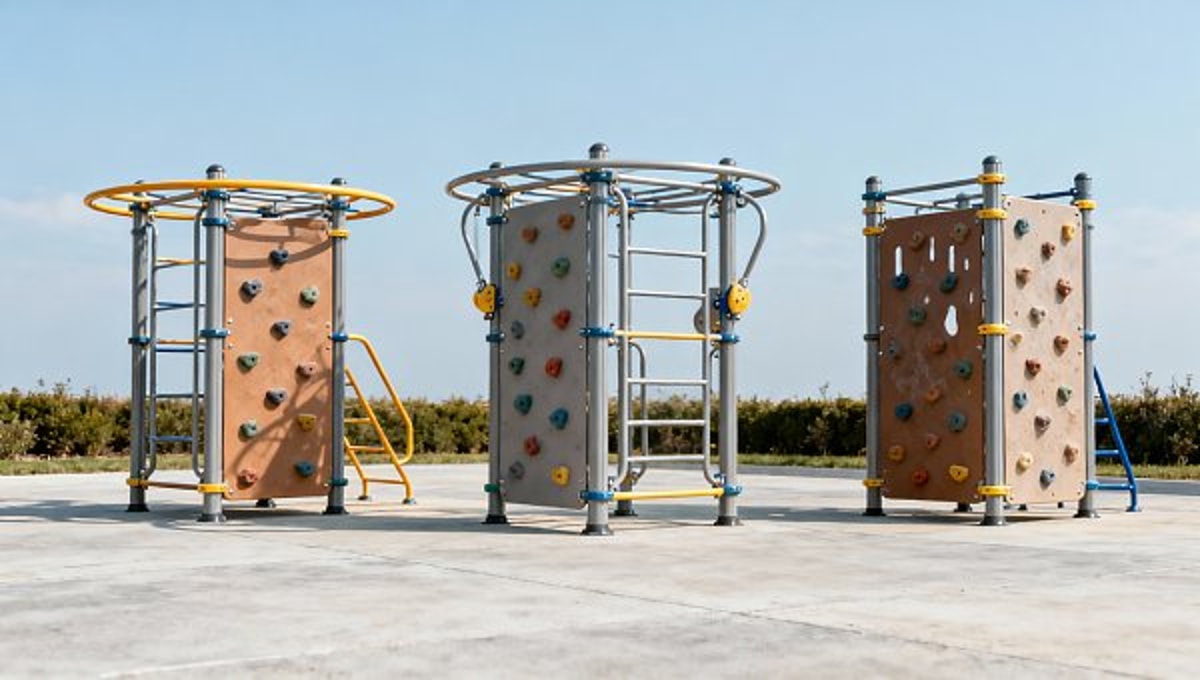
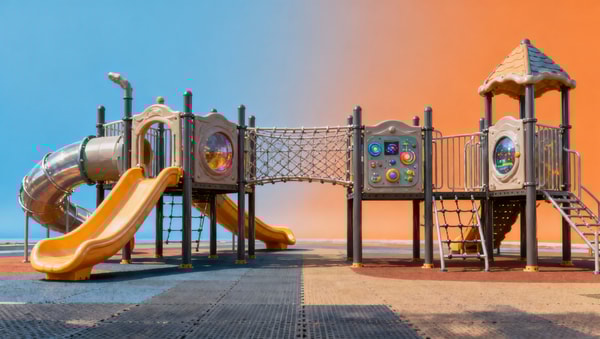
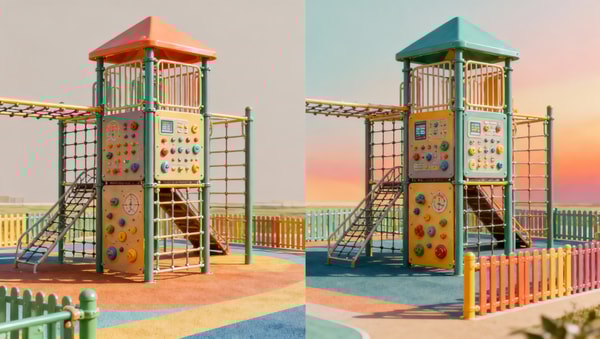
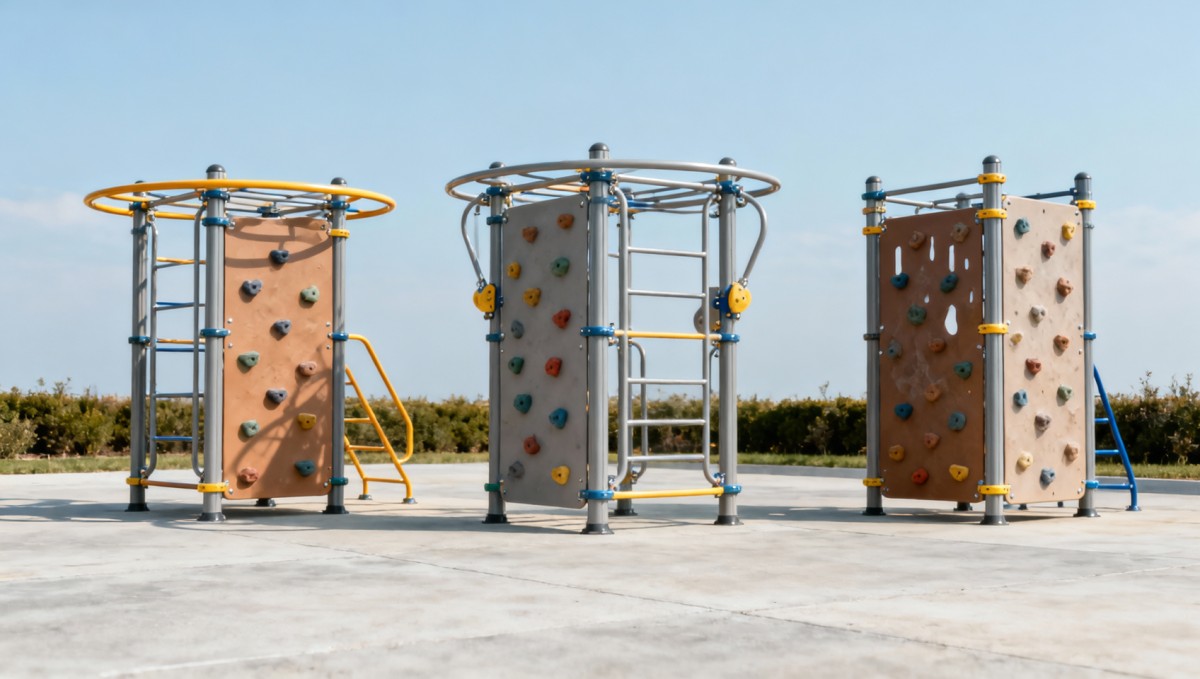
On April 29, 2026, the U.S. Consumer Product Safety Commission (CPSC) issued an urgent recall of three models of modular children’s outdoor climbing frames manufactured in China and distributed across the U.S., Mexico, and Canada. The recall highlights structural integrity and pinch-point hazards—specifically noncompliance with ASTM F1487-23’s static load failure and moving-part clearance requirements. Importers in Saudi Arabia (SASO) and Brazil (INMETRO) have since requested full ASTM F1487 retesting from Chinese suppliers, extending average lead times by 18 business days. This development is especially relevant for exporters of juvenile play equipment, third-party testing service providers, and compliance-focused supply chain managers serving North America, Latin America, and the Middle East.
Event Overview
The U.S. CPSC announced the recall on April 29, 2026. It covers three specific models of modular children’s climbing frames produced in China and imported into the United States, Mexico, and Canada. The cited safety deficiencies are: (1) failure to withstand required static load per ASTM F1487-23 Section 8.2 (‘Static Load Test’), indicating insufficient structural strength; and (2) excessive clearance around moving parts, violating Section 9.3 (‘Pinch, Crush, and Shear Points’) and posing entrapment or finger-injury risks. No injuries have been reported. The recall was publicly posted on the CPSC website and triggered follow-up requests from SASO- and INMETRO-regulated importers for supplementary ASTM F1487 certification documentation.
Industries Affected by Segment
Direct Exporters & Trading Companies
Exporters shipping climbing frames to CPSC-jurisdiction markets (U.S., Canada, Mexico) face immediate re-evaluation of product conformity. Their existing ASTM F1487 test reports—especially those based on older editions (e.g., F1487-17 or F1487-20)—may no longer suffice if they omit the updated static load methodology or clearance tolerances introduced in F1487-23. Re-testing may be required pre-shipment, directly impacting order fulfillment timelines and cost allocation.
Manufacturers & OEM/ODM Factories
Factories producing climbing frames for export must verify whether their current design, material thickness, joint reinforcement, and hinge/gap specifications meet F1487-23’s revised thresholds. Structural redesign or tooling adjustments may be necessary—not only for new orders but also for pending production batches already scheduled for North American or LATAM shipment. Non-compliant inventory may require quarantine or rework before release.
Testing & Certification Service Providers
Laboratories accredited for ASTM F1487 testing are seeing increased demand for F1487-23-specific validation, particularly for static load verification under dynamic simulation conditions and precision gap measurement at multiple articulation points. Capacity constraints are emerging, with average turnaround now extended by 18 business days—as confirmed by importer feedback. Labs must ensure their scope of accreditation explicitly covers F1487-23, not just earlier versions.
Regional Importers & Distributors (Middle East / Latin America)
Importers operating under SASO or INMETRO regulatory frameworks—though not bound by CPSC enforcement—have proactively escalated ASTM F1487 compliance as a contractual requirement following this recall. This signals de facto harmonization pressure: products cleared for U.S. market entry are now being treated as a baseline for other regulated regions, even where ASTM adoption is voluntary. Documentation gaps may delay customs clearance or trigger post-import audits.
What Relevant Businesses Should Monitor and Do Now
Track official updates to ASTM F1487 implementation guidance
ASTM International has not yet published formal interpretation notes for F1487-23’s static load clause. CPSC’s enforcement posture—particularly whether it treats prior-version certifications as grandfathered—remains pending. Businesses should monitor ASTM’s Committee F15 minutes and CPSC’s ‘Business Guidance’ bulletins for clarifications before committing to re-testing.
Verify which climbing frame SKUs fall under F1487-23’s expanded scope
F1487-23 introduces refined definitions for ‘modular systems’ and ‘articulating components’. Not all climbing frames previously classified as ‘non-applicable’ or ‘exempt’ may retain that status. Exporters should cross-check SKU-level configurations (e.g., presence of rotating beams, telescoping ladders, or pivot-mounted platforms) against Annex A.1 of F1487-23 to determine mandatory applicability.
Distinguish between regulatory signal and operational impact
This recall applies only to three specific models—not the entire category. However, analysis shows CPSC is applying stricter scrutiny to static load performance in multi-component assemblies, suggesting future enforcement may expand beyond these units. Companies should treat this as a signal of tightening expectations—not yet a blanket mandate—but prepare internal checklists aligned with F1487-23’s test setup, instrumentation, and reporting requirements.
Initiate supplier alignment on documentation and timeline buffers
Manufacturers and importers should jointly review current test reports, identify version gaps (e.g., F1487-20 vs. -23), and agree on shared responsibility for re-testing costs and schedule extensions. Contractual terms should specify who bears liability for delays caused by newly required certifications—especially where delivery windows are tied to seasonal retail cycles (e.g., back-to-school or holiday).
Editorial Perspective / Industry Observation
Observably, this recall functions less as an isolated enforcement action and more as a calibration point for how regional regulators interpret evolving ASTM benchmarks—particularly when structural performance and mechanical safety intersect. While CPSC’s action is narrowly scoped, its ripple effect across SASO and INMETRO channels suggests growing reliance on U.S.-aligned standards as de facto global baselines for juvenile equipment. Analysis shows this reflects a broader trend: technical standard updates (not just new regulations) are increasingly triggering supply chain responses—even in markets without formal statutory adoption. From an industry perspective, the real significance lies not in the number of units recalled, but in the speed and consistency with which downstream importers translate a CPSC finding into contractual compliance demands.
Conclusion: This recall underscores that ASTM F1487-23 is transitioning from a reference standard to an operational prerequisite for market access—not only in North America but increasingly across diversified export corridors. It is better understood as a procedural inflection point than a one-off compliance event. Companies engaged in juvenile outdoor equipment trade should prioritize version-aware conformity assessment—not just for new designs, but for active SKUs with pending shipments.
Source: U.S. CPSC Recall Notice #2026-XXX (published April 29, 2026); importer communications verified via SASO and INMETRO channel notifications (April 2026). Note: CPSC’s final determination on grandfathering of prior-version ASTM reports remains pending and will be updated as official guidance is released.
Search News
Hot Articles
Popular Tags
Need ExpertConsultation?
Connect with our specialized leisureengineering team for procurementstrategies.
Recommended News
 May 04, 2026CPSC Recalls 3 Chinese-Made Kids' Climbing FramesCPSC recalls 3 Chinese-made kids' climbing frames over ASTM F1487-23 compliance risks—urgent implications for exporters, testers & importers globally.● Theme Park Strategist
 May 02, 2026Sanya Asian Beach Games Closure Spurs Halal Certification Demand for Sand Sports GearHalal certification demand surges for sand sports gear post-Sanya Asian Beach Games—key for volleyball nets, inflatable parks & Middle East exports.● Theme Park Strategist
 May 01, 2026Sanya Asian Beach Games Closure Triggers Halal Certification Demand for Sand Sports EquipmentHalal certification demand surges for sand sports equipment post-Sanya Asian Beach Games—key for beach volleyball, kite surfing & football gear exporters targeting GCC markets.● Theme Park Strategist
 May 01, 2026AI Football Training Robots Export Surge After Man Utd MatchAI football training robots surge in EU demand after Man Utd’s match—FIFA-certified, GPS+IMU equipped, CE-compliant & multilingual ready.● Theme Park Strategist
 May 01, 2026Shanghai Extreme Sports Association Re-elected; EN 15613 Certification Urgency RisesEN 15613 certification urgency surges as Shanghai Extreme Sports Association re-elected—key for EU-bound skateboards, climbing walls & wind tunnels.● Theme Park Strategist
 May 01, 2026Amusement Park Signage That Improves Flow Without Adding ClutterAmusement park signage that improves guest flow, reduces confusion, and supports safety without visual clutter. Discover practical strategies for clearer wayfinding and better park operations.● Theme Park Strategist
 Apr 30, 2026Asian Beach Games Boost Export Demand for Commercial Beach Sports EquipmentCommercial beach sports equipment export demand surges post-Asian Beach Games—key for manufacturers targeting Middle East markets with ISO/ASTM compliance.● Theme Park Strategist
 Apr 30, 2026Water park equipment choices that affect downtime the mostWater park equipment choices can make or break uptime. Learn which pumps, controls, filtration, and material specs reduce downtime, cut maintenance risk, and improve sourcing decisions.● Theme Park Strategist
 Apr 30, 2026Theme park rides with shorter queues and stronger repeat appealTheme park rides with shorter queues and stronger repeat appeal: learn how smarter capacity, ride mix, and sourcing decisions can improve guest flow, ROI, and park performance.● Theme Park Strategist
 Apr 29, 2026Asian Beach Games Boost Demand for UV-Resistant Beach Sports EquipmentUV-resistant beach sports equipment demand surges after China's gold sweep at Sanya Asian Beach Games—key for exporters targeting Middle East markets.● Theme Park Strategist
 Apr 28, 2026Asia Beach Games Boost Export Inquiries for Commercial Sand Sports EquipmentCommercial sand sports equipment exporters see 210% surge in inquiries amid Asia Beach Games—IP68, ISO 22301 & maritime packaging demand spikes from KSA, UAE, Indonesia, Thailand.● Theme Park Strategist
 Apr 27, 2026Asia Beach Games Boost Demand for Portable Sand Sports EquipmentPortable sand sports equipment demand surges 217% amid Asia Beach Games—discover UV-resistant, anchor-stable volleyball & soccer systems for export.● Theme Park Strategist
 Apr 26, 2026China FA Warns Nanjing City Over Fan Conduct; Security Compliance Tightens for International MatchesChina FA warns Nanjing City over fan conduct—key alert for venues, security providers & tech integrators ahead of June 30, 2026 compliance deadline.● Theme Park Strategist
 Apr 25, 2026China FA Warns Nanjing City Over Fan Conduct, Ups Security RulesChina FA warns Nanjing City over fan conduct—new AI security, drone countermeasures & spectrum monitoring now mandated for AFC matches.● Theme Park Strategist
 Apr 24, 2026China FA Warns Nanjing City Over Fan Conduct; ISO 20785 Compliance AcceleratesISO 20785 compliance accelerates as China FA warns Nanjing City over fan conduct—key for sports security integrators targeting Middle East & SEA tenders.● Theme Park Strategist
 Apr 28, 2026How Long Does Amusement Equipment Really Stay Profitable?Amusement equipment profitability lasts 5–12 years. Compare lifecycle ROI with park benches, luxury furniture, hotel beds, custom furniture, hotel furniture, hotel chairs, hotel tables, and hotel equipment.● Theme Park Strategist
 Apr 24, 2026How to Source Park Trash Cans That LastPark trash cans sourcing guide: compare durable materials, supplier options, capacity, and lifecycle cost for playground planning, hospitality procurement, and safer outdoor spaces.● Theme Park Strategist
 Apr 24, 2026Park Trash Cans: What Specs Matter Most?Park trash cans buying guide: compare material, capacity, maintenance, and safety specs for playground planning, playground surfacing, and hospitality procurement projects.● Theme Park Strategist
 Apr 24, 2026What to Check Before Buying Amusement EquipmentAmusement equipment buyers: check playground safety, playground borders, playground climbers, and sensory playground features before purchase to reduce risk and improve long-term value.● Theme Park Strategist
 Apr 24, 2026Amusement Equipment: Buy New or Used?Amusement equipment buying guide: compare new vs. used options for playground climbers, playground borders, sensory playground design, and playground safety to reduce risk and improve ROI.● Theme Park Strategist
 Apr 23, 2026Amusement Equipment Upgrades That Change Guest ExperienceAmusement equipment upgrades improve guest experience with sensory playground features, playground climbers, playground safety, playground borders, and smart commercial furniture solutions.● Theme Park Strategist
 Apr 23, 2026Amusement Equipment Safety Issues Often Missed at InstallAmusement equipment and playground safety start at install. Learn how sensory playground, playground borders, and playground climbers affect compliance, durability, and safer commercial projects.● Theme Park Strategist
 Apr 25, 2026Theme Park Rides That Cut MaintenanceTheme park rides that cut maintenance: compare durable theme park rides, playground structures, inclusive playground and playground swings for leisure park projects. Learn how smart materials and supplier support reduce downtime and lifecycle costs.● Theme Park Strategist
 Apr 25, 2026How to Plan a Profitable Leisure ParkLearn how to build a profitable leisure park with smart theme park rides, inclusive playground design, playground structures, catering equipment, custom furniture, hotel beds, and more.● Theme Park Strategist