Office Partitions Wholesale: Open Plan Savings, Closed Office Needs
For project managers balancing budget control, delivery speed, and workspace performance, office partitions wholesale offers a practical path between open-plan efficiency and private office functionality. From large-scale fit-outs to phased renovations, the right partition strategy can reduce costs, support acoustic needs, and simplify procurement while keeping commercial projects on schedule and aligned with modern workplace expectations.
What does office partitions wholesale actually mean for a project manager?
In practical terms, office partitions wholesale means purchasing partition systems in project quantities rather than as isolated retail items. For a project manager or engineering lead, this is not only about buying more units at a lower price. It is about securing a coordinated package that may include panel systems, framed glass modules, acoustic partitions, doors, hardware, cable management options, and installation support under one sourcing strategy.
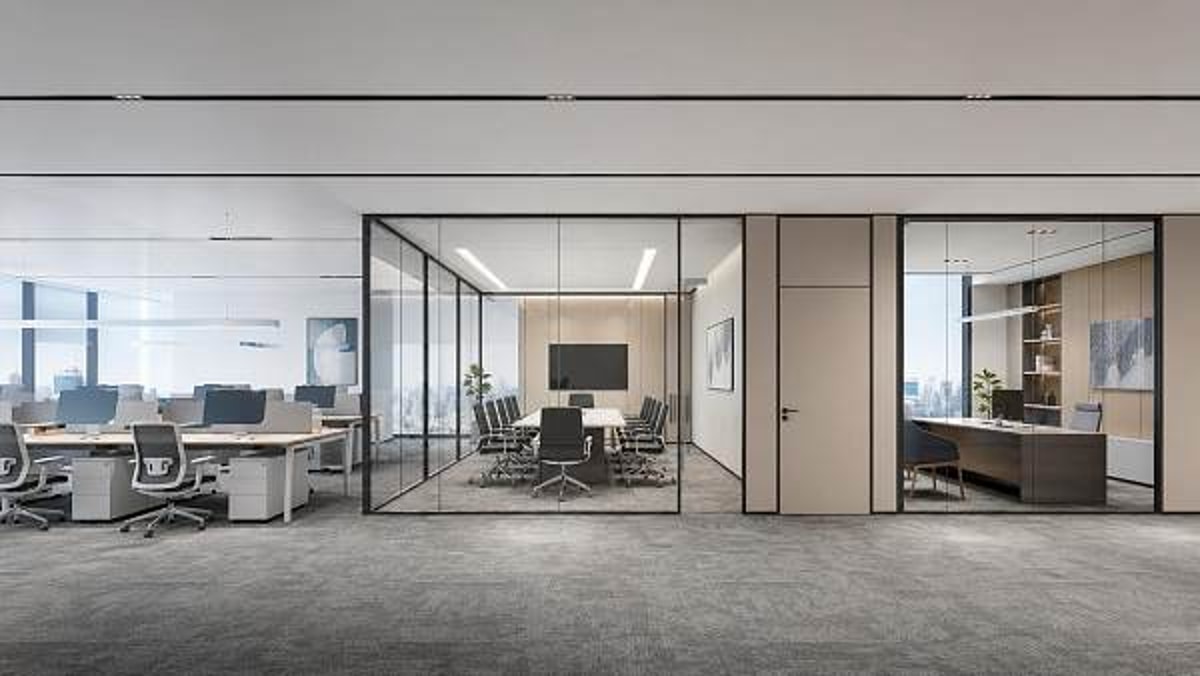
The reason this model gets attention is simple: modern office projects rarely fit one layout type. Open-plan areas may be ideal for collaboration and density, while leadership rooms, HR spaces, meeting areas, and focus booths still require enclosure, privacy, and controlled noise. Office partitions wholesale helps bridge those two needs without forcing a full traditional drywall build in every zone.
For large commercial buyers, wholesale sourcing also improves consistency. Instead of mixing multiple local products with different finishes, tolerances, and lead times, teams can standardize dimensions, visual language, and performance ratings across phases. That matters when the project extends across several floors, multiple branches, or a regional rollout.
Why are more commercial projects using wholesale office partitions instead of full permanent construction?
The biggest driver is flexibility. Businesses change headcount, department structures, and collaboration patterns faster than before. Permanent walls can become a sunk cost when reconfiguration is needed within a few years. By comparison, modular partition systems support faster adaptation with less demolition, less disruption, and often lower lifecycle cost.
Speed is another advantage. Drywall construction can involve more wet trades, longer finishing cycles, repainting, and coordination with MEP adjustments. Office partitions wholesale solutions are often designed for faster assembly, especially in shell-and-core fit-outs, leased offices, technology parks, education administration spaces, and customer-facing commercial environments.
Cost visibility is equally important. Project leaders prefer systems that can be measured, quoted, manufactured, and scheduled with fewer unknowns. Standardized modular partitions allow clearer budgeting for materials, transport, accessories, and installation. While not every partition system is cheaper than basic drywall, many become more economical when factoring in speed, reduced site waste, future relocation, and lower downtime.
There is also a design and brand factor. Contemporary workspaces increasingly use glass, slim frames, acoustic fabric, and integrated smart features to communicate openness and professionalism. Wholesale office partition procurement makes it easier to align those finishes across a complete commercial environment rather than treating each room as a one-off build.
Which office partition types are most suitable for open-plan savings and closed office needs?
This depends on what the project is trying to solve. Not all office partitions wholesale packages serve the same function, and choosing by appearance alone is a common mistake. Project teams should start with performance requirements, then match the partition type to the intended use.
For open-plan areas that need light zoning rather than full privacy, low or mid-height partitions can define teams, support circulation, and reduce visual clutter without sacrificing density. These are often effective in admin departments, call support areas, or co-working layouts where openness still matters.
For manager rooms, meeting spaces, and executive offices, full-height framed glass or solid-panel systems are more common. Glass preserves daylight and a sense of openness, while solid or composite partitions improve visual privacy and often provide stronger acoustic control. Hybrid systems combine both, allowing projects to balance transparency with discretion.
Acoustic partitions are especially relevant when the office design includes concentrated work, confidential discussions, or frequent video meetings. In these situations, the wrong partition choice can create user dissatisfaction even if the layout looks modern. Sound insulation ratings, door seals, ceiling interfaces, and floor conditions all become critical procurement details.
How should you evaluate cost when comparing office partitions wholesale options?
A common misconception is that the lowest unit price equals the best value. For project managers, the real comparison should include total installed cost and total project impact. Office partitions wholesale decisions affect procurement timing, labor coordination, transport volume, storage needs, and post-install modifications.
Start with the product scope. Does the quote include doors, frames, glazing, ironmongery, skirting, seals, integrated blinds, electrical raceways, or only basic panels? A low headline rate can become misleading if essential accessories are treated as extras. Next, check whether the system is standard or custom. Custom dimensions and special finishes may support brand goals, but they can increase lead time and replacement complexity.
Then examine installation realities. Some systems appear economical until site conditions trigger expensive adjustments. Uneven slabs, suspended ceiling conflicts, sprinkler layouts, HVAC coordination, and fire egress rules can all alter the final cost. Experienced suppliers involved in office partitions wholesale usually ask for reflected ceiling plans, MEP drawings, and final dimensions early for exactly this reason.
Lifecycle value deserves equal weight. If a tenant is likely to reconfigure in two or three years, demountable systems may produce better returns than fixed construction. Reusability, lower demolition waste, and shorter future downtime can justify a higher initial cost. For regional buyers managing multiple sites, standardization across locations can also reduce maintenance complexity and spare part issues.
What technical details should be confirmed before placing a wholesale order?
Before signing off on office partitions wholesale procurement, project teams should confirm several technical points that directly affect performance and schedule. The first is dimensional coordination. Partition layout must align with base building structure, ceiling types, lighting grids, air diffusers, and door swing clearance. Even a strong product can fail on site if tolerance planning is weak.
The second is compliance. Depending on the market and building category, you may need fire performance documentation, safety glass certification, acoustic test reports, and material compliance data. For international sourcing, project managers should verify whether the offered system meets local code expectations rather than assuming a foreign standard will automatically pass approval.
Third, ask about manufacturing repeatability. Can the supplier maintain finish consistency across multiple batches? Is the hardware platform stable, or does it change frequently? For phased projects, continuity matters because a mismatch between the first and second delivery can create both aesthetic and operational problems.
Fourth, confirm packaging, transport, and damage management. Glass partitions and finished panels need suitable protection. Wholesale volume increases logistics exposure, so it is wise to clarify carton labeling, palletization, replacement lead times, and claims procedures before shipment starts.
Quick pre-order checklist for project teams
Use this sequence before final approval:
- Validate final room dimensions and ceiling conditions.
- Confirm acoustic, privacy, and fire requirements by room type.
- Check full bill of materials, not only panel pricing.
- Review lead times for standard versus custom finishes.
- Align installation sequence with electrical, HVAC, and flooring trades.
- Clarify warranty scope and replacement part availability.
What mistakes do buyers make when sourcing office partitions wholesale?
One frequent mistake is prioritizing appearance over function. A sleek glass office may photograph well, but if speech privacy is poor, user complaints will arrive quickly. Another mistake is assuming all modular systems are interchangeable. In reality, frame profiles, glazing methods, acoustic seals, and connection logic vary widely between manufacturers.
Buyers also underestimate lead time risk. Office partitions wholesale often involves factory scheduling, finish confirmation, and batch production. If decisions on color, hardware, or door type are delayed, the entire installation window may shift. This becomes more serious when partitions are on the critical path for MEP completion, furniture handover, or client occupation.
Another issue is incomplete stakeholder alignment. Facilities teams may care about maintenance access, designers may focus on visual continuity, and end users may prioritize acoustic comfort. If procurement decisions are made without reconciling those views, the selected system may satisfy one requirement while weakening another.
Finally, some teams fail to ask about after-sales support. For large-scale commercial sourcing, the relationship should not end at delivery. Spare hardware, glass replacement, future reconfiguration support, and technical documentation all matter. A supplier that can support post-install needs is often more valuable than one offering only a slightly lower initial price.
How can project managers balance open-plan efficiency with closed office performance?
The best results usually come from a mixed planning strategy rather than choosing one workplace model entirely. Open-plan layouts still deliver density, communication benefits, and lower fit-out cost per workstation. But they should be supported by targeted enclosed areas where concentration, privacy, and sensitive conversations are expected.
That is where office partitions wholesale becomes especially effective. Instead of building every enclosed area with heavy permanent construction, project teams can reserve modular partitions for spaces that most benefit from future adjustment: meeting rooms, team huddle rooms, executive offices, quiet rooms, and temporary project zones. This keeps the open-plan core efficient while protecting the functions that truly need enclosure.
From a planning perspective, it helps to classify spaces into three categories: open collaboration, semi-private work, and fully private use. Once those categories are mapped, partition specifications become easier to assign. For example, low partitions may suit operational teams, glass modules may suit leadership rooms, and high-acoustic solid systems may suit finance or legal functions. This approach avoids overspending on privacy where it is unnecessary and under-specifying where performance is essential.
What should you ask a supplier before moving forward with office partitions wholesale?
A productive supplier conversation should move beyond catalog browsing. Ask whether the supplier has handled similar project sizes, similar building standards, and similar delivery models. Request evidence of commercial installations, not just product photos. For complex fit-outs, experience with coordination is often more important than a broad product list.
It is also useful to ask how the supplier supports decision-making. Can they provide shop drawings, finish samples, acoustic data, code-related documentation, packing lists, and phased shipment planning? Can they adapt to OEM or ODM requirements if the project includes custom branding or non-standard dimensions? For international commercial sourcing, these capabilities often define whether procurement runs smoothly.
If you need to confirm a concrete direction, begin with a few priority questions: What room types need privacy versus openness? What acoustic level is required? Is speed of installation more important than full customization? Will the layout change within the lease term? What compliance documents are mandatory in the destination market? What is the realistic lead time from drawing approval to site delivery? These questions help narrow the right office partitions wholesale solution far faster than discussing price alone.
For project managers and engineering leaders, the most reliable path is to treat partitions as a strategic system, not a late-stage finishing item. When wholesale sourcing is aligned with workspace goals, compliance needs, and installation sequencing, it becomes a cost-control tool, a schedule protection tool, and a workplace performance tool at the same time. If you need to move toward a specific specification, quotation, timeline, or cooperation model, the next step is to share layout drawings, performance priorities, target quantities, and delivery milestones with a qualified commercial sourcing partner.
Search News
Hot Articles
Popular Tags
Need ExpertConsultation?
Connect with our specialized leisureengineering team for procurementstrategies.
Recommended News
 May 04, 2026Ergonomic Office Chairs Wholesale: Comfort Claims vs Real SupportErgonomic office chairs wholesale: learn how to verify real support beyond comfort claims with fit, adjustability, durability, and compliance insights for smarter commercial buying.● Institutional Buyer
 May 04, 2026Modular Office Workstations: Flexibility Can Add Setup CostsModular office workstations can improve flexibility, but setup costs often rise through installation, power, data, and rework. Learn when the added investment truly pays off.● Institutional Buyer
 May 04, 2026Steel Filing Cabinets: Why Some Drawers Jam Too EarlySteel filing cabinets often jam early due to weak slides, poor leveling, overload, or lock issues. Discover what to check before buying and how to avoid costly drawer failures.● Institutional Buyer
 May 04, 2026Office Network Racks: Airflow Problems Start With Bad PlanningOffice network racks can fail early when airflow is ignored. Learn the key planning checklist to prevent overheating, reduce maintenance risks, and build a more reliable office network.● Institutional Buyer
 May 04, 2026Office Partitions Wholesale: Open Plan Savings, Closed Office NeedsOffice partitions wholesale helps project managers cut fit-out costs, speed delivery, and balance open-plan efficiency with private office performance. Explore smarter commercial workspace solutions.● Institutional Buyer
 May 04, 2026Conference Room Tables: Common Layout Mistakes to AvoidConference room tables can make or break meeting flow. Discover common layout mistakes to avoid and plan smarter spaces for collaboration, AV integration, and professional results.● Institutional Buyer
 May 04, 2026Mobile Pedestals Wholesale: Why Drawer Slides Matter MoreMobile pedestals wholesale buyers should look beyond price—drawer slides shape durability, load capacity, and maintenance costs. Learn what to compare before ordering.● Institutional Buyer
 May 04, 2026Height Adjustable Standing Desks: Stability Matters More Than SpeedHeight adjustable standing desks should be judged by stability, not just speed. Learn how stronger frames improve safety, user confidence, and long-term value in commercial spaces.● Institutional Buyer
 May 04, 2026Executive Office Desks: When Looks Start to Hurt FunctionExecutive office desks should do more than look impressive. Discover how to balance prestige, ergonomics, storage, and tech support for smarter office buying decisions.● Institutional Buyer
 May 04, 2026Server Cabinets Wholesale: How to Avoid Ordering the Wrong DepthServer cabinets wholesale guide: avoid costly depth mistakes by checking usable internal space, rail fit, cable clearance, and expansion needs before placing bulk orders.● Institutional Buyer
 May 04, 2026Commercial Paper Shredders and the Hidden Cost of DowntimeCommercial paper shredders do more than destroy documents—they protect uptime, compliance, and budgets. Discover how to avoid hidden downtime costs and choose smarter for busy workplaces.● Institutional Buyer
 May 04, 2026Mesh Office Chairs OEM Orders: Specs That Cause ReworkMesh office chairs OEM projects often face rework from vague specs, certification gaps, and component mismatches. Learn what to verify before production to avoid delays and protect budgets.● Institutional Buyer
 May 04, 2026Stackable Visitor Chairs That Save Space Without Looking CheapStackable visitor chairs that save space without looking cheap—discover how to choose stylish, durable seating for offices, schools, and hospitality spaces.● Institutional Buyer
 May 04, 2026What Makes Commercial Acoustic Panels Worth the Cost?Commercial acoustic panels help buyers balance cost with performance, compliance, durability, and design. Learn what makes them worth the investment across offices, schools, hotels, and more.● Institutional Buyer
 May 04, 2026Biometric Time Attendance Systems: Where Accuracy Gains FadeBiometric time attendance systems deliver stronger tracking, but where do accuracy gains fade? Explore real-world limits, privacy risks, and smarter deployment choices.● Institutional Buyer
 May 03, 2026Commercial trash cans: capacity, liners, and lid design all matterCommercial trash cans impact cleanliness, labor, and guest experience. Learn how capacity, liner fit, and lid design help buyers choose smarter, cleaner, cost-effective solutions.● Institutional Buyer
 May 03, 2026Wet and dry vacuum cleaners: when tank size slows teams downWet and dry vacuum cleaners can boost flexibility, but the wrong tank size cuts productivity. Learn how to choose capacity that reduces downtime, labor costs, and workflow friction.● Institutional Buyer
 May 03, 2026Commercial floor scrubbers: ride-on or walk-behind for large sitesCommercial floor scrubbers for large sites: compare ride-on and walk-behind models by productivity, maneuverability, labor efficiency, and cost to choose the best fit.● Institutional Buyer
 May 03, 2026Decorative room dividers that improve layout without blocking lightDecorative room dividers improve layout, define zones, and preserve natural light in modern interiors. Explore stylish, flexible solutions for commercial and hospitality spaces.● Institutional Buyer
 May 03, 2026Why wholesale ironing boards vary so much in frame qualityWholesale ironing boards vary in frame quality due to steel grade, weld strength, stability, coating, and QC. Learn what smart buyers should check before placing bulk orders.● Institutional Buyer
 Apr 30, 2026Contract furniture specs that reduce replacement cyclesContract furniture specs that cut replacement cycles: learn how durability, cleanability, compliance, and serviceable design help buyers lower lifecycle costs and protect brand standards.● Institutional Buyer
 Apr 28, 2026Luxury Furniture Materials That Age Well and Those That Do NotLuxury furniture guide for hotel furniture, custom furniture, hotel beds, hotel chairs, hotel tables, and park benches—learn which materials age well, cut lifecycle costs, and protect premium spaces.● Institutional Buyer
 Apr 28, 2026Custom Furniture Orders Go Wrong When Samples Skip Real TestingCustom furniture mistakes start when samples skip real testing. Learn how hotel furniture, hotel beds, hotel chairs, hotel tables, luxury furniture and park benches avoid costly failures.● Institutional Buyer
 Apr 28, 2026Are Park Benches With Backrests Always the Better Choice?Park benches with backrests are not always best. Explore how custom furniture choices align with luxury furniture, hotel furniture, hotel chairs, hotel tables, and hotel equipment needs.● Institutional Buyer