Conference Room Tables: Common Layout Mistakes to Avoid
Poorly planned conference room tables can disrupt workflow, weaken collaboration, and reduce the impact of important meetings. For project managers and engineering leads, avoiding common layout mistakes is essential to creating a space that supports clear communication, efficient movement, and professional decision-making. This guide highlights the most frequent planning errors and how to prevent them in modern commercial environments.
Why conference room tables deserve strategic planning
In many commercial projects, conference room tables are treated as a late-stage furniture decision. In practice, they influence circulation, sightlines, acoustics, power access, technology integration, and the overall tone of a meeting environment. For project managers and engineering leads, the table is not just a surface for laptops and documents. It is a central planning element that affects how teams collaborate, how clients perceive professionalism, and how efficiently a room performs under daily operational pressure.
Across office fit-outs, education spaces, hospitality meeting suites, and mixed-use commercial developments, the demand for flexible and high-performance meeting spaces has grown. Businesses now expect conference room tables to support hybrid meetings, quick reconfiguration, cable management, accessibility, and premium visual standards. That is why layout errors can become expensive: a poor table decision may force redesigns, create safety issues, or weaken the user experience for years.
From a sourcing and planning perspective, Global Commercial Trade highlights the same principle seen across commercial interiors: successful spaces come from aligning furniture with function, compliance, and user behavior. When conference room tables are selected with only dimensions or appearance in mind, critical operational factors are often missed.
What effective conference room table layout really means
A strong layout is more than fitting a table into a room. It means creating a balanced relationship between the table, chairs, doors, display screens, writing surfaces, lighting, and traffic paths. It should also support the primary use case of the room. A boardroom for executive reviews has different needs than a project war room, an engineering coordination room, or a client-facing presentation suite.
Well-planned conference room tables allow every participant to see, hear, connect devices, and move comfortably. They make remote collaboration easier because camera angles and screen orientation are considered early. They also help facilities teams maintain the room, clean around it, and update technology without major disruption. In short, effective layout planning turns the table into a performance asset rather than a fixed obstacle.
Industry context: why layout mistakes are more visible today
Commercial meeting spaces have changed rapidly. Hybrid conferencing tools, stricter accessibility expectations, denser building services, and higher design standards have raised the bar. In the past, a large rectangular table might have been acceptable in almost any meeting room. Today, stakeholders expect integrated power, clean cable routing, camera-friendly seating, and flexible occupancy options. This means the margin for error is smaller than before.
For project-based teams, conference room tables must also support fast decision cycles. Engineering reviews, procurement meetings, contractor coordination, and stakeholder presentations all depend on a room that works without friction. If attendees struggle to enter the room, cannot see the screen clearly, or have nowhere to place equipment, the space undermines productivity. These problems may seem minor individually, but together they reduce meeting quality and project momentum.
Common layout mistakes to avoid
1. Choosing table size before defining room use
One of the most common mistakes is selecting conference room tables based on a target seat count alone. A room designed for weekly status meetings may not need the same table footprint as a room used for technical reviews with drawings, prototypes, or multiple monitors. When room purpose is unclear, teams often buy a table that is either oversized or too limited for actual workflows.
The better approach is to map the meeting type first: formal board sessions, collaborative planning, training, hybrid presentations, or cross-functional workshops. Once the use pattern is clear, the right dimensions and shape become easier to define.
2. Ignoring circulation clearance around the table
A visually impressive table can still fail if people cannot move around it comfortably. Insufficient clearance creates bottlenecks near doors, cabinets, screens, and chair backs. It can also create accessibility challenges and negatively affect emergency movement. In commercial environments, circulation should never be treated as leftover space.
Project leaders should review clearances for seated use, chair pull-back, passing traffic, and service access. This is especially important when conference room tables are placed in compact rooms where every inch affects function.
3. Using the wrong table shape for communication goals
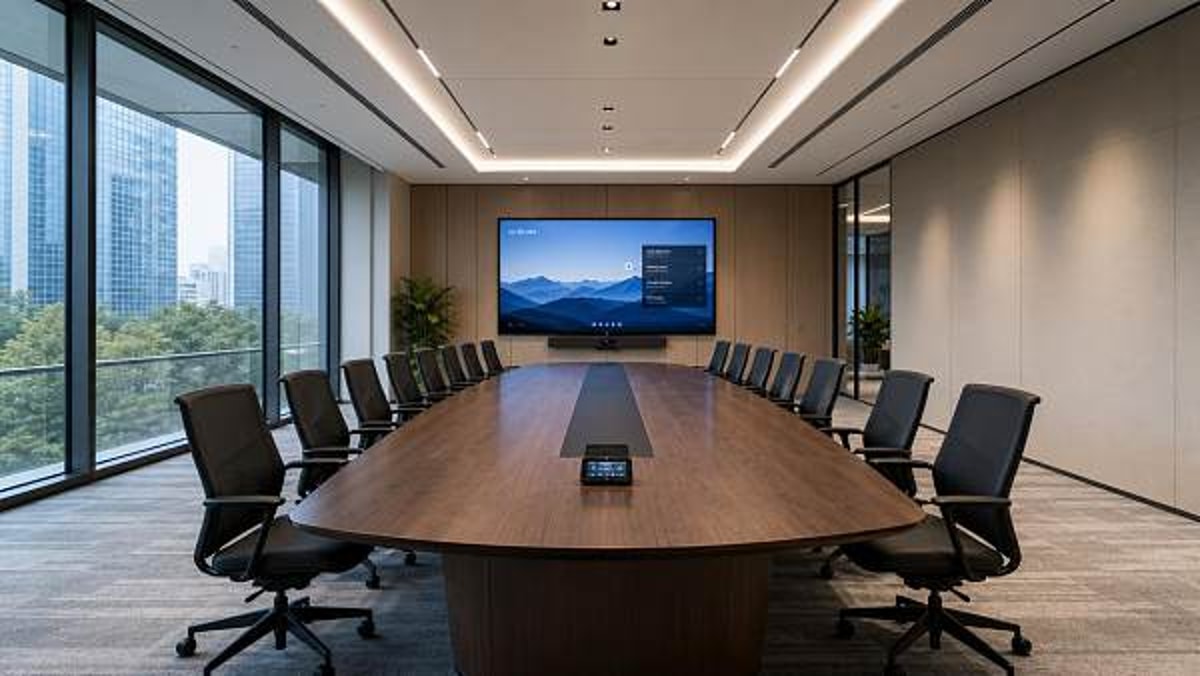
Shape strongly influences interaction. Rectangular conference room tables support hierarchy and are common in formal rooms, but they can increase distance between participants. Boat-shaped designs improve sightlines toward central displays. Round or oval tables encourage equal participation but may reduce usable surface for documents and devices. Modular tables can adapt to changing layouts, though they require careful planning for seams, stability, and cable routing.
A mismatch between table shape and meeting behavior is a frequent design error. Rooms intended for open collaboration often perform poorly when fitted with tables that reinforce rigid seating patterns.
4. Neglecting screen visibility and camera alignment
Modern conference room tables must work with display walls, video bars, microphones, and ceiling systems. If the table is too long, too wide, or incorrectly positioned, some users will struggle to see content or appear awkwardly framed on camera. In hybrid meetings, that directly affects participation quality.
Before finalizing layout, verify viewing angles from every seat, eye contact lines toward the main screen, and camera coverage for both in-room and remote participants. The most attractive table will not solve a poor technology relationship.
5. Underestimating power, data, and cable management needs
This is one of the costliest oversights in commercial meeting room planning. Conference room tables without integrated power or sensible cable paths quickly become cluttered with extension cords and floor hazards. Retrofitting these systems later is disruptive and often more expensive than planning them properly from the beginning.
Engineering leads should coordinate furniture layout with floor boxes, wall outlets, AV systems, and network requirements early in design development. The best result is a clean, maintainable system that supports both current and future devices.
6. Overlooking accessibility and inclusive use
Conference room tables must support diverse users, including visitors, executives, technical staff, and people with mobility needs. Leg clearance, approach zones, seating flexibility, and reach to power modules all matter. A room may look finished yet still be inconvenient or noncompliant in real use.
Inclusive planning improves usability for everyone. It also reduces the risk of design revisions after occupancy reviews or stakeholder feedback.
A practical overview of layout priorities
The table below summarizes major planning factors that should be reviewed before specifying conference room tables in commercial projects.
Typical commercial scenarios and the right planning focus
Not all meeting spaces should use the same conference room tables. The table format should reflect the decision style, participant count, and technology profile of the room.
Practical recommendations for project managers and engineering leads
To avoid layout mistakes, start with a room performance checklist rather than a furniture catalog. Define occupancy range, typical meeting duration, expected device usage, presentation method, and remote meeting frequency. This operational view will guide better decisions than seat count alone.
Next, review conference room tables in relation to architecture and building systems. Door swings, glazing, columns, floor boxes, air distribution, and lighting all influence placement. In many projects, the smartest savings come from coordinating these details before procurement rather than correcting them during installation.
It is also wise to involve end users early. Facilities teams, IT managers, department heads, and frequent meeting hosts often identify practical issues that are not obvious in drawings. Their feedback can reveal whether the room needs more collaboration space, easier equipment access, or a different seating pattern.
Finally, think beyond immediate occupancy. Durable materials, modular construction, serviceable power units, and adaptable table formats can extend the value of conference room tables as teams and technologies evolve. That long-view mindset is especially important in premium commercial environments where image and operational efficiency must coexist.
Conclusion: turn conference room tables into a project advantage
The most common mistakes with conference room tables are rarely about style alone. They come from underestimating how deeply table layout affects communication, movement, technology performance, and user confidence. For project managers and engineering leaders, careful planning can prevent expensive adjustments while delivering a meeting space that supports faster decisions and stronger professional presentation.
In today’s commercial environment, the best conference room tables are those specified as part of a broader room strategy. When layout, AV, circulation, accessibility, and business use are considered together, the result is a room that works as well as it looks. If your next project includes boardrooms, collaboration spaces, or client-facing meeting suites, treating conference room table planning as a strategic design decision will create measurable long-term value.
Search News
Hot Articles
Popular Tags
Need ExpertConsultation?
Connect with our specialized leisureengineering team for procurementstrategies.
Recommended News
 May 04, 2026Ergonomic Office Chairs Wholesale: Comfort Claims vs Real SupportErgonomic office chairs wholesale: learn how to verify real support beyond comfort claims with fit, adjustability, durability, and compliance insights for smarter commercial buying.● Institutional Buyer
 May 04, 2026Modular Office Workstations: Flexibility Can Add Setup CostsModular office workstations can improve flexibility, but setup costs often rise through installation, power, data, and rework. Learn when the added investment truly pays off.● Institutional Buyer
 May 04, 2026Steel Filing Cabinets: Why Some Drawers Jam Too EarlySteel filing cabinets often jam early due to weak slides, poor leveling, overload, or lock issues. Discover what to check before buying and how to avoid costly drawer failures.● Institutional Buyer
 May 04, 2026Office Network Racks: Airflow Problems Start With Bad PlanningOffice network racks can fail early when airflow is ignored. Learn the key planning checklist to prevent overheating, reduce maintenance risks, and build a more reliable office network.● Institutional Buyer
 May 04, 2026Office Partitions Wholesale: Open Plan Savings, Closed Office NeedsOffice partitions wholesale helps project managers cut fit-out costs, speed delivery, and balance open-plan efficiency with private office performance. Explore smarter commercial workspace solutions.● Institutional Buyer
 May 04, 2026Conference Room Tables: Common Layout Mistakes to AvoidConference room tables can make or break meeting flow. Discover common layout mistakes to avoid and plan smarter spaces for collaboration, AV integration, and professional results.● Institutional Buyer
 May 04, 2026Mobile Pedestals Wholesale: Why Drawer Slides Matter MoreMobile pedestals wholesale buyers should look beyond price—drawer slides shape durability, load capacity, and maintenance costs. Learn what to compare before ordering.● Institutional Buyer
 May 04, 2026Height Adjustable Standing Desks: Stability Matters More Than SpeedHeight adjustable standing desks should be judged by stability, not just speed. Learn how stronger frames improve safety, user confidence, and long-term value in commercial spaces.● Institutional Buyer
 May 04, 2026Executive Office Desks: When Looks Start to Hurt FunctionExecutive office desks should do more than look impressive. Discover how to balance prestige, ergonomics, storage, and tech support for smarter office buying decisions.● Institutional Buyer
 May 04, 2026Server Cabinets Wholesale: How to Avoid Ordering the Wrong DepthServer cabinets wholesale guide: avoid costly depth mistakes by checking usable internal space, rail fit, cable clearance, and expansion needs before placing bulk orders.● Institutional Buyer
 May 04, 2026Commercial Paper Shredders and the Hidden Cost of DowntimeCommercial paper shredders do more than destroy documents—they protect uptime, compliance, and budgets. Discover how to avoid hidden downtime costs and choose smarter for busy workplaces.● Institutional Buyer
 May 04, 2026Mesh Office Chairs OEM Orders: Specs That Cause ReworkMesh office chairs OEM projects often face rework from vague specs, certification gaps, and component mismatches. Learn what to verify before production to avoid delays and protect budgets.● Institutional Buyer
 May 04, 2026Stackable Visitor Chairs That Save Space Without Looking CheapStackable visitor chairs that save space without looking cheap—discover how to choose stylish, durable seating for offices, schools, and hospitality spaces.● Institutional Buyer
 May 04, 2026What Makes Commercial Acoustic Panels Worth the Cost?Commercial acoustic panels help buyers balance cost with performance, compliance, durability, and design. Learn what makes them worth the investment across offices, schools, hotels, and more.● Institutional Buyer
 May 04, 2026Biometric Time Attendance Systems: Where Accuracy Gains FadeBiometric time attendance systems deliver stronger tracking, but where do accuracy gains fade? Explore real-world limits, privacy risks, and smarter deployment choices.● Institutional Buyer
 May 03, 2026Commercial trash cans: capacity, liners, and lid design all matterCommercial trash cans impact cleanliness, labor, and guest experience. Learn how capacity, liner fit, and lid design help buyers choose smarter, cleaner, cost-effective solutions.● Institutional Buyer
 May 03, 2026Wet and dry vacuum cleaners: when tank size slows teams downWet and dry vacuum cleaners can boost flexibility, but the wrong tank size cuts productivity. Learn how to choose capacity that reduces downtime, labor costs, and workflow friction.● Institutional Buyer
 May 03, 2026Commercial floor scrubbers: ride-on or walk-behind for large sitesCommercial floor scrubbers for large sites: compare ride-on and walk-behind models by productivity, maneuverability, labor efficiency, and cost to choose the best fit.● Institutional Buyer
 May 03, 2026Decorative room dividers that improve layout without blocking lightDecorative room dividers improve layout, define zones, and preserve natural light in modern interiors. Explore stylish, flexible solutions for commercial and hospitality spaces.● Institutional Buyer
 May 03, 2026Why wholesale ironing boards vary so much in frame qualityWholesale ironing boards vary in frame quality due to steel grade, weld strength, stability, coating, and QC. Learn what smart buyers should check before placing bulk orders.● Institutional Buyer
 Apr 30, 2026Contract furniture specs that reduce replacement cyclesContract furniture specs that cut replacement cycles: learn how durability, cleanability, compliance, and serviceable design help buyers lower lifecycle costs and protect brand standards.● Institutional Buyer
 Apr 28, 2026Luxury Furniture Materials That Age Well and Those That Do NotLuxury furniture guide for hotel furniture, custom furniture, hotel beds, hotel chairs, hotel tables, and park benches—learn which materials age well, cut lifecycle costs, and protect premium spaces.● Institutional Buyer
 Apr 28, 2026Custom Furniture Orders Go Wrong When Samples Skip Real TestingCustom furniture mistakes start when samples skip real testing. Learn how hotel furniture, hotel beds, hotel chairs, hotel tables, luxury furniture and park benches avoid costly failures.● Institutional Buyer
 Apr 28, 2026Are Park Benches With Backrests Always the Better Choice?Park benches with backrests are not always best. Explore how custom furniture choices align with luxury furniture, hotel furniture, hotel chairs, hotel tables, and hotel equipment needs.● Institutional Buyer