Server Cabinets Wholesale: How to Avoid Ordering the Wrong Depth
In server cabinets wholesale, choosing the wrong depth can lead to costly installation delays, poor airflow, and equipment compatibility issues. For technical evaluators, understanding rack dimensions is essential to matching cabinet depth with servers, cable management, and future expansion needs. This guide explains how to avoid common sizing mistakes and make more reliable wholesale purchasing decisions.
Understanding cabinet depth in a wholesale context
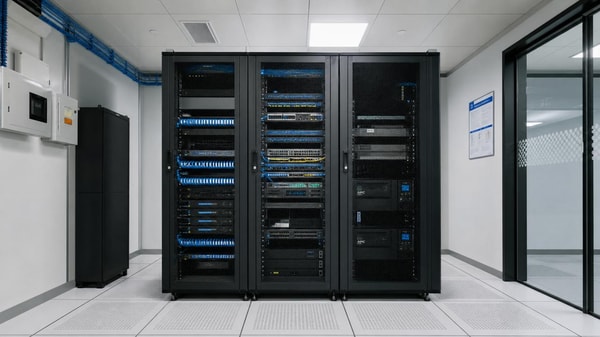
In technical sourcing, cabinet depth is not a minor specification. It directly affects whether servers can be mounted safely, whether rear doors can close, whether power distribution units fit correctly, and whether technicians can route cables without blocking airflow. In server cabinets wholesale, depth errors often happen because buyers rely on nominal rack size, such as 42U, while overlooking the more practical front-to-rear usable space.
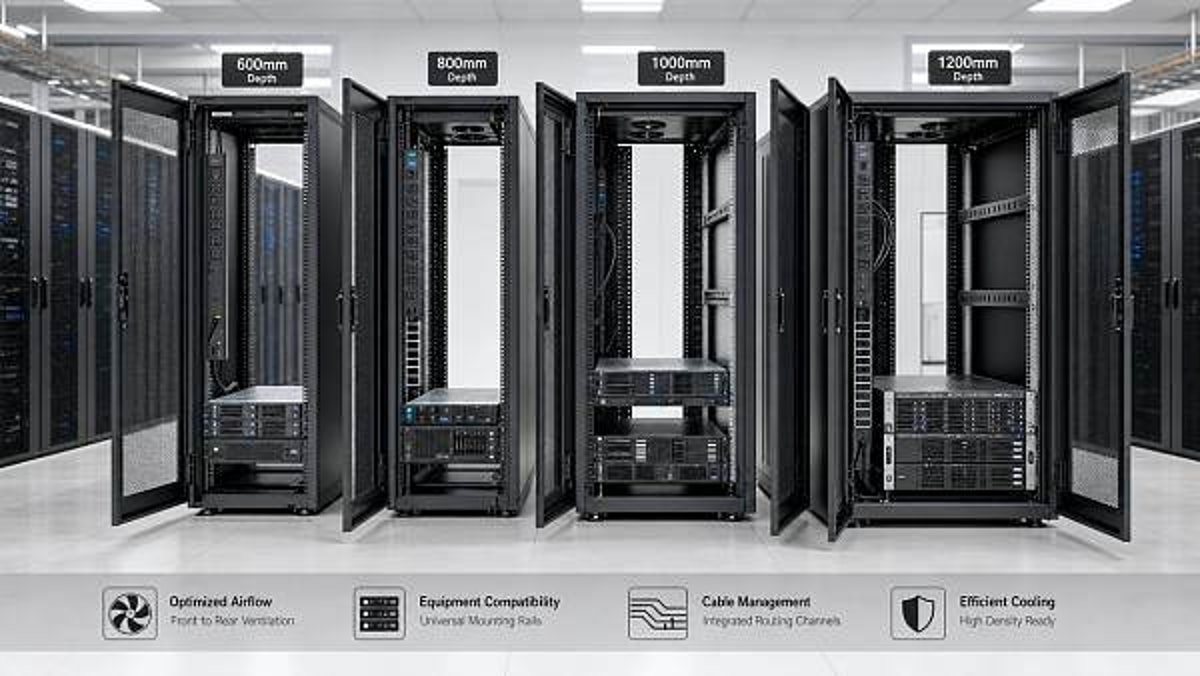
A server cabinet may be described as 600 mm, 800 mm, 1000 mm, or 1200 mm deep, but the external dimension is only part of the story. Technical evaluators must confirm internal mounting depth, rail adjustment range, door clearance, side panel interference, and the additional room needed for cable bends and power connectors. For B2B buyers managing multi-site rollouts, even a small mismatch can multiply into rework costs, project delays, and inconsistent installation standards.
This matters across many commercial environments, from smart campuses and control rooms to hospitality IT back offices and specialty retail infrastructure. As organizations modernize their digital operations, server cabinets wholesale decisions are no longer about basic enclosure supply alone. They now support uptime, maintainability, security, and future equipment migration.
Why depth mistakes happen so often
The most common reason is that product teams, procurement staff, and site installers do not use the same measurement logic. Equipment vendors may publish chassis depth only, while cabinet suppliers list external depth. Installers, meanwhile, need clearance for connectors, cable managers, and service access. In server cabinets wholesale, these different perspectives can create a misleading impression that a cabinet is “large enough” when in reality it is only barely compatible or not compatible at all.
Another frequent issue is mixed equipment planning. A cabinet that fits short network switches may fail once deeper rack servers, UPS units, sliding rails, or high-density patching are added. Technical evaluators should also note that rails from different server brands can require different mounting distances. What looks standardized at the rack-unit level can still vary significantly in practical installation depth.
In cross-border sourcing, data quality is another risk. Some catalogs provide only approximate dimensions, while some OEM or ODM suppliers use local conventions that do not fully explain usable depth. A high-quality server cabinets wholesale evaluation therefore depends on verifying engineering drawings rather than trusting headline dimensions alone.
What technical evaluators should measure before ordering
Before approving a bulk order, technical evaluators should build a simple but disciplined checklist. The goal is to compare real equipment requirements with real cabinet capacity, not just marketing labels. At minimum, the following measurements should be reviewed:
- Server chassis depth, including protruding handles if relevant
- Rail kit required mounting distance
- Rear clearance for power plugs, PDUs, and cable bend radius
- Front clearance for door design, handles, and airflow path
- Space reserved for vertical cable managers or rear accessories
- Need for future equipment with greater depth than current devices
In server cabinets wholesale, it is usually safer to evaluate the deepest planned equipment plus operational clearance, rather than the average depth of current assets. This is especially true in projects where infrastructure is expected to stay in service for five years or longer.
A practical sizing overview for common environments
Depth requirements vary by application. The table below provides a practical overview to help technical evaluators align server cabinets wholesale decisions with common equipment profiles and operational needs.
Industry relevance beyond basic fit
For many commercial buyers, the consequences of poor depth planning extend beyond installation inconvenience. In hospitality, education, leisure, and premium retail environments, IT infrastructure often supports customer-facing systems, security, digital signage, payment services, and building management. A cabinet that is too shallow can affect uptime, serviceability, and thermal performance, which in turn affects business continuity.
This is where a structured sourcing perspective becomes valuable. Organizations that operate across different commercial sectors need consistent technical evaluation standards, not isolated purchasing decisions. In server cabinets wholesale, technical evaluators should work with sourcing partners who understand not only mechanical specifications but also deployment realities, documentation quality, compliance expectations, and OEM customization options.
That broader view is increasingly important as buyers request cabinets tailored for airflow strategy, cable density, lock types, color finishes, perforation ratios, and regional power layouts. Depth remains the starting point, but it connects to a much wider infrastructure decision.
Common depth-related mistakes in server cabinets wholesale
Several recurring mistakes appear in large-volume cabinet sourcing. Recognizing them early can improve specification accuracy and reduce downstream change orders.
- Assuming all 19-inch rack equipment has similar depth requirements
- Using equipment body depth without adding connector and cable space
- Ignoring the impact of rear vertical PDUs on usable depth
- Overlooking door style, especially when using perforated or split rear doors
- Failing to account for hot-aisle or wall-adjacent service clearance
- Ordering a single cabinet depth for all sites despite differing equipment mixes
A strong server cabinets wholesale specification should therefore define not just the cabinet depth, but also the minimum usable mounting depth and the required front and rear equipment clearance. That language reduces ambiguity between buyer and supplier.
How to assess future expansion without overspending
Technical evaluators often face a balancing challenge. Choosing the deepest available cabinet may seem safer, but oversized cabinets can consume more floor space, complicate room layouts, and increase freight costs. On the other hand, selecting a cabinet that only fits current equipment can shorten infrastructure life and force premature replacement.
A practical approach is to group projects into equipment depth tiers. For example, one tier may cover shallow network-focused deployments, another may support mixed network and server loads, and a third may be reserved for storage-heavy or compute-dense applications. In server cabinets wholesale, this tiered model gives procurement teams standardization without forcing every site into the same specification.
It is also wise to review the organization’s technology roadmap. If the next refresh cycle includes deeper servers, GPU systems, or denser cabling, the cabinet decision should reflect that direction now. Depth planning should support lifecycle efficiency rather than short-term price optimization alone.
Supplier questions that improve specification accuracy
When evaluating suppliers for server cabinets wholesale, technical teams should go beyond catalog pages and request evidence-based answers. Useful questions include:
- What is the adjustable rail range and confirmed usable internal depth?
- Can the supplier provide engineering drawings with front and rear clearance dimensions?
- Which server brands or rail kits have been tested in the cabinet?
- How do PDUs, cable managers, and door types affect available depth?
- Are custom depth options available for project-based deployments?
- What quality controls ensure dimension consistency across large production runs?
These questions are especially relevant in international sourcing, where documentation clarity and production consistency can vary. Technical evaluators should also ask for sample validation or pilot deployment support before committing to a full wholesale order.
A simple decision framework for technical evaluators
A reliable decision framework for server cabinets wholesale can be summarized in four steps. First, identify the deepest current and near-future equipment. Second, add realistic space for rails, connectors, and cable routing. Third, confirm usable internal depth instead of relying on external dimensions. Fourth, validate the specification against room layout, airflow strategy, and maintenance access.
This process may sound basic, but it prevents one of the most expensive rack infrastructure errors: treating cabinet depth as a commodity detail. In practice, depth is a functional requirement tied to equipment fit, cooling performance, and service efficiency. That is why experienced technical evaluators document it carefully and align stakeholders around a shared standard.
Final guidance for more dependable wholesale decisions
The safest path in server cabinets wholesale is to treat depth as a strategic technical parameter, not a secondary line item. Buyers should confirm actual usable space, match cabinet design to real equipment profiles, and allow room for cabling and future growth. This approach reduces deployment friction, improves service access, and supports long-term infrastructure consistency across commercial projects.
For organizations sourcing across hospitality, education, commercial facilities, and specialty environments, disciplined rack evaluation creates measurable value. It helps teams avoid avoidable replacement costs, supports smoother installations, and strengthens supplier accountability. When technical evaluators combine dimension verification with broader sourcing intelligence, server cabinets wholesale becomes a more predictable and scalable decision.
If you are preparing a multi-unit cabinet order, start with a depth validation matrix for your equipment list and require suppliers to confirm internal usable depth in writing. That one step can prevent the most common mismatch in rack infrastructure sourcing.
Search News
Hot Articles
Popular Tags
Need ExpertConsultation?
Connect with our specialized leisureengineering team for procurementstrategies.
Recommended News
 May 04, 2026Ergonomic Office Chairs Wholesale: Comfort Claims vs Real SupportErgonomic office chairs wholesale: learn how to verify real support beyond comfort claims with fit, adjustability, durability, and compliance insights for smarter commercial buying.● Institutional Buyer
 May 04, 2026Modular Office Workstations: Flexibility Can Add Setup CostsModular office workstations can improve flexibility, but setup costs often rise through installation, power, data, and rework. Learn when the added investment truly pays off.● Institutional Buyer
 May 04, 2026Steel Filing Cabinets: Why Some Drawers Jam Too EarlySteel filing cabinets often jam early due to weak slides, poor leveling, overload, or lock issues. Discover what to check before buying and how to avoid costly drawer failures.● Institutional Buyer
 May 04, 2026Office Network Racks: Airflow Problems Start With Bad PlanningOffice network racks can fail early when airflow is ignored. Learn the key planning checklist to prevent overheating, reduce maintenance risks, and build a more reliable office network.● Institutional Buyer
 May 04, 2026Office Partitions Wholesale: Open Plan Savings, Closed Office NeedsOffice partitions wholesale helps project managers cut fit-out costs, speed delivery, and balance open-plan efficiency with private office performance. Explore smarter commercial workspace solutions.● Institutional Buyer
 May 04, 2026Conference Room Tables: Common Layout Mistakes to AvoidConference room tables can make or break meeting flow. Discover common layout mistakes to avoid and plan smarter spaces for collaboration, AV integration, and professional results.● Institutional Buyer
 May 04, 2026Mobile Pedestals Wholesale: Why Drawer Slides Matter MoreMobile pedestals wholesale buyers should look beyond price—drawer slides shape durability, load capacity, and maintenance costs. Learn what to compare before ordering.● Institutional Buyer
 May 04, 2026Height Adjustable Standing Desks: Stability Matters More Than SpeedHeight adjustable standing desks should be judged by stability, not just speed. Learn how stronger frames improve safety, user confidence, and long-term value in commercial spaces.● Institutional Buyer
 May 04, 2026Executive Office Desks: When Looks Start to Hurt FunctionExecutive office desks should do more than look impressive. Discover how to balance prestige, ergonomics, storage, and tech support for smarter office buying decisions.● Institutional Buyer
 May 04, 2026Server Cabinets Wholesale: How to Avoid Ordering the Wrong DepthServer cabinets wholesale guide: avoid costly depth mistakes by checking usable internal space, rail fit, cable clearance, and expansion needs before placing bulk orders.● Institutional Buyer
 May 04, 2026Commercial Paper Shredders and the Hidden Cost of DowntimeCommercial paper shredders do more than destroy documents—they protect uptime, compliance, and budgets. Discover how to avoid hidden downtime costs and choose smarter for busy workplaces.● Institutional Buyer
 May 04, 2026Mesh Office Chairs OEM Orders: Specs That Cause ReworkMesh office chairs OEM projects often face rework from vague specs, certification gaps, and component mismatches. Learn what to verify before production to avoid delays and protect budgets.● Institutional Buyer
 May 04, 2026Stackable Visitor Chairs That Save Space Without Looking CheapStackable visitor chairs that save space without looking cheap—discover how to choose stylish, durable seating for offices, schools, and hospitality spaces.● Institutional Buyer
 May 04, 2026What Makes Commercial Acoustic Panels Worth the Cost?Commercial acoustic panels help buyers balance cost with performance, compliance, durability, and design. Learn what makes them worth the investment across offices, schools, hotels, and more.● Institutional Buyer
 May 04, 2026Biometric Time Attendance Systems: Where Accuracy Gains FadeBiometric time attendance systems deliver stronger tracking, but where do accuracy gains fade? Explore real-world limits, privacy risks, and smarter deployment choices.● Institutional Buyer
 May 03, 2026Commercial trash cans: capacity, liners, and lid design all matterCommercial trash cans impact cleanliness, labor, and guest experience. Learn how capacity, liner fit, and lid design help buyers choose smarter, cleaner, cost-effective solutions.● Institutional Buyer
 May 03, 2026Wet and dry vacuum cleaners: when tank size slows teams downWet and dry vacuum cleaners can boost flexibility, but the wrong tank size cuts productivity. Learn how to choose capacity that reduces downtime, labor costs, and workflow friction.● Institutional Buyer
 May 03, 2026Commercial floor scrubbers: ride-on or walk-behind for large sitesCommercial floor scrubbers for large sites: compare ride-on and walk-behind models by productivity, maneuverability, labor efficiency, and cost to choose the best fit.● Institutional Buyer
 May 03, 2026Decorative room dividers that improve layout without blocking lightDecorative room dividers improve layout, define zones, and preserve natural light in modern interiors. Explore stylish, flexible solutions for commercial and hospitality spaces.● Institutional Buyer
 May 03, 2026Why wholesale ironing boards vary so much in frame qualityWholesale ironing boards vary in frame quality due to steel grade, weld strength, stability, coating, and QC. Learn what smart buyers should check before placing bulk orders.● Institutional Buyer
 Apr 30, 2026Contract furniture specs that reduce replacement cyclesContract furniture specs that cut replacement cycles: learn how durability, cleanability, compliance, and serviceable design help buyers lower lifecycle costs and protect brand standards.● Institutional Buyer
 Apr 28, 2026Luxury Furniture Materials That Age Well and Those That Do NotLuxury furniture guide for hotel furniture, custom furniture, hotel beds, hotel chairs, hotel tables, and park benches—learn which materials age well, cut lifecycle costs, and protect premium spaces.● Institutional Buyer
 Apr 28, 2026Custom Furniture Orders Go Wrong When Samples Skip Real TestingCustom furniture mistakes start when samples skip real testing. Learn how hotel furniture, hotel beds, hotel chairs, hotel tables, luxury furniture and park benches avoid costly failures.● Institutional Buyer
 Apr 28, 2026Are Park Benches With Backrests Always the Better Choice?Park benches with backrests are not always best. Explore how custom furniture choices align with luxury furniture, hotel furniture, hotel chairs, hotel tables, and hotel equipment needs.● Institutional Buyer