Executive Office Desks: When Looks Start to Hurt Function
Executive office desks are often chosen for prestige, visual impact, and brand image—but when design starts to outweigh usability, productivity can quietly suffer. For buyers researching workspace solutions, understanding how executive office desks influence ergonomics, workflow, storage, and daily efficiency is essential before making a high-value purchasing decision.
A Clear Shift Is Happening in How Executive Workstations Are Evaluated
For years, executive office desks were evaluated primarily through appearance. Large surfaces, premium veneers, thick panels, and imposing silhouettes were treated as visible signs of authority. In many commercial projects, the desk was expected to communicate leadership before it ever supported work. That logic is changing.
Today, buyers are operating in a different environment. Hybrid work, digital workflows, wellness expectations, tighter real-estate planning, and stronger scrutiny on long-term value are reshaping office furniture decisions. As a result, executive office desks are no longer judged only as symbols of status. They are increasingly assessed as performance assets that must support concentration, meetings, device use, cable management, movement, and organizational efficiency.
This change matters across industries because leadership roles have become more fluid. Executives now switch more frequently between focused work, video calls, informal collaboration, document review, and visitor interaction. A desk that looks impressive but creates reach problems, visual clutter, awkward seating, or poor storage access can weaken performance in subtle but costly ways.
Why the Market Is Reconsidering Traditional Executive Office Desks
Several converging signals explain why executive office desks are being re-evaluated. First, office design has become more experience-driven. Decision-makers are expected to create spaces that support productivity and employee well-being, not just hierarchy. Second, technology density has increased. Desks now need to accommodate multiple screens, docking stations, charging points, task lighting, microphones, and cleaner cable routing. Third, procurement teams are under pressure to justify lifecycle value rather than purchase by appearance alone.
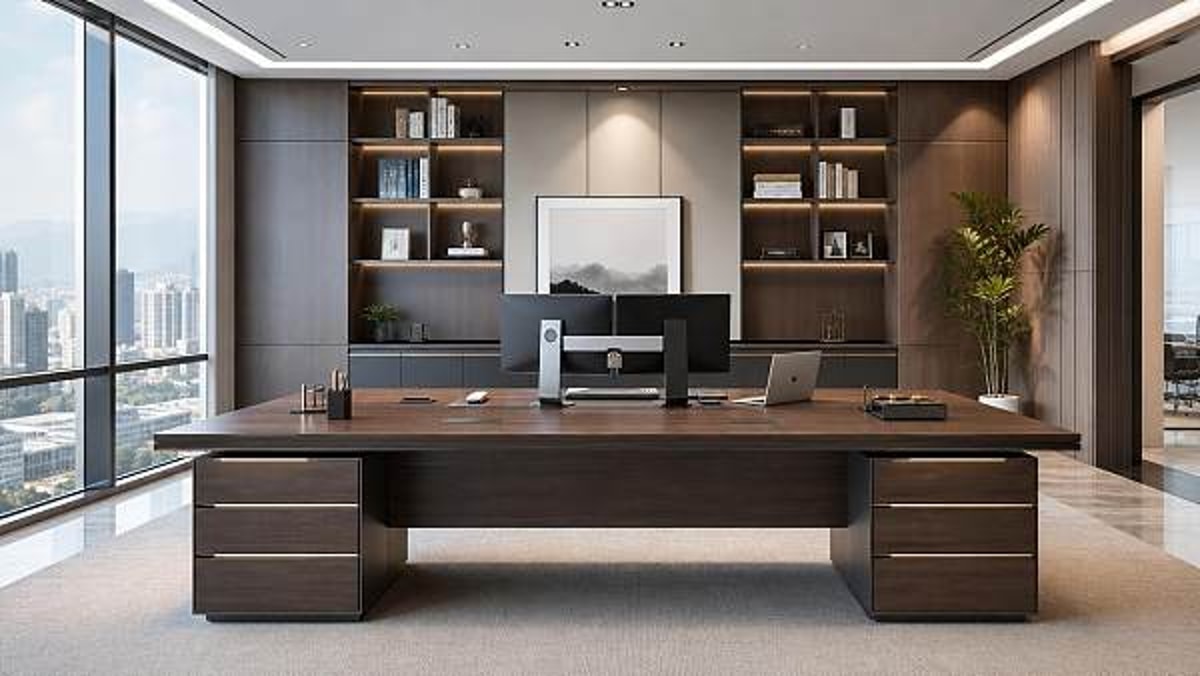
In practical terms, this means the older “bigger is better” assumption is less reliable. A deep executive desk may look substantial but can place screens too far away. A highly sculpted front panel may enhance aesthetics while limiting leg movement or guest interaction. Decorative storage pedestals may create visual mass yet reduce access to frequently used items. In short, prestige-focused designs can begin to hurt function when they ignore the realities of modern executive work.
For information researchers and commercial buyers, the key trend is not that executive office desks are losing importance. It is that the criteria for a good desk are becoming broader, more measurable, and more connected to daily performance.
The Most Visible Trend: Function Is Catching Up With Image
The strongest market direction is the blending of executive aesthetics with operational usability. Instead of choosing between visual presence and function, buyers increasingly expect both. This is influencing product development, specification standards, and showroom conversations.
The implication is significant: the best executive office desks now behave more like high-performance work tools wrapped in premium design language. Buyers who miss this shift risk selecting furniture that photographs well but ages poorly in real use.
What Is Driving the Change Behind Executive Office Desks
The market is not changing for one reason alone. It is being pushed by a combination of operational, cultural, and spatial pressures.
- Hybrid leadership routines require desks to support both solo work and digital communication.
- Ergonomic awareness has moved upward from task seating into executive furniture decisions.
- Commercial interiors are expected to look premium without wasting space.
- Procurement teams increasingly compare durability, adaptability, and maintenance cost.
- Corporate brand identity is being expressed through smarter, more restrained design rather than oversized furniture statements.
These drivers are especially relevant in international sourcing environments, where buyers must balance aesthetics, user expectations, compliance, and consistency across projects. A visually dominant desk that fails in cable management, edge comfort, storage logic, or meeting usability can create friction that spreads into the larger workplace experience.
Where Looks Commonly Start to Hurt Function
Not every premium desk is a bad choice, and not every bold design creates a problem. The issue appears when appearance leads the specification process without enough testing of practical use. In executive office desks, the most common weaknesses tend to show up in five areas.
1. Overscaled dimensions
A large desk can signal authority, but excessive depth or width may force inefficient reaching, reduce guest seating flexibility, and dominate the room. This becomes more problematic in modern offices where executive spaces are designed to feel connected rather than isolated.
2. Poor ergonomic alignment
Fixed heights, thick edge profiles, or restricted knee clearance can reduce comfort over long periods. Even high-ranking users are not exempt from repetitive strain, neck tension, or poor monitor positioning.
3. Decorative but inefficient storage
Some executive office desks include impressive side returns or cabinetry, yet the storage is poorly zoned for current workflows. If important items are hard to access or drawers conflict with seating and movement, the desk begins to work against the user.
4. Technology retrofitted as an afterthought
Visible cords, inaccessible outlets, and lack of charging points are now red flags. Executive work depends on seamless device support, and desks that ignore this can quickly appear outdated.
5. Image that no longer matches leadership style
In many companies, leadership presence is becoming less formal and more collaborative. A desk that creates physical and visual distance may conflict with the culture the organization wants to project.
Who Feels the Impact Most
The effects of poor desk-function alignment are not limited to the executive user. They influence several roles in the project and workplace chain.
This broader impact explains why executive office desks are no longer a purely personal or image-based purchase. They are strategic workplace assets with downstream consequences for operations, maintenance, and brand perception.
What Buyers Should Watch as the Category Evolves
Several signals are worth tracking when evaluating executive office desks in the current market. One is the rise of modular executive configurations that preserve a premium look while allowing adaptation to room size, storage needs, or changing technology. Another is the gradual normalization of sit-stand capability in leadership spaces, especially where wellness and modernity are part of the company image.
Material selection is also becoming more strategic. Buyers are paying closer attention to surface durability, cleanability, edge resistance, and consistency across batches. In cross-border sourcing, this matters because luxury appearance alone is not enough if the finish wears quickly in active commercial environments.
A further trend is the reduction of unnecessary bulk. Lighter visual profiles, integrated power access, smarter under-desk planning, and more considered guest interaction zones are becoming signs of maturity in executive furniture design. For researchers, this is an important interpretation shift: minimal or streamlined does not mean less executive. In many cases, it means more intentional.
A Practical Framework for Evaluating Executive Office Desks
To respond to these changes, buyers should test executive office desks against a simple decision framework rather than relying on first impressions alone.
- Workflow fit: Does the desk support computer work, reading, writing, video calls, and brief meetings in one coherent layout?
- Ergonomic support: Are height, clearance, edge detail, and monitor placement practical for long-term use?
- Technology readiness: Is cable management built in, not improvised after installation?
- Space relationship: Does the desk fit the room without restricting movement or making the office feel outdated?
- Brand alignment: Does the design express leadership in a way that matches current company culture?
- Lifecycle value: Will the desk remain effective as work patterns and technology continue to change?
This kind of evaluation helps procurement teams and specifiers move beyond superficial prestige and toward informed selection. It also reduces the risk of expensive replacements or ongoing dissatisfaction after installation.
What This Means for Sourcing Decisions Going Forward
For global buyers, the future of executive office desks lies in disciplined balance. The market is not abandoning premium design; it is demanding that premium design prove itself through use. This has implications for supplier selection, OEM and ODM development, showroom presentation, and product documentation.
Manufacturers that can demonstrate ergonomic thinking, technology integration, material durability, and project adaptability are likely to gain an advantage. Buyers, meanwhile, should ask for more than finish samples and hero images. They should request detailed dimensions, access diagrams, cable-routing logic, storage layouts, and use-case explanations.
In a commercial environment increasingly shaped by experience, efficiency, and design intelligence, executive office desks that privilege looks over function will face more scrutiny. The better question is no longer “Does this desk look executive enough?” It is “Does this desk help leadership perform at a higher level while still expressing the right image?”
Final Judgment Signals for Researchers and Commercial Buyers
If you are assessing executive office desks for a current or future project, focus on the signals that reveal real quality under the surface: proportion that supports movement, storage that reflects actual habits, cable planning that respects digital work, and materials that hold their appearance under commercial use. These are the factors that increasingly define strong executive furniture choices.
For organizations that want to judge how this trend affects their own workplace strategy, the most useful next step is to confirm a few practical questions: How do executives actually use their desks today? Which tasks create friction? How much of the selection is driven by image versus measurable function? And will the chosen desk still make sense as leadership spaces continue to evolve? Answering those questions will lead to better sourcing decisions than appearance alone ever could.
Search News
Hot Articles
Popular Tags
Need ExpertConsultation?
Connect with our specialized leisureengineering team for procurementstrategies.
Recommended News
 May 04, 2026Ergonomic Office Chairs Wholesale: Comfort Claims vs Real SupportErgonomic office chairs wholesale: learn how to verify real support beyond comfort claims with fit, adjustability, durability, and compliance insights for smarter commercial buying.● Institutional Buyer
 May 04, 2026Modular Office Workstations: Flexibility Can Add Setup CostsModular office workstations can improve flexibility, but setup costs often rise through installation, power, data, and rework. Learn when the added investment truly pays off.● Institutional Buyer
 May 04, 2026Steel Filing Cabinets: Why Some Drawers Jam Too EarlySteel filing cabinets often jam early due to weak slides, poor leveling, overload, or lock issues. Discover what to check before buying and how to avoid costly drawer failures.● Institutional Buyer
 May 04, 2026Office Network Racks: Airflow Problems Start With Bad PlanningOffice network racks can fail early when airflow is ignored. Learn the key planning checklist to prevent overheating, reduce maintenance risks, and build a more reliable office network.● Institutional Buyer
 May 04, 2026Office Partitions Wholesale: Open Plan Savings, Closed Office NeedsOffice partitions wholesale helps project managers cut fit-out costs, speed delivery, and balance open-plan efficiency with private office performance. Explore smarter commercial workspace solutions.● Institutional Buyer
 May 04, 2026Conference Room Tables: Common Layout Mistakes to AvoidConference room tables can make or break meeting flow. Discover common layout mistakes to avoid and plan smarter spaces for collaboration, AV integration, and professional results.● Institutional Buyer
 May 04, 2026Mobile Pedestals Wholesale: Why Drawer Slides Matter MoreMobile pedestals wholesale buyers should look beyond price—drawer slides shape durability, load capacity, and maintenance costs. Learn what to compare before ordering.● Institutional Buyer
 May 04, 2026Height Adjustable Standing Desks: Stability Matters More Than SpeedHeight adjustable standing desks should be judged by stability, not just speed. Learn how stronger frames improve safety, user confidence, and long-term value in commercial spaces.● Institutional Buyer
 May 04, 2026Executive Office Desks: When Looks Start to Hurt FunctionExecutive office desks should do more than look impressive. Discover how to balance prestige, ergonomics, storage, and tech support for smarter office buying decisions.● Institutional Buyer
 May 04, 2026Server Cabinets Wholesale: How to Avoid Ordering the Wrong DepthServer cabinets wholesale guide: avoid costly depth mistakes by checking usable internal space, rail fit, cable clearance, and expansion needs before placing bulk orders.● Institutional Buyer
 May 04, 2026Commercial Paper Shredders and the Hidden Cost of DowntimeCommercial paper shredders do more than destroy documents—they protect uptime, compliance, and budgets. Discover how to avoid hidden downtime costs and choose smarter for busy workplaces.● Institutional Buyer
 May 04, 2026Mesh Office Chairs OEM Orders: Specs That Cause ReworkMesh office chairs OEM projects often face rework from vague specs, certification gaps, and component mismatches. Learn what to verify before production to avoid delays and protect budgets.● Institutional Buyer
 May 04, 2026Stackable Visitor Chairs That Save Space Without Looking CheapStackable visitor chairs that save space without looking cheap—discover how to choose stylish, durable seating for offices, schools, and hospitality spaces.● Institutional Buyer
 May 04, 2026What Makes Commercial Acoustic Panels Worth the Cost?Commercial acoustic panels help buyers balance cost with performance, compliance, durability, and design. Learn what makes them worth the investment across offices, schools, hotels, and more.● Institutional Buyer
 May 04, 2026Biometric Time Attendance Systems: Where Accuracy Gains FadeBiometric time attendance systems deliver stronger tracking, but where do accuracy gains fade? Explore real-world limits, privacy risks, and smarter deployment choices.● Institutional Buyer
 May 03, 2026Commercial trash cans: capacity, liners, and lid design all matterCommercial trash cans impact cleanliness, labor, and guest experience. Learn how capacity, liner fit, and lid design help buyers choose smarter, cleaner, cost-effective solutions.● Institutional Buyer
 May 03, 2026Wet and dry vacuum cleaners: when tank size slows teams downWet and dry vacuum cleaners can boost flexibility, but the wrong tank size cuts productivity. Learn how to choose capacity that reduces downtime, labor costs, and workflow friction.● Institutional Buyer
 May 03, 2026Commercial floor scrubbers: ride-on or walk-behind for large sitesCommercial floor scrubbers for large sites: compare ride-on and walk-behind models by productivity, maneuverability, labor efficiency, and cost to choose the best fit.● Institutional Buyer
 May 03, 2026Decorative room dividers that improve layout without blocking lightDecorative room dividers improve layout, define zones, and preserve natural light in modern interiors. Explore stylish, flexible solutions for commercial and hospitality spaces.● Institutional Buyer
 May 03, 2026Why wholesale ironing boards vary so much in frame qualityWholesale ironing boards vary in frame quality due to steel grade, weld strength, stability, coating, and QC. Learn what smart buyers should check before placing bulk orders.● Institutional Buyer
 Apr 30, 2026Contract furniture specs that reduce replacement cyclesContract furniture specs that cut replacement cycles: learn how durability, cleanability, compliance, and serviceable design help buyers lower lifecycle costs and protect brand standards.● Institutional Buyer
 Apr 28, 2026Luxury Furniture Materials That Age Well and Those That Do NotLuxury furniture guide for hotel furniture, custom furniture, hotel beds, hotel chairs, hotel tables, and park benches—learn which materials age well, cut lifecycle costs, and protect premium spaces.● Institutional Buyer
 Apr 28, 2026Custom Furniture Orders Go Wrong When Samples Skip Real TestingCustom furniture mistakes start when samples skip real testing. Learn how hotel furniture, hotel beds, hotel chairs, hotel tables, luxury furniture and park benches avoid costly failures.● Institutional Buyer
 Apr 28, 2026Are Park Benches With Backrests Always the Better Choice?Park benches with backrests are not always best. Explore how custom furniture choices align with luxury furniture, hotel furniture, hotel chairs, hotel tables, and hotel equipment needs.● Institutional Buyer