Id Card Holders Wholesale: Hard Shell or Soft Vinyl?
Choosing between hard shell and soft vinyl options can directly impact durability, branding, and daily usability in bulk procurement. For buyers evaluating id card holders wholesale, understanding the differences in protection, flexibility, cost, and application is essential. This guide helps procurement professionals compare both materials and identify the best fit for offices, schools, events, and commercial environments.
Why the Buying Criteria for ID Card Holders Are Changing
The market for badges, credential carriers, and workplace identification accessories is no longer driven by price alone. Procurement teams sourcing id card holders wholesale are now responding to broader operational shifts: higher employee mobility, stricter access control, more brand-sensitive visitor management, and stronger expectations around product life cycle value. In practical terms, that means the old question of “which option is cheaper?” has been replaced by “which option performs better for the intended environment?”
This change is especially visible across offices, education campuses, healthcare networks, exhibitions, logistics sites, and hospitality groups. In each of these settings, badges are no longer just passive holders for printed cards. They are part of security systems, customer-facing presentation, onboarding processes, and daily workflow. As a result, material choice between hard shell and soft vinyl has become a more strategic sourcing decision.
For commercial buyers, the implication is clear: evaluating id card holders wholesale now requires looking at usage intensity, replacement frequency, attachment compatibility, print visibility, user comfort, and even sustainability expectations from clients or internal stakeholders.
The Main Signals Driving Demand Toward More Purpose-Built Holders
Several demand signals are pushing buyers to segment purchases more carefully instead of ordering one universal holder for every department or event.
1. Security and card protection are receiving more attention
As more organizations use proximity cards, RFID access cards, and barcode-based employee credentials, the holder must preserve scannability while protecting the card from cracks, bending, moisture, and abrasion. Hard shell products are increasingly favored where cards are reused for long periods or where access reliability matters every day.
2. Event and temporary workforce management is expanding
Trade shows, seasonal staffing, campus intake cycles, and short-term visitors create demand for lower-cost, easy-insert options. In these scenarios, soft vinyl remains highly relevant because it supports frequent card changes and lower initial spend, which is often a major factor in id card holders wholesale tenders for temporary programs.
3. Branding and presentation matter more than before
Reception teams, premium retail staff, hotel personnel, and conference hosts often need badge solutions that look clean and align with brand standards. Buyers are paying more attention to transparency, edge finish, profile thickness, and orientation. This has made material selection a visible part of front-of-house experience design.
4. Procurement is shifting from unit cost to total use cost
A low-cost holder that tears or clouds quickly may not be economical over a full year. Teams sourcing id card holders wholesale increasingly compare replacement rates, staff complaints, administrative handling time, and compatibility with lanyards, reels, or clips before making a final decision.
Hard Shell vs Soft Vinyl: A Trend-Focused Comparison for Procurement
The comparison below reflects how buyers are currently assessing material fit, not just product features in isolation.
What Is Pushing Buyers Toward Hard Shell Options
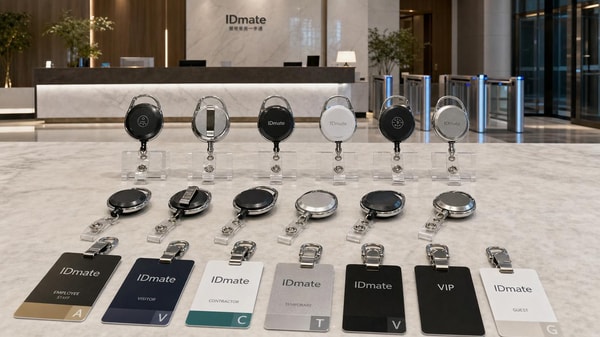
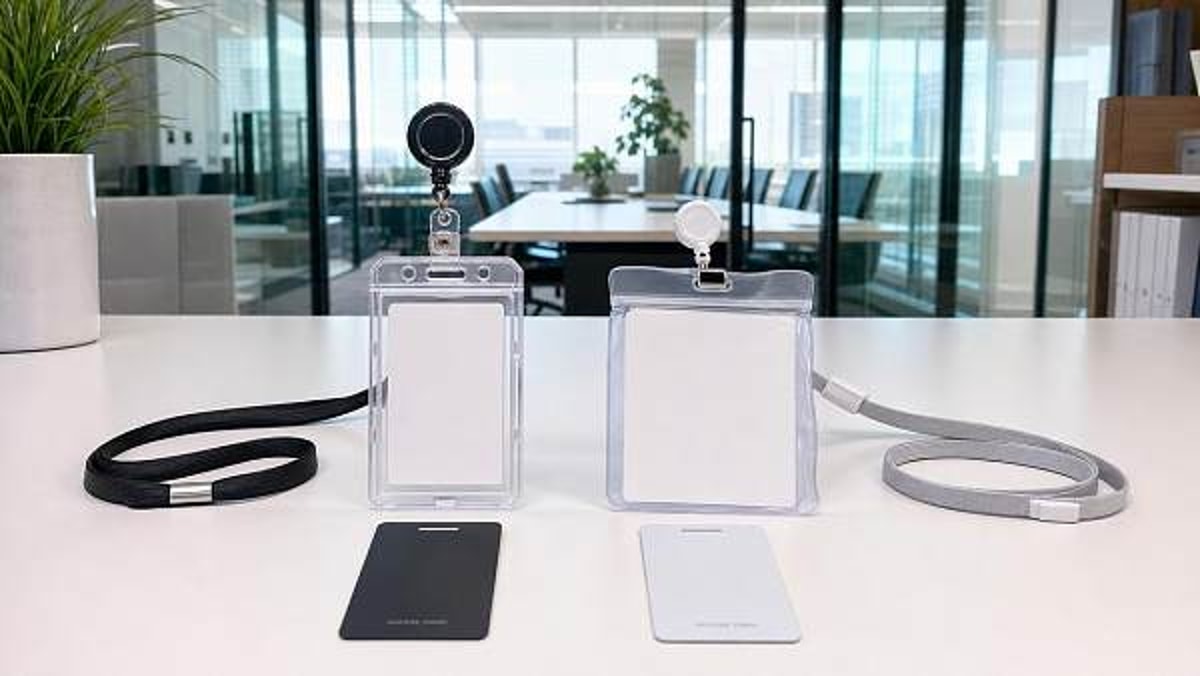
Hard shell holders are gaining ground in settings where credentials are issued once and expected to perform for months or years. Corporate headquarters, manufacturing plants, hospitals, controlled-access campuses, and logistics operations are common examples. The key driver is reliability: a rigid holder reduces card warping and helps maintain a neat appearance even under repeated use.
Another factor is presentation. In high-visibility environments, the holder contributes to the perceived professionalism of staff. Procurement managers in customer-facing sectors are often under pressure to support both security and image. That dual requirement has made hard shell styles more attractive in premium office, hospitality, and retail applications.
In the id card holders wholesale market, buyers are also noticing that hard shell products can reduce replacement volume. While unit pricing may be higher, the total cost over a longer deployment period may be more predictable. This matters for organizations trying to reduce emergency replenishment, inconsistent badge appearance, and minor operational friction.
Why Soft Vinyl Still Holds a Strong Position
Despite the shift toward durability, soft vinyl remains highly practical in many real-world procurement programs. It is especially useful where badge turnover is high, budget cycles are tight, or storage efficiency matters. Schools managing short-term events, exhibition organizers, conference operators, and visitor registration teams often prefer soft vinyl because it is easy to distribute, simple to load, and economical for large quantities.
Soft vinyl can also support mixed-format procurement. For example, a company may buy rigid holders for permanent employees and vinyl holders for guests, contractors, or one-off meetings. This hybrid approach is becoming more common because it aligns material performance with actual user needs rather than forcing one product across every scenario.
For many procurement teams, the continued relevance of soft vinyl in id card holders wholesale is not a contradiction to the durability trend. Instead, it reflects a more segmented buying strategy.
How Different Buyer Groups Are Affected
The best material choice depends heavily on who will use the holder and how often it will be handled.
What Procurement Teams Should Evaluate Before Placing a Bulk Order
When reviewing id card holders wholesale offers, buyers should move beyond material labels and test the operational fit of each option. A good sourcing decision usually comes from asking a more structured set of questions.
First, confirm the expected badge life. If credentials will be reissued every few days, soft vinyl may be the efficient solution. If they will be used for a year or more, hard shell may offer stronger value.
Second, review the card technology. Proximity and access-control cards should remain easy to scan and difficult to damage. Buyers should test holder opening style, card fit, and attachment points with the actual lanyards, clips, or retractable reels used on site.
Third, assess the environment. Humidity, dust, physical movement, and repeated handling can quickly expose weaknesses in lower-grade products. In demanding commercial spaces, durability and edge quality often matter more than the difference of a few cents per unit.
Fourth, consider visual standards. If the badge is part of staff-facing or guest-facing communication, clarity and shape retention become part of brand control. This is increasingly relevant in modern reception, campus, and hospitality environments.
A Practical Decision Framework for the Next Buying Cycle
The most effective way to approach id card holders wholesale today is not to search for a universally superior material, but to align the holder type with the business scenario. A simple decision framework can help:
- Choose hard shell when the card is long-term, scanned often, exposed to wear, or part of a professional brand presentation.
- Choose soft vinyl when badges are short-term, frequently replaced, cost-sensitive, or distributed in very large volumes.
- Use a hybrid procurement model when your organization has permanent staff, temporary workers, visitors, and event guests with different usage profiles.
- Request samples before final commitment, especially if environmental stress, scanning reliability, or visual presentation are important.
FAQ: Current Questions Buyers Ask About ID Card Holders Wholesale
Are hard shell holders always better for bulk procurement?
No. They are better for long-term use, stronger protection, and more structured presentation, but not always for temporary or high-turnover badge programs. The best id card holders wholesale choice depends on deployment conditions.
Is soft vinyl becoming obsolete?
Not at all. Soft vinyl remains highly relevant for events, visitor management, schools, and budget-sensitive projects. What is changing is that buyers are using it more selectively.
What is the biggest sourcing mistake buyers make?
Treating all end users the same. One product type rarely fits employees, contractors, visitors, and event attendees equally well.
Should procurement prioritize price or durability?
Both matter, but the better metric is total use value. A slightly higher-cost holder may lower replacement frequency and improve presentation over time.
The Direction to Watch Next
The next phase of the market will likely be defined by smarter segmentation, stronger quality expectations, and more detailed procurement specifications. Buyers will continue to ask for better compatibility, cleaner finish, and longer service life, while still preserving cost discipline for short-cycle programs. That means the future of id card holders wholesale is not simply hard shell versus soft vinyl. It is about matching material performance to evolving business use cases.
If your organization is preparing for a new sourcing round, the most useful next step is to confirm four points: how long each badge will be used, how often it will be handled, how visible it is to customers or visitors, and how costly replacement becomes over time. Once those answers are clear, choosing between hard shell and soft vinyl becomes a much more confident and commercially sound decision.
Search News
Hot Articles
Popular Tags
Need ExpertConsultation?
Connect with our specialized leisureengineering team for procurementstrategies.
Recommended News
 May 04, 2026PU Leather Journals: Why Some Covers Peel Too SoonPU leather journals can look elegant and affordable, but why do some peel so quickly? Discover the real causes, warning signs, and smarter buying tips before you choose.● Institutional Buyer
 May 04, 2026Retractable Badge Reels: The Small Item That Fails FirstRetractable badge reels fail faster than many workplace accessories. Learn what causes breakage, how to source durable options, and how to cut replacement costs.● Institutional Buyer
 May 04, 2026Id Card Holders Wholesale: Hard Shell or Soft Vinyl?Id card holders wholesale guide: compare hard shell vs soft vinyl for durability, cost, branding, and daily use to choose the best bulk option for offices, schools, events, and more.● Institutional Buyer
 May 04, 2026Office Laminating Machines: The Heat Settings People OverlookOffice laminating machines perform best when heat settings match pouch thickness, paper type, and speed. Learn how proper temperature control reduces bubbles, curl, waste, and rework.● Institutional Buyer
 May 04, 2026Custom Printed Lanyards: Which Material Holds Up Best?Custom printed lanyards: discover which materials last longest, keep logos sharp, and deliver better value for events, offices, schools, and premium commercial use.● Institutional Buyer
 May 04, 2026Why Wholesale Spiral Notebooks Vary So Much in Paper FeelWholesale spiral notebooks can look alike yet feel completely different. Learn what paper weight, fiber, coating, and sourcing standards mean for writing quality and smarter bulk buying.● Institutional Buyer
 May 04, 2026Binding Machines Wholesale: Small Price Gaps, Big Quality RisksBinding machines wholesale buyers face hidden quality risks behind small price gaps. Learn how to compare durability, compliance, and total cost before you order.● Institutional Buyer
 May 04, 2026Custom Printed Planners That People Actually Keep UsingCustom printed planners that people actually keep using—learn how to choose the right format, materials, and branding to boost retention, usability, and long-term brand value.● Institutional Buyer
 May 02, 2026Wholesale chef coats that hold shape after repeated industrial washingWholesale chef coats that stay sharp after repeated industrial washing. Compare fabrics, stitching, and supplier standards to choose durable uniforms that protect brand image and reduce replacement costs.● Institutional Buyer
 May 02, 2026What makes non slip chef shoes comfortable for 12-hour shiftsNon slip chef shoes for 12-hour shifts should deliver lasting support, cushioning, breathability, and grip. Learn what buyers and chefs should compare before choosing.● Institutional Buyer
 May 02, 2026Kenya Marathon Record Break Sparks Carbon-Plate Shoe Export Surge to AfricaKenya Marathon Record Break sparks surge in carbon-plate shoe exports to Africa—urgent bilingual labeling compliance needed for EAC markets.● Institutional Buyer
 May 01, 2026Custom Hotel Uniforms: Where Fit Problems Usually StartCustom hotel uniforms often fail at the fit-planning stage. Learn where sizing issues start, how to compare suppliers, and how to avoid costly reorders with smarter sourcing.● Institutional Buyer
 Apr 28, 2026How to Shortlist an Office Supplies WholesalerOffice supplies wholesaler selection starts with the right criteria. Learn how to compare an office supplies supplier, distributor, or manufacturer for cost, quality, compliance, and scalable B2B sourcing.● Institutional Buyer
 Apr 28, 20262026 Office Supplies Supplier Trends to WatchExplore 2026 office supplies supplier trends and learn how every office supplies wholesaler, distributor, and manufacturer can improve sourcing, compliance, fulfillment, and OEM growth.● Institutional Buyer
 Apr 28, 2026What to Check Before Choosing an ExporterOffice supplies supplier and exporter checklist: compare quality, compliance, lead times, MOQ, and service to choose a reliable office supplies manufacturer or wholesaler with confidence.● Institutional Buyer
 Apr 28, 2026Can an Office Supplies Producer Improve MarginsCan an office supplies producer improve margins? Learn how an office supplies manufacturer, supplier, and exporter boosts profit through smarter sourcing, lean production, and OEM value.● Institutional Buyer
 Apr 28, 2026How Bulk Suppliers Handle Custom PackingOffice supplies supplier insights: learn how an office supplies wholesaler, distributor, or OEM manufacturer manages custom packing to reduce risk, control cost, and improve delivery.● Institutional Buyer
 Apr 28, 2026Office Supplies OEM Manufacturer Pros and ConsOffice supplies OEM manufacturer pros and cons explained for every office supplies supplier, wholesaler, distributor, and B2B buyer—compare cost, quality, MOQ, and delivery before sourcing.● Institutional Buyer
 Apr 28, 2026Who Needs an Office Supplies B2B SupplierOffice supplies supplier guide for procurement teams, distributors, and institutions. Learn when to choose an office supplies wholesaler or manufacturer for stable supply and better B2B sourcing.● Institutional Buyer
 Apr 28, 2026How to Avoid Risks With Office Supplies FactoriesOffice supplies supplier risk guide: learn how to vet an office supplies manufacturer, wholesaler, distributor, or factory for quality, compliance, OEM reliability, and on-time delivery.● Institutional Buyer
 Apr 27, 2026Office Supplies Manufacturer MOQ ExplainedOffice supplies manufacturer MOQ explained: compare an office supplies supplier, wholesaler, distributor, OEM manufacturer, and factory to reduce cost, improve flexibility, and source smarter.● Institutional Buyer
 Apr 27, 2026Distributor or Supplier for Fast ReordersOffice supplies supplier or distributor for fast reorders? Compare lead times, stock stability, and bulk supply options to choose a reliable office supplies B2B supplier.● Institutional Buyer
 Apr 27, 2026How Wholesalers Cut Office Supply CostsOffice supplies supplier and office supplies wholesaler solutions help cut costs through bulk buying, OEM options, and smarter sourcing. Compare distributors and manufacturers to save more.● Institutional Buyer
 Apr 27, 2026Office Supplies Supplier Pricing Red FlagsOffice supplies supplier pricing red flags explained: compare an office supplies wholesaler, distributor, or manufacturer, spot hidden risks, and choose a reliable B2B partner with confidence.● Institutional Buyer