PU Leather Journals: Why Some Covers Peel Too Soon
PU leather journals offer a sleek, affordable look, but some covers start peeling far earlier than buyers expect. What causes this premature wear—poor material quality, weak surface coatings, storage conditions, or manufacturing shortcuts? This article explores the key reasons behind peeling covers and helps information-focused readers identify better products before making a purchase.
What exactly are PU leather journals, and why do they peel at all?
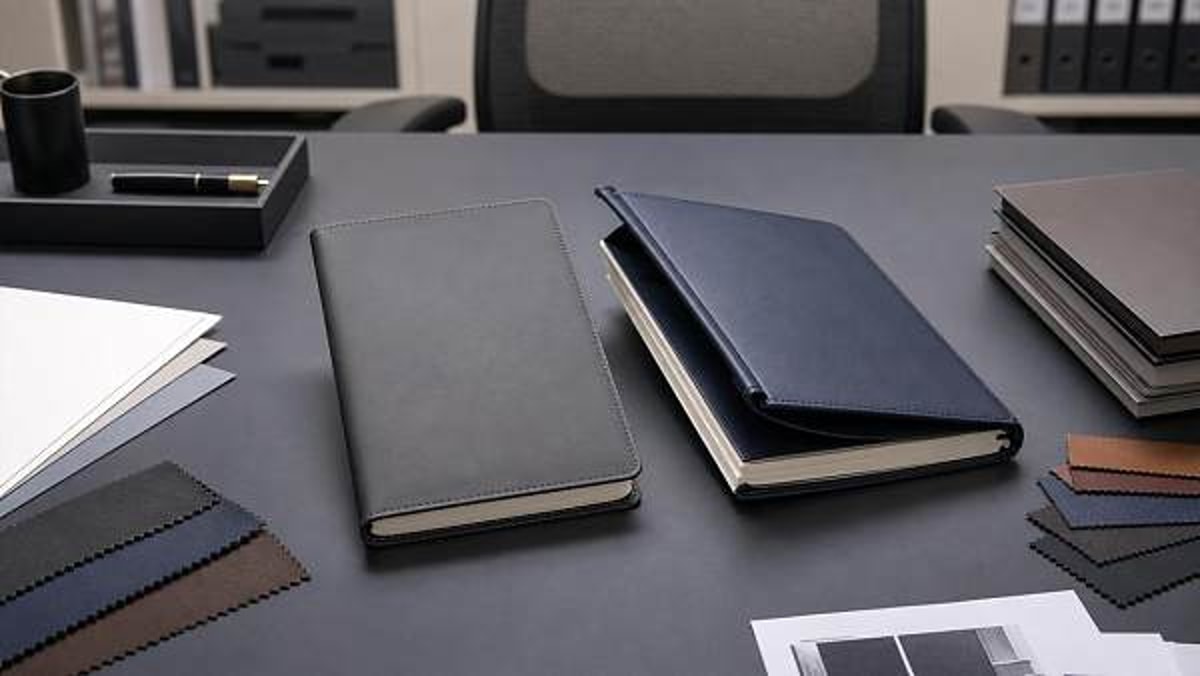
PU leather journals are notebooks or diaries covered with polyurethane-based synthetic leather rather than animal hide. For many buyers, they strike an attractive balance: they look refined, support a wide range of colors and textures, and usually cost less than genuine leather. In retail, gifting, hospitality, education, and office supply channels, this makes them a popular choice.
However, the same layered construction that gives PU leather journals their consistent appearance can also create a weakness. Most PU covers are made from a base fabric, a foam or bonding layer, and a polyurethane surface film. When peeling happens, it usually means one of these layers has started to separate, crack, or break down. Unlike natural leather, which develops wear in a more gradual and irregular way, PU surfaces often fail visibly once the top layer loses flexibility or adhesion.
That is why peeling is such a common complaint. Buyers may think they are evaluating “leather quality” in a general sense, but the real issue is often coating chemistry, lamination quality, material thickness, environmental exposure, or handling during production and shipping.
Why do some PU leather journals peel much sooner than others?
Early peeling rarely comes from one factor alone. In most cases, it is the result of several small compromises across the supply chain. A journal can look excellent on the shelf yet still be vulnerable to fast surface failure if materials and processing were optimized only for appearance and price.
The most common cause is low-grade PU film. Lower-cost synthetic leather may use thinner top layers with weaker resistance to abrasion, oils from hands, friction inside bags, and repeated bending around corners and spines. Over time, the surface hardens, micro-cracks form, and flakes begin to detach.
Another major reason is poor adhesion between layers. If the polyurethane coating does not bond well to the substrate, the material can start lifting even before visible cracking appears. This may happen because of inferior adhesives, uneven heat during lamination, or rushed curing processes at the factory.
Storage and transport also matter. PU leather journals exposed to high heat, moisture swings, direct sunlight, or sealed packaging with trapped humidity can degrade faster. Even a good-looking cover may already be aging internally before it reaches the end user.
Finally, design choices play a role. Covers with sharp folds, tight wrapping over rigid boards, or frequent flex points around elastic closures and pen loops face more stress. When the material selected is not elastic enough for that design, premature peeling becomes more likely.
How can buyers tell whether peeling risk comes from material quality or manufacturing shortcuts?
This is one of the most useful questions for anyone comparing PU leather journals. Material quality and manufacturing quality are closely linked, but they are not the same thing. A decent PU material can still fail if converted poorly, and a careful factory cannot fully rescue a weak substrate.
Signs of material-related risk include an overly plastic feel, unnatural surface shine, brittle edges, and a strong chemical odor. These may suggest lower-grade coatings or incomplete curing. If the cover feels stiff when bent, especially at room temperature, it may not tolerate repeated use well.
Manufacturing-related risk often appears at stress points. Look closely at folded corners, spine edges, stitched areas, and glued turn-ins. If the surface is already whitening, wrinkling, bubbling, or separating at these spots, the conversion process may have overstretched or weakened the material.
For trade buyers, sample evaluation should include both visual inspection and handling tests. Open and close the journal repeatedly. Rub the corners lightly. Press the cover near glued edges. These simple actions can reveal whether the PU leather journals were engineered for real use or only for display.
Quick buyer check: what should you inspect first?
Are all peeling problems caused by cheap products?
Not always. Lower-cost products do have a higher chance of failure, but price alone does not explain everything. Some premium-looking PU leather journals are designed for presentation, gift packaging, or short product cycles rather than long-term daily use. They may feature embossing, metallic finishes, or ultra-soft coatings that look luxurious but are less resistant to abrasion and skin oils.
On the other side, some mid-range journals perform surprisingly well because the supplier prioritized practical durability. A simpler matte finish, thicker facing layer, and better construction around edges can outlast a more expensive journal built mainly for visual impact.
This matters especially in B2B sourcing. A hotel group choosing in-room guest journals, an educational distributor ordering custom planners, or a corporate gifting team selecting branded notebooks should judge the product by use case, not by price tag or catalog styling alone. A reception desk journal that is touched occasionally faces a very different wear profile from an executive planner carried every day in a backpack.
What usage and storage conditions make PU leather journals deteriorate faster?
Even well-made PU leather journals can deteriorate early if the environment is harsh. Heat is one of the biggest threats. When journals are left in cars, near radiators, or in direct sun, the coating can dry out and lose flexibility. Once that happens, bending the cover starts a crack-and-peel cycle.
Humidity is another hidden factor. Excess moisture can affect adhesives and accelerate chemical breakdown, especially if journals are wrapped in non-breathable packaging for long periods. Sudden shifts between dry and humid environments can also stress the layered structure.
Frequent friction matters too. Journals carried with keys, chargers, cosmetics, or hard-edged office items will wear faster at corners and high-contact panels. Hand lotions, sanitizers, and skin oils can gradually weaken certain finishes, particularly on dark glossy covers.
Poor storage at the distribution stage is often overlooked. Products may leave the factory in good condition but degrade in a warehouse with poor temperature control. For importers and resellers, this is a critical quality point: peeling may begin long before the customer starts writing in the journal.
How do PU leather journals compare with genuine leather and other alternatives?
Many buyers ask this question because they want to understand whether peeling is simply the trade-off for choosing synthetic material. The answer is nuanced. Genuine leather usually does not peel in the same film-like way because it is a natural fibrous material, although coated corrected leather can still show finish wear. It tends to age through scuffing, stretching, darkening, and patina rather than flaking.
PU leather journals offer stronger consistency in color, texture, and branding, which is useful for large-volume sourcing. They are also usually easier to emboss and more budget-friendly. The trade-off is that performance depends heavily on the integrity of the synthetic coating system.
Other alternatives, such as fabric-bound journals, coated paperboard covers, microfiber leather, or PVC-based covers, bring their own pros and cons. Microfiber materials can outperform standard PU in durability, while fabric avoids peeling altogether but creates a different look and may stain more easily. For buyers focused on longevity, “synthetic leather” should not be treated as one category. The exact construction matters more than the generic label.
Simple comparison for information-focused buyers
What should buyers ask suppliers before choosing PU leather journals?
If the goal is to avoid disappointment, the right pre-purchase questions are more valuable than generic promises of “premium quality.” Buyers should ask what type of PU material is being used, whether it is standard PU or a more durable upgraded synthetic, and how thick the facing layer is. They should also ask about abrasion resistance, flex testing, and storage recommendations.
For custom or bulk programs, it helps to request information on edge wrapping, adhesive system, and the expected use environment. A supplier serving hospitality or commercial gifting clients should be able to explain how the product performs under handling, warehousing, and branding processes such as debossing or foil stamping.
Samples should ideally be reviewed over time, not just on arrival. A journal that looks perfect on day one may reveal coating stress after a few weeks in ordinary room conditions. For larger orders, consistency across batches is equally important. One strong prototype does not guarantee stable mass production.
What are the biggest myths about peeling PU leather journals?
One myth is that peeling only happens because users “handled the journal badly.” In reality, normal use should not cause rapid flaking if the product is properly specified. Another myth is that all PU leather journals are low quality by definition. That is too broad. There is a large performance gap between entry-level coated covers and better-engineered synthetic materials.
A third misconception is that a softer cover is always a better cover. Soft-touch finishes can feel luxurious, but unless the formulation is stable, they may be more vulnerable to wear, stickiness, or surface breakdown over time. Buyers should not confuse tactile appeal with long-term durability.
There is also a common assumption that peeling will be obvious immediately. Sometimes it is not. Certain defects stay hidden until the journal is opened repeatedly, exposed to warm conditions, or left unused in storage for months. That delayed failure is exactly why sourcing evaluation should go beyond appearance.
So how can information-focused readers choose better PU leather journals?
Start by matching the journal to the actual use case. If appearance matters most for a short campaign or event gift, standard PU may be sufficient. If the journal is meant for daily professional use, long distribution cycles, or premium brand representation, evaluate higher-grade synthetic options or even genuine leather alternatives.
Second, inspect stress points rather than only the front cover. Corners, folds, spine transitions, and inner turn-ins often reveal whether the product will age well. Third, ask targeted supplier questions about coating quality, lamination, testing, and storage. Vague quality claims are not enough.
Finally, think like a commercial buyer: durability is not just a material issue but a total product issue. Design, logistics, warehousing, branding treatment, and end-use conditions all shape performance. If you need to confirm a specific sourcing direction, sample standard, lead time, quotation basis, or cooperation model for PU leather journals, the first questions to raise should be about material specification, stress-point construction, testing method, storage conditions, and expected service life in the target market.
Search News
Hot Articles
Popular Tags
Need ExpertConsultation?
Connect with our specialized leisureengineering team for procurementstrategies.
Recommended News
 May 04, 2026PU Leather Journals: Why Some Covers Peel Too SoonPU leather journals can look elegant and affordable, but why do some peel so quickly? Discover the real causes, warning signs, and smarter buying tips before you choose.● Institutional Buyer
 May 04, 2026Retractable Badge Reels: The Small Item That Fails FirstRetractable badge reels fail faster than many workplace accessories. Learn what causes breakage, how to source durable options, and how to cut replacement costs.● Institutional Buyer
 May 04, 2026Id Card Holders Wholesale: Hard Shell or Soft Vinyl?Id card holders wholesale guide: compare hard shell vs soft vinyl for durability, cost, branding, and daily use to choose the best bulk option for offices, schools, events, and more.● Institutional Buyer
 May 04, 2026Office Laminating Machines: The Heat Settings People OverlookOffice laminating machines perform best when heat settings match pouch thickness, paper type, and speed. Learn how proper temperature control reduces bubbles, curl, waste, and rework.● Institutional Buyer
 May 04, 2026Custom Printed Lanyards: Which Material Holds Up Best?Custom printed lanyards: discover which materials last longest, keep logos sharp, and deliver better value for events, offices, schools, and premium commercial use.● Institutional Buyer
 May 04, 2026Why Wholesale Spiral Notebooks Vary So Much in Paper FeelWholesale spiral notebooks can look alike yet feel completely different. Learn what paper weight, fiber, coating, and sourcing standards mean for writing quality and smarter bulk buying.● Institutional Buyer
 May 04, 2026Binding Machines Wholesale: Small Price Gaps, Big Quality RisksBinding machines wholesale buyers face hidden quality risks behind small price gaps. Learn how to compare durability, compliance, and total cost before you order.● Institutional Buyer
 May 04, 2026Custom Printed Planners That People Actually Keep UsingCustom printed planners that people actually keep using—learn how to choose the right format, materials, and branding to boost retention, usability, and long-term brand value.● Institutional Buyer
 May 02, 2026Wholesale chef coats that hold shape after repeated industrial washingWholesale chef coats that stay sharp after repeated industrial washing. Compare fabrics, stitching, and supplier standards to choose durable uniforms that protect brand image and reduce replacement costs.● Institutional Buyer
 May 02, 2026What makes non slip chef shoes comfortable for 12-hour shiftsNon slip chef shoes for 12-hour shifts should deliver lasting support, cushioning, breathability, and grip. Learn what buyers and chefs should compare before choosing.● Institutional Buyer
 May 02, 2026Kenya Marathon Record Break Sparks Carbon-Plate Shoe Export Surge to AfricaKenya Marathon Record Break sparks surge in carbon-plate shoe exports to Africa—urgent bilingual labeling compliance needed for EAC markets.● Institutional Buyer
 May 01, 2026Custom Hotel Uniforms: Where Fit Problems Usually StartCustom hotel uniforms often fail at the fit-planning stage. Learn where sizing issues start, how to compare suppliers, and how to avoid costly reorders with smarter sourcing.● Institutional Buyer
 Apr 28, 2026How to Shortlist an Office Supplies WholesalerOffice supplies wholesaler selection starts with the right criteria. Learn how to compare an office supplies supplier, distributor, or manufacturer for cost, quality, compliance, and scalable B2B sourcing.● Institutional Buyer
 Apr 28, 20262026 Office Supplies Supplier Trends to WatchExplore 2026 office supplies supplier trends and learn how every office supplies wholesaler, distributor, and manufacturer can improve sourcing, compliance, fulfillment, and OEM growth.● Institutional Buyer
 Apr 28, 2026What to Check Before Choosing an ExporterOffice supplies supplier and exporter checklist: compare quality, compliance, lead times, MOQ, and service to choose a reliable office supplies manufacturer or wholesaler with confidence.● Institutional Buyer
 Apr 28, 2026Can an Office Supplies Producer Improve MarginsCan an office supplies producer improve margins? Learn how an office supplies manufacturer, supplier, and exporter boosts profit through smarter sourcing, lean production, and OEM value.● Institutional Buyer
 Apr 28, 2026How Bulk Suppliers Handle Custom PackingOffice supplies supplier insights: learn how an office supplies wholesaler, distributor, or OEM manufacturer manages custom packing to reduce risk, control cost, and improve delivery.● Institutional Buyer
 Apr 28, 2026Office Supplies OEM Manufacturer Pros and ConsOffice supplies OEM manufacturer pros and cons explained for every office supplies supplier, wholesaler, distributor, and B2B buyer—compare cost, quality, MOQ, and delivery before sourcing.● Institutional Buyer
 Apr 28, 2026Who Needs an Office Supplies B2B SupplierOffice supplies supplier guide for procurement teams, distributors, and institutions. Learn when to choose an office supplies wholesaler or manufacturer for stable supply and better B2B sourcing.● Institutional Buyer
 Apr 28, 2026How to Avoid Risks With Office Supplies FactoriesOffice supplies supplier risk guide: learn how to vet an office supplies manufacturer, wholesaler, distributor, or factory for quality, compliance, OEM reliability, and on-time delivery.● Institutional Buyer
 Apr 27, 2026Office Supplies Manufacturer MOQ ExplainedOffice supplies manufacturer MOQ explained: compare an office supplies supplier, wholesaler, distributor, OEM manufacturer, and factory to reduce cost, improve flexibility, and source smarter.● Institutional Buyer
 Apr 27, 2026Distributor or Supplier for Fast ReordersOffice supplies supplier or distributor for fast reorders? Compare lead times, stock stability, and bulk supply options to choose a reliable office supplies B2B supplier.● Institutional Buyer
 Apr 27, 2026How Wholesalers Cut Office Supply CostsOffice supplies supplier and office supplies wholesaler solutions help cut costs through bulk buying, OEM options, and smarter sourcing. Compare distributors and manufacturers to save more.● Institutional Buyer
 Apr 27, 2026Office Supplies Supplier Pricing Red FlagsOffice supplies supplier pricing red flags explained: compare an office supplies wholesaler, distributor, or manufacturer, spot hidden risks, and choose a reliable B2B partner with confidence.● Institutional Buyer