Binding Machines Wholesale: Small Price Gaps, Big Quality Risks
In binding machines wholesale, a small price difference can hide major risks in durability, safety compliance, and long-term operating costs. For procurement professionals, choosing the lowest quote may lead to higher failure rates, inconsistent performance, and supplier issues that disrupt daily operations. Understanding where quality gaps come from is essential to making smarter, lower-risk purchasing decisions.
Why do small price gaps in binding machines wholesale create big procurement risks?
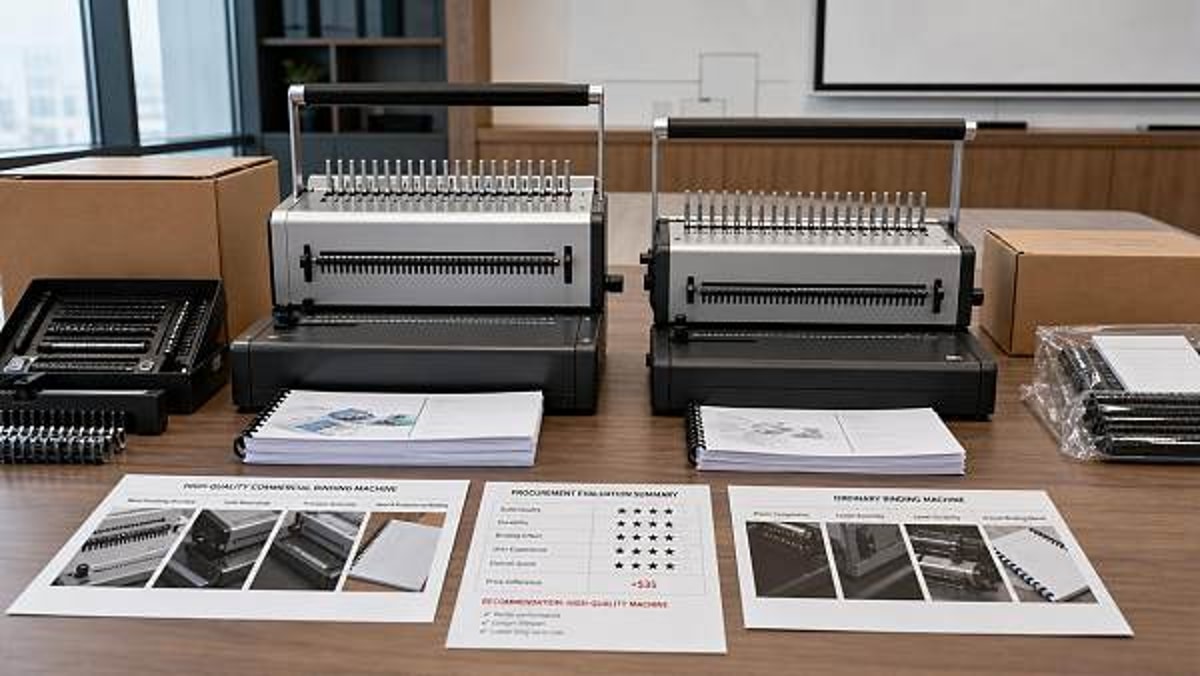
At first glance, many binding machines in wholesale catalogs look nearly identical. Similar photos, similar stated capacities, and only a small unit-price difference can make lower-cost offers appear attractive. Yet for procurement teams serving schools, offices, print rooms, hotels, training centers, and multi-site institutions, the real cost is rarely the invoice price alone.
In binding machines wholesale, hidden quality variation usually comes from material grade, punch mechanism precision, coil or comb alignment accuracy, motor stability in electric models, and the supplier’s process control. A machine that is only slightly cheaper may produce more paper jams, uneven punching, cracked housings, and shorter service life under frequent use.
This matters across the broader commercial environment covered by Global Commercial Trade. Buyers in office and educational supplies often work under tight delivery timelines, fixed annual budgets, and internal audit requirements. They do not just need a machine that works on day one. They need a sourcing decision that remains defensible after six months of daily operation.
- Lower-priced units may use thinner steel in punch dies, which accelerates wear and reduces hole consistency.
- Cheaper plastic covers and handles can crack during repetitive office or school use.
- Incomplete documentation can delay customs clearance, internal approval, or institutional deployment.
- Weak after-sales support increases downtime when a campus, copy center, or administrative office depends on continuous document finishing.
The procurement question is not “Which quote is lower?”
The better question is: which offer gives the strongest balance of functional reliability, compliance confidence, supply continuity, and total operating value? That is where experienced sourcing partners and data-backed comparison become far more useful than simple price matching.
What quality gaps should buyers evaluate in binding machines wholesale?
Procurement teams often receive quotations that mention punch capacity, binding capacity, and machine type, but leave out the factors that determine actual performance in daily use. The table below highlights common hidden quality differences in binding machines wholesale and their operational impact.
For buyers, the lesson is simple: small price gaps often reflect decisions made deep in the production process. If those decisions reduce metal strength, assembly accuracy, testing frequency, or packaging protection, the hidden costs appear later as returns, user complaints, and replacement orders.
Where procurement teams most often underestimate quality risk
- They compare only headline capacities, without asking whether the stated punch capacity is for occasional use or sustained daily operation.
- They assume all electric models have similar internal components, although motor quality and switch durability vary widely.
- They overlook packaging design, even though weak export packaging can cause transit damage and missing accessories.
Which binding machine type fits different commercial scenarios?
Binding machines wholesale decisions should match workload, document style, user skill level, and replacement planning. A school admin office, a training center, and a corporate print room do not need the same machine profile. Matching the wrong type can waste budget even when the unit price looks competitive.
Common scenario-based selection logic
The table below helps procurement professionals compare typical machine categories by use case, output expectation, and sourcing priorities.
This comparison shows why procurement should not treat all binding equipment as a single commodity. In binding machines wholesale, accurate scenario mapping protects budget far more effectively than chasing the lowest visible quote.
How should buyers compare total cost instead of unit price?
A lower purchase price can become the most expensive option once downtime, operator frustration, rework, and replacement are included. Procurement teams in institutions and commercial organizations should build a basic total-cost review before placing larger wholesale orders.
A practical cost checklist for binding machines wholesale
- Estimate annual document volume by location rather than buying one generic model for all sites.
- Compare expected service life for handles, dies, motors, and closing elements where relevant.
- Ask about accessory compatibility, including combs, wire sizes, covers, and replacement cutting parts.
- Include labor impact from jams, alignment errors, and slower operation during peak demand.
- Review claims handling, spare-part supply, and after-sales response in the destination market.
For cross-border sourcing, freight packaging and product consistency across batches also matter. A machine that performs well in one sample but shows variation in the next shipment can create internal complaints across branches, campuses, or customer-facing service points.
Why the GCT approach is useful for procurement teams
Global Commercial Trade supports buyers by connecting sourcing decisions with commercial-use context. That is important when a machine is not being purchased for isolated personal use, but for broader operational systems such as education procurement, hospitality back-office functions, managed office supply programs, or institutional tender projects.
Instead of reducing the decision to catalog pricing, GCT focuses on documented supplier capability, realistic application fit, and sourcing intelligence across commercial categories. That helps procurement teams compare offers in a way that is easier to justify internally.
What compliance and documentation should be checked before ordering?
Not every binding machine requires the same compliance review, but buyers should always verify product safety, electrical suitability for destination markets, and consistency between quotation data and shipment documents. This becomes more important for electric models, institutional tenders, and import programs serving multiple countries.
- Check voltage and plug configuration for the target market, especially when sourcing electric binding machines wholesale for regional distribution.
- Request inspection records or standard quality-control documentation for production batches.
- Confirm carton labeling, instruction materials, and accessory counts before shipment.
- For institutional procurement, verify whether internal policy requires additional declarations, user-safety documentation, or product test references.
A common mistake is assuming that a product sold internationally is automatically ready for every market. Procurement teams should treat documentation quality as part of product quality. Weak paperwork often signals weak process discipline elsewhere in the supply chain.
How can procurement teams reduce supplier risk in binding machines wholesale?
Supplier risk is not only about fraud or non-delivery. It also includes poor communication, unstable lead times, changing specifications, and weak post-shipment support. For wholesale buyers, these issues can be just as costly as a defective machine.
A practical supplier evaluation framework
Before confirming a binding machines wholesale order, ask suppliers to support a structured review:
- Provide complete specifications, including punch capacity, binding capacity, machine dimensions, net weight, and power details for electric models.
- Clarify whether the quoted model is designed for occasional office use, departmental use, or frequent batch processing.
- Confirm packaging details, spare parts, consumable compatibility, and carton drop protection where applicable.
- Request sample evaluation or a pre-shipment review process for larger rollouts.
- Define acceptable lead-time variation and after-sales communication channels before purchase order release.
This is where an experienced commercial sourcing hub can add value. Procurement does not need more quotations alone. It needs context, benchmarking logic, and decision support that reduces the chance of buying a machine that looks acceptable on paper but fails under real demand.
FAQ: common buyer questions about binding machines wholesale
How do I choose between manual and electric binding machines wholesale?
Start with usage frequency and operator workload. Manual machines can be suitable for lower-volume offices and school departments, while electric models are often better for shared production points with frequent jobs. If the machine will be used daily by multiple staff members, labor savings and consistency may justify a higher upfront cost.
What is the most overlooked risk when comparing wholesale quotations?
The most overlooked risk is assuming that stated capacity equals sustainable performance. Many quotes list maximum punch numbers without explaining whether that level is realistic for repeated use. Buyers should ask about operating rhythm, wear parts, and expected performance over time.
Are all binding machines wholesale offers suitable for schools and institutions?
No. Educational and institutional environments often require durable construction, easy operation, predictable maintenance, and suitable safety considerations for shared use. Machines chosen only on price may not withstand semester peaks, enrollment periods, or repetitive departmental use.
What should be confirmed before placing a larger order?
Confirm model specifications, consumable compatibility, packaging, voltage for electric units, spare-part support, lead time, and inspection expectations. If multiple sites will use the same machine, it is also wise to test one sample in the actual working environment before rolling out the full order.
Why choose us for sourcing support in binding machines wholesale?
Global Commercial Trade helps procurement professionals move beyond surface-level price comparison. Our strength lies in connecting product evaluation with commercial application, supply chain reliability, and category-specific sourcing intelligence across office and educational supplies within the wider commercial environment.
If you are reviewing binding machines wholesale options, we can help you narrow specifications, compare machine types for your workload, identify likely quality gaps between quotes, and organize a clearer procurement brief for internal approval or supplier negotiation.
- Ask us to compare manual, electric, wire, comb, or thermal binding options for your document volume.
- Consult on parameter confirmation, including punch capacity, binding thickness, voltage, and consumable compatibility.
- Discuss delivery timing, sample support, packaging requirements, and multi-site rollout planning.
- Review certification and documentation expectations for your destination market or institutional procurement process.
- Request sourcing guidance that balances budget control with lower operational risk over the product life cycle.
If your team needs more than a basic quote, contact us with your target machine type, expected monthly volume, market destination, and preferred price range. We can support product selection, supplier screening, lead-time discussion, sample coordination, and quotation comparison so your binding machines wholesale decision is more accurate, more defensible, and better aligned with long-term operating value.
Search News
Hot Articles
Popular Tags
Need ExpertConsultation?
Connect with our specialized leisureengineering team for procurementstrategies.
Recommended News
 May 04, 2026PU Leather Journals: Why Some Covers Peel Too SoonPU leather journals can look elegant and affordable, but why do some peel so quickly? Discover the real causes, warning signs, and smarter buying tips before you choose.● Institutional Buyer
 May 04, 2026Retractable Badge Reels: The Small Item That Fails FirstRetractable badge reels fail faster than many workplace accessories. Learn what causes breakage, how to source durable options, and how to cut replacement costs.● Institutional Buyer
 May 04, 2026Id Card Holders Wholesale: Hard Shell or Soft Vinyl?Id card holders wholesale guide: compare hard shell vs soft vinyl for durability, cost, branding, and daily use to choose the best bulk option for offices, schools, events, and more.● Institutional Buyer
 May 04, 2026Office Laminating Machines: The Heat Settings People OverlookOffice laminating machines perform best when heat settings match pouch thickness, paper type, and speed. Learn how proper temperature control reduces bubbles, curl, waste, and rework.● Institutional Buyer
 May 04, 2026Custom Printed Lanyards: Which Material Holds Up Best?Custom printed lanyards: discover which materials last longest, keep logos sharp, and deliver better value for events, offices, schools, and premium commercial use.● Institutional Buyer
 May 04, 2026Why Wholesale Spiral Notebooks Vary So Much in Paper FeelWholesale spiral notebooks can look alike yet feel completely different. Learn what paper weight, fiber, coating, and sourcing standards mean for writing quality and smarter bulk buying.● Institutional Buyer
 May 04, 2026Binding Machines Wholesale: Small Price Gaps, Big Quality RisksBinding machines wholesale buyers face hidden quality risks behind small price gaps. Learn how to compare durability, compliance, and total cost before you order.● Institutional Buyer
 May 04, 2026Custom Printed Planners That People Actually Keep UsingCustom printed planners that people actually keep using—learn how to choose the right format, materials, and branding to boost retention, usability, and long-term brand value.● Institutional Buyer
 May 02, 2026Wholesale chef coats that hold shape after repeated industrial washingWholesale chef coats that stay sharp after repeated industrial washing. Compare fabrics, stitching, and supplier standards to choose durable uniforms that protect brand image and reduce replacement costs.● Institutional Buyer
 May 02, 2026What makes non slip chef shoes comfortable for 12-hour shiftsNon slip chef shoes for 12-hour shifts should deliver lasting support, cushioning, breathability, and grip. Learn what buyers and chefs should compare before choosing.● Institutional Buyer
 May 02, 2026Kenya Marathon Record Break Sparks Carbon-Plate Shoe Export Surge to AfricaKenya Marathon Record Break sparks surge in carbon-plate shoe exports to Africa—urgent bilingual labeling compliance needed for EAC markets.● Institutional Buyer
 May 01, 2026Custom Hotel Uniforms: Where Fit Problems Usually StartCustom hotel uniforms often fail at the fit-planning stage. Learn where sizing issues start, how to compare suppliers, and how to avoid costly reorders with smarter sourcing.● Institutional Buyer
 Apr 28, 2026How to Shortlist an Office Supplies WholesalerOffice supplies wholesaler selection starts with the right criteria. Learn how to compare an office supplies supplier, distributor, or manufacturer for cost, quality, compliance, and scalable B2B sourcing.● Institutional Buyer
 Apr 28, 20262026 Office Supplies Supplier Trends to WatchExplore 2026 office supplies supplier trends and learn how every office supplies wholesaler, distributor, and manufacturer can improve sourcing, compliance, fulfillment, and OEM growth.● Institutional Buyer
 Apr 28, 2026What to Check Before Choosing an ExporterOffice supplies supplier and exporter checklist: compare quality, compliance, lead times, MOQ, and service to choose a reliable office supplies manufacturer or wholesaler with confidence.● Institutional Buyer
 Apr 28, 2026Can an Office Supplies Producer Improve MarginsCan an office supplies producer improve margins? Learn how an office supplies manufacturer, supplier, and exporter boosts profit through smarter sourcing, lean production, and OEM value.● Institutional Buyer
 Apr 28, 2026How Bulk Suppliers Handle Custom PackingOffice supplies supplier insights: learn how an office supplies wholesaler, distributor, or OEM manufacturer manages custom packing to reduce risk, control cost, and improve delivery.● Institutional Buyer
 Apr 28, 2026Office Supplies OEM Manufacturer Pros and ConsOffice supplies OEM manufacturer pros and cons explained for every office supplies supplier, wholesaler, distributor, and B2B buyer—compare cost, quality, MOQ, and delivery before sourcing.● Institutional Buyer
 Apr 28, 2026Who Needs an Office Supplies B2B SupplierOffice supplies supplier guide for procurement teams, distributors, and institutions. Learn when to choose an office supplies wholesaler or manufacturer for stable supply and better B2B sourcing.● Institutional Buyer
 Apr 28, 2026How to Avoid Risks With Office Supplies FactoriesOffice supplies supplier risk guide: learn how to vet an office supplies manufacturer, wholesaler, distributor, or factory for quality, compliance, OEM reliability, and on-time delivery.● Institutional Buyer
 Apr 27, 2026Office Supplies Manufacturer MOQ ExplainedOffice supplies manufacturer MOQ explained: compare an office supplies supplier, wholesaler, distributor, OEM manufacturer, and factory to reduce cost, improve flexibility, and source smarter.● Institutional Buyer
 Apr 27, 2026Distributor or Supplier for Fast ReordersOffice supplies supplier or distributor for fast reorders? Compare lead times, stock stability, and bulk supply options to choose a reliable office supplies B2B supplier.● Institutional Buyer
 Apr 27, 2026How Wholesalers Cut Office Supply CostsOffice supplies supplier and office supplies wholesaler solutions help cut costs through bulk buying, OEM options, and smarter sourcing. Compare distributors and manufacturers to save more.● Institutional Buyer
 Apr 27, 2026Office Supplies Supplier Pricing Red FlagsOffice supplies supplier pricing red flags explained: compare an office supplies wholesaler, distributor, or manufacturer, spot hidden risks, and choose a reliable B2B partner with confidence.● Institutional Buyer