Student Chairs With Writing Pad: Which Sizes Fit Best?
Choosing the right student chairs with writing pad is about more than fitting a room—it affects comfort, posture, classroom flow, and long-term value for institutional buyers. From compact lecture halls to flexible training spaces, the best size depends on user age, seating density, and usage needs. This guide helps procurement teams compare dimensions that support both functionality and efficient space planning.
Why Size Decisions Are Changing in Education and Training Spaces
Procurement teams are no longer selecting student chairs with writing pad based only on seat count and unit price. Across schools, universities, training centers, and corporate learning environments, seating decisions are being shaped by new signals: blended learning layouts, stricter attention to posture, more diverse student body sizes, and stronger pressure to maximize room flexibility. As a result, “which size fits best” has become a strategic planning question rather than a simple furniture specification.
This shift matters because the wrong size creates ripple effects. A writing tablet that is too small may limit laptop or workbook use. A seat height that is too high or too low can reduce concentration over long sessions. A chair footprint that is too large can cut room capacity and disrupt circulation. For buyers managing educational supply projects at scale, sizing errors often lead to faster replacement cycles, lower user satisfaction, and avoidable facility redesign costs.
In today’s market, the most effective student chairs with writing pad are selected through a balance of ergonomics, spatial efficiency, user profile, and anticipated teaching format. That is especially relevant for procurement professionals who serve mixed-age campuses or multi-purpose learning facilities where one chair type may need to support several use cases.
Key Market Signals Behind the Shift Toward Better Sizing
Several practical changes are pushing institutions to re-evaluate chair dimensions. First, learning spaces are becoming more hybrid and multi-format. Rooms once used only for note-taking now support tablets, laptops, group discussion, and short-form testing. This means the writing surface and seat spacing must support more than one learning posture.
Second, user diversity is more visible in procurement planning. Buyers increasingly need student chairs with writing pad that suit children, teenagers, university students, and adult learners, depending on the project. Standard one-size purchasing is less effective when facilities host broader body-size ranges and longer sitting durations.
Third, space utilization targets are changing. Institutions want to keep capacity high without creating cramped environments. This has raised demand for chairs with optimized dimensions: compact enough for density, but large enough to support comfort and device use. In many tenders, the focus is shifting from overall furniture count to usable square-meter performance.
Finally, buyers are under more scrutiny to justify value over time. A poorly sized chair may technically meet a specification sheet, yet fail in daily use. Procurement teams are therefore paying closer attention to seat width, back height, writing tablet dimensions, right- or left-handed options, and aisle clearance before committing to volume orders.
What “Best Fit” Means for Student Chairs With Writing Pad Today
The best size is no longer defined by a single standard dimension. Instead, it reflects how the chair will be used, by whom, and for how long. Procurement teams should evaluate five sizing zones together rather than in isolation.
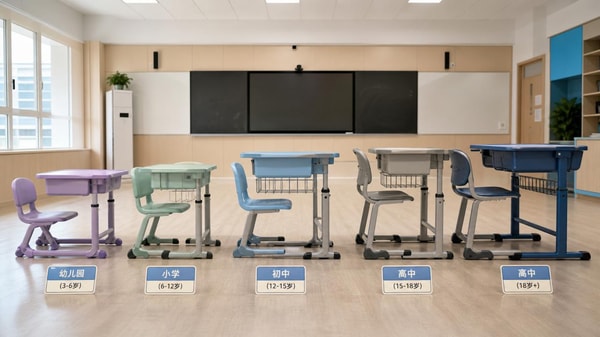
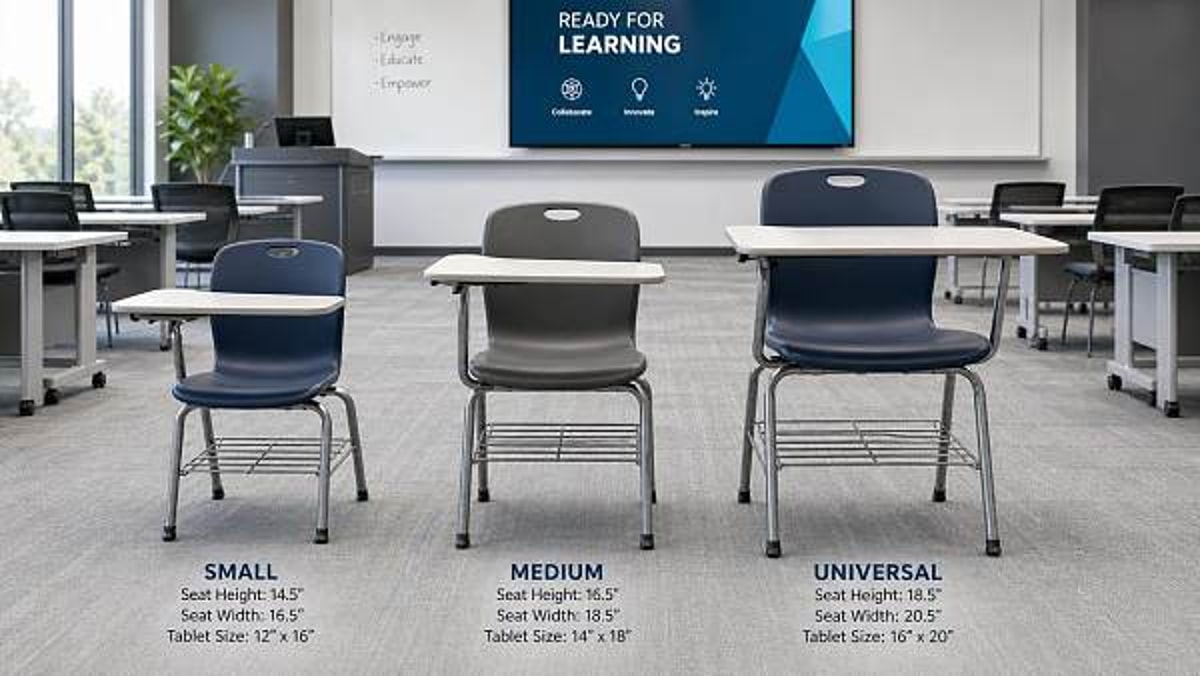
The first is seat height. For younger students, a lower seat height helps maintain stable foot contact and better posture. For secondary and tertiary environments, a moderate seat height usually supports longer sessions. The second is seat width and depth. Wider seats improve comfort for adult learners and extended classes, but can reduce room density if oversized.
The third is writing pad size. This is now a major decision factor because users increasingly place notebooks, textbooks, or compact laptops on the tablet. The fourth is total chair footprint, including tablet swing radius if applicable. This affects row spacing, aisle movement, and emergency access. The fifth is backrest height and angle, which influences comfort over lecture-length sessions.
For many institutional buyers, the best-performing student chairs with writing pad are those that reach a middle ground: large enough to support practical learning tasks, but compact enough to preserve layout efficiency.
A Practical Size Comparison for Procurement Planning
The table below summarizes how sizing priorities typically change by learning environment. Exact dimensions vary by manufacturer, but the comparison helps buyers judge which size direction is most suitable.
Why the Writing Pad Itself Is Becoming a Bigger Decision Point
In the past, institutional seating often treated the writing pad as a secondary feature. That is changing quickly. Buyers are seeing more demand for writing surfaces that support digital devices, broader paper formats, and left- or right-handed usability. As teaching methods evolve, the tablet size on student chairs with writing pad can no longer be too narrow or unstable.
This does not mean every project needs oversized tablets. In fact, too large a writing pad can increase chair bulk, complicate movement, and reduce layout efficiency. The procurement question is whether the tablet matches the most common task. If the room is used for short lectures and note-taking, a moderate surface may be enough. If the room supports device-based instruction or assessments, buyers should look for larger, more stable tablet dimensions and stronger fixing points.
The trend is toward task-matched sizing rather than generic enlargement. That approach reduces both under-specification and unnecessary material cost.
How Different Stakeholders Feel the Impact of Sizing Choices
The size of student chairs with writing pad affects more stakeholders than many tenders initially reflect. The impact is operational, financial, and reputational.
Common Procurement Mistakes as Demand Becomes More Nuanced
One common mistake is selecting student chairs with writing pad by catalog appearance rather than measured fit. A chair may seem compact but still create poor aisle flow once tablet position and seated body space are considered. Another mistake is using a single dimension standard for all age groups in multi-level institutions. This often results in comfort complaints and uneven utilization across rooms.
Buyers also sometimes focus heavily on overall chair width but overlook tablet usability. If the writing pad cannot accommodate the expected work mode, the chair underperforms even if the seat itself is acceptable. In addition, procurement teams may ignore left-handed user needs, which can become a functional issue in testing rooms and academic environments.
A further risk is failing to connect size with durability. Larger seats and larger writing tablets may improve comfort, but they also place stress on joints, frames, and tablet arms. If dimensions increase without matching structural reinforcement, product lifespan may suffer.
What Buyers Should Evaluate Before Finalizing a Size Standard
A strong sizing decision starts with user mapping. Procurement teams should identify whether the main users are children, teenagers, university students, or adult trainees. The second step is activity mapping: handwriting, laptop use, examinations, or short-cycle training. These variables quickly narrow the right size range for student chairs with writing pad.
Next comes room mapping. Buyers should review aisle width, row depth, emergency egress, and whether chairs need to be moved frequently. A chair that fits on paper can still fail in actual circulation patterns. Sample testing in a real room setup is often more valuable than relying only on technical drawings.
Procurement teams should also confirm whether a standard size can cover most rooms, while reserving a second dimension option for special spaces. This two-tier approach is becoming more common because it improves fit without creating excessive SKU complexity.
How the Next Procurement Cycle Is Likely to Evolve
Looking ahead, the demand for student chairs with writing pad is likely to move in three clear directions. First, expect more requests for versatile medium-size models that can serve mixed-use learning rooms. Second, expect stronger emphasis on ergonomic evidence, not just dimensional claims. Buyers increasingly want chairs that demonstrate practical suitability for extended sitting and active writing tasks.
Third, customization will matter more, but in focused ways. Rather than fully bespoke products, many institutions will seek adjustable or variant-based solutions such as alternate seat heights, larger tablet options, or left-handed matching units within the same product family. This reflects a broader sourcing trend across educational supplies: controlled flexibility instead of uncontrolled complexity.
For global buyers and sourcing professionals, this means supplier conversations should move beyond simple quotations. The more useful discussion is about user mix, room efficiency, compliance expectations, and the best size strategy across an entire facility portfolio.
Decision Signals to Watch When Comparing Suppliers
When assessing vendors, buyers should look for clear dimension sheets, tolerance consistency, and evidence that the writing tablet has been designed for real educational use. It is also worth asking whether the supplier can provide multiple tablet sizes, handedness options, or sample units for pilot evaluation. These signals often indicate stronger readiness for institutional projects.
Another important sign is whether the supplier understands that student chairs with writing pad must perform as part of a room system, not as isolated furniture pieces. Vendors who can discuss spacing logic, stacking or mobility implications, and maintenance cycles usually provide better long-term procurement support.
Final Buying Perspective
The size question is becoming more important because educational environments are changing faster than old furniture standards. For procurement teams, the best student chairs with writing pad are not simply the smallest for density or the largest for comfort. They are the models whose dimensions reflect current learning behavior, room efficiency goals, and realistic lifecycle expectations.
If your organization is evaluating future seating projects, focus on a few core questions: Who will use the chair most often? What tasks will happen on the writing tablet? How much circulation space must be protected? And can one size serve most rooms without compromising posture or usability? Answering those questions will lead to a more accurate sourcing decision and a more resilient classroom investment strategy.
Search News
Hot Articles
Popular Tags
Need ExpertConsultation?
Connect with our specialized leisureengineering team for procurementstrategies.
Recommended News
 May 04, 2026Kindergarten Furniture Bulk Orders and the Safety Details MissedKindergarten furniture bulk buyers: discover the hidden safety checks suppliers often miss, from emissions and stability to ergonomics and compliance, before placing large orders.● Institutional Buyer
 May 04, 2026School Desks and Chairs Wholesale: Matching Age to Size CorrectlySchool desks and chairs wholesale guide: learn how to match age to size correctly for better comfort, safety, compliance, and smarter school furniture purchasing.● Institutional Buyer
 May 04, 2026Library Bookshelves Wholesale: How Much Load Is Really Enough?Library bookshelves wholesale guide: learn how much load is truly enough for safety, durability, and compliance. Compare ratings, avoid costly mistakes, and choose the right shelving with confidence.● Institutional Buyer
 May 04, 2026Smart Interactive Whiteboards: Which Features Get Used Daily?Smart interactive whiteboards: discover which features teams and teachers actually use daily, from touch accuracy and wireless casting to easy collaboration, ROI, and smarter buying decisions.● Institutional Buyer
 May 04, 2026Student Chairs With Writing Pad: Which Sizes Fit Best?Student chairs with writing pad: discover which sizes best support comfort, posture, room capacity, and tablet use. Compare fit options for schools, universities, and training spaces.● Institutional Buyer
 May 03, 2026Beijing Women's FC Win Spurs AI Training System Export to UKBeijing Women's FC win sparks UK demand for AI sports training systems — real-time analytics, GDPR/ISO 27001 compliance & Heathrow logistics insights revealed.● Institutional Buyer
 May 01, 2026Park Trash Cans That Cut Maintenance Instead of Adding ItPark trash cans that reduce labor, resist weather, and stay cleaner longer. Learn which designs, materials, and features help lower maintenance costs across parks and outdoor spaces.● Institutional Buyer
 May 01, 2026Park Drinking Fountains That Hold Up Better in Public SpacesPark drinking fountains built for public spaces need durability, hygiene, and low maintenance. Discover how to choose vandal-resistant models that cut long-term costs.● Institutional Buyer
 May 01, 2026Restaurant POS Systems That Reduce Training Time at the CounterRestaurant POS systems that cut counter training time: compare intuitive workflows, role-based controls, and error-reducing features to speed onboarding and improve service consistency.● Institutional Buyer
 Apr 30, 20262026 Shanghai Smart Campus Expo: VR EdTech Gains ITU & ISO/IEC 23053 Dual CertificationVR EdTech gains ITU & ISO/IEC 23053 dual certification at 2026 Shanghai Smart Campus Expo—key for global smart PE tenders in UAE, Thailand & ASEAN.● Institutional Buyer
 Apr 29, 20262026 Shanghai Smart Campus Expo: VR EdTech Gains ITU & ISO/IEC Dual CertVR EdTech gains ITU & ISO/IEC dual cert at 2026 Shanghai Smart Campus Expo—key for exporters, integrators & compliance providers.● Institutional Buyer
 Apr 28, 20262026 Shanghai Smart Campus Expo: VR Teaching Devices Gain ITU & ISO/IEC 23053 CertificationVR teaching devices certified to ITU & ISO/IEC 23053 at 2026 Shanghai Smart Campus Expo—unlock EU tenders, interoperability, and global edtech growth.● Institutional Buyer
 Apr 27, 20262026 Shanghai Smart Campus Expo: VR EdTech Gains ITU & ISO/IEC Dual CertificationVR EdTech gains ITU & ISO/IEC dual certification at 2026 Shanghai Smart Campus Expo—key for global edtech exporters, integrators, and compliance teams.● Institutional Buyer
 Apr 26, 20262026 Shanghai Smart Campus Expo: VR EdTech Devices Gain ITU & ISO/IEC 23053 CertificationVR EdTech devices certified to ITU & ISO/IEC 23053 at 2026 Shanghai Smart Campus Expo — key for GCC & SEA education exporters, integrators, and compliance teams.● Institutional Buyer
 Apr 25, 20262026 Shanghai Smart Campus Expo: VR EdTech Gains ITU & ISO/IEC 23053 Dual CertificationVR EdTech gains ITU & ISO/IEC 23053 dual certification at 2026 Shanghai Smart Campus Expo—key for EU/UAE edtech tenders. Act now.● Institutional Buyer
 Apr 24, 20262026 Shanghai Smart Campus Expo: VR EdTech Gains ITU & ISO/IEC 23053 Dual CertificationVR EdTech gains ITU & ISO/IEC 23053 dual certification at 2026 Shanghai Smart Campus Expo—key for global edtech tenders. Discover impact & compliance insights.● Institutional Buyer
 Apr 23, 20262026 Shanghai Smart Campus Expo: VR EdTech Gains ITU & ISO/IEC Dual CertificationVR EdTech gains ITU & ISO/IEC dual certification at 2026 Shanghai Smart Campus Expo — a must-see milestone for global edtech exporters, LMS integrators, and STEM hardware providers.● Institutional Buyer
 Apr 22, 20262026 Shanghai Smart Campus Expo: VR EdTech Gains ITU & ISO/IEC Dual CertificationVR EdTech gains ITU & ISO/IEC dual certification at 2026 Shanghai Smart Campus Expo—unlock B2G opportunities in UAE, Chile & Indonesia now.● Institutional Buyer
 Apr 21, 2026FSAE China 2026: Domestic Timing System Gains ITU CertificationFSAE China 2026: Domestic timing system wins ITU certification — first education-level motorsport solution compliant with ITU-T G.9972. Discover implications for timing tech, AI integration & standards adoption.● Institutional Buyer
 Apr 21, 20262026 Shanghai Smart Campus Expo: VR EdTech Gains ITU & ISO/IEC 23053 Dual CertificationVR EdTech gains ITU & ISO/IEC 23053 dual certification at 2026 Shanghai Smart Campus Expo—key for exporters, integrators & procurement pros.● Institutional Buyer
 Apr 20, 20262026 Shanghai Smart Campus Expo: VR EdTech Gains ITU & ISO/IEC Dual CertificationVR EdTech gains ITU & ISO/IEC dual certification at 2026 Shanghai Smart Campus Expo—key for global edtech exporters, procurement agencies & VR integrators.● Institutional Buyer
 Apr 19, 20262026 Shanghai Smart Campus Expo: VR EdTech Gains ITU & ISO/IEC Dual CertificationVR EdTech hits a milestone: 2026 Shanghai Smart Campus Expo unveils ITU & ISO/IEC dual-certified haptic teaching devices—game-changing for global edtech exporters, OEMs, and procurement agencies.● Institutional Buyer
 Apr 18, 20262026 Shanghai Smart Campus Expo: VR Teaching Devices Gain ITU & ISO/IEC Dual CertificationVR teaching devices gain ITU & ISO/IEC dual certification at 2026 Shanghai Smart Campus Expo — a must-have for edtech exporters targeting Saudi, Mexico & Poland.● Institutional Buyer
 Apr 17, 20262026 Shanghai Smart Campus Expo: VR Teaching Devices Gain ITU & ISO/IEC Dual CertificationVR teaching devices with ITU & ISO/IEC dual certification headline the 2026 Shanghai Smart Campus Expo—unlock global edtech tenders now.● Institutional Buyer