School Desks and Chairs Wholesale: Matching Age to Size Correctly
Choosing the right school furniture is not just about price—it directly affects student comfort, posture, and classroom efficiency. For procurement teams sourcing school desks and chairs wholesale, matching desk and chair sizes to different age groups is essential for safety, compliance, and long-term value. This guide explains how to select the correct dimensions for every stage of learning while supporting smarter institutional purchasing decisions.
Understanding age-to-size matching in educational furniture
In the education supply sector, school furniture is more than a basic classroom necessity. It is part of the learning environment, student welfare strategy, and facilities management plan. When buyers evaluate school desks and chairs wholesale, they are not simply comparing unit prices, finishes, or shipping terms. They are also making decisions that influence posture support, student concentration, classroom circulation, and the useful life of the furniture fleet.
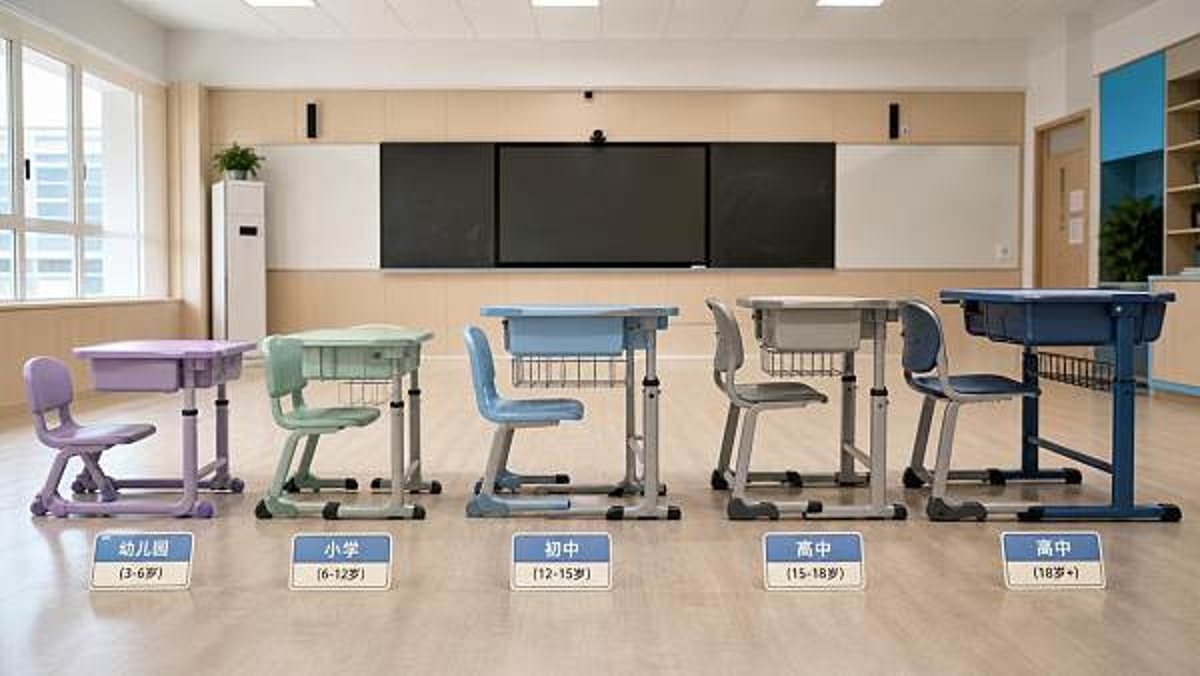
Age-to-size matching means selecting desk heights, chair seat heights, and related dimensions according to the physical development of students in each education stage. A desk that is too high can raise shoulders and strain wrists. A chair that is too low may force a child into a rounded spine position. Across a full school day, these small ergonomic mismatches become meaningful operational and wellbeing issues. For institutional buyers, this is why school desks and chairs wholesale should be assessed through an ergonomic and lifecycle lens, not through cost alone.
This topic matters even more today because schools are expected to deliver safe, inclusive, and flexible spaces. Procurement teams, school operators, dealers, and project contractors increasingly need furniture that supports varied age bands, modern teaching methods, and compliance expectations in different export markets.
Why the market pays close attention to correct sizing
The demand for school desks and chairs wholesale is growing alongside campus expansion, school renovation, and international education investment. At the same time, buyers are under pressure to balance budget discipline with measurable value. Correct sizing has become a key focus because it affects several practical outcomes at once.
- Student comfort during long sitting periods
- Health and posture support in early development years
- Safer movement in classrooms, libraries, and training rooms
- Better fit between furniture and curriculum use, including writing, digital learning, and group work
- Reduced replacement costs caused by misuse or poor dimensional fit
For procurement personnel, these factors connect directly to total cost of ownership. Poorly sized furniture may trigger complaints from staff, lower user satisfaction, or require earlier replacement. Well-matched products, by contrast, tend to support durability because students use them more naturally, with less rocking, dragging, and awkward posture-driven stress on frames and joints.
A practical sizing overview for procurement teams
Although standards vary by country and manufacturer, procurement teams can use age bands and body dimensions as a practical starting point. The table below provides a general reference point when reviewing school desks and chairs wholesale offers. Final specifications should always be confirmed against local standards, school requirements, and supplier technical sheets.
These dimensions are not a substitute for certified testing, but they help buyers screen supplier catalogs more effectively. In large school desks and chairs wholesale projects, especially for public tenders or international delivery, using a clear sizing matrix reduces specification ambiguity and helps prevent mismatched shipments.
How sizing supports real educational and business value
For schools, correctly sized desks and chairs support a more functional classroom. Students can sit with feet grounded, knees and elbows positioned more naturally, and a comfortable visual distance from books or screens. This matters in classrooms where children spend many hours each week seated for writing, reading, testing, and digital work.
For procurement teams and distributors, the value is also commercial. A well-specified school desks and chairs wholesale program improves project credibility. It demonstrates that the supplier or sourcing partner understands educational use cases rather than treating furniture as a generic commodity. In institutional buying, that difference can influence bid success, repeat orders, and buyer trust.
This is where a sourcing platform with strong market intelligence becomes useful. In sectors such as Office & Educational Supplies, buyers increasingly need more than a product list. They need reliable data on manufacturing capability, quality control, compliance readiness, packaging stability, and OEM or ODM flexibility. In other words, sizing is one part of a wider value equation that includes ergonomics, safety, and supply chain dependability.
Typical product categories and when each works best
Not every educational setting needs the same furniture format. When reviewing school desks and chairs wholesale offers, buyers should connect size decisions with the teaching model, room type, and expected years of use.
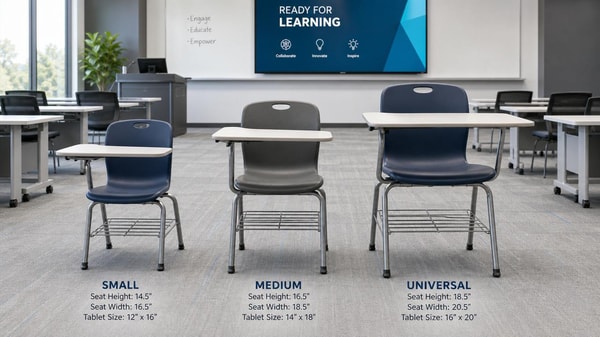
This category view helps buyers avoid the common mistake of selecting one uniform specification for all rooms. Even when ordering school desks and chairs wholesale under one project, libraries, standard classrooms, language labs, and maker spaces may require different dimensional or functional priorities.
Key specification points beyond age and height
Correct height is the starting point, but professional buyers should also review a wider set of details before confirming a wholesale order. These points often determine whether the furniture performs well over years of institutional use.
- Seat depth and backrest angle: Important for comfort, especially in upper grades where sitting time is longer.
- Desktop size: Must support notebooks, textbooks, and digital devices without crowding.
- Frame material: Steel frames are common for durability, while molded plastic and laminated tops affect maintenance and weight.
- Edge protection: Rounded corners and smooth finishes are essential in younger age groups.
- Load capacity and stability: Especially relevant for active classrooms and higher-grade student use.
- Noise and floor protection: Anti-slip feet and floor-friendly glides improve classroom management.
When evaluating school desks and chairs wholesale quotations, it is wise to request technical drawings, tolerance ranges, test reports, material details, and packaging specifications. This is particularly important in export-oriented sourcing, where dimensions may appear similar in brochures but differ in real production.
Common procurement risks and how to avoid them
Many sizing issues happen not because buyers ignore ergonomics, but because projects simplify student groups too aggressively. A school may contain wide variation within a single grade, especially in fast-growth years. A procurement strategy based on one fixed size per campus can therefore create avoidable mismatches.
Another frequent risk is relying only on age labels from suppliers. “Primary school size” or “junior student model” may sound convenient, but these labels do not replace exact measurements. Buyers should ask for seat height, desk height, top dimensions, and frame footprint in millimeters, then compare them against the target user group and classroom layout.
Finally, do not separate sizing from logistics. In school desks and chairs wholesale projects, knock-down design, carton strength, pallet efficiency, and assembly consistency matter. A technically correct product can still become a poor project result if installation is slow, parts are inconsistent, or damage rates are high.
Practical sourcing advice for institutional buyers
A strong sourcing approach usually combines user-fit analysis with supplier verification. Start by mapping the student population by education stage and room function. Then identify whether fixed or adjustable models are the better fit for the budget and replacement cycle. After that, shortlist suppliers that can provide consistent dimensions, quality documentation, and scalable manufacturing.
For larger projects, consider sample evaluation before full contract release. Test actual seating posture, desk reach, storage access, and classroom spacing. Include teachers or facilities staff in the review process, since they see daily usage patterns that may not appear on a technical sheet. This method improves decision quality without turning the process into unnecessary complexity.
The most effective school desks and chairs wholesale decisions are those that align age-appropriate dimensions with compliance, durability, and operational reality. In a market where schools want better outcomes from every capital expense, precise size matching is no longer a minor detail. It is a practical standard of responsible procurement.
Conclusion
Choosing school desks and chairs wholesale by age-appropriate size is one of the clearest ways to improve student comfort, classroom usability, and long-term purchasing value. For procurement teams, the goal is not just to buy furniture that fits a room, but to source furniture that fits the learners who use it every day. By combining sizing logic, product category understanding, and supplier due diligence, institutions can make smarter, safer, and more durable educational furniture investments.
If your project involves multi-grade classrooms, export sourcing, or OEM and ODM educational furniture development, a data-backed sourcing partner can help validate dimensions, compare supplier capability, and reduce project risk before you place volume orders.
Search News
Hot Articles
Popular Tags
Need ExpertConsultation?
Connect with our specialized leisureengineering team for procurementstrategies.
Recommended News
 May 04, 2026Kindergarten Furniture Bulk Orders and the Safety Details MissedKindergarten furniture bulk buyers: discover the hidden safety checks suppliers often miss, from emissions and stability to ergonomics and compliance, before placing large orders.● Institutional Buyer
 May 04, 2026School Desks and Chairs Wholesale: Matching Age to Size CorrectlySchool desks and chairs wholesale guide: learn how to match age to size correctly for better comfort, safety, compliance, and smarter school furniture purchasing.● Institutional Buyer
 May 04, 2026Library Bookshelves Wholesale: How Much Load Is Really Enough?Library bookshelves wholesale guide: learn how much load is truly enough for safety, durability, and compliance. Compare ratings, avoid costly mistakes, and choose the right shelving with confidence.● Institutional Buyer
 May 04, 2026Smart Interactive Whiteboards: Which Features Get Used Daily?Smart interactive whiteboards: discover which features teams and teachers actually use daily, from touch accuracy and wireless casting to easy collaboration, ROI, and smarter buying decisions.● Institutional Buyer
 May 04, 2026Student Chairs With Writing Pad: Which Sizes Fit Best?Student chairs with writing pad: discover which sizes best support comfort, posture, room capacity, and tablet use. Compare fit options for schools, universities, and training spaces.● Institutional Buyer
 May 03, 2026Beijing Women's FC Win Spurs AI Training System Export to UKBeijing Women's FC win sparks UK demand for AI sports training systems — real-time analytics, GDPR/ISO 27001 compliance & Heathrow logistics insights revealed.● Institutional Buyer
 May 01, 2026Park Trash Cans That Cut Maintenance Instead of Adding ItPark trash cans that reduce labor, resist weather, and stay cleaner longer. Learn which designs, materials, and features help lower maintenance costs across parks and outdoor spaces.● Institutional Buyer
 May 01, 2026Park Drinking Fountains That Hold Up Better in Public SpacesPark drinking fountains built for public spaces need durability, hygiene, and low maintenance. Discover how to choose vandal-resistant models that cut long-term costs.● Institutional Buyer
 May 01, 2026Restaurant POS Systems That Reduce Training Time at the CounterRestaurant POS systems that cut counter training time: compare intuitive workflows, role-based controls, and error-reducing features to speed onboarding and improve service consistency.● Institutional Buyer
 Apr 30, 20262026 Shanghai Smart Campus Expo: VR EdTech Gains ITU & ISO/IEC 23053 Dual CertificationVR EdTech gains ITU & ISO/IEC 23053 dual certification at 2026 Shanghai Smart Campus Expo—key for global smart PE tenders in UAE, Thailand & ASEAN.● Institutional Buyer
 Apr 29, 20262026 Shanghai Smart Campus Expo: VR EdTech Gains ITU & ISO/IEC Dual CertVR EdTech gains ITU & ISO/IEC dual cert at 2026 Shanghai Smart Campus Expo—key for exporters, integrators & compliance providers.● Institutional Buyer
 Apr 28, 20262026 Shanghai Smart Campus Expo: VR Teaching Devices Gain ITU & ISO/IEC 23053 CertificationVR teaching devices certified to ITU & ISO/IEC 23053 at 2026 Shanghai Smart Campus Expo—unlock EU tenders, interoperability, and global edtech growth.● Institutional Buyer
 Apr 27, 20262026 Shanghai Smart Campus Expo: VR EdTech Gains ITU & ISO/IEC Dual CertificationVR EdTech gains ITU & ISO/IEC dual certification at 2026 Shanghai Smart Campus Expo—key for global edtech exporters, integrators, and compliance teams.● Institutional Buyer
 Apr 26, 20262026 Shanghai Smart Campus Expo: VR EdTech Devices Gain ITU & ISO/IEC 23053 CertificationVR EdTech devices certified to ITU & ISO/IEC 23053 at 2026 Shanghai Smart Campus Expo — key for GCC & SEA education exporters, integrators, and compliance teams.● Institutional Buyer
 Apr 25, 20262026 Shanghai Smart Campus Expo: VR EdTech Gains ITU & ISO/IEC 23053 Dual CertificationVR EdTech gains ITU & ISO/IEC 23053 dual certification at 2026 Shanghai Smart Campus Expo—key for EU/UAE edtech tenders. Act now.● Institutional Buyer
 Apr 24, 20262026 Shanghai Smart Campus Expo: VR EdTech Gains ITU & ISO/IEC 23053 Dual CertificationVR EdTech gains ITU & ISO/IEC 23053 dual certification at 2026 Shanghai Smart Campus Expo—key for global edtech tenders. Discover impact & compliance insights.● Institutional Buyer
 Apr 23, 20262026 Shanghai Smart Campus Expo: VR EdTech Gains ITU & ISO/IEC Dual CertificationVR EdTech gains ITU & ISO/IEC dual certification at 2026 Shanghai Smart Campus Expo — a must-see milestone for global edtech exporters, LMS integrators, and STEM hardware providers.● Institutional Buyer
 Apr 22, 20262026 Shanghai Smart Campus Expo: VR EdTech Gains ITU & ISO/IEC Dual CertificationVR EdTech gains ITU & ISO/IEC dual certification at 2026 Shanghai Smart Campus Expo—unlock B2G opportunities in UAE, Chile & Indonesia now.● Institutional Buyer
 Apr 21, 2026FSAE China 2026: Domestic Timing System Gains ITU CertificationFSAE China 2026: Domestic timing system wins ITU certification — first education-level motorsport solution compliant with ITU-T G.9972. Discover implications for timing tech, AI integration & standards adoption.● Institutional Buyer
 Apr 21, 20262026 Shanghai Smart Campus Expo: VR EdTech Gains ITU & ISO/IEC 23053 Dual CertificationVR EdTech gains ITU & ISO/IEC 23053 dual certification at 2026 Shanghai Smart Campus Expo—key for exporters, integrators & procurement pros.● Institutional Buyer
 Apr 20, 20262026 Shanghai Smart Campus Expo: VR EdTech Gains ITU & ISO/IEC Dual CertificationVR EdTech gains ITU & ISO/IEC dual certification at 2026 Shanghai Smart Campus Expo—key for global edtech exporters, procurement agencies & VR integrators.● Institutional Buyer
 Apr 19, 20262026 Shanghai Smart Campus Expo: VR EdTech Gains ITU & ISO/IEC Dual CertificationVR EdTech hits a milestone: 2026 Shanghai Smart Campus Expo unveils ITU & ISO/IEC dual-certified haptic teaching devices—game-changing for global edtech exporters, OEMs, and procurement agencies.● Institutional Buyer
 Apr 18, 20262026 Shanghai Smart Campus Expo: VR Teaching Devices Gain ITU & ISO/IEC Dual CertificationVR teaching devices gain ITU & ISO/IEC dual certification at 2026 Shanghai Smart Campus Expo — a must-have for edtech exporters targeting Saudi, Mexico & Poland.● Institutional Buyer
 Apr 17, 20262026 Shanghai Smart Campus Expo: VR Teaching Devices Gain ITU & ISO/IEC Dual CertificationVR teaching devices with ITU & ISO/IEC dual certification headline the 2026 Shanghai Smart Campus Expo—unlock global edtech tenders now.● Institutional Buyer