How to Choose a Jewelry Laser Engraving Machine Manufacturer for Custom Production
A custom jewelry program can lose margin quickly when engraving quality varies from one batch to the next, a delicate item is marked too deeply, or a machine supplier cannot respond when production settings need adjustment. These problems are rarely solved by choosing the highest advertised laser power or the lowest quotation. For custom production, the right jewelry laser engraving machine manufacturer is one that can prove stable results on your actual materials, explain its machine configuration clearly, support the required workflow, and provide practical service after delivery.
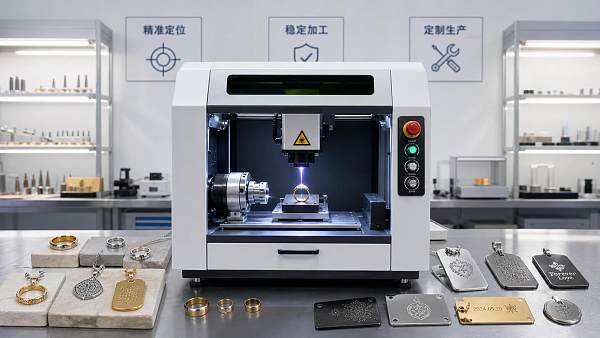
The first sourcing decision should therefore be based on production fit rather than a generic machine specification. Ask each supplier to demonstrate engraving on representative samples such as gold, silver, platinum, stainless steel, titanium, coated jewelry, or other materials used in your collection. Then assess whether the proposed system can repeatedly achieve the required line sharpness, contrast, depth, placement accuracy, and surface finish without creating excessive heat marks or distortion.
Start with the engraving work, not the machine catalog
Jewelry engraving is not a single application. A machine that performs well for shallow text on stainless-steel pendants may be unsuitable for deep monograms on precious-metal signet rings. Likewise, a system selected for logo marking on flat tags may create positioning difficulties when the work includes curved bangles, inner-ring inscriptions, watch components, or irregular cast pieces.
Before contacting a jewelry laser engraving machine manufacturer, define the jobs that will make up most of the production volume. A useful request package should include:
- Material types, alloy information where available, plating or coating details, and approximate thickness.
- Part geometry, including flat, curved, hollow, reflective, textured, or highly polished surfaces.
- Typical marking content: names, dates, serial numbers, logos, barcodes, patterns, fingerprints, or decorative artwork.
- Required engraving style, such as surface annealing, dark marking, shallow etching, deep engraving, frosting, or material removal.
- Smallest character size, finest line width, permitted tolerance for placement, and areas that must remain untouched.
- Expected batch size, daily operating hours, product changeover frequency, and whether operators will process one item or fixtures of many items.
This preparation exposes an important distinction: visual acceptability and production capability are not the same. A supplier may provide an attractive single sample made with slow settings, careful manual alignment, and repeated passes. That does not confirm that the same result can be maintained across a mixed production run. Request samples that reflect normal operating conditions, including several pieces from the same material family and at least one geometry that is difficult to fixture.
Match the laser source to the materials and finish required
The laser source has a direct effect on marking behavior, operating flexibility, and the types of jewelry work the equipment can handle. Buyers do not need to select a source solely by technical terminology, but they should ask the manufacturer to connect the recommendation to specific materials and output requirements.
Fiber laser systems are widely used for metal marking and engraving. They are often considered for precious metals, stainless steel, titanium, and many metal accessories because they can produce fine text, logos, serial markings, and controlled engraving when correctly configured. However, source type alone does not determine result quality. Pulse characteristics, optics, beam quality, software settings, and the condition of the jewelry surface all affect the outcome.
Other laser configurations may be proposed for non-metal components, coated surfaces, resins, wood inlays, leather elements, or applications where heat response differs from solid metal. When a collection combines several materials, do not assume one machine will provide equally strong results on all of them. Ask whether the supplier recommends separate processing parameters, interchangeable setups, or different equipment for different material groups.
Be cautious when quotations describe performance with broad terms such as “high precision” or “suitable for all metals” without showing the boundaries of that claim. A capable manufacturer should be able to discuss what may change when material hardness, reflectivity, surface finish, plating thickness, or engraving depth changes. Clear limitations are more useful than an overly broad promise.
Evaluate precision as a complete system
Fine jewelry work places high demands on placement and repeatability. Buyers often focus on the stated marking area or nominal resolution while overlooking the mechanical and operational factors that determine whether a design lands in the correct place. The relevant question is not simply whether the machine can engrave small characters; it is whether it can place those characters consistently on the intended location across repeated loading cycles.
Review the motion and positioning arrangement together with the laser head. Depending on the application, the machine may use a fixed worktable, movable stage, camera-assisted alignment, rotary attachment, dedicated ring fixture, or custom tooling. Each option has value only when it supports the production mix. A camera can help with visual alignment, but it does not eliminate the need for stable fixturing. A rotary device can support circular components, but it must accommodate the relevant diameter range and hold delicate items without scratching or deforming them.
Questions that reveal practical precision
- How is the focal distance set, checked, and retained between operators?
- Can the machine align designs to pre-existing features such as stone settings, edges, holes, or clasp openings?
- What fixture is included for rings, pendants, bracelets, and flat blanks?
- Can the supplier design or adapt fixtures for unusual geometry, and what information is needed?
- How does the system prevent movement when an operator loads a small or polished component?
- Can artwork be previewed or framed before firing the laser?
Fixture design deserves particular attention in custom production. Without reliable workholding, operators compensate manually, cycle time rises, and placement errors become harder to trace. A machine may be technically capable of engraving a component, yet still be a poor production choice if each item must be positioned by eye. Where SKU variation is high, request a realistic plan for changeover: fixture replacement, saved parameter files, alignment method, and operator verification steps.
Compare throughput using the whole work cycle
Laser cycle time is only one part of capacity. In a workshop or retail-customization environment, the actual time per piece may include artwork preparation, barcode or order-data import, loading, focus adjustment, alignment, engraving, cleaning, inspection, and unloading. For deep engraving or complex decorative patterns, laser time can become dominant. For short personalized text, handling and setup may consume more time than the mark itself.
Ask suppliers to separate these stages when discussing output. A useful demonstration follows a normal sequence: receive a design file, select or create a parameter set, mount the item, align the design, run the process, and inspect the result. This makes it easier to identify whether automation is genuinely useful. For example, a multi-position fixture may increase output for identical pendants, but it may add little value for one-off rings with different sizes and engraving locations.
Do not compare power ratings as a shortcut for productivity. Higher power can support some depth or speed requirements, but it may not improve fine detailing, reduce setup time, or protect heat-sensitive pieces. The preferred configuration is the one that meets required quality at a repeatable and manageable production pace.
Inspect software, file handling, and data control
Engraving software affects daily usability more than many first-time buyers expect. Custom jewelry orders may arrive as vector logos, customer handwriting, text strings, serialized data, or artwork that needs scaling to a restricted area. The operator should be able to import common design files, position artwork accurately, set text along a path where needed, and retain approved parameters without rebuilding the job each time.
During evaluation, ask the manufacturer to show the software rather than simply listing it in a quotation. Check how it handles:
- Variable text, serial numbers, dates, and batch identifiers.
- Vector artwork and image files, including the steps needed to prepare them.
- Layer-based parameter settings for different sections of one design.
- Saved material libraries and controlled access to approved parameter files.
- Design preview, marking boundary display, and correction before processing.
- Data import or integration needs when engraving is connected to an order-management process.
Software licensing, update policy, language availability, computer requirements, and offline operation should be confirmed in writing. A capable laser system can become difficult to deploy when the software depends on an unsupported operating environment, a single unreplaceable computer, or unclear license ownership. Also clarify who will adjust parameters after installation and whether training covers practical troubleshooting rather than basic startup only.
Look beyond the machine frame when judging manufacturer capability
A quotation can appear complete while excluding items that determine whether the equipment is ready for production. Compare supplier proposals line by line. The scope may include the laser unit but not the rotary attachment, extraction equipment, air-assist arrangement, cooling approach, protective enclosure, workstation, fixtures, software license, installation support, or spare lenses. These omissions create budget uncertainty and can delay commissioning.
For jewelry applications, cleanliness and work-area protection should be considered early. Material removal can create fine residue, while some coatings or materials may require appropriate extraction and filtration measures. The supplier should identify the intended operating environment, routine cleaning requirements, and any limitations associated with processing certain materials. Buyers should also verify applicable workplace safety obligations in the destination market, including enclosure, access control, warning features, ventilation, and operator protection requirements. Compliance responsibility should not be assumed from a product photograph or a general statement in a brochure.
Manufacturer capability is also visible in the quality of technical communication. A credible supplier can provide a machine configuration, component list, utility requirements, installation dimensions, operating instructions, maintenance schedule, troubleshooting route, and warranty terms that match the proposed model. When purchasing for export, confirm electrical requirements, plug configuration, documentation language, packaging method, shipment terms, and the process for reporting transit damage or missing accessories.
Test after-sales support before placing the order
Laser equipment is not maintenance-free. Lenses require cleaning, fixtures wear, alignment can be affected by handling, software settings can be changed accidentally, and engraving results may shift when a new alloy or finish enters production. The relevant question is how quickly and clearly the manufacturer can help restore a controlled process.
Ask who provides remote support, which communication channels are used, what information technicians need for diagnosis, and whether spare parts are stocked or supplied on request. Clarify the warranty scope for the laser source, control system, motion components, and accessories separately. A broad warranty phrase is less useful than a defined procedure for fault reporting, replacement decisions, shipping responsibilities, and technical guidance during downtime.
Before issuing a purchase order, conduct a final acceptance discussion using your own criteria: approved sample appearance, engraving placement, parameter repeatability, included accessories, training content, documentation, safety configuration, delivery scope, and support responsibilities. Put the agreed configuration and sample standard into the commercial record. This protects both sides from treating a general demonstration as a guarantee for every future material or design.
The strongest choice is not necessarily the supplier offering the most features. It is the jewelry laser engraving machine manufacturer that can translate your production requirements into a defined configuration, demonstrate the relevant result, identify limitations before shipment, and support the equipment when real custom orders begin to vary.
Search News
Hot Articles
Popular Tags
Need ExpertConsultation?
Connect with our specialized leisureengineering team for procurementstrategies.
Recommended News
 Oct 12, 2026How to Choose Designer Eyewear That Fits Your Store’s Customer ProfileDesigner eyewear buying guide for retailers: match frames, price points, brand appeal, fit, and supplier support to your store’s customer profile for stronger sales.● Luxury Retail Analyst
 Oct 07, 2026Thermal Diamond Testers: How They Work and When They Can Misidentify StonesThermal diamond tester guide: learn how it works, spot false positives from moissanite, and choose reliable verification methods for jewelry trade and retail.● Luxury Retail Analyst
 Oct 02, 2026Diamond Tester Wholesale: How to Vet Accuracy, Calibration, and MOQ Before OrderingDiamond tester wholesale guide: verify accuracy, calibration records, supplier quality controls, and MOQ terms before ordering. Source reliable testers with confidence.● Luxury Retail Analyst
 Sep 09, 2026Wholesale Coral Earrings: How Buyers Can Assess Quality, Treatments, and Supply RiskCoral jewelry earrings wholesale guide for buyers: assess quality, treatments, secure settings, documentation, and supply risks before ordering.● Luxury Retail Analyst
 Sep 01, 2026How to Choose a Jewelry Laser Engraving Machine Manufacturer for Custom ProductionChoose a jewelry laser engraving machine manufacturer with proven sample testing, precision fixtures, workflow-ready software, and reliable support for custom production.● Luxury Retail Analyst
 Aug 27, 2026Evaluating Luxury Retail Accessories Suppliers: Quality, Lead Times, and Brand FitLuxury retail accessories supplier selection made clearer: assess quality, lead times, compliance, costs, and brand fit to protect premium launches and margins.● Luxury Retail Analyst
 Jul 29, 2026Fine Jewelry Price Guide: What Affects Cost and How to Judge Real ValueFine jewelry price guide for buyers: learn what drives cost in metals, gemstones, craftsmanship, certification, and branding so you can judge real value, reduce sourcing risk, and buy with confidence.● Luxury Retail Analyst
 Jul 14, 2026What to Ask an Enamel Jewelry Manufacturer Before Sampling and Mass ProductionEnamel jewelry manufacturer selection starts with the right questions. Learn what to ask about materials, color matching, MOQ, QC, compliance, and lead times before sampling and mass production.● Luxury Retail Analyst
 Jul 12, 2026Surgical Steel Belly Rings vs Titanium: Material Differences, Safety, and CostSurgical steel belly rings vs titanium: compare safety, nickel exposure, comfort, durability, and cost to choose the best option for sensitive skin or budget-friendly style.● Luxury Retail Analyst
 Jul 12, 2026Natural Coral Jewelry Guide: How to Identify Real Coral, Treatments, and QualityNatural coral jewelry guide covering how to identify real coral, spot treatments, assess quality, and buy with confidence. Learn the key signs before you choose.● Luxury Retail Analyst
 Jul 11, 2026Braided Leather Bracelets OEM: Material, Clasp, and MOQ Factors Before SamplingBraided leather bracelets OEM guide covering material grades, clasp options, and MOQ factors before sampling. Learn how to reduce sourcing risk, control cost, and choose the right supplier.● Luxury Retail Analyst
 Jul 09, 2026Jewelry Craftsmanship Gemstone Setting Methods Explained: Prong, Bezel, Pave, and MoreJewelry craftsmanship gemstone setting explained clearly: compare prong, bezel, pavé, channel, and more to choose secure, beautiful, and commercially smart jewelry designs.● Luxury Retail Analyst
 Jul 06, 2026Photo Locket Necklace Manufacturer Selection Guide: Materials, MOQ, and Custom OptionsPhoto locket necklace manufacturer selection guide covering materials, MOQ, custom options, compliance, and quality checks to help buyers source smarter and build stronger jewelry lines.● Luxury Retail Analyst
 Jul 05, 2026What to Check When Comparing a Sterling Silver Clasp ManufacturerChoosing a sterling silver clasp manufacturer? Learn what to check first: 925 silver claims, finish quality, testing, compliance, lead times, and hidden sourcing costs.● Luxury Retail Analyst
 Jul 02, 2026Jewelry Craftsmanship Techniques Explained: Casting, Stone Setting, Engraving, and PolishingJewelry craftsmanship techniques explained: discover how casting, stone setting, engraving, and polishing shape quality, durability, and sourcing confidence.● Luxury Retail Analyst
 Jul 01, 2026Lost Wax Casting Machines Explained: Types, Capacity, and Metal CompatibilityLost wax casting machines explained: compare types, real capacity, and metal compatibility to choose the right system for precision casting, higher quality, and smarter sourcing.● Luxury Retail Analyst
 Jun 29, 2026How to Evaluate a Luxury Accessories Online Store Before You BuyLuxury accessories online store buying guide: learn how to verify authenticity, compare policies, check reviews, and avoid costly mistakes before you place an order.● Luxury Retail Analyst
 Jun 22, 2026Matching Couple Rings: Popular Materials, Fit Differences, and How to ChooseMatching couple rings guide: compare popular materials, fit differences, comfort, durability, and resizing options to choose a stylish pair that truly lasts.● Luxury Retail Analyst
 Jun 19, 2026How to Build a Fashion Accessories Catalog That Improves Product Discovery and SalesFashion accessories catalog strategies that improve product discovery, filtering, and conversions. Learn how to structure pages, categories, and data to drive more qualified sales.● Luxury Retail Analyst
 Jun 19, 2026How to Choose Luxury Accessories for Women by Material, Style, and Price PointLuxury accessories for women: learn how to choose the right pieces by material, style, and price point for better value, timeless appeal, and smarter buying decisions.● Luxury Retail Analyst
 Jun 18, 2026Stainless Steel Rings Bulk: 304 vs 316L, Finishes, and Custom Order FactorsStainless steel rings bulk guide: compare 304 vs 316L, explore finish options, and learn key custom order factors to reduce sourcing risk and improve product value.● Luxury Retail Analyst
 Jun 18, 2026Body Piercing Jewelry Bulk Buying Guide: Materials, Sizes, and MOQ QuestionsBody piercing jewelry bulk buying guide covering safe materials, size checks, MOQ strategy, supplier screening, and compliance tips to reduce risk and source with confidence.● Luxury Retail Analyst
 Jun 18, 2026How to Evaluate a Luxury Jewelry Exporter for Quality, Compliance, and DeliveryLuxury jewelry exporter evaluation starts with more than design. Learn how to verify quality, compliance, and delivery control to source premium jewelry with less risk.● Luxury Retail Analyst
 Jun 17, 2026Iced Out Watches Wholesale: How to Compare MOQ, Stone Quality, and MarginsIced out watches wholesale guide: compare MOQ, stone quality, and real margins to choose reliable suppliers, reduce risk, and grow resale profits with smarter sourcing.● Luxury Retail Analyst