How to Choose Designer Eyewear That Fits Your Store’s Customer Profile
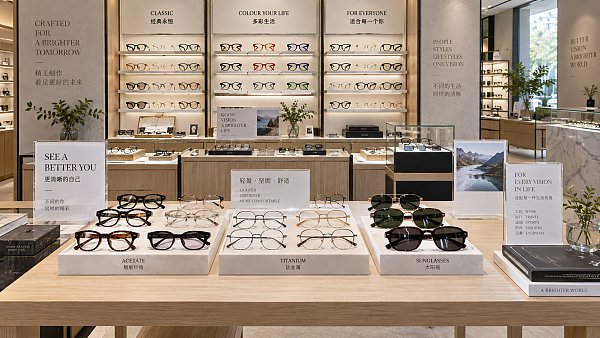
Designer eyewear earns its place in a store when it reinforces the reason customers choose that store over a general optical chain, fashion retailer, or online marketplace. The right assortment is not defined by the most recognizable labels, the widest selection, or the highest ticket prices. It is defined by the fit between frame architecture, price ladder, brand signals, service model, and the customers who are expected to buy repeatedly.
A mismatch is expensive in ways that are not always visible at the initial buying stage. A store may secure attractive wholesale terms on oversized acetate frames, sculptural titanium, or logo-led sunglasses, yet still create slow-moving inventory if its local customer base buys conservative optical frames, expects practical warranties, or has limited tolerance for premium upgrades. Selection should begin with customer evidence and store positioning, then move to brands, collections, and supplier terms.
Start with the customer profile, not the brand list
“Customer profile” should mean more than age and income. In eyewear, purchasing behavior is shaped by visual needs, occupational dress codes, face-shape preferences, fashion confidence, replacement cycles, insurance or reimbursement arrangements where relevant, and the role eyewear plays in personal identity.
A useful profile combines transactional data with selling-floor observations. Review the frames sold over the previous 12 to 24 months and separate them by material, silhouette, price band, lens type, color, gender expression, and use case. The value of this exercise is not merely identifying bestsellers. It reveals which customers convert and where demand drops away. For example, a store may sell many mid-priced acetate frames but have weak conversion above a certain price point. That may indicate an insufficient premium service experience, unclear design differentiation, or a customer base that values durability more than fashion exclusivity. It does not automatically mean premium designer eyewear has no place in the assortment.
Customer conversations can clarify what sales data cannot. Ask why a frame was rejected: fit, weight, logo visibility, color, perceived fragility, price, lens compatibility, or lack of distinction from existing eyewear. These objections are more useful than generic claims that a collection is “too fashion-forward.” A customer rejecting a thick frame because it feels heavy creates a different buying response from one who wants a subtler silhouette.
Local context matters as well. Stores near business districts may need refined, all-day optical frames that work with formal or client-facing dress. Locations near universities, creative districts, resorts, or luxury shopping zones can support different proportions, colors, and sunwear demand. The conclusion should come from the store’s own customer mix, not assumptions about a neighborhood’s image.
Translate positioning into an assortment architecture
Designer eyewear should operate as a portfolio, not as a collection of isolated “beautiful frames.” Before meeting suppliers, define what each part of the assortment must do.
- Core optical frames provide dependable choice for customers seeking everyday prescription eyewear. Their value lies in fit range, repeatable colorways, stable availability, and a price level consistent with the store’s normal transaction.
- Design-led optical frames create differentiation through material, construction, shape, or creative direction. They need a clear reason to exist beyond a label, especially when the price premium is substantial.
- Statement pieces generate visual interest and establish fashion authority, but should be bought in controlled depth unless prior sales support larger quantities.
- Sunwear can extend the store’s style message and raise average transaction value, yet its buying calendar, replenishment logic, and lens requirements may differ from prescription optical frames.
- Special-fit options address bridge fit, temple length, narrow or wide head sizes, low-bridge designs, and petite proportions. These are often underrepresented when buying decisions are driven mainly by showroom appearance.
These categories should not receive equal budget. A customer profile centered on professional prescription wear may justify deeper investment in core and design-led optical styles, with a selective sunwear edit. A fashion boutique that sells eyewear primarily as an accessory may need more visual variety and a tighter price spread, while maintaining enough quality control to avoid returns and reputational damage.
Price architecture requires similar discipline. A store should know where its entry point, principal selling range, premium upgrade range, and exceptional pieces sit. Large gaps between these levels create friction. If a collection jumps from accessible designer frames directly to high-luxury pieces, sales staff may struggle to explain the incremental value. The customer must be able to see and feel why a higher-priced frame costs more: distinctive material, finer finishing, design provenance, limited production, specialized hinges, lighter weight, or better fit—not simply a larger logo.
Evaluate frame design through wearability, not only visual impact
Designer eyewear is especially vulnerable to showroom bias. A striking frame may command attention on a display wall but perform poorly when customers wear it for ten minutes. Buyers should inspect the physical design with the same care used for fashion direction.
Frame dimensions are a starting point, not a full fit assessment. Lens width, bridge width, temple length, and vertical depth influence fit, but they do not capture pantoscopic tilt, frame wrap, bridge geometry, endpiece position, temple pressure, or nose-pad design. Two frames with similar stated measurements can sit very differently on the face.
For prescription-oriented retail, lens compatibility deserves early attention. Very shallow eye sizes can limit progressive lens fitting height. Highly curved or strongly wrapped frames may create complications for certain prescription ranges and lens designs. Rimless and semi-rimless frames can require specific glazing competence and may have a different repair profile. Oversized frames can be visually appealing but may create thickness, weight, or optical-centering challenges for stronger prescriptions. These constraints do not disqualify a design; they determine whether it belongs in the main optical offer, a curated fashion edit, or a sunwear-focused assortment.
Material choice also affects the selling and service model:
- Acetate offers color depth, sculptural potential, and a premium tactile impression. It can be adjusted with heat, but fit stability, polishing quality, lamination integrity, and temple alignment should be inspected closely.
- Metal alloys can deliver fine profiles and adjustable nose pads. Their suitability depends on plating durability, solder quality, corrosion resistance, and the availability of replacement parts.
- Titanium is valued for low weight and corrosion resistance, but the term alone does not establish quality. Buyers should determine which components are titanium, how the hinges are constructed, and whether the frame can be serviced locally.
- Combination frames can broaden design options but introduce more interfaces where finish consistency, screw retention, or material movement may affect long-term performance.
Sampling should include hands-on checks rather than a purely visual approval. Open and close hinges repeatedly, assess symmetry on a flat surface, inspect lens groove consistency, check screw seating, examine the transition between temples and endpieces, and look for rough edges or uneven polishing. Ask whether nose pads, temples, screws, demo lenses, and branded cases can be replaced, and whether replacements are stocked by the distributor or only available through the brand’s central operation.
Match brand equity to the store’s credibility
A well-known designer name can help a customer make a quick purchase decision, but brand recognition is not a substitute for relevance. The key question is whether the label supports the store’s existing identity and the customer’s desired self-image.
Some brands sell through visible logo codes and immediately recognizable fashion associations. Others appeal through independent design language, specialist craftsmanship, heritage, or material innovation. Neither approach is inherently superior. A logo-led collection may be appropriate where customers see eyewear as a recognizable luxury accessory. A more discreet collection may suit stores where customers value construction, individual expression, and a less overtly branded appearance.
Brand overlap is a common assortment problem. Multiple labels may appear different in a supplier catalogue but compete for the same customer because they occupy the same price level, silhouette, and visual identity. If three brands all offer black, medium-weight acetate rectangles at similar retail prices, stocking all three rarely creates meaningful choice. It can split sales, complicate training, and dilute the display.
Exclusivity should be evaluated carefully. Territory protection can be commercially useful only when the supplier defines the territory, channels, duration, minimum purchases, online selling rights, and enforcement mechanism in writing. A vague promise that a label will be “protected locally” has limited value if the same frames are sold by nearby retailers, department stores, or unauthorized online channels.
Buy depth where replenishment is reliable and breadth where discovery matters
Eyewear inventory differs from many fashion categories because customers often need immediate fit options, while individual styles can remain relevant beyond a short seasonal window. The buying decision therefore involves both breadth and depth.
Depth is appropriate for frames that repeatedly solve customer needs: proven shapes, successful colorways, core sizes, and styles compatible with the store’s most common prescriptions. Breadth is more appropriate for fashion experimentation, distinctive colors, niche forms, and new designer launches. Buying too deeply into untested statement styles ties up capital and creates pressure to discount products that were intended to signal premium positioning.
Do not assess sell-through only at brand level. A brand can appear weak because the store bought the wrong sizes, colors, or shapes, while a narrow subset of its frames performs well. Review sales at stock-keeping-unit level, but group results into meaningful design families. That makes it easier to distinguish a label problem from a buying problem.
Ageing inventory should be measured against its role. A display piece that helps establish a premium image may justify a slower turn than a core frame. However, this should be a deliberate allocation, not an excuse to retain inventory with no commercial or visual function. Clear internal rules are needed for re-merchandising, transfer between locations, controlled markdowns, supplier returns where agreed, and discontinuation.
Supplier assessment is part of product selection
Designer eyewear buying can fail even when the collection is right if the supplier cannot support the operating requirements behind it. Availability, authenticity, after-sales service, and commercial terms should be examined before the first seasonal order.
Confirm whether the supplier is the brand owner, an authorized distributor, or a secondary wholesaler. Request documentation appropriate to the trading relationship and verify that invoices, warranty responsibility, product traceability, and use of brand assets are clear. Unauthorized or poorly documented supply creates risks that extend beyond product quality, including customs issues, trademark disputes, and customer distrust.
Order terms should specify minimum order values, opening order requirements, replenishment minimums, delivery lead times, payment conditions, return provisions, defective-item handling, and treatment of discontinued models. If frames are supplied internationally, clarify Incoterms, freight responsibility, import duties, and whether replacement parts can be shipped efficiently across borders. A low ex-works price can be offset by fragmented deliveries, expensive warranty handling, or limited access to spare parts.
Service responsiveness matters particularly for premium eyewear. A customer who has purchased a high-value frame will judge the store by how quickly a loose temple, missing nose pad, damaged case, or warranty issue is resolved. Suppliers should be asked for their process rather than their general service promise: response time, required evidence, approval path, standard repair turnaround, and availability of loan or replacement options.
Check compliance according to the product and destination market
Compliance should be built into the sourcing file rather than treated as a final shipping check. Requirements depend on whether the product is a fashion frame, prescription spectacle frame, ready-to-wear reading glasses, or sunglasses, as well as the market in which it will be sold.
For sunglasses placed on the European market, applicable product safety and personal protective equipment requirements, including the relevant conformity documentation, must be reviewed with the responsible economic operator. EN ISO 12312-1 is widely used for sunglasses and related eyewear, but a standard reference alone does not prove that a product is correctly placed on the market. Product labeling, traceability, instructions, declarations, and the responsibilities of importers or distributors require attention.
In the United States, impact-resistance requirements apply to ophthalmic lenses under FDA regulations. Other markets may impose their own labeling, product safety, chemical, or consumer protection obligations. Material declarations can be relevant where coatings, dyes, plasticizers, nickel release, or restricted substances are regulated. The practical buying rule is simple: identify the destination market before placing an order, assign responsibility for compliance documents, and ensure that product records can be retrieved by model and shipment.
For private-label or OEM designer eyewear, the retailer or importer may carry a more direct role in product specifications, labeling, documentation, and corrective action. That calls for stronger control of technical files, approved samples, batch identification, and change management. A supplier changing a hinge, plating process, acetate source, or lens supplier without notice can affect both product consistency and compliance.
Use the assortment review to make future orders more precise
The most useful post-season review connects commercial performance with the original buying rationale. Compare planned customer segment, intended price role, expected use case, actual sell-through, returns, repairs, and replenishment demand. A high-selling frame that generates repeated adjustment complaints is not necessarily a genuine success. Equally, a slow but profitable design family may deserve a smaller, more deliberate presence rather than elimination.
Designer eyewear selection becomes more accurate when every purchase answers a defined store need: a missing fit option, a proven premium upgrade, a distinctive design statement, a sunwear opportunity, or a brand signal consistent with the store’s identity. When that discipline is applied to product, supplier, and service evaluation together, the assortment becomes easier to sell, easier to replenish, and less dependent on seasonal intuition.
Search News
Hot Articles
- Fashion & Gem JewelryHow to Choose Designer Eyewear That Fits Your Store’s Customer ProfileOct 12, 2026
- Musical InstrumentsA Practical Guide to Identifying Wooden Orchestral Instruments by Family and ToneOct 10, 2026
- Indoor PlaygroundHow to Choose Animatronic Haunted House Props for High-Throughput AttractionsOct 08, 2026
Popular Tags
Need ExpertConsultation?
Connect with our specialized leisureengineering team for procurementstrategies.
Recommended News
 Oct 12, 2026How to Choose Designer Eyewear That Fits Your Store’s Customer ProfileDesigner eyewear buying guide for retailers: match frames, price points, brand appeal, fit, and supplier support to your store’s customer profile for stronger sales.● Luxury Retail Analyst
 Oct 07, 2026Thermal Diamond Testers: How They Work and When They Can Misidentify StonesThermal diamond tester guide: learn how it works, spot false positives from moissanite, and choose reliable verification methods for jewelry trade and retail.● Luxury Retail Analyst
 Oct 02, 2026Diamond Tester Wholesale: How to Vet Accuracy, Calibration, and MOQ Before OrderingDiamond tester wholesale guide: verify accuracy, calibration records, supplier quality controls, and MOQ terms before ordering. Source reliable testers with confidence.● Luxury Retail Analyst
 Sep 09, 2026Wholesale Coral Earrings: How Buyers Can Assess Quality, Treatments, and Supply RiskCoral jewelry earrings wholesale guide for buyers: assess quality, treatments, secure settings, documentation, and supply risks before ordering.● Luxury Retail Analyst
 Sep 01, 2026How to Choose a Jewelry Laser Engraving Machine Manufacturer for Custom ProductionChoose a jewelry laser engraving machine manufacturer with proven sample testing, precision fixtures, workflow-ready software, and reliable support for custom production.● Luxury Retail Analyst
 Aug 27, 2026Evaluating Luxury Retail Accessories Suppliers: Quality, Lead Times, and Brand FitLuxury retail accessories supplier selection made clearer: assess quality, lead times, compliance, costs, and brand fit to protect premium launches and margins.● Luxury Retail Analyst
 Jul 29, 2026Fine Jewelry Price Guide: What Affects Cost and How to Judge Real ValueFine jewelry price guide for buyers: learn what drives cost in metals, gemstones, craftsmanship, certification, and branding so you can judge real value, reduce sourcing risk, and buy with confidence.● Luxury Retail Analyst
 Jul 14, 2026What to Ask an Enamel Jewelry Manufacturer Before Sampling and Mass ProductionEnamel jewelry manufacturer selection starts with the right questions. Learn what to ask about materials, color matching, MOQ, QC, compliance, and lead times before sampling and mass production.● Luxury Retail Analyst
 Jul 12, 2026Surgical Steel Belly Rings vs Titanium: Material Differences, Safety, and CostSurgical steel belly rings vs titanium: compare safety, nickel exposure, comfort, durability, and cost to choose the best option for sensitive skin or budget-friendly style.● Luxury Retail Analyst
 Jul 12, 2026Natural Coral Jewelry Guide: How to Identify Real Coral, Treatments, and QualityNatural coral jewelry guide covering how to identify real coral, spot treatments, assess quality, and buy with confidence. Learn the key signs before you choose.● Luxury Retail Analyst
 Jul 11, 2026Braided Leather Bracelets OEM: Material, Clasp, and MOQ Factors Before SamplingBraided leather bracelets OEM guide covering material grades, clasp options, and MOQ factors before sampling. Learn how to reduce sourcing risk, control cost, and choose the right supplier.● Luxury Retail Analyst
 Jul 09, 2026Jewelry Craftsmanship Gemstone Setting Methods Explained: Prong, Bezel, Pave, and MoreJewelry craftsmanship gemstone setting explained clearly: compare prong, bezel, pavé, channel, and more to choose secure, beautiful, and commercially smart jewelry designs.● Luxury Retail Analyst
 Jul 06, 2026Photo Locket Necklace Manufacturer Selection Guide: Materials, MOQ, and Custom OptionsPhoto locket necklace manufacturer selection guide covering materials, MOQ, custom options, compliance, and quality checks to help buyers source smarter and build stronger jewelry lines.● Luxury Retail Analyst
 Jul 05, 2026What to Check When Comparing a Sterling Silver Clasp ManufacturerChoosing a sterling silver clasp manufacturer? Learn what to check first: 925 silver claims, finish quality, testing, compliance, lead times, and hidden sourcing costs.● Luxury Retail Analyst
 Jul 02, 2026Jewelry Craftsmanship Techniques Explained: Casting, Stone Setting, Engraving, and PolishingJewelry craftsmanship techniques explained: discover how casting, stone setting, engraving, and polishing shape quality, durability, and sourcing confidence.● Luxury Retail Analyst
 Jul 01, 2026Lost Wax Casting Machines Explained: Types, Capacity, and Metal CompatibilityLost wax casting machines explained: compare types, real capacity, and metal compatibility to choose the right system for precision casting, higher quality, and smarter sourcing.● Luxury Retail Analyst
 Jun 29, 2026How to Evaluate a Luxury Accessories Online Store Before You BuyLuxury accessories online store buying guide: learn how to verify authenticity, compare policies, check reviews, and avoid costly mistakes before you place an order.● Luxury Retail Analyst
 Jun 22, 2026Matching Couple Rings: Popular Materials, Fit Differences, and How to ChooseMatching couple rings guide: compare popular materials, fit differences, comfort, durability, and resizing options to choose a stylish pair that truly lasts.● Luxury Retail Analyst
 Jun 19, 2026How to Build a Fashion Accessories Catalog That Improves Product Discovery and SalesFashion accessories catalog strategies that improve product discovery, filtering, and conversions. Learn how to structure pages, categories, and data to drive more qualified sales.● Luxury Retail Analyst
 Jun 19, 2026How to Choose Luxury Accessories for Women by Material, Style, and Price PointLuxury accessories for women: learn how to choose the right pieces by material, style, and price point for better value, timeless appeal, and smarter buying decisions.● Luxury Retail Analyst
 Jun 18, 2026Stainless Steel Rings Bulk: 304 vs 316L, Finishes, and Custom Order FactorsStainless steel rings bulk guide: compare 304 vs 316L, explore finish options, and learn key custom order factors to reduce sourcing risk and improve product value.● Luxury Retail Analyst
 Jun 18, 2026Body Piercing Jewelry Bulk Buying Guide: Materials, Sizes, and MOQ QuestionsBody piercing jewelry bulk buying guide covering safe materials, size checks, MOQ strategy, supplier screening, and compliance tips to reduce risk and source with confidence.● Luxury Retail Analyst
 Jun 18, 2026How to Evaluate a Luxury Jewelry Exporter for Quality, Compliance, and DeliveryLuxury jewelry exporter evaluation starts with more than design. Learn how to verify quality, compliance, and delivery control to source premium jewelry with less risk.● Luxury Retail Analyst
 Jun 17, 2026Iced Out Watches Wholesale: How to Compare MOQ, Stone Quality, and MarginsIced out watches wholesale guide: compare MOQ, stone quality, and real margins to choose reliable suppliers, reduce risk, and grow resale profits with smarter sourcing.● Luxury Retail Analyst