Fine Jewelry Price Guide: What Affects Cost and How to Judge Real Value
Fine Jewelry Price Guide: What Affects Cost and How to Judge Real Value
This fine jewelry price guide helps procurement professionals understand what truly drives cost in gemstones, precious metals, craftsmanship, certification, and brand positioning. For commercial buyers sourcing luxury accessories at scale, judging real value means balancing design excellence, material integrity, supplier reliability, and long-term market appeal. Use this guide to make more informed purchasing decisions and reduce sourcing risk.
If you buy fine jewelry for retail programs, gifting portfolios, hotel boutiques, private-label collections, or branded commercial projects, the fastest way to overpay is to treat price as a simple function of gold weight and stone size. It rarely works that way. Two rings can look nearly identical in a line sheet and land at very different landed costs once you get into stone grading, finishing standards, labor intensity, loss allowance, packaging, documentation, and defect tolerance.
The practical question is not “Why is this piece expensive?” It is “What part of this price is giving me durable value, and what part is only presentation?” That is the distinction procurement teams need to make.
Start with the cost drivers that actually move the number
For fine jewelry, the biggest price variables usually sit in five places:
- precious metal content and alloy choice
- gemstone type, quality, treatment status, and matching
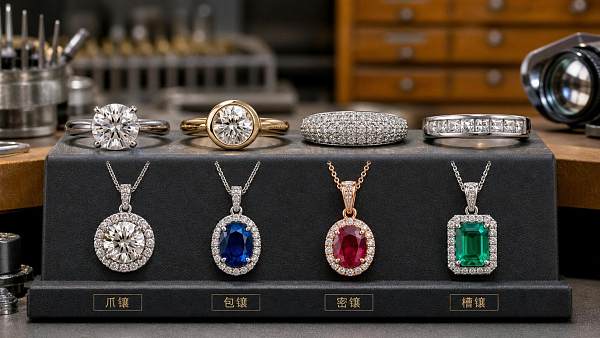
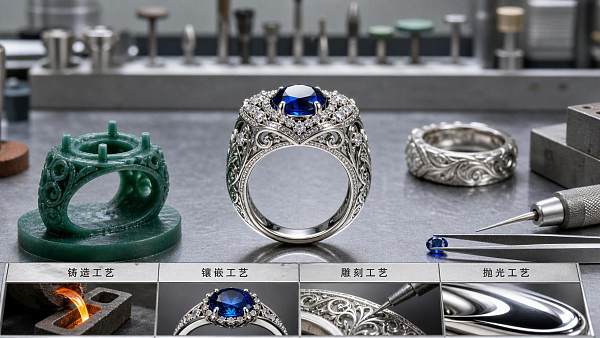
- craftsmanship, especially setting complexity and finishing
- brand position, design exclusivity, and presentation standards
- commercial variables such as MOQ, yield loss, lead time, and compliance paperwork
That last point is where many non-specialist buyers get caught. A quotation can look competitive until you ask for matched stones, custom sizing ratios, tamper-evident packaging, assay documentation, and replacement support for missing stones. Then the “cheap” supplier stops being cheap.
Check the metal spec before you compare quotes
Never compare jewelry pricing without a metal specification sheet. “18K gold necklace” is not enough for procurement. You need to know whether the quote is based on yellow, white, or rose alloy, the target finished weight, the tolerance range, and whether plating is involved.
White gold is a common trap. Some suppliers quote lower because the rhodium finishing is light, inconsistent, or not included in any maintenance expectation. The piece may still pass first inspection, but visual aging in a retail environment can be faster than expected. For silver-based fine jewelry, the same logic applies to plating thickness and wear performance. If the item is intended for repeated try-on in a store setting, ask directly about surface durability and service expectations. If the answer is vague, assume future complaints.
Also check hallmarking and metal fineness requirements for the destination market. Rules differ by country, and import, sale, or labeling obligations may apply. Do not rely on a generic “export standard” claim. Market-specific verification is safer, especially for private-label programs.
Gemstones are where the spreadsheet gets deceptive
A procurement team looking at unit price alone can miss the real issue: gemstone quality is not a single variable. With diamonds, buyers usually know the 4Cs, but in commercial buying the problem is often consistency, not one isolated stone. A parcel of melee diamonds with poor matching can cheapen an entire collection even if the average grade sounds acceptable on paper.
For colored stones, judgment gets harder. Hue, tone, saturation, clarity, cut, origin claims, and treatment status all affect price. Treatments such as heating, fracture filling, dyeing, irradiation, or diffusion can materially change value and care requirements depending on stone type. Not every treatment is unacceptable, but undisclosed treatment is a sourcing risk. Ask for disclosure in writing, and where relevant, ask whether the treatment is standard industry practice for that stone category.
Origin claims deserve extra caution. Stones described as “Burmese,” “Kashmir,” or “Colombian” often command higher prices, but those claims should not be treated as commercial fact without supporting documentation from a recognized gemological laboratory where applicable. If the origin premium is significant and the supplier cannot document it, remove that premium from your value calculation.
Craftsmanship is often the hidden gap between samples and repeat orders
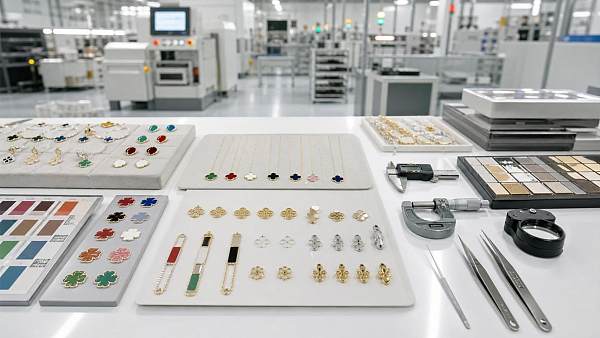
This is where experienced buyers spend time. Fine jewelry cost is heavily affected by labor, but labor value is uneven. Some workshops charge more because they genuinely control stone setting, symmetry, solder quality, clasp performance, polish consistency, and microscopic finishing. Others charge more because they know the buyer will focus on appearance under showroom lighting and not inspect structural details.
Ask for close-up production images or pre-shipment QC standards for prongs, pavé alignment, link movement, clasp closure, and underside finishing. In pieces with small stones, weak setting quality is one of the most expensive post-sale problems because repair handling costs quickly exceed the original unit savings.
A good working rule: if the design has intricate pavé, invisible setting, articulated sections, or unusually thin structures, do not approve based on renderings alone. Request a physical sample and a wear check. The quote may be acceptable, but the production repeatability may not be.
Certification matters, but only if it matches the risk
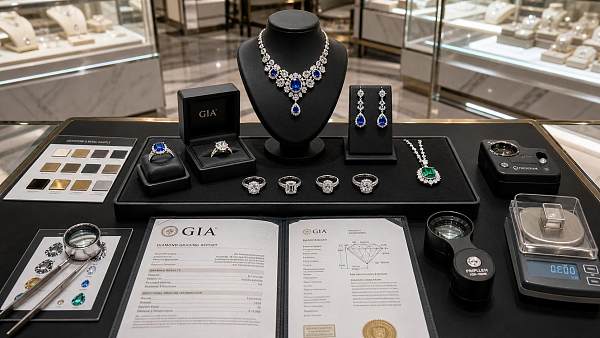
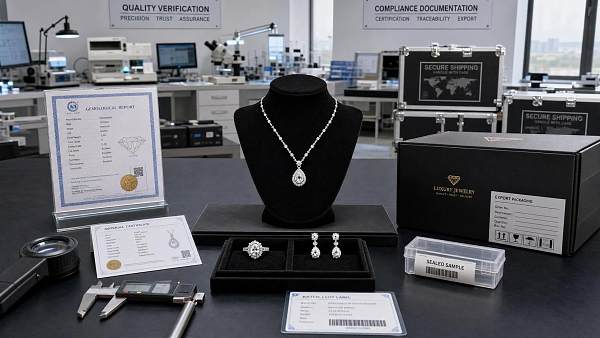
Not every item in a commercial jewelry program needs the same documentation. A high-value solitaire program, investor-grade stone purchase, or premium bridal line usually justifies stronger third-party verification. Fashion-adjacent fine jewelry with small accent stones may not need individual reports on each unit, but it still needs clear material disclosure and quality control records.
The useful question is whether documentation supports the specific buying risk. If you are paying a premium for a diamond grade, colored stone origin, untreated status, or precious metal claim, paperwork becomes part of value. If you are not paying for those distinctions, do not let unnecessary certificates inflate cost without commercial benefit.
When certificates are provided, verify the issuing lab, report number, and item traceability. The market recognizes different laboratories differently, and equivalence should not be assumed without review. If a supplier uses in-house grading language that sounds close to formal gemological grading, treat that as marketing unless independently supported.
Brand premium is real, but do not confuse it with material value
In luxury accessories, part of the price can absolutely come from design authorship, heritage, exclusivity, packaging, and retail desirability. That does not make it fake value. It just means you need to separate resale or market-facing value from intrinsic bill-of-material value.
For procurement, the decision changes with channel. If you are sourcing for a branded boutique, a concept store, or a VIP gifting environment where presentation and name recognition drive conversion, brand premium may be justified. If you are building a private-label range, you need to know exactly how much of the competing benchmark price comes from branding rather than workmanship or material quality. Otherwise you will chase the wrong spec.
One practical method is to split evaluation into two columns: tangible quality and commercial positioning. Keep them separate until the last stage of vendor selection.
Do not ignore sourcing friction costs
A jewelry quote that looks competitive ex-works can become expensive after you factor in stone breakage allowance, rework rate, missed delivery windows, customs documentation gaps, or short shipment replacement delays. This matters more in fine jewelry than many buyers expect because the unit value is high and the tolerance for defects is low.
- Ask what defect rate the supplier considers acceptable.
- Confirm who absorbs loss if assay, stone count, or finish quality fails agreed standards.
- Check replenishment lead time for missing sizes or damaged units.
- Review whether spare stones, spare parts, or repair service are available.
- Clarify insurance responsibility during shipment, especially for higher-value consignments.
These are not side issues. They directly affect true acquisition cost.
A quick buyer’s checklist before you approve the order
- Match every quote to a written spec: metal purity, weight target, stone details, finish, size ratio, packaging, and labeling.
- Ask whether gemstone treatments are disclosed in writing and whether any origin claims are supported.
- Review sample quality under magnification, not only in staged photos.
- Check whether the supplier has a realistic process for consistent stone matching in repeat production.
- Separate material value from brand or presentation premium.
- Price in after-sales handling, replacement terms, and delivery risk before comparing vendors.
- Verify destination-market marking, declaration, and documentation requirements with current local guidance when necessary, especially where legal obligations may vary.【待核实】
A reliable fine jewelry price guide should help you say no with confidence, not just negotiate a lower number. In practice, good buying decisions come from knowing which premium protects quality and which premium only decorates the quotation. When the metal spec is clear, stone quality is disclosed, craftsmanship is visible, and service terms are workable, you are much closer to real value.
For procurement teams, that is the standard worth using: not the cheapest piece, not the most impressive sample, but the offer that still makes sense after inspection, documentation review, repeat-order reality, and market fit are all on the table.
Search News
Hot Articles
Popular Tags
Need ExpertConsultation?
Connect with our specialized leisureengineering team for procurementstrategies.
Recommended News
 Oct 27, 2026Luxury Retail Merchandising: What Sets It Apart From Mass-Market Retail?Discover how luxury retail merchandising differs from mass-market retail, with curated displays, refined spaces, and personalized service that elevate perceived value and inspire purchases.● Luxury Retail Analyst
 Oct 12, 2026How to Choose Designer Eyewear That Fits Your Store’s Customer ProfileDesigner eyewear buying guide for retailers: match frames, price points, brand appeal, fit, and supplier support to your store’s customer profile for stronger sales.● Luxury Retail Analyst
 Oct 07, 2026Thermal Diamond Testers: How They Work and When They Can Misidentify StonesThermal diamond tester guide: learn how it works, spot false positives from moissanite, and choose reliable verification methods for jewelry trade and retail.● Luxury Retail Analyst
 Oct 02, 2026Diamond Tester Wholesale: How to Vet Accuracy, Calibration, and MOQ Before OrderingDiamond tester wholesale guide: verify accuracy, calibration records, supplier quality controls, and MOQ terms before ordering. Source reliable testers with confidence.● Luxury Retail Analyst
 Sep 09, 2026Wholesale Coral Earrings: How Buyers Can Assess Quality, Treatments, and Supply RiskCoral jewelry earrings wholesale guide for buyers: assess quality, treatments, secure settings, documentation, and supply risks before ordering.● Luxury Retail Analyst
 Sep 01, 2026How to Choose a Jewelry Laser Engraving Machine Manufacturer for Custom ProductionChoose a jewelry laser engraving machine manufacturer with proven sample testing, precision fixtures, workflow-ready software, and reliable support for custom production.● Luxury Retail Analyst
 Aug 27, 2026Evaluating Luxury Retail Accessories Suppliers: Quality, Lead Times, and Brand FitLuxury retail accessories supplier selection made clearer: assess quality, lead times, compliance, costs, and brand fit to protect premium launches and margins.● Luxury Retail Analyst
 Jul 29, 2026Fine Jewelry Price Guide: What Affects Cost and How to Judge Real ValueFine jewelry price guide for buyers: learn what drives cost in metals, gemstones, craftsmanship, certification, and branding so you can judge real value, reduce sourcing risk, and buy with confidence.● Luxury Retail Analyst
 Jul 14, 2026What to Ask an Enamel Jewelry Manufacturer Before Sampling and Mass ProductionEnamel jewelry manufacturer selection starts with the right questions. Learn what to ask about materials, color matching, MOQ, QC, compliance, and lead times before sampling and mass production.● Luxury Retail Analyst
 Jul 12, 2026Surgical Steel Belly Rings vs Titanium: Material Differences, Safety, and CostSurgical steel belly rings vs titanium: compare safety, nickel exposure, comfort, durability, and cost to choose the best option for sensitive skin or budget-friendly style.● Luxury Retail Analyst
 Jul 12, 2026Natural Coral Jewelry Guide: How to Identify Real Coral, Treatments, and QualityNatural coral jewelry guide covering how to identify real coral, spot treatments, assess quality, and buy with confidence. Learn the key signs before you choose.● Luxury Retail Analyst
 Jul 11, 2026Braided Leather Bracelets OEM: Material, Clasp, and MOQ Factors Before SamplingBraided leather bracelets OEM guide covering material grades, clasp options, and MOQ factors before sampling. Learn how to reduce sourcing risk, control cost, and choose the right supplier.● Luxury Retail Analyst
 Jul 09, 2026Jewelry Craftsmanship Gemstone Setting Methods Explained: Prong, Bezel, Pave, and MoreJewelry craftsmanship gemstone setting explained clearly: compare prong, bezel, pavé, channel, and more to choose secure, beautiful, and commercially smart jewelry designs.● Luxury Retail Analyst
 Jul 06, 2026Photo Locket Necklace Manufacturer Selection Guide: Materials, MOQ, and Custom OptionsPhoto locket necklace manufacturer selection guide covering materials, MOQ, custom options, compliance, and quality checks to help buyers source smarter and build stronger jewelry lines.● Luxury Retail Analyst
 Jul 05, 2026What to Check When Comparing a Sterling Silver Clasp ManufacturerChoosing a sterling silver clasp manufacturer? Learn what to check first: 925 silver claims, finish quality, testing, compliance, lead times, and hidden sourcing costs.● Luxury Retail Analyst
 Jul 02, 2026Jewelry Craftsmanship Techniques Explained: Casting, Stone Setting, Engraving, and PolishingJewelry craftsmanship techniques explained: discover how casting, stone setting, engraving, and polishing shape quality, durability, and sourcing confidence.● Luxury Retail Analyst
 Jul 01, 2026Lost Wax Casting Machines Explained: Types, Capacity, and Metal CompatibilityLost wax casting machines explained: compare types, real capacity, and metal compatibility to choose the right system for precision casting, higher quality, and smarter sourcing.● Luxury Retail Analyst
 Jun 29, 2026How to Evaluate a Luxury Accessories Online Store Before You BuyLuxury accessories online store buying guide: learn how to verify authenticity, compare policies, check reviews, and avoid costly mistakes before you place an order.● Luxury Retail Analyst
 Jun 22, 2026Matching Couple Rings: Popular Materials, Fit Differences, and How to ChooseMatching couple rings guide: compare popular materials, fit differences, comfort, durability, and resizing options to choose a stylish pair that truly lasts.● Luxury Retail Analyst
 Jun 19, 2026How to Build a Fashion Accessories Catalog That Improves Product Discovery and SalesFashion accessories catalog strategies that improve product discovery, filtering, and conversions. Learn how to structure pages, categories, and data to drive more qualified sales.● Luxury Retail Analyst
 Jun 19, 2026How to Choose Luxury Accessories for Women by Material, Style, and Price PointLuxury accessories for women: learn how to choose the right pieces by material, style, and price point for better value, timeless appeal, and smarter buying decisions.● Luxury Retail Analyst
 Jun 18, 2026Stainless Steel Rings Bulk: 304 vs 316L, Finishes, and Custom Order FactorsStainless steel rings bulk guide: compare 304 vs 316L, explore finish options, and learn key custom order factors to reduce sourcing risk and improve product value.● Luxury Retail Analyst
 Jun 18, 2026Body Piercing Jewelry Bulk Buying Guide: Materials, Sizes, and MOQ QuestionsBody piercing jewelry bulk buying guide covering safe materials, size checks, MOQ strategy, supplier screening, and compliance tips to reduce risk and source with confidence.● Luxury Retail Analyst
 Jun 18, 2026How to Evaluate a Luxury Jewelry Exporter for Quality, Compliance, and DeliveryLuxury jewelry exporter evaluation starts with more than design. Learn how to verify quality, compliance, and delivery control to source premium jewelry with less risk.● Luxury Retail Analyst