How to Choose Custom Luxury Jewelry for Private Label: Materials, MOQ, and Lead Time
Why does custom luxury jewelry sourcing need a stricter checklist?
Choosing custom luxury jewelry for a private label is rarely a simple design decision.
The real challenge sits between appearance, cost control, compliance, and delivery reliability.
A polished sample can look perfect, yet still fail on plating durability, gemstone consistency, or production timing.
That is why custom luxury jewelry sourcing usually starts with commercial questions, not only creative ones.
In practice, three issues shape most decisions: materials, MOQ, and lead time.
These factors influence unit cost, launch risk, inventory pressure, and long-term brand positioning.
For businesses working across premium retail, hospitality gifting, or branded accessories, the stakes are even higher.
Global Commercial Trade, or GCT, often frames this category through a broader sourcing lens.
Luxury accessories are part of a commercial experience ecosystem, where quality, trust, and supply chain discipline must align.
So the better question is not just how to buy custom luxury jewelry.
It is how to buy it without creating avoidable cost, delay, or quality disputes later.
What materials make sense for custom luxury jewelry?
Material choice sets the tone for price, durability, and perceived brand value.
The right answer depends on target market, wearing frequency, and expected margin.
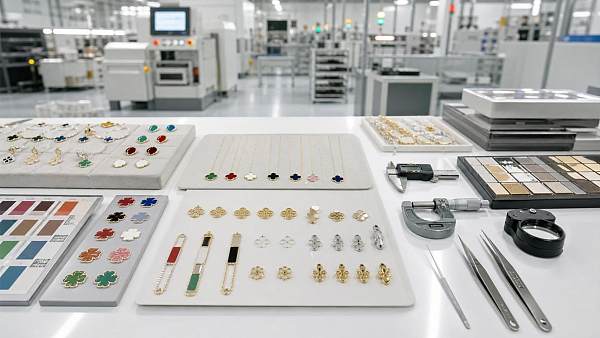
For custom luxury jewelry, common base options include sterling silver, brass, stainless steel, and solid gold.
Sterling silver supports a premium image and works well for fine detailing.
Brass is flexible for fashion-led designs, but plating quality becomes critical.
Stainless steel offers strength and stable cost, though it can limit very intricate forms.
Solid gold carries the strongest luxury signal, but MOQ and budget pressure rise quickly.
Plating also deserves close review.
Gold vermeil, micron plating, rhodium finishing, and anti-tarnish coating can change the lifespan of the same design.
Need to compare options quickly? This table helps organize the decision.
Gemstones add another layer.
Natural stones strengthen exclusivity, while lab-grown stones improve consistency and budget predictability.
More often, the most practical route is mixed positioning.
Use premium core materials for hero pieces, then build supporting SKUs with controlled-cost alternatives.
How should MOQ be judged without overbuying?
MOQ looks simple on paper, but it usually hides tooling, sourcing, and labor assumptions.
A low MOQ is not always cheaper in the full sourcing cycle.
Some suppliers offer a small opening quantity, then recover cost through higher unit pricing or reduced customization.
Others quote a higher MOQ because molds, stone matching, or hand-finishing require production efficiency.
The better way to judge custom luxury jewelry MOQ is to separate three questions.
- Is the MOQ based on one design, one metal color, or one full style family?
- Does the quantity include packaging, logo application, and certification needs?
- Will repeat orders keep the same price, or only the first order qualifies?
This matters because MOQ affects working capital more than many teams expect.
If the assortment is wide, excess stock can quietly erase the margin gained from lower piece cost.
A useful benchmark is to ask whether the supplier can support a pilot run.
A pilot run may cost more per piece, but it reduces risk before a larger launch.
In actual sourcing projects, flexible MOQ often signals stronger private label experience.
Suppliers serving premium brands usually understand phased launches, seasonal edits, and replenishment planning.
What lead time is realistic for custom luxury jewelry?
Lead time should never be treated as one single number.
For custom luxury jewelry, the timeline often includes design confirmation, sampling, revision, raw material preparation, production, quality control, and shipping.
A supplier promising very short lead time may be skipping an important control step.
That is especially risky for gemstone setting, logo placement, plating thickness, and packaging accuracy.
A more realistic approach is to ask for stage-by-stage timing.
The most common delays come from changes after sample approval.
A new clasp, different stone size, or revised logo can restart part of the process.
That is why clear technical packs matter.
GCT often emphasizes supply chain reliability because premium sourcing depends on predictable execution, not optimistic promises.
How can you compare suppliers beyond the sample itself?
A beautiful sample proves design capability, but not always bulk consistency.
For custom luxury jewelry, supplier evaluation should combine product evidence and operational evidence.
Useful questions include whether production is in-house, which processes are outsourced, and how defects are recorded.
It also helps to ask for past work in adjacent sectors.
A supplier serving luxury retail, hotel boutiques, or branded gifting programs may understand premium presentation requirements better.
During review, pay attention to these checkpoints.
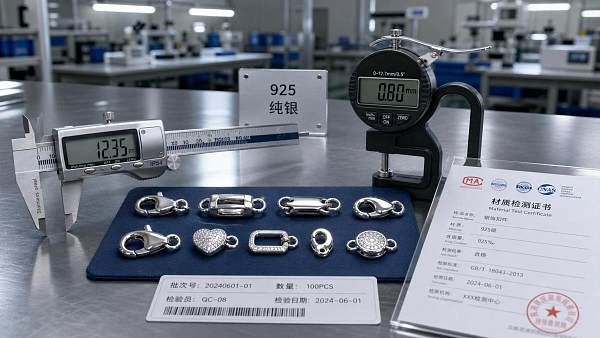
- Metal purity records and plating specifications are documented clearly.
- Stone sourcing can be traced by grade, size, and replacement standard.
- QC reports cover scratches, clasp tension, symmetry, and finish consistency.
- Packaging capability matches the brand’s premium positioning.
- Communication remains precise during design revision and order updates.
This is where a data-backed sourcing framework becomes useful.
GCT’s editorial approach highlights not only product aesthetics, but also compliance, sourcing depth, and commercial credibility.
That perspective is valuable because luxury accessories live at the intersection of branding and operations.
Where do custom luxury jewelry projects usually go wrong?
Most sourcing problems are not dramatic at the start.
They begin with small assumptions that nobody writes down.
One frequent mistake is approving a sample without confirming plating thickness or wear expectations.
Another is accepting MOQ terms without checking whether mixed sizes, colors, or variants count together.
Lead time errors also appear when shipping time is discussed, but sampling and rework time is ignored.
More subtle risks include hidden subcontracting and inconsistent stone matching between sample and bulk.
The safest response is to document standards before deposit payment.
- Define acceptable color variation for metal and stones.
- Confirm packaging materials, insert cards, and barcode placement.
- Set a defect tolerance and replacement procedure.
- Lock approval files, dimensions, and logo artwork version.
These steps may feel detailed, yet they usually save more time than chasing corrections later.
What is the smartest next step before placing a bulk order?
The strongest custom luxury jewelry decisions come from comparing offers in the same structure.
That means reviewing material specs, MOQ logic, and lead time stages side by side.
It also helps to score suppliers on consistency, not only price.
If one quote is cheaper but unclear on plating, gemstone grading, or rework policy, the real cost may be higher.
A practical next step is to build a short sourcing sheet.
List target materials, required finish, pilot quantity, bulk quantity, sample deadline, and final delivery window.
Then request each supplier to answer against that same format.
This turns custom luxury jewelry sourcing into a controlled comparison instead of a guess based on appearance.
For businesses navigating broader premium sourcing categories, GCT’s value lies in this kind of disciplined decision support.
Not because it simplifies luxury buying, but because it helps clarify which details truly shape cost, risk, and delivery.
When the brief is clear, the comparison is structured, and the supplier is tested beyond the sample, bulk ordering becomes far more predictable.
Search News
Hot Articles
Popular Tags
Need ExpertConsultation?
Connect with our specialized leisureengineering team for procurementstrategies.
Recommended News
 Oct 27, 2026Luxury Retail Merchandising: What Sets It Apart From Mass-Market Retail?Discover how luxury retail merchandising differs from mass-market retail, with curated displays, refined spaces, and personalized service that elevate perceived value and inspire purchases.● Luxury Retail Analyst
 Oct 12, 2026How to Choose Designer Eyewear That Fits Your Store’s Customer ProfileDesigner eyewear buying guide for retailers: match frames, price points, brand appeal, fit, and supplier support to your store’s customer profile for stronger sales.● Luxury Retail Analyst
 Oct 07, 2026Thermal Diamond Testers: How They Work and When They Can Misidentify StonesThermal diamond tester guide: learn how it works, spot false positives from moissanite, and choose reliable verification methods for jewelry trade and retail.● Luxury Retail Analyst
 Oct 02, 2026Diamond Tester Wholesale: How to Vet Accuracy, Calibration, and MOQ Before OrderingDiamond tester wholesale guide: verify accuracy, calibration records, supplier quality controls, and MOQ terms before ordering. Source reliable testers with confidence.● Luxury Retail Analyst
 Sep 09, 2026Wholesale Coral Earrings: How Buyers Can Assess Quality, Treatments, and Supply RiskCoral jewelry earrings wholesale guide for buyers: assess quality, treatments, secure settings, documentation, and supply risks before ordering.● Luxury Retail Analyst
 Sep 01, 2026How to Choose a Jewelry Laser Engraving Machine Manufacturer for Custom ProductionChoose a jewelry laser engraving machine manufacturer with proven sample testing, precision fixtures, workflow-ready software, and reliable support for custom production.● Luxury Retail Analyst
 Aug 27, 2026Evaluating Luxury Retail Accessories Suppliers: Quality, Lead Times, and Brand FitLuxury retail accessories supplier selection made clearer: assess quality, lead times, compliance, costs, and brand fit to protect premium launches and margins.● Luxury Retail Analyst
 Jul 29, 2026Fine Jewelry Price Guide: What Affects Cost and How to Judge Real ValueFine jewelry price guide for buyers: learn what drives cost in metals, gemstones, craftsmanship, certification, and branding so you can judge real value, reduce sourcing risk, and buy with confidence.● Luxury Retail Analyst
 Jul 14, 2026What to Ask an Enamel Jewelry Manufacturer Before Sampling and Mass ProductionEnamel jewelry manufacturer selection starts with the right questions. Learn what to ask about materials, color matching, MOQ, QC, compliance, and lead times before sampling and mass production.● Luxury Retail Analyst
 Jul 12, 2026Surgical Steel Belly Rings vs Titanium: Material Differences, Safety, and CostSurgical steel belly rings vs titanium: compare safety, nickel exposure, comfort, durability, and cost to choose the best option for sensitive skin or budget-friendly style.● Luxury Retail Analyst
 Jul 12, 2026Natural Coral Jewelry Guide: How to Identify Real Coral, Treatments, and QualityNatural coral jewelry guide covering how to identify real coral, spot treatments, assess quality, and buy with confidence. Learn the key signs before you choose.● Luxury Retail Analyst
 Jul 11, 2026Braided Leather Bracelets OEM: Material, Clasp, and MOQ Factors Before SamplingBraided leather bracelets OEM guide covering material grades, clasp options, and MOQ factors before sampling. Learn how to reduce sourcing risk, control cost, and choose the right supplier.● Luxury Retail Analyst
 Jul 09, 2026Jewelry Craftsmanship Gemstone Setting Methods Explained: Prong, Bezel, Pave, and MoreJewelry craftsmanship gemstone setting explained clearly: compare prong, bezel, pavé, channel, and more to choose secure, beautiful, and commercially smart jewelry designs.● Luxury Retail Analyst
 Jul 06, 2026Photo Locket Necklace Manufacturer Selection Guide: Materials, MOQ, and Custom OptionsPhoto locket necklace manufacturer selection guide covering materials, MOQ, custom options, compliance, and quality checks to help buyers source smarter and build stronger jewelry lines.● Luxury Retail Analyst
 Jul 05, 2026What to Check When Comparing a Sterling Silver Clasp ManufacturerChoosing a sterling silver clasp manufacturer? Learn what to check first: 925 silver claims, finish quality, testing, compliance, lead times, and hidden sourcing costs.● Luxury Retail Analyst
 Jul 02, 2026Jewelry Craftsmanship Techniques Explained: Casting, Stone Setting, Engraving, and PolishingJewelry craftsmanship techniques explained: discover how casting, stone setting, engraving, and polishing shape quality, durability, and sourcing confidence.● Luxury Retail Analyst
 Jul 01, 2026Lost Wax Casting Machines Explained: Types, Capacity, and Metal CompatibilityLost wax casting machines explained: compare types, real capacity, and metal compatibility to choose the right system for precision casting, higher quality, and smarter sourcing.● Luxury Retail Analyst
 Jun 29, 2026How to Evaluate a Luxury Accessories Online Store Before You BuyLuxury accessories online store buying guide: learn how to verify authenticity, compare policies, check reviews, and avoid costly mistakes before you place an order.● Luxury Retail Analyst
 Jun 22, 2026Matching Couple Rings: Popular Materials, Fit Differences, and How to ChooseMatching couple rings guide: compare popular materials, fit differences, comfort, durability, and resizing options to choose a stylish pair that truly lasts.● Luxury Retail Analyst
 Jun 19, 2026How to Build a Fashion Accessories Catalog That Improves Product Discovery and SalesFashion accessories catalog strategies that improve product discovery, filtering, and conversions. Learn how to structure pages, categories, and data to drive more qualified sales.● Luxury Retail Analyst
 Jun 19, 2026How to Choose Luxury Accessories for Women by Material, Style, and Price PointLuxury accessories for women: learn how to choose the right pieces by material, style, and price point for better value, timeless appeal, and smarter buying decisions.● Luxury Retail Analyst
 Jun 18, 2026Stainless Steel Rings Bulk: 304 vs 316L, Finishes, and Custom Order FactorsStainless steel rings bulk guide: compare 304 vs 316L, explore finish options, and learn key custom order factors to reduce sourcing risk and improve product value.● Luxury Retail Analyst
 Jun 18, 2026Body Piercing Jewelry Bulk Buying Guide: Materials, Sizes, and MOQ QuestionsBody piercing jewelry bulk buying guide covering safe materials, size checks, MOQ strategy, supplier screening, and compliance tips to reduce risk and source with confidence.● Luxury Retail Analyst
 Jun 18, 2026How to Evaluate a Luxury Jewelry Exporter for Quality, Compliance, and DeliveryLuxury jewelry exporter evaluation starts with more than design. Learn how to verify quality, compliance, and delivery control to source premium jewelry with less risk.● Luxury Retail Analyst