Body Piercing Jewelry Bulk Buying Guide: Materials, Sizes, and MOQ Questions
Why does body piercing jewelry bulk sourcing need a tighter buying standard?
Buying body piercing jewelry bulk is rarely a simple price comparison. Small differences in alloy content, threading accuracy, and polishing quality can affect returns, reputation, and compliance.
That is why experienced sourcing teams usually review material certificates, dimensional consistency, packaging control, and MOQ structure together, not as separate issues.
In jewelry and luxury accessory supply chains, the commercial risk sits in the details. A low unit price means little if one production lot creates skin sensitivity claims.
This is also where a research-led platform matters. GCT focuses on data-backed sourcing decisions across commercial categories where design, safety, and supply reliability must work together.
For body piercing jewelry bulk orders, that mindset helps turn a wholesale inquiry into a controlled procurement process with clearer benchmarks and fewer surprises.
Which materials are usually safest for body piercing jewelry bulk orders?
This is often the first real screening question. Material claims on listings can look similar, but actual suitability depends on composition, finish quality, and supporting documentation.
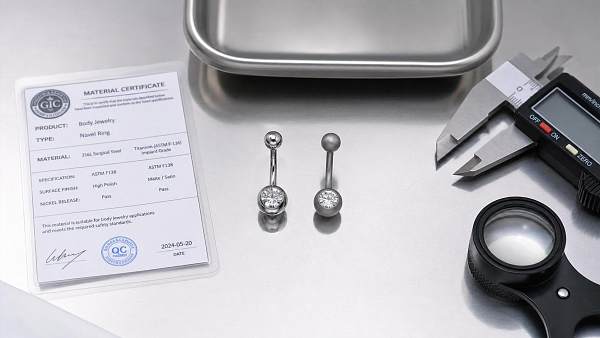
For most body piercing jewelry bulk programs, implant-grade titanium is considered the safest premium option. It is lightweight, corrosion resistant, and widely preferred for sensitive skin.
316L surgical stainless steel remains common in wholesale body piercing jewelry because it balances durability, appearance, and cost. Still, nickel sensitivity concerns need careful review.
Solid gold can work for higher-end collections, especially in curated retail environments. The key is confirming alloy quality, karat consistency, and whether posts or wearable areas contain additives.
Acrylic, plated brass, and low-cost mixed metals may fit fashion-driven lines, but they are riskier for fresh piercings or long wear. They also create more variation across batches.
A practical comparison table helps narrow the shortlist before sampling.
In practice, the safer path is to match material choice to end use. Jewelry meant for healed piercings can follow a different standard than jewelry intended for first wear.
How should sizes be checked before placing a large wholesale order?
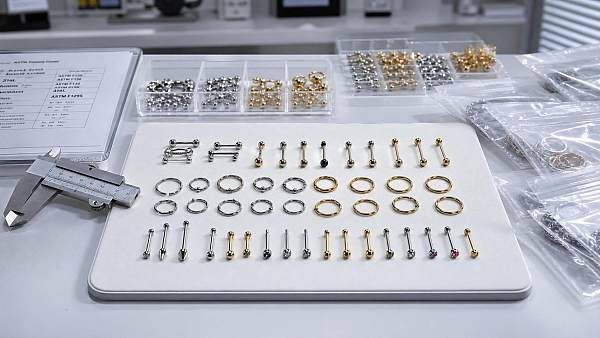
Size issues create more complaints than many buyers expect. In body piercing jewelry bulk purchasing, gauge, wearable length, ball size, thread pattern, and internal diameter all matter.
The more common mistake is assuming the supplier’s size chart matches the target market’s naming habits. Regional buying language can differ, even when measurements look familiar.
Sample approval should go beyond visual review. It is better to measure several pieces from the same sample set and record tolerance expectations in writing.
For barbells, labrets, rings, and clickers, consistency matters more than having many nominal sizes. A narrow, dependable range usually performs better than a broad, unstable assortment.
Useful checkpoints often include:
- Gauge measured in millimeters, not label only
- Post length tolerance across one batch
- Thread fit between shafts and balls
- Hinge closure stability for clicker rings
- Stone setting security after repeated opening
When wholesale body piercing jewelry is intended for chain retail or specialty resale, exact size records also support cleaner replenishment and fewer SKU mix-ups later.
MOQ questions: what is a reasonable minimum, and when is low MOQ not really cheaper?
MOQ is one of the most searched questions in body piercing jewelry bulk buying, but the answer depends on product complexity and customization level.
For standard stainless steel items, MOQ may be relatively low. Basic designs with shared components are easier for factories to group into existing production schedules.
Custom colors, logo cards, branded pouches, or mixed stone settings usually increase MOQ because they add setup time, material planning, and packaging labor.
A low MOQ can also hide higher costs. The unit price may rise sharply, freight may become inefficient, and reordering small runs can create uneven stock positions.
A more useful way to evaluate MOQ is to compare the full order structure, not the number alone.
In actual sourcing, it often helps to request two quotations. One uses stock designs. The other includes custom packaging or private label options for comparison.
What separates a reliable supplier from a risky one in wholesale body piercing jewelry?
Catalog variety is not enough. Reliable body piercing jewelry bulk suppliers usually show stronger control in three areas: documentation, repeatability, and communication speed.
Documentation means more than a simple declaration. Material test reports, plating details, REACH-related information, and packaging specifications should be available when relevant.
Repeatability is often visible in sampling. If finish, thread feel, and stone placement vary across a small sample set, larger production risk is already visible.
Communication speed also matters because it reflects process maturity. Clear answers on lead time, substitution rules, and defect handling reduce friction after purchase orders are issued.
Some warning signs appear early:
- Material grade changes between quotation and sample
- Unclear answers on nickel, plating, or coating
- No written tolerance or inspection standard
- Large MOQ pressure before sample confirmation
- Frequent style substitutions without approval
GCT’s editorial approach is useful here because commercial sourcing decisions benefit from verified, cross-category discipline. Jewelry may be emotional in design, but buying decisions still depend on measurable control points.
How do lead time, compliance, and packaging affect the real landed cost?
The visible unit price is only one part of total cost. With body piercing jewelry bulk orders, landed cost changes when lead time slips, packaging is incomplete, or compliance paperwork arrives late.
A delayed shipment can force split freight. A missing barcode or retail card can trigger relabeling. A weak seal bag can increase damage or contamination risk in storage.
For higher-volume programs, packaging should be reviewed as a functional cost item. Unit packs, assortment labels, inner carton counts, and master carton markings influence warehouse efficiency.
Compliance review should also start early. Depending on destination market and product claims, buyers may need material declarations, testing references, or traceable production records.
A simple pre-order checklist usually prevents expensive corrections later:
- Confirm material grade by item category
- Lock final size sheet with tolerances
- Approve packaging artwork and pack count
- Set inspection method before mass production
- Define claim handling for defects or shortages
When these elements are confirmed together, wholesale body piercing jewelry sourcing becomes easier to scale and easier to audit.
What is the best next step before committing to a body piercing jewelry bulk supplier?
Start by narrowing the assortment. Separate everyday volume items from premium or custom pieces, because those categories often need different material and MOQ strategies.
Then build one comparison sheet covering material, size tolerance, finishing, MOQ, packaging, lead time, and defect policy. This makes quotations easier to judge on equal terms.
For body piercing jewelry bulk decisions, the strongest buying position usually comes from verified samples, documented standards, and realistic reorder planning.
If the goal is stable long-term supply, focus less on the cheapest opening quote and more on whether the supplier can repeat the same result across future batches.
That is the practical value of a disciplined sourcing process. It reduces avoidable risk, supports better stock planning, and helps commercial jewelry programs grow on firmer ground.
Search News
Hot Articles
- Outdoor RidesWhat Drives Animatronic Dinosaur Manufacturer Prices for Theme Park Projects?Sep 18, 2026
- Stationery & UniformsHow to Source Wholesale Packing Tape Without Compromising Carton Seal StrengthSep 17, 2026
- Smart Campus TechHow to Source Educational Furniture Worldwide for Safe, Flexible Learning SpacesSep 16, 2026
Popular Tags
Need ExpertConsultation?
Connect with our specialized leisureengineering team for procurementstrategies.
Recommended News
 Sep 09, 2026Wholesale Coral Earrings: How Buyers Can Assess Quality, Treatments, and Supply RiskCoral jewelry earrings wholesale guide for buyers: assess quality, treatments, secure settings, documentation, and supply risks before ordering.● Luxury Retail Analyst
 Sep 01, 2026How to Choose a Jewelry Laser Engraving Machine Manufacturer for Custom ProductionChoose a jewelry laser engraving machine manufacturer with proven sample testing, precision fixtures, workflow-ready software, and reliable support for custom production.● Luxury Retail Analyst
 Aug 27, 2026Evaluating Luxury Retail Accessories Suppliers: Quality, Lead Times, and Brand FitLuxury retail accessories supplier selection made clearer: assess quality, lead times, compliance, costs, and brand fit to protect premium launches and margins.● Luxury Retail Analyst
 Jul 29, 2026Fine Jewelry Price Guide: What Affects Cost and How to Judge Real ValueFine jewelry price guide for buyers: learn what drives cost in metals, gemstones, craftsmanship, certification, and branding so you can judge real value, reduce sourcing risk, and buy with confidence.● Luxury Retail Analyst
 Jul 14, 2026What to Ask an Enamel Jewelry Manufacturer Before Sampling and Mass ProductionEnamel jewelry manufacturer selection starts with the right questions. Learn what to ask about materials, color matching, MOQ, QC, compliance, and lead times before sampling and mass production.● Luxury Retail Analyst
 Jul 12, 2026Surgical Steel Belly Rings vs Titanium: Material Differences, Safety, and CostSurgical steel belly rings vs titanium: compare safety, nickel exposure, comfort, durability, and cost to choose the best option for sensitive skin or budget-friendly style.● Luxury Retail Analyst
 Jul 12, 2026Natural Coral Jewelry Guide: How to Identify Real Coral, Treatments, and QualityNatural coral jewelry guide covering how to identify real coral, spot treatments, assess quality, and buy with confidence. Learn the key signs before you choose.● Luxury Retail Analyst
 Jul 11, 2026Braided Leather Bracelets OEM: Material, Clasp, and MOQ Factors Before SamplingBraided leather bracelets OEM guide covering material grades, clasp options, and MOQ factors before sampling. Learn how to reduce sourcing risk, control cost, and choose the right supplier.● Luxury Retail Analyst
 Jul 09, 2026Jewelry Craftsmanship Gemstone Setting Methods Explained: Prong, Bezel, Pave, and MoreJewelry craftsmanship gemstone setting explained clearly: compare prong, bezel, pavé, channel, and more to choose secure, beautiful, and commercially smart jewelry designs.● Luxury Retail Analyst
 Jul 06, 2026Photo Locket Necklace Manufacturer Selection Guide: Materials, MOQ, and Custom OptionsPhoto locket necklace manufacturer selection guide covering materials, MOQ, custom options, compliance, and quality checks to help buyers source smarter and build stronger jewelry lines.● Luxury Retail Analyst
 Jul 05, 2026What to Check When Comparing a Sterling Silver Clasp ManufacturerChoosing a sterling silver clasp manufacturer? Learn what to check first: 925 silver claims, finish quality, testing, compliance, lead times, and hidden sourcing costs.● Luxury Retail Analyst
 Jul 02, 2026Jewelry Craftsmanship Techniques Explained: Casting, Stone Setting, Engraving, and PolishingJewelry craftsmanship techniques explained: discover how casting, stone setting, engraving, and polishing shape quality, durability, and sourcing confidence.● Luxury Retail Analyst
 Jul 01, 2026Lost Wax Casting Machines Explained: Types, Capacity, and Metal CompatibilityLost wax casting machines explained: compare types, real capacity, and metal compatibility to choose the right system for precision casting, higher quality, and smarter sourcing.● Luxury Retail Analyst
 Jun 29, 2026How to Evaluate a Luxury Accessories Online Store Before You BuyLuxury accessories online store buying guide: learn how to verify authenticity, compare policies, check reviews, and avoid costly mistakes before you place an order.● Luxury Retail Analyst
 Jun 22, 2026Matching Couple Rings: Popular Materials, Fit Differences, and How to ChooseMatching couple rings guide: compare popular materials, fit differences, comfort, durability, and resizing options to choose a stylish pair that truly lasts.● Luxury Retail Analyst
 Jun 19, 2026How to Build a Fashion Accessories Catalog That Improves Product Discovery and SalesFashion accessories catalog strategies that improve product discovery, filtering, and conversions. Learn how to structure pages, categories, and data to drive more qualified sales.● Luxury Retail Analyst
 Jun 19, 2026How to Choose Luxury Accessories for Women by Material, Style, and Price PointLuxury accessories for women: learn how to choose the right pieces by material, style, and price point for better value, timeless appeal, and smarter buying decisions.● Luxury Retail Analyst
 Jun 18, 2026Stainless Steel Rings Bulk: 304 vs 316L, Finishes, and Custom Order FactorsStainless steel rings bulk guide: compare 304 vs 316L, explore finish options, and learn key custom order factors to reduce sourcing risk and improve product value.● Luxury Retail Analyst
 Jun 18, 2026Body Piercing Jewelry Bulk Buying Guide: Materials, Sizes, and MOQ QuestionsBody piercing jewelry bulk buying guide covering safe materials, size checks, MOQ strategy, supplier screening, and compliance tips to reduce risk and source with confidence.● Luxury Retail Analyst
 Jun 18, 2026How to Evaluate a Luxury Jewelry Exporter for Quality, Compliance, and DeliveryLuxury jewelry exporter evaluation starts with more than design. Learn how to verify quality, compliance, and delivery control to source premium jewelry with less risk.● Luxury Retail Analyst
 Jun 17, 2026Iced Out Watches Wholesale: How to Compare MOQ, Stone Quality, and MarginsIced out watches wholesale guide: compare MOQ, stone quality, and real margins to choose reliable suppliers, reduce risk, and grow resale profits with smarter sourcing.● Luxury Retail Analyst
 Jun 15, 2026How to Evaluate an Amber Jewelry Manufacturer: Quality Grades, OEM Options, and Lead TimesAmber jewelry manufacturer selection starts with quality grades, OEM capability, and realistic lead times. Learn how to compare suppliers, reduce sourcing risk, and choose with confidence.● Luxury Retail Analyst
 Jun 14, 2026Stainless Steel Rings Bulk Buying Guide: Grades, Finishes, Sizes, and Supplier ChecksStainless steel rings bulk buying guide covering grades, finishes, sizing, and supplier checks to help you reduce returns, protect quality, and source with confidence.● Luxury Retail Analyst
 Jun 14, 2026How to Choose Custom Luxury Jewelry for Private Label: Materials, MOQ, and Lead TimeCustom luxury jewelry buying guide for private labels: compare materials, MOQ, and lead time to reduce sourcing risk, control costs, and choose reliable suppliers with confidence.● Luxury Retail Analyst