What to Check Before Buying Thick Gymnastic Mats Wholesale for Schools and Gyms
Start with the risk, not the unit price
When buying thick gymnastic mats wholesale for schools and gyms, the cheapest quote is rarely the cheapest outcome. A mat that tears early, shifts during use, absorbs sweat, or fails to provide the expected level of impact protection creates replacement costs, cleaning issues, and potential injury exposure. For procurement teams, the real job is to compare total use value: safety, service life, maintenance burden, and supplier reliability.
That means asking better questions before the purchase order goes out. Not abstract questions, but practical ones: What type of activity will happen on the mat? What is the foam construction? What documents can the supplier provide? Will the cover survive institutional use? Can the same specification be repeated across future orders? Those checks matter far more than a small difference in upfront pricing.
What thickness is actually appropriate for a school or gym?
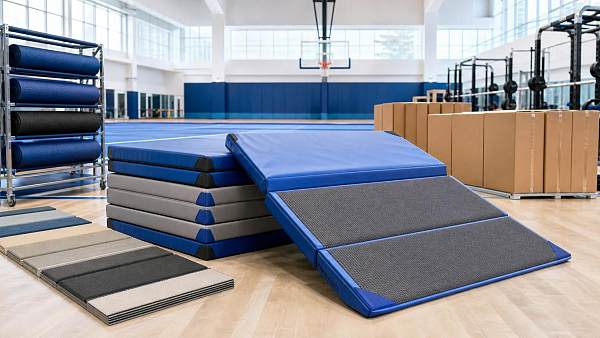
Thickness should be matched to use, not treated as a simple “more is better” spec. Thick mats are commonly considered for tumbling, landing drills, basic gymnastics instruction, physical education, and some fitness settings where users need more cushioning than a thin exercise mat can provide. But a mat that is too soft or too tall for the activity can also create balance issues.
For procurement, the important step is to group intended use cases before requesting quotes. Ask internal users to separate mats for landing support, floor exercise, stretching, preschool movement, martial arts crossover use, or wall padding. These categories often need different constructions even if they look similar in photos.
If a supplier only promotes “extra thick” without asking about application, that is not a strong sign. A capable vendor should want to know who will use the mats, what movements are involved, how often they will be moved, and whether the mats will be connected, stacked, or stored vertically.
Which material details tell you whether the mat will perform well?
This is where many wholesale buyers get trapped. Two mats can share the same dimensions and still behave very differently in use. The core issue is not thickness alone. It is the combination of foam type, foam density, firmness, recovery, and cover construction.
Ask for these details in writing:
- Foam type used in the core
- Whether the mat uses single-layer or multi-layer construction
- Density or firmness information if the supplier provides it
- Cover material and thickness
- Seam construction and zipper placement
- Bottom surface material, especially if anti-slip performance matters
A thicker mat with low-quality foam may bottom out faster than a slightly thinner mat with better internal support. Likewise, a durable core can still become a poor purchase if the outer cover cracks, delaminates, or splits at the handles and corners after heavy school use.
What safety documents should a buyer ask for before ordering?
Do not stop at a general statement that the product is “safe” or “tested.” Ask the supplier to show product-specific documentation tied to the exact mat construction being quoted. For institutional buying, that usually means test reports, material declarations where relevant, and clear product specifications that can be attached to the purchase file.
The exact document set depends on the destination market and the purchasing policy of the school group, gym operator, or distributor. Rather than asking vague questions, request a document pack that includes the product spec sheet, test references for the cover or foam where applicable, and carton or labeling details if those matter for receiving and inventory control.
The practical check is simple: make sure the documents match the quoted item, not just a similar product from the same factory. Color, cover material, thickness, core construction, and intended use should align. A generic certificate with no link to the actual item is weak support in a compliance review.
How do you judge cover durability before placing a bulk order?
The outer cover is where institutional wear shows up first. In schools, mats get dragged, folded, stacked, leaned against walls, and cleaned more aggressively than many suppliers expect. In gyms, repeated shoes, chalk, sweat, and equipment contact add another layer of stress.
Look closely at four areas: corner finishing, handle attachment if handles are included, zipper protection, and the underside. Weak stitching around stress points often appears long before the core has any real problem. If sample review is possible, bend the cover at corners and fold lines, press on stitched areas, and inspect whether the finish already shows whitening, surface cracking, or seam tension.
One more point that gets missed: cleaning chemicals. If the mats will be sanitized regularly, ask what cleaning methods the cover is designed to tolerate. A mat that looks fine on arrival may age quickly if the surface coating does not handle routine institutional cleaning.
Are hygiene and moisture resistance really a procurement issue?
Absolutely. For shared-use environments, hygiene is not just a maintenance concern; it affects replacement cycle and user acceptance. Covers that absorb moisture, trap dirt in stitching, or become hard to wipe clean tend to create complaints fast, especially in schools with high daily traffic.
Procurement should ask whether the cover is designed for easy surface cleaning, whether seams are exposed or protected, and how the mat should be dried and stored after use. If mats will be stored before they are fully dry, mold and odor become a real lifecycle cost. That is less dramatic than a safety failure, but it is often what triggers early replacement.
What should be included in a sample evaluation?
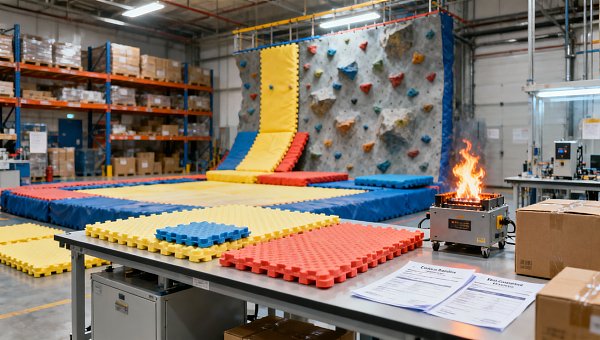
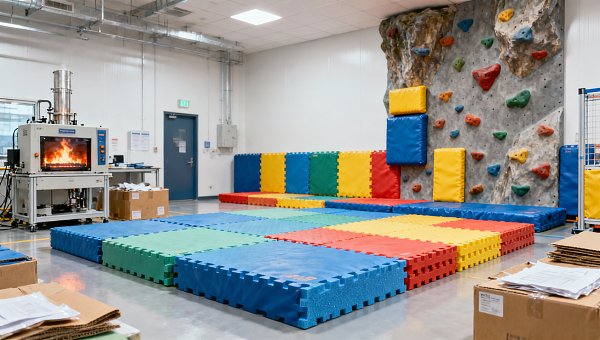
If the order volume is meaningful, skipping samples is a procurement mistake. A sample does not need to answer everything, but it should confirm that the quoted spec behaves as expected in real handling.
It also helps to involve the actual end users in the sample review. A PE department, gymnastics coach, or facility manager will often notice usability issues that do not appear on a specification sheet.
How can buyers compare wholesale quotes fairly?
Price comparisons fall apart when each supplier is quoting a different product under the same broad description. Before comparing numbers, standardize the request. Define the dimensions, thickness, fold style if any, cover material, color range, handles, fastening method, logo needs, packing method, and destination terms.
Then compare quotes on a landed-value basis, not just ex-factory or unit cost. For thick gymnastic mats wholesale, freight efficiency can shift the economics because bulky products consume space quickly. A mat that looks slightly cheaper per unit may become more expensive once packaging volume, pallet configuration, and container loading are factored in.
Also check whether the quote reflects the same warranty terms, spare batch consistency, and lead time. Procurement problems often begin when one supplier prices aggressively on the first order but cannot maintain the same specification or delivery performance later.
What are the most common mistakes in thick gymnastic mats wholesale orders?
A few errors come up repeatedly:
- Buying by thickness alone and ignoring foam quality
- Approving a sample but failing to lock the approved specification into the order documents
- Using one mat design across very different activities
- Overlooking storage, cleaning, and handling realities at the site
- Comparing quotes without normalizing packaging and shipping terms
- Assuming future repeat orders will match the first batch without a clear reference standard
The fix is not complicated. Build a purchase file that includes the approved sample reference, key material details, expected finish quality, packaging requirement, and acceptance criteria on arrival. That reduces disputes and makes repeat buying much easier.
How do you assess whether a supplier can support repeat institutional orders?
For schools, gym chains, and distributors, repeatability matters almost as much as the first shipment. You need to know whether the supplier can hold a consistent build, reproduce color reasonably well across batches, and keep dimensions within acceptable tolerance for mats that sit side by side.
Ask operational questions, not just sales questions. Can the supplier identify the production spec for your approved item later? Do they maintain sample references? Can they match accessories and packaging on repeat orders? If the answer is vague, future replenishment may become messy even if the first order goes smoothly.
What should receiving teams inspect when the mats arrive?
Arrival inspection should focus on what can materially affect acceptance: quantity, dimensions, visible damage, seam quality, cover consistency, odor level if relevant to your use environment, and whether labeling or packing matches the order record. Do not leave this entirely to warehouse staff if the mats are for a sensitive school or sports environment. Someone familiar with the approved sample should review at least part of the batch.
If the order is large, use a documented spot-check process and photograph anything that departs from the approved specification. Small deviations become much harder to resolve once mats are distributed across multiple sites.
So what is the best buying rule for procurement teams?
Treat thick gymnastic mats as a performance product, not a commodity. Start with the activity, define the construction, review the documents, test a sample, and compare total delivered value rather than chasing the lowest line-item price. If a quote is missing detail on foam, cover, testing support, packaging, or repeat-order control, it is not a complete quote yet.
The most reliable buying sequence is straightforward: lock the use case first, approve a sample second, and only then finalize bulk terms. That order prevents most of the costly mistakes buyers run into with wholesale mat purchases for schools and gyms.
Search News
Hot Articles
- Outdoor RidesWhat Drives Animatronic Dinosaur Manufacturer Prices for Theme Park Projects?Sep 18, 2026
- Stationery & UniformsHow to Source Wholesale Packing Tape Without Compromising Carton Seal StrengthSep 17, 2026
- Smart Campus TechHow to Source Educational Furniture Worldwide for Safe, Flexible Learning SpacesSep 16, 2026
Popular Tags
Need ExpertConsultation?
Connect with our specialized leisureengineering team for procurementstrategies.
Recommended News
 Aug 30, 2026Entertainment Venue Master Planning: How to Balance Capacity, Flow, and RevenueEntertainment venue development master planning: balance capacity, guest flow, and revenue with practical strategies for resilient, high-performing venues.● Theme Park Strategist
 Sep 07, 2026What Should Buyers Do When a Supplier Delivers Non-Compliant Products?What to do if a supplier delivers non-compliant commercial products: contain risks, document evidence, protect your project, and secure the right remedy.● Theme Park Strategist
 Sep 02, 2026Waterpark Capacity Management: Balancing Queue Times, Safety, and Guest ThroughputWaterpark capacity management strategies to reduce queue times, protect safety, optimize guest throughput, and build a smoother, more profitable park operation.● Theme Park Strategist
 Sep 01, 2026ASTM F2075 Explained: Testing Engineered Wood Fiber for Playground Impact SafetyASTM F2075 explained: learn how engineered wood fiber supports playground impact safety, smarter sourcing, compliance documentation, and reliable maintenance planning.● Theme Park Strategist
 Aug 24, 2026How to Evaluate an Indoor Ninja Warrior Course Supplier in Europe?indoor ninja warrior course Europe supplier guide: learn how to assess safety, EN compliance, engineering, installation, and maintenance support before you choose.● Theme Park Strategist
 Aug 20, 2026How to Choose Modular Indoor Play Equipment for Different Venue Sizes and Age GroupsModular indoor play equipment buying guide: learn how to match venue size, ceiling height, traffic flow, and age groups to create safer, smarter, and more profitable play spaces.● Theme Park Strategist
 Aug 14, 2026POB Push Lifts Overseas Pre-Registrations 45.74%POB boosts overseas pre-registrations for the 2026 China Sport Show by 45.74%, signaling stronger global buyer interest and smarter sourcing opportunities in sports manufacturing.● Theme Park Strategist
 Aug 02, 2026What to Check Before Buying Thick Gymnastic Mats Wholesale for Schools and GymsThick gymnastic mats wholesale buying guide for schools and gyms: learn how to check foam, cover durability, safety documents, samples, and true long-term value before placing a bulk order.● Theme Park Strategist
 Jul 28, 2026How to Design Inclusive Sensory Play Areas for Different Age Groups and NeedsInclusive sensory play starts with smart zoning, age planning, accessibility, and acoustics. Discover practical design tips to create safer, engaging spaces that truly work.● Theme Park Strategist
 Jul 26, 2026How to Evaluate a Bowling Alley Equipment Factory Before Requesting a QuoteBowling alley equipment factory evaluation starts before price. Learn how to check manufacturing scope, engineering, compliance, spare parts, and installation support to avoid costly sourcing mistakes.● Theme Park Strategist
 Jul 16, 2026EN 1176:2026 Takes Effect for Indoor PlaygroundsEN 1176:2026 takes effect for indoor playgrounds in the EU, making conformity assessment mandatory. Learn how this impacts certification, customs clearance, suppliers, and market access.● Theme Park Strategist
 Jul 15, 2026CPSC Sets New ASTM Impact Test for Indoor Playground Metal PartsCPSC sets new ASTM impact test rules for indoor playground metal parts effective Oct. 1, 2026. Learn how the 15kN requirement may affect compliance, testing timelines, and U.S. export delivery.● Theme Park Strategist
 Jul 14, 2026CPSC Tightens Phthalate Limit for Indoor Playground Soft MaterialsCPSC tightens phthalate limits for indoor playground soft materials from Aug 15, 2026. Learn how DIBP control, CBP detention risk, and testing changes impact sourcing, exports, and compliance.● Theme Park Strategist
 Jul 13, 2026Vietnam Tightens IoT Rule for Indoor Playground ImportsVietnam Tightens IoT Rule for Indoor Playground Imports: learn how VNSS-2025 gateway requirements affect exporters, buyers, installers, and delivery timelines before the 2026 deadline.● Theme Park Strategist
 Jul 13, 2026How a Recreational Facility Planning Company Helps Reduce Layout MistakesRecreational facility planning company insights: learn how early layout strategy reduces costly mistakes, improves flow, compliance, and buildability for smoother project delivery.● Theme Park Strategist
 Jul 12, 2026CPSC Halts Imports of Indoor Playground Soft PartsCPSC halts imports of indoor playground soft parts from China under ASTM F3432-26. Learn the compliance risks, testing requirements, and urgent steps importers must take now.● Theme Park Strategist
 Jul 11, 2026CPSC Import Alert Tightens Fire Test Rule for Indoor Playground PaddingCPSC import alert updates indoor playground padding rules to ASTM F3432-26. See how the new fire test affects foam mats, shipments, and U.S. market access.● Theme Park Strategist
 Jul 11, 2026Ice Bumper Cars Bulk Order Checklist for Indoor Parks: Space, Power, and Safety PointsIce bumper cars bulk order guide for indoor parks: learn how to assess space, power, safety, and throughput before buying, so you can avoid costly mistakes and choose the right fleet with confidence.● Theme Park Strategist
 Jul 10, 2026Commercial Playground Equipment for Campuses: Key Safety Standards and Planning TipsCommercial playground equipment for campuses: explore key safety standards, inclusive layout planning, durable materials, and smart procurement tips to avoid costly mistakes.● Theme Park Strategist
 Jul 09, 2026CPSC Recall Escalates Over Phthalates in Indoor Playground PadsCPSC recall escalates over phthalates in indoor playground pads as affected batches exceed CPSIA limits. Learn the risks, supply chain impact, and what buyers should monitor now.● Theme Park Strategist
 Jul 07, 2026How to Choose Ice Skating Rink Equipment in Europe: Key Systems, Standards, and Budget Factorsice skating rink equipment Europe guide: compare refrigeration, rink floors, boards, EU compliance, and total budget factors to choose a safer, more efficient commercial rink solution.● Theme Park Strategist
 Jul 06, 2026CPSC Flags New Flame Test for Indoor Playground PaddingCPSC flags a new flame test for indoor playground padding under ASTM F1487-23b. Learn how this urgent compliance alert affects materials, testing, imports, and U.S. market access.● Theme Park Strategist
 Jul 05, 2026Vietnam Sets VCA Registration Deadline for Indoor Playground ImportsVietnam Sets VCA Registration Deadline for Indoor Playground Imports: learn the August 15, 2026 VCA registration rule, batch EN 14960 test report requirements, and how to avoid import license delays in Vietnam.● Theme Park Strategist
 Jul 04, 2026EU Rule Tightens Fire Tests for Indoor Playground PaddingIndoor Playground suppliers and buyers must act now as the EU enforces stricter fire and smoke tests under EN 14960:2026+A1:2026. Learn the compliance risks, customs impact, and sourcing priorities.● Theme Park Strategist