ASTM F2075 Explained: Testing Engineered Wood Fiber for Playground Impact Safety
ASTM F2075 Explained: Testing Engineered Wood Fiber for Playground Impact Safety
For quality-control and safety managers, ASTM F2075 is a critical reference for evaluating engineered wood fiber used in playground surfacing. The standard helps buyers and project teams verify that a wood-fiber product is suitable for its intended role beneath and around playground equipment—not merely that it looks like mulch when delivered. Understanding its scope supports safer sourcing decisions, clearer compliance records, and fewer disputes when material reaches a commercial playground, school campus, hotel recreation area, or leisure destination.
The first point is also the one most often missed: ASTM F2075 does not, by itself, certify that an installed playground surface will protect a child from every fall height. It is a material specification for engineered wood fiber (EWF). Impact attenuation at the installed surface level is addressed through separate testing and project-specific conditions. Treating one document as a substitute for the other creates a gap that may remain invisible until an inspection, incident review, or owner audit.
What ASTM F2075 Actually Addresses
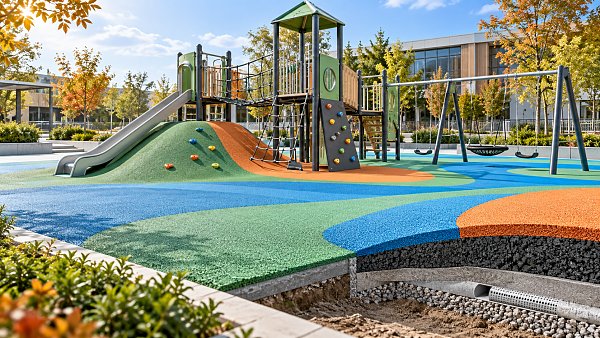
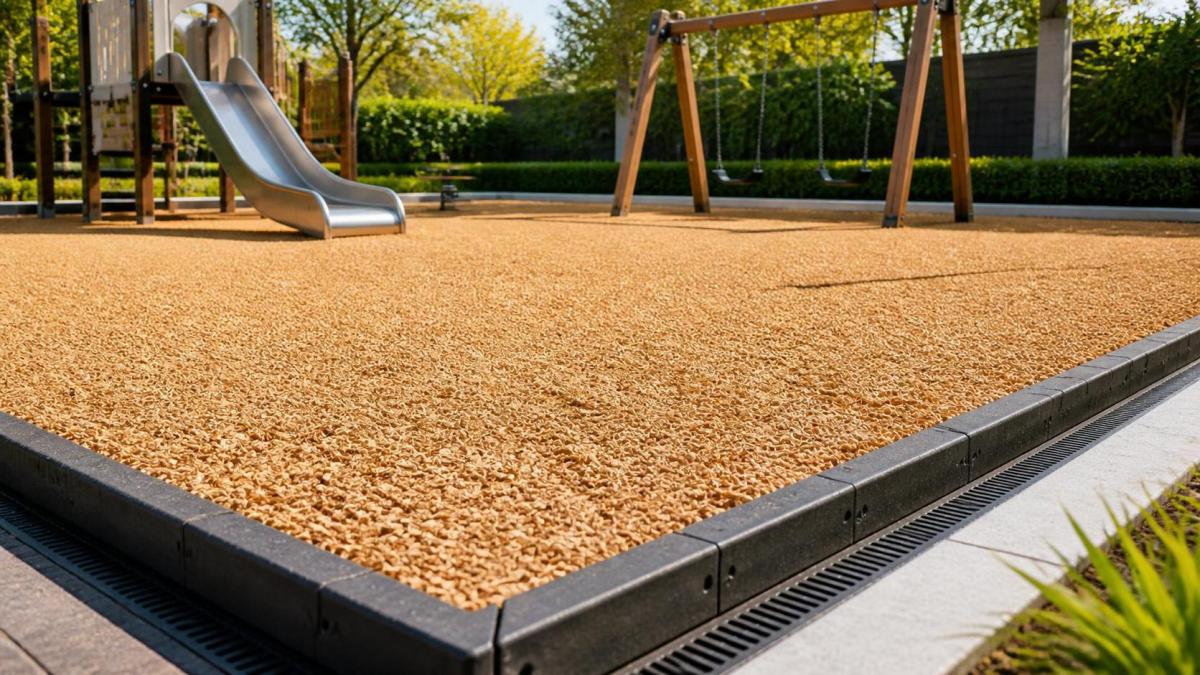
ASTM F2075, formally a specification for engineered wood fiber used as a playground safety surface under and around equipment, establishes requirements intended to distinguish purpose-made surfacing fiber from ordinary landscaping mulch, wood waste, or uncontrolled grinding output. The distinction matters. Landscape mulch may contain oversized pieces, bark, fines, or contaminants that make it unsuitable for a predictable loose-fill safety surface.
Engineered wood fiber is generally processed from wood specifically selected and mechanically sized for playground use. The desired product is fibrous rather than chunky. Its particle-size distribution, texture, cleanliness, and consistency affect how the material knits together, drains, migrates, and performs when compacted through normal use. ASTM F2075 provides a common technical language for evaluating those characteristics.
That common language is valuable in multi-party projects. A buyer may be dealing with a fiber producer, a distributor, an installer, a playground-equipment supplier, and a facility operator. Without a recognized specification, “playground mulch” can mean different things to each party. A purchase order that simply requests “wood chips” leaves too much open to interpretation.
Material quality is more than a visual check
A delivery can appear clean and still be unsuitable. Quality review should consider whether the material is genuinely engineered wood fiber, whether the lot is reasonably uniform, and whether it contains foreign matter or undesirable material. Construction debris, painted or treated wood, metal fragments, plastic, glass, excessive bark, and sharp oversized pieces are obvious concerns. Less obvious issues include an excessive proportion of very fine particles or an inconsistent mix of long fibers and large chunks.
Moisture can complicate judgment at receipt. Wet fiber is heavier, may look darker, and can compact differently from dry material. Bulk density and shipping weight therefore should not be read in isolation. A practical review compares the supplier’s declared product information, the shipment documentation, visual observations, and any required laboratory results. If a lot has materially different texture from prior accepted deliveries, that is a reason to pause—not an issue to solve by simply spreading the material more thinly.
The active edition of ASTM F2075 and the project specification should always control. Quality teams should avoid copying sieve limits, test values, or acceptance language from an old submittal without confirming that the referenced edition remains appropriate. Standards are revised, and contract documents may impose requirements beyond the base material specification.
The Critical Boundary: Material Compliance vs. Installed Impact Performance
It is useful to separate three questions that are often blended together during procurement:
ASTM F1292 is commonly associated with measuring impact attenuation of playground surfacing. It evaluates surface performance using a test method rather than defining the engineered wood fiber itself. ASTM F1951 is often relevant where accessibility of playground surfacing is under review. Equipment standards, local building rules, owner requirements, and the recommendations of the equipment manufacturer may also apply. None should be assumed to disappear because an EWF supplier provides an ASTM F2075 statement.
This division of responsibility has practical consequences. A supplier can provide compliant fiber, while a site still develops inadequate protection because the installed depth is too low, high-traffic zones are depleted, drainage is poor, or material has migrated outside the use zone. Conversely, an installation may be topped up to the correct depth but still receive questionable material if the incoming fiber was never properly verified.
How to Build ASTM F2075 Into a Procurement File
The strongest procurement approach does not ask only for a generic certificate. It defines what documents are needed, when they are due, and how the delivered lot is connected to them. For recurring projects, this is especially important because wood-fiber characteristics can vary with raw material supply, processing settings, storage conditions, and transport.
A well-written submittal request usually identifies the required ASTM F2075 edition, asks the supplier to confirm that the offered product is engineered wood fiber for playground surfacing, and requests test information or certification appropriate to the contract. It should also state whether documentation must be product-level or lot-specific. These are not interchangeable. A historical product report may be useful background, but it may not establish the condition or composition of every shipment.
Traceability deserves special attention when material is sourced across borders or through multiple distributors. Bills of lading and delivery tickets should identify the product consistently. If the manufacturer’s product name, the distributor’s invoice description, and the installer’s material log all use different terms, reconstructing the supply chain later becomes unnecessarily difficult. The solution is simple: require a common product designation and retain the records with the playground closeout documents.
Receiving checks that can catch avoidable problems
A receiving inspection does not replace laboratory testing, but it can prevent unsuitable material from being installed before questions are resolved. Inspect more than the top layer of a truckload or bag. Look at several areas of the shipment and note visible foreign objects, unusual odor, excessive dust, long sharp pieces, atypical chunkiness, standing water, or a major difference in color and texture from the approved sample.
Photographs, delivery-ticket numbers, date, weather conditions, and the inspector’s observations create a useful record. Where the contract permits sampling, follow the agreed sampling procedure rather than taking an informal handful that may not represent the lot. If results are disputed, the chain of custody and sampling method can become as important as the test result itself.
Quality managers should also keep the material issue separate from installation workmanship. Fiber may be acceptable at delivery yet installed over poor drainage, spread unevenly, or allowed to migrate from high-use areas. The maintenance plan must address raking, redistribution, replenishment, containment, and inspection frequency. Loose-fill surfacing is not a set-and-forget system.
Where Projects Commonly Go Wrong
One recurring mistake is equating “natural” with “safe.” Wood is familiar and renewable as a raw material, but a playground safety surface depends on controlled processing and ongoing depth management. Another is accepting landscaping mulch because it is less expensive or more readily available. The apparent savings can vanish when the material must be removed, supplemented, or defended during a safety review.
A second mistake is specifying a material standard without connecting it to the actual equipment layout. Fall heights, use zones, access routes, climate, drainage, and expected traffic influence the overall surfacing decision. A quiet courtyard playground and a heavily used public park can place very different demands on the same material category.
Finally, some project teams rely on a single compliance letter issued before installation and never revisit the surface. That document belongs in the file, but it cannot describe what the surface looks like after seasonal weather, compaction, and hundreds of hours of use. Site inspection is the control that closes the loop.
A More Defensible Sourcing Decision
For hospitality, education, and leisure developments, playground surfacing sits at the intersection of safety, operations, procurement, and guest experience. Global Commercial Trade approaches this type of sourcing question as a documentation and specification challenge as much as a product-selection exercise. The useful comparison is not simply which supplier quotes the lowest delivered price; it is which offer can be traced to a defined material, appropriate evidence, realistic installation requirements, and a workable maintenance plan.
Before approving engineered wood fiber, confirm the applicable ASTM F2075 edition, request documentation tied as closely as possible to the supplied product, and identify the separate evidence required for installed impact performance and accessibility. Then preserve those records alongside delivery logs and inspection reports. That process will not eliminate every field variable, but it gives safety and quality teams a far clearer basis for accepting material—and for recognizing when a playground surface needs attention before it becomes a preventable risk.
Search News
Hot Articles
Popular Tags
Need ExpertConsultation?
Connect with our specialized leisureengineering team for procurementstrategies.
Recommended News
 Oct 08, 2026How to Choose Animatronic Haunted House Props for High-Throughput AttractionsAnimatronic haunted house props for high-throughput attractions: compare motion, triggers, safety, and maintenance to create reliable scares that keep guests moving.● Theme Park Strategist
 Sep 29, 2026Poured Playground Safety Surfacing: How to Specify Thickness for Fall HeightsPoured playground safety surfacing: learn how to specify tested thickness by fall height, ASTM standards, substrate conditions, accessibility, and field verification.● Theme Park Strategist
 Sep 27, 2026Custom Trampoline Park Equipment: Planning Capacity, Safety, and LayoutCustom trampoline park equipment for safer capacity, smooth guest flow, and efficient layouts. Explore practical planning insights for a high-performing park.● Theme Park Strategist
 Aug 30, 2026Entertainment Venue Master Planning: How to Balance Capacity, Flow, and RevenueEntertainment venue development master planning: balance capacity, guest flow, and revenue with practical strategies for resilient, high-performing venues.● Theme Park Strategist
 Sep 07, 2026What Should Buyers Do When a Supplier Delivers Non-Compliant Products?What to do if a supplier delivers non-compliant commercial products: contain risks, document evidence, protect your project, and secure the right remedy.● Theme Park Strategist
 Sep 02, 2026Waterpark Capacity Management: Balancing Queue Times, Safety, and Guest ThroughputWaterpark capacity management strategies to reduce queue times, protect safety, optimize guest throughput, and build a smoother, more profitable park operation.● Theme Park Strategist
 Sep 01, 2026ASTM F2075 Explained: Testing Engineered Wood Fiber for Playground Impact SafetyASTM F2075 explained: learn how engineered wood fiber supports playground impact safety, smarter sourcing, compliance documentation, and reliable maintenance planning.● Theme Park Strategist
 Aug 24, 2026How to Evaluate an Indoor Ninja Warrior Course Supplier in Europe?indoor ninja warrior course Europe supplier guide: learn how to assess safety, EN compliance, engineering, installation, and maintenance support before you choose.● Theme Park Strategist
 Aug 20, 2026How to Choose Modular Indoor Play Equipment for Different Venue Sizes and Age GroupsModular indoor play equipment buying guide: learn how to match venue size, ceiling height, traffic flow, and age groups to create safer, smarter, and more profitable play spaces.● Theme Park Strategist
 Aug 14, 2026POB Push Lifts Overseas Pre-Registrations 45.74%POB boosts overseas pre-registrations for the 2026 China Sport Show by 45.74%, signaling stronger global buyer interest and smarter sourcing opportunities in sports manufacturing.● Theme Park Strategist
 Aug 02, 2026What to Check Before Buying Thick Gymnastic Mats Wholesale for Schools and GymsThick gymnastic mats wholesale buying guide for schools and gyms: learn how to check foam, cover durability, safety documents, samples, and true long-term value before placing a bulk order.● Theme Park Strategist
 Jul 28, 2026How to Design Inclusive Sensory Play Areas for Different Age Groups and NeedsInclusive sensory play starts with smart zoning, age planning, accessibility, and acoustics. Discover practical design tips to create safer, engaging spaces that truly work.● Theme Park Strategist
 Jul 26, 2026How to Evaluate a Bowling Alley Equipment Factory Before Requesting a QuoteBowling alley equipment factory evaluation starts before price. Learn how to check manufacturing scope, engineering, compliance, spare parts, and installation support to avoid costly sourcing mistakes.● Theme Park Strategist
 Jul 16, 2026EN 1176:2026 Takes Effect for Indoor PlaygroundsEN 1176:2026 takes effect for indoor playgrounds in the EU, making conformity assessment mandatory. Learn how this impacts certification, customs clearance, suppliers, and market access.● Theme Park Strategist
 Jul 15, 2026CPSC Sets New ASTM Impact Test for Indoor Playground Metal PartsCPSC sets new ASTM impact test rules for indoor playground metal parts effective Oct. 1, 2026. Learn how the 15kN requirement may affect compliance, testing timelines, and U.S. export delivery.● Theme Park Strategist
 Jul 14, 2026CPSC Tightens Phthalate Limit for Indoor Playground Soft MaterialsCPSC tightens phthalate limits for indoor playground soft materials from Aug 15, 2026. Learn how DIBP control, CBP detention risk, and testing changes impact sourcing, exports, and compliance.● Theme Park Strategist
 Jul 13, 2026Vietnam Tightens IoT Rule for Indoor Playground ImportsVietnam Tightens IoT Rule for Indoor Playground Imports: learn how VNSS-2025 gateway requirements affect exporters, buyers, installers, and delivery timelines before the 2026 deadline.● Theme Park Strategist
 Jul 13, 2026How a Recreational Facility Planning Company Helps Reduce Layout MistakesRecreational facility planning company insights: learn how early layout strategy reduces costly mistakes, improves flow, compliance, and buildability for smoother project delivery.● Theme Park Strategist
 Jul 12, 2026CPSC Halts Imports of Indoor Playground Soft PartsCPSC halts imports of indoor playground soft parts from China under ASTM F3432-26. Learn the compliance risks, testing requirements, and urgent steps importers must take now.● Theme Park Strategist
 Jul 11, 2026CPSC Import Alert Tightens Fire Test Rule for Indoor Playground PaddingCPSC import alert updates indoor playground padding rules to ASTM F3432-26. See how the new fire test affects foam mats, shipments, and U.S. market access.● Theme Park Strategist
 Jul 11, 2026Ice Bumper Cars Bulk Order Checklist for Indoor Parks: Space, Power, and Safety PointsIce bumper cars bulk order guide for indoor parks: learn how to assess space, power, safety, and throughput before buying, so you can avoid costly mistakes and choose the right fleet with confidence.● Theme Park Strategist
 Jul 10, 2026Commercial Playground Equipment for Campuses: Key Safety Standards and Planning TipsCommercial playground equipment for campuses: explore key safety standards, inclusive layout planning, durable materials, and smart procurement tips to avoid costly mistakes.● Theme Park Strategist
 Jul 09, 2026CPSC Recall Escalates Over Phthalates in Indoor Playground PadsCPSC recall escalates over phthalates in indoor playground pads as affected batches exceed CPSIA limits. Learn the risks, supply chain impact, and what buyers should monitor now.● Theme Park Strategist
 Jul 07, 2026How to Choose Ice Skating Rink Equipment in Europe: Key Systems, Standards, and Budget Factorsice skating rink equipment Europe guide: compare refrigeration, rink floors, boards, EU compliance, and total budget factors to choose a safer, more efficient commercial rink solution.● Theme Park Strategist