Commercial Playground Equipment for Campuses: Key Safety Standards and Planning Tips
Why is commercial playground equipment for campuses now a planning issue, not just a play issue?
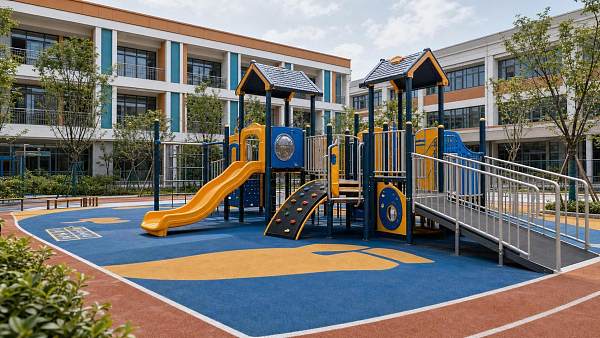
Commercial playground equipment for campuses now sits at the intersection of safety, durability, accessibility, and long-term site management.
That shift matters because outdoor learning spaces are expected to support recreation, supervision, inclusion, and campus identity at the same time.
A poor early decision can create expensive redesigns later.
More common problems include non-compliant fall zones, unclear age separation, weak surfacing choices, and maintenance gaps that only appear after installation.
In practical terms, commercial playground equipment for campuses should be treated like any other capital asset.
It needs specification discipline, supplier verification, installation oversight, and a realistic lifecycle plan.
This is also why market platforms such as Global Commercial Trade focus on safety compliance, sourcing reliability, and project-fit intelligence rather than simple product listings.
For campus environments, play value still matters.
It just cannot come before risk control, user suitability, and operational practicality.
Which safety standards should be checked before selecting equipment?
This is usually the first real question in campus planning, and for good reason.
Standards define whether commercial playground equipment for campuses is safe in measurable, inspectable ways.
The exact standard depends on the project location, but several frameworks appear often in international sourcing and specification work.
- ASTM F1487 for public-use playground equipment performance requirements.
- CPSC Public Playground Safety Handbook for risk interpretation and layout guidance.
- EN 1176 and EN 1177 for equipment and impact-attenuating surfacing in many international projects.
- ADA-related accessibility requirements in the United States, or equivalent local access rules elsewhere.
Need to confirm more than a certificate.
Ask whether the test applies to the exact model, configuration, height, and surface system being proposed.
A compliant tower paired with the wrong surfacing depth may still fail the intended use case.
Another point often missed is installation tolerance.
Even certified commercial playground equipment for campuses can become non-compliant when clearances, anchoring, or use zones change on site.
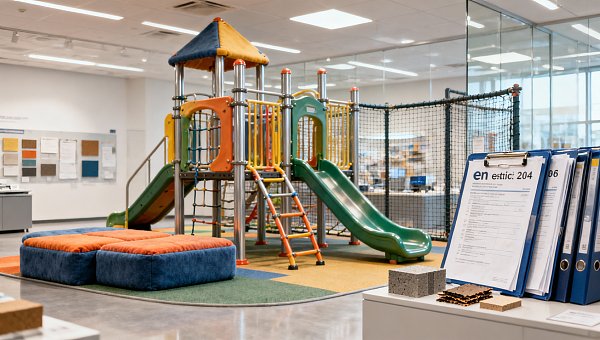
The table below helps frame the review.
How do you judge whether a campus layout is age-appropriate and inclusive?
The better question is not whether a playground looks engaging.
It is whether the layout matches how different users actually move, wait, gather, and play across the school day.
For younger children, lower deck heights, shorter transfer distances, and simple climbing sequences are usually safer.
For older students, challenge can increase, but circulation and supervision still need to stay clear.
Inclusive planning goes beyond ramps.
In actual campus use, inclusion also involves sensory variety, social spaces, ground-level activities, and routes that do not isolate some users from the main play experience.
A reliable review usually checks these points:
- Separate or clearly zoned equipment for distinct age groups.
- Accessible entry paths from classrooms, drop-off areas, and restrooms.
- Shaded waiting or observation areas for staff and caregivers.
- Balanced mix of active, social, and quiet-use features.
- Clear sightlines that reduce hidden corners and supervision blind spots.
When commercial playground equipment for campuses is evaluated this way, the result is usually more durable in both safety and daily usability terms.
What materials and construction details hold up best in campus conditions?
This question matters more than brochures suggest.
Campus sites face repeated use, changing weather, cleaning demands, and occasional misuse.
Material choices should therefore be compared by lifecycle performance, not just initial price.
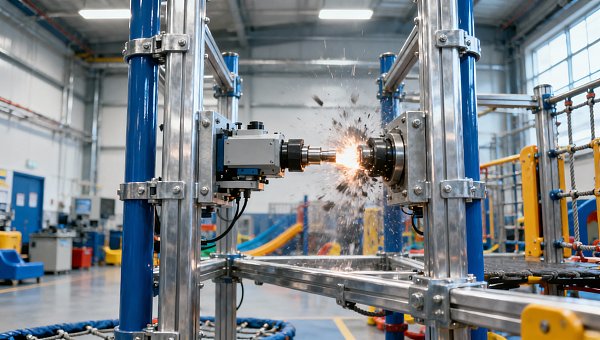
Powder-coated steel performs well in many systems, but coating quality, weld consistency, and corrosion resistance need verification.
Rotomolded plastic components are common for slides and panels, though UV stability should be checked for exposed climates.
HDPE panels often outlast painted alternatives in high-contact zones.
Fasteners, bearing points, rope connections, and edge finishing are equally important.
These smaller details often drive maintenance calls long before structural failure appears.
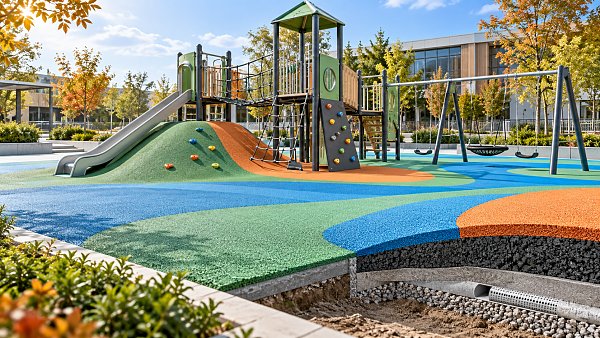
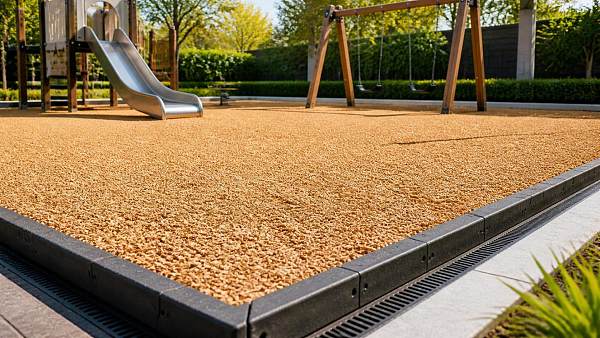
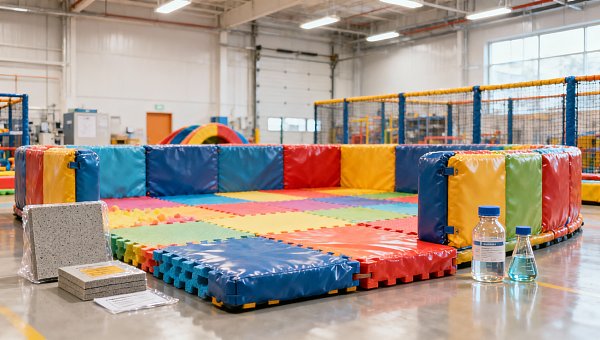
For surfacing, poured-in-place rubber offers consistent accessibility and cleaner appearance, but requires quality sub-base preparation.
Engineered wood fiber may cost less upfront, yet it demands regular replenishment and leveling.
When sourcing commercial playground equipment for campuses internationally, this is where GCT-style due diligence becomes useful.
The real comparison is supplier process control, testing discipline, and after-installation support, not only appearance.
Where do campus playground projects usually go wrong?
Most failures are not dramatic.
They show up as delays, avoidable change orders, and features that never perform as intended.
One frequent mistake is treating commercial playground equipment for campuses as a catalog purchase.
That approach often ignores drainage, existing utilities, route widths, and local inspection expectations.
Another common issue is underestimating surfacing complexity.
Surface failure can come from poor base work, edge restraint errors, or mismatch with the site’s drainage profile.
Some projects also overdesign challenge elements for the available supervision level.
A dramatic layout may photograph well, yet perform poorly during crowded transitions or mixed-age use.
The highest-risk blind spots are usually these:
- No final check between equipment drawings and actual site dimensions.
- Insufficient warranty review for coating, moving parts, and surfacing.
- Missing maintenance schedule before handover.
- Accessibility considered only at entrance level, not throughout use.
- Supplier lead times reviewed without freight, customs, or spare-part planning.
These are manageable risks, but only when identified early.
How should cost, timeline, and procurement be evaluated before approval?
A useful cost review separates purchase price from ownership cost.
The lower bid is not always the lower-cost option over ten years.
For commercial playground equipment for campuses, budgeting should include equipment, surfacing, freight, customs, civil works, installation, inspection, maintenance, and contingency.
Timeline planning should also be realistic.
Custom colors, themed components, imported surfacing systems, or multi-vendor packages can extend delivery and coordination windows.
A simple approval checklist usually helps keep the project grounded.
If procurement involves global sourcing, compare compliance documentation and support responsiveness with the same rigor used for price comparison.
That is usually the difference between a smooth installation and a strained handover.
What is the smartest next step before choosing a final system?
Start by turning broad interest into a site-specific brief.
List age groups, expected occupancy, supervision style, climate exposure, accessibility targets, and preferred maintenance capacity.
Then compare commercial playground equipment for campuses against that brief, not against marketing visuals alone.
The strongest campus projects usually follow a disciplined sequence.
- Confirm the governing safety and accessibility standards.
- Review layout fit, fall zones, and circulation on the actual site plan.
- Validate materials and surfacing against climate and maintenance realities.
- Check lifecycle cost, warranty scope, and replacement support.
- Require installation verification and post-handover inspection steps.
Commercial playground equipment for campuses performs best when safety standards, design intent, and sourcing discipline are aligned from the start.
That gives the project a clearer path to compliance, steadier operating costs, and a campus space that remains useful well beyond opening day.
Search News
Hot Articles
- Indoor PlaygroundHow to Choose Animatronic Haunted House Props for High-Throughput AttractionsOct 08, 2026
- Fashion & Gem JewelryThermal Diamond Testers: How They Work and When They Can Misidentify StonesOct 07, 2026
- Commercial KitchenWhat Is Driving Demand for Commercial Hospitality Projects Across the GCC?Oct 06, 2026
Popular Tags
Need ExpertConsultation?
Connect with our specialized leisureengineering team for procurementstrategies.
Recommended News
 Oct 08, 2026How to Choose Animatronic Haunted House Props for High-Throughput AttractionsAnimatronic haunted house props for high-throughput attractions: compare motion, triggers, safety, and maintenance to create reliable scares that keep guests moving.● Theme Park Strategist
 Sep 29, 2026Poured Playground Safety Surfacing: How to Specify Thickness for Fall HeightsPoured playground safety surfacing: learn how to specify tested thickness by fall height, ASTM standards, substrate conditions, accessibility, and field verification.● Theme Park Strategist
 Sep 27, 2026Custom Trampoline Park Equipment: Planning Capacity, Safety, and LayoutCustom trampoline park equipment for safer capacity, smooth guest flow, and efficient layouts. Explore practical planning insights for a high-performing park.● Theme Park Strategist
 Aug 30, 2026Entertainment Venue Master Planning: How to Balance Capacity, Flow, and RevenueEntertainment venue development master planning: balance capacity, guest flow, and revenue with practical strategies for resilient, high-performing venues.● Theme Park Strategist
 Sep 07, 2026What Should Buyers Do When a Supplier Delivers Non-Compliant Products?What to do if a supplier delivers non-compliant commercial products: contain risks, document evidence, protect your project, and secure the right remedy.● Theme Park Strategist
 Sep 02, 2026Waterpark Capacity Management: Balancing Queue Times, Safety, and Guest ThroughputWaterpark capacity management strategies to reduce queue times, protect safety, optimize guest throughput, and build a smoother, more profitable park operation.● Theme Park Strategist
 Sep 01, 2026ASTM F2075 Explained: Testing Engineered Wood Fiber for Playground Impact SafetyASTM F2075 explained: learn how engineered wood fiber supports playground impact safety, smarter sourcing, compliance documentation, and reliable maintenance planning.● Theme Park Strategist
 Aug 24, 2026How to Evaluate an Indoor Ninja Warrior Course Supplier in Europe?indoor ninja warrior course Europe supplier guide: learn how to assess safety, EN compliance, engineering, installation, and maintenance support before you choose.● Theme Park Strategist
 Aug 20, 2026How to Choose Modular Indoor Play Equipment for Different Venue Sizes and Age GroupsModular indoor play equipment buying guide: learn how to match venue size, ceiling height, traffic flow, and age groups to create safer, smarter, and more profitable play spaces.● Theme Park Strategist
 Aug 14, 2026POB Push Lifts Overseas Pre-Registrations 45.74%POB boosts overseas pre-registrations for the 2026 China Sport Show by 45.74%, signaling stronger global buyer interest and smarter sourcing opportunities in sports manufacturing.● Theme Park Strategist
 Aug 02, 2026What to Check Before Buying Thick Gymnastic Mats Wholesale for Schools and GymsThick gymnastic mats wholesale buying guide for schools and gyms: learn how to check foam, cover durability, safety documents, samples, and true long-term value before placing a bulk order.● Theme Park Strategist
 Jul 28, 2026How to Design Inclusive Sensory Play Areas for Different Age Groups and NeedsInclusive sensory play starts with smart zoning, age planning, accessibility, and acoustics. Discover practical design tips to create safer, engaging spaces that truly work.● Theme Park Strategist
 Jul 26, 2026How to Evaluate a Bowling Alley Equipment Factory Before Requesting a QuoteBowling alley equipment factory evaluation starts before price. Learn how to check manufacturing scope, engineering, compliance, spare parts, and installation support to avoid costly sourcing mistakes.● Theme Park Strategist
 Jul 16, 2026EN 1176:2026 Takes Effect for Indoor PlaygroundsEN 1176:2026 takes effect for indoor playgrounds in the EU, making conformity assessment mandatory. Learn how this impacts certification, customs clearance, suppliers, and market access.● Theme Park Strategist
 Jul 15, 2026CPSC Sets New ASTM Impact Test for Indoor Playground Metal PartsCPSC sets new ASTM impact test rules for indoor playground metal parts effective Oct. 1, 2026. Learn how the 15kN requirement may affect compliance, testing timelines, and U.S. export delivery.● Theme Park Strategist
 Jul 14, 2026CPSC Tightens Phthalate Limit for Indoor Playground Soft MaterialsCPSC tightens phthalate limits for indoor playground soft materials from Aug 15, 2026. Learn how DIBP control, CBP detention risk, and testing changes impact sourcing, exports, and compliance.● Theme Park Strategist
 Jul 13, 2026Vietnam Tightens IoT Rule for Indoor Playground ImportsVietnam Tightens IoT Rule for Indoor Playground Imports: learn how VNSS-2025 gateway requirements affect exporters, buyers, installers, and delivery timelines before the 2026 deadline.● Theme Park Strategist
 Jul 13, 2026How a Recreational Facility Planning Company Helps Reduce Layout MistakesRecreational facility planning company insights: learn how early layout strategy reduces costly mistakes, improves flow, compliance, and buildability for smoother project delivery.● Theme Park Strategist
 Jul 12, 2026CPSC Halts Imports of Indoor Playground Soft PartsCPSC halts imports of indoor playground soft parts from China under ASTM F3432-26. Learn the compliance risks, testing requirements, and urgent steps importers must take now.● Theme Park Strategist
 Jul 11, 2026CPSC Import Alert Tightens Fire Test Rule for Indoor Playground PaddingCPSC import alert updates indoor playground padding rules to ASTM F3432-26. See how the new fire test affects foam mats, shipments, and U.S. market access.● Theme Park Strategist
 Jul 11, 2026Ice Bumper Cars Bulk Order Checklist for Indoor Parks: Space, Power, and Safety PointsIce bumper cars bulk order guide for indoor parks: learn how to assess space, power, safety, and throughput before buying, so you can avoid costly mistakes and choose the right fleet with confidence.● Theme Park Strategist
 Jul 10, 2026Commercial Playground Equipment for Campuses: Key Safety Standards and Planning TipsCommercial playground equipment for campuses: explore key safety standards, inclusive layout planning, durable materials, and smart procurement tips to avoid costly mistakes.● Theme Park Strategist
 Jul 09, 2026CPSC Recall Escalates Over Phthalates in Indoor Playground PadsCPSC recall escalates over phthalates in indoor playground pads as affected batches exceed CPSIA limits. Learn the risks, supply chain impact, and what buyers should monitor now.● Theme Park Strategist
 Jul 07, 2026How to Choose Ice Skating Rink Equipment in Europe: Key Systems, Standards, and Budget Factorsice skating rink equipment Europe guide: compare refrigeration, rink floors, boards, EU compliance, and total budget factors to choose a safer, more efficient commercial rink solution.● Theme Park Strategist