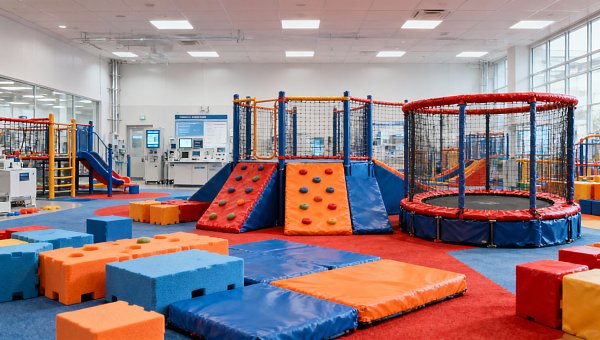
How to Choose a Trampoline Park Layout: Capacity, Age Zones, and Safety Flow
Choosing a trampoline park layout is a commercial planning decision before it becomes a design exercise. The arrangement of courts, circulation paths, spectator areas, and support spaces shapes how many guests a venue can serve, which age groups it can safely welcome, and how efficiently staff can manage risk.
That matters even more as leisure projects compete on experience quality, not only attraction count. In the amusement and leisure parks sector followed by Global Commercial Trade, buyers increasingly look for layouts that combine throughput, compliance, and flexible guest use without creating operational friction.
Layout Planning Starts With Capacity Logic
A successful trampoline park is rarely the one with the densest floor plan. It is the one that turns available square footage into reliable guest flow, manageable supervision, and repeatable session turnover.
Capacity should be calculated in layers. The first layer is physical capacity, meaning how many users each zone can hold. The second is operational capacity, meaning how many users staff can supervise without crowding or delayed intervention.
The third layer is commercial capacity. This reflects how many paying guests can move through check-in, locker use, briefing, jumping time, and exit without bottlenecks that damage the experience.
For that reason, the core jump area should never be evaluated in isolation. Entrance queues, shoe change areas, waiver handling, party rooms, food service, restrooms, and parent seating all influence true venue capacity.
Why overfilling the floor creates hidden costs
A crowded trampoline park can appear profitable on paper while underperforming in practice. Congestion raises collision risk, extends turnover time, and forces staff to spend more effort on crowd control than service quality.
It also reduces the value of premium zones. Dodgeball courts, foam pits, performance lanes, and climbing add-ons generate better returns when guests can access them smoothly instead of waiting in compressed circulation space.
Age Zones Are a Structural Requirement, Not a Minor Feature
One of the most common layout mistakes is treating all jump users as one category. In reality, age segmentation is central to both safety planning and market positioning.
A trampoline park that serves toddlers, school-age children, teenagers, and adults needs physical separation between activity profiles. Size difference, movement speed, and play behavior create predictable conflict when zones overlap.
This is why age zones should be built into circulation from the beginning. They should not depend only on signage or time-slot policy.
Common zoning structure
The strongest layouts reduce cross-traffic between these zones. A junior area beside a high-impact performance lane may save space, but it creates avoidable stress for guests and supervisors.
Safety Flow Depends on Movement, Visibility, and Response Time
Safety in a trampoline park is often discussed in terms of padding, frame quality, and standards compliance. Those are essential, but they are only part of the picture.
Safety flow is about how people move into, through, and out of risk areas. A layout with poor transitions can undermine even high-grade equipment.
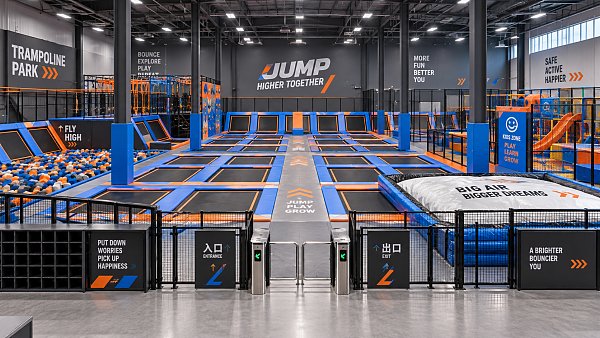
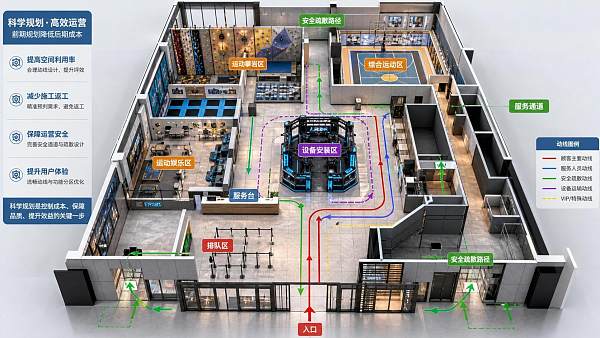
Entry points should be intuitive. Guests should understand where to wait, where to start, and where not to cross. Staff should be able to see conflict points before incidents happen.
Key flow principles for a trampoline park
- Separate arrival flow from active play zones.
- Avoid dead-end walkways beside high-speed attractions.
- Keep emergency access routes clear and direct.
- Position staff stations where multiple zones remain visible.
- Use barriers and level changes carefully to guide behavior.
- Create calm transition areas between waiting and jumping.
Visibility deserves special attention. Columns, decorative walls, oversized feature structures, or poorly placed party rooms can create blind spots. In a busy trampoline park, blind spots quickly become supervision gaps.
Commercial Value Comes From the Right Mix of Zones
Not every square meter should be dedicated to jumping. The most effective trampoline park layout supports multiple revenue behaviors within a single visit.
Open jumping may drive baseline traffic, but food counters, birthday rooms, spectator seating, retail corners, and upgrade attractions often shape profitability more directly.
This is where layout planning connects with broader commercial sourcing decisions. GCT often tracks how experiential venues balance attraction investment with support infrastructure, because the return on a project depends on the whole operating model.
A trampoline park aimed at family visits may need generous lounge space, stroller-friendly paths, and visible junior zones. A site focused on group events may prioritize party suites, queue handling, and faster turnover between booked sessions.
Questions that shape the right mix
- Will revenue depend more on walk-in traffic or scheduled groups?
- Is the venue serving local families, tourism traffic, or mixed-use developments?
- How much floor area must remain flexible for seasonal programming?
- Which zones require premium supervision or added staffing?
Site Conditions Change the Best Layout Choice
A trampoline park in a new-build leisure complex can be planned differently from one inside a converted retail box or industrial shell. Ceiling height, column grid, fire egress, and mechanical systems all shape the final scheme.
Low beams may limit performance attractions. Dense columns may force smaller courts or broken sightlines. Uneven utility placement can affect party rooms, food service, and restrooms more than expected.
This is why early technical coordination matters. Layout planning should involve architectural, structural, mechanical, and operations review before equipment selection is locked.
In cross-border sourcing projects, the specification phase also needs attention to local codes, material certifications, maintenance access, and replacement part logistics. A layout that looks efficient on a supplier drawing may become expensive if servicing is difficult.
A Practical Review Framework Before Design Freeze
Before approving a trampoline park layout, it helps to review the plan against a small set of business-critical criteria. This keeps decisions grounded when multiple attractions compete for floor area.
This kind of review is especially useful when comparing multiple vendor concepts. It shifts the discussion from attraction count toward total operating performance.
What to Prioritize Next
The right trampoline park layout usually emerges from disciplined trade-offs, not from adding every available feature. Capacity must be believable, age zones must be truly separated, and safety flow must work under peak conditions, not only on a clean drawing.
A useful next step is to map the venue around real operating scenarios: a busy weekend family session, a birthday turnover window, a mixed-age holiday crowd, and an emergency response event. If the layout works under those conditions, it is more likely to support long-term performance.
For projects moving into sourcing or design review, compare layout options against compliance demands, staffing visibility, equipment maintenance access, and revenue mix. That approach gives a trampoline park stronger foundations than attraction density alone ever can.
Search News
Hot Articles
- Outdoor RidesHow to Select Leisure Park Equipment for Safe, High-Throughput Visitor AreasOct 03, 2026
- Fashion & Gem JewelryDiamond Tester Wholesale: How to Vet Accuracy, Calibration, and MOQ Before OrderingOct 02, 2026
- Hotel Room AmenitiesHow Hotels Can Choose Amenity Bottles That Balance Brand Image and Refill CostsOct 01, 2026
Popular Tags
Need ExpertConsultation?
Connect with our specialized leisureengineering team for procurementstrategies.
Recommended News
 Sep 29, 2026Poured Playground Safety Surfacing: How to Specify Thickness for Fall HeightsPoured playground safety surfacing: learn how to specify tested thickness by fall height, ASTM standards, substrate conditions, accessibility, and field verification.● Theme Park Strategist
 Sep 27, 2026Custom Trampoline Park Equipment: Planning Capacity, Safety, and LayoutCustom trampoline park equipment for safer capacity, smooth guest flow, and efficient layouts. Explore practical planning insights for a high-performing park.● Theme Park Strategist
 Aug 30, 2026Entertainment Venue Master Planning: How to Balance Capacity, Flow, and RevenueEntertainment venue development master planning: balance capacity, guest flow, and revenue with practical strategies for resilient, high-performing venues.● Theme Park Strategist
 Sep 07, 2026What Should Buyers Do When a Supplier Delivers Non-Compliant Products?What to do if a supplier delivers non-compliant commercial products: contain risks, document evidence, protect your project, and secure the right remedy.● Theme Park Strategist
 Sep 02, 2026Waterpark Capacity Management: Balancing Queue Times, Safety, and Guest ThroughputWaterpark capacity management strategies to reduce queue times, protect safety, optimize guest throughput, and build a smoother, more profitable park operation.● Theme Park Strategist
 Sep 01, 2026ASTM F2075 Explained: Testing Engineered Wood Fiber for Playground Impact SafetyASTM F2075 explained: learn how engineered wood fiber supports playground impact safety, smarter sourcing, compliance documentation, and reliable maintenance planning.● Theme Park Strategist
 Aug 24, 2026How to Evaluate an Indoor Ninja Warrior Course Supplier in Europe?indoor ninja warrior course Europe supplier guide: learn how to assess safety, EN compliance, engineering, installation, and maintenance support before you choose.● Theme Park Strategist
 Aug 20, 2026How to Choose Modular Indoor Play Equipment for Different Venue Sizes and Age GroupsModular indoor play equipment buying guide: learn how to match venue size, ceiling height, traffic flow, and age groups to create safer, smarter, and more profitable play spaces.● Theme Park Strategist
 Aug 14, 2026POB Push Lifts Overseas Pre-Registrations 45.74%POB boosts overseas pre-registrations for the 2026 China Sport Show by 45.74%, signaling stronger global buyer interest and smarter sourcing opportunities in sports manufacturing.● Theme Park Strategist
 Aug 02, 2026What to Check Before Buying Thick Gymnastic Mats Wholesale for Schools and GymsThick gymnastic mats wholesale buying guide for schools and gyms: learn how to check foam, cover durability, safety documents, samples, and true long-term value before placing a bulk order.● Theme Park Strategist
 Jul 28, 2026How to Design Inclusive Sensory Play Areas for Different Age Groups and NeedsInclusive sensory play starts with smart zoning, age planning, accessibility, and acoustics. Discover practical design tips to create safer, engaging spaces that truly work.● Theme Park Strategist
 Jul 26, 2026How to Evaluate a Bowling Alley Equipment Factory Before Requesting a QuoteBowling alley equipment factory evaluation starts before price. Learn how to check manufacturing scope, engineering, compliance, spare parts, and installation support to avoid costly sourcing mistakes.● Theme Park Strategist
 Jul 16, 2026EN 1176:2026 Takes Effect for Indoor PlaygroundsEN 1176:2026 takes effect for indoor playgrounds in the EU, making conformity assessment mandatory. Learn how this impacts certification, customs clearance, suppliers, and market access.● Theme Park Strategist
 Jul 15, 2026CPSC Sets New ASTM Impact Test for Indoor Playground Metal PartsCPSC sets new ASTM impact test rules for indoor playground metal parts effective Oct. 1, 2026. Learn how the 15kN requirement may affect compliance, testing timelines, and U.S. export delivery.● Theme Park Strategist
 Jul 14, 2026CPSC Tightens Phthalate Limit for Indoor Playground Soft MaterialsCPSC tightens phthalate limits for indoor playground soft materials from Aug 15, 2026. Learn how DIBP control, CBP detention risk, and testing changes impact sourcing, exports, and compliance.● Theme Park Strategist
 Jul 13, 2026Vietnam Tightens IoT Rule for Indoor Playground ImportsVietnam Tightens IoT Rule for Indoor Playground Imports: learn how VNSS-2025 gateway requirements affect exporters, buyers, installers, and delivery timelines before the 2026 deadline.● Theme Park Strategist
 Jul 13, 2026How a Recreational Facility Planning Company Helps Reduce Layout MistakesRecreational facility planning company insights: learn how early layout strategy reduces costly mistakes, improves flow, compliance, and buildability for smoother project delivery.● Theme Park Strategist
 Jul 12, 2026CPSC Halts Imports of Indoor Playground Soft PartsCPSC halts imports of indoor playground soft parts from China under ASTM F3432-26. Learn the compliance risks, testing requirements, and urgent steps importers must take now.● Theme Park Strategist
 Jul 11, 2026CPSC Import Alert Tightens Fire Test Rule for Indoor Playground PaddingCPSC import alert updates indoor playground padding rules to ASTM F3432-26. See how the new fire test affects foam mats, shipments, and U.S. market access.● Theme Park Strategist
 Jul 11, 2026Ice Bumper Cars Bulk Order Checklist for Indoor Parks: Space, Power, and Safety PointsIce bumper cars bulk order guide for indoor parks: learn how to assess space, power, safety, and throughput before buying, so you can avoid costly mistakes and choose the right fleet with confidence.● Theme Park Strategist
 Jul 10, 2026Commercial Playground Equipment for Campuses: Key Safety Standards and Planning TipsCommercial playground equipment for campuses: explore key safety standards, inclusive layout planning, durable materials, and smart procurement tips to avoid costly mistakes.● Theme Park Strategist
 Jul 09, 2026CPSC Recall Escalates Over Phthalates in Indoor Playground PadsCPSC recall escalates over phthalates in indoor playground pads as affected batches exceed CPSIA limits. Learn the risks, supply chain impact, and what buyers should monitor now.● Theme Park Strategist
 Jul 07, 2026How to Choose Ice Skating Rink Equipment in Europe: Key Systems, Standards, and Budget Factorsice skating rink equipment Europe guide: compare refrigeration, rink floors, boards, EU compliance, and total budget factors to choose a safer, more efficient commercial rink solution.● Theme Park Strategist
 Jul 06, 2026CPSC Flags New Flame Test for Indoor Playground PaddingCPSC flags a new flame test for indoor playground padding under ASTM F1487-23b. Learn how this urgent compliance alert affects materials, testing, imports, and U.S. market access.● Theme Park Strategist