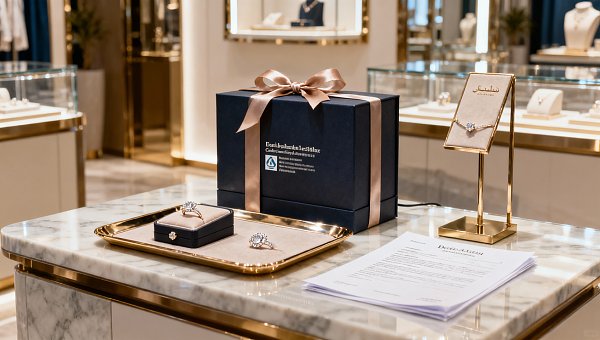
How to Choose Retail Display Fixtures for Boutiques by Layout, Product Mix, and Brand Style
Choosing retail display fixtures for boutiques is often treated as a visual merchandising decision, but procurement teams know the cost of getting it wrong goes far beyond appearance. Fixtures shape customer movement, selling density, replenishment efficiency, loss prevention, and even whether a brand feels premium or inconsistent. In boutique environments, where floor space is limited and brand identity carries more weight than in mass retail, fixture selection becomes a sourcing decision with direct commercial consequences.
The challenge is that there is no universally “best” fixture package. A system that works for a fashion-led boutique with frequent collection changes may fail in a jewelry concept store that requires tighter security and more controlled presentation. A high-margin lifestyle boutique may prioritize flexibility and story-driven display, while a compact urban store may need to maximize every vertical and perimeter meter without looking crowded.
For buyers evaluating retail display fixtures for boutiques, the most reliable approach is to start with three variables together rather than separately: layout, product mix, and brand style. These define not only what the store should look like, but how fixtures need to perform over time.
Start with layout logic, not fixture catalogs
One of the most common procurement mistakes is reviewing fixture types before understanding the store’s traffic logic. Vendors usually present gondolas, wall bays, nesting tables, vitrines, and cash wraps as standalone products. In practice, their value depends on where they sit in the customer journey.
A boutique layout usually falls into one of a few operational patterns:
- Linear or narrow-front layouts, common in urban street retail, where sightlines from the entrance matter more than deep browsing zones.
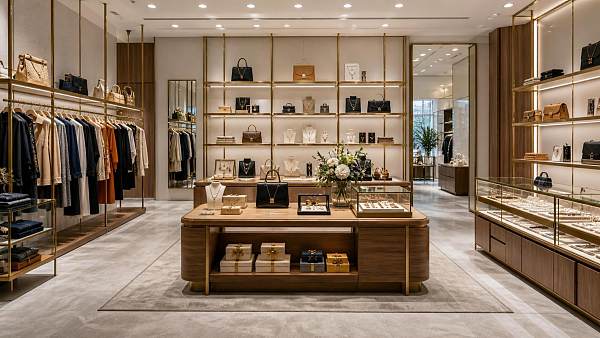
- Open-plan layouts, often used in lifestyle and fashion boutiques, where fixtures must define zones without blocking visual flow.
- Room-based or gallery-style layouts, more typical in luxury accessories and premium concept stores, where fixtures support storytelling and slower browsing.
- High-density compact layouts, where inventory needs are high relative to floor area and every fixture must carry both merchandising and storage value.
In narrow stores, bulky center-floor fixtures can quickly reduce visibility and make the space feel cheaper. In open-plan boutiques, the issue is different: too many low fixtures can preserve sightlines but weaken category definition, making the assortment feel scattered. In gallery-style stores, standard modular racks may solve cost and lead-time concerns but undermine the controlled brand experience the store is trying to create.
Procurement teams should ask a practical question early: Is the fixture meant to move customers, hold inventory, frame hero products, or separate zones? A display table and a freestanding merchandising unit may have similar dimensions, but they support different commercial roles.
Match fixture categories to selling behavior
Product mix matters because boutiques rarely sell a single display behavior. Apparel, handbags, fine jewelry, beauty accessories, gift items, and footwear all demand different combinations of visibility, touchability, storage, and security.
Apparel-heavy boutiques generally need a balanced mix of wall systems, face-outs, hangrails, and folding tables. The main decision is not whether to use hanging or folded display, but how often collections rotate. If turnover is high, modular wall standards and adjustable shelves usually outperform fixed decorative installations. If the boutique is highly curated with low SKU count, fewer but more sculptural fixtures can improve perceived value.
Accessory-led boutiques often require tighter fixture engineering. Small leather goods, scarves, belts, sunglasses, or giftable items benefit from denser display, but over-merchandising quickly creates visual clutter. Here, layered fixtures with controlled compartmentalization are more effective than generic shelving. Buyers should evaluate whether the fixture supports tidy replenishment and clear price communication, not just whether it increases capacity.
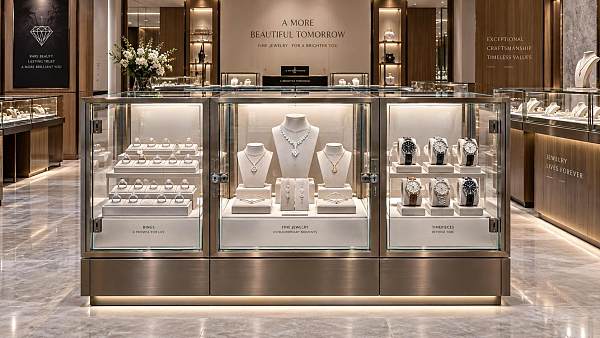
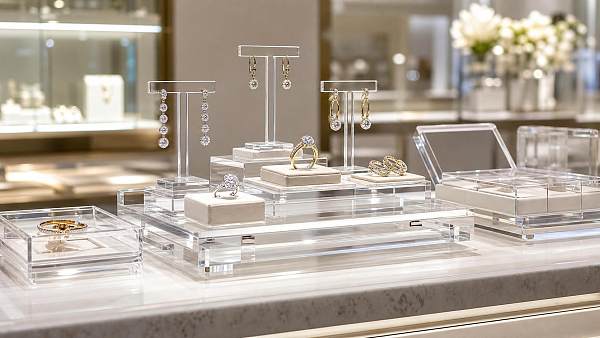
Jewelry and luxury accessory boutiques are a separate category altogether. Glass showcases, lockable drawers, integrated lighting, anti-tarnish material considerations, and controlled customer interaction all become central. The procurement risk is treating these fixtures as furniture rather than operational equipment. Security hardware quality, glass specification, hinge durability, and lighting heat performance deserve more scrutiny than decorative finishes.
Beauty, fragrance, or mixed gifting boutiques typically require fixtures that support sampling, storytelling, and cross-selling. Open testers, branded shelves, under-counter storage, and easy-clean surfaces matter more here than in soft goods environments. Materials must tolerate spills, frequent wiping, and high-touch use.
When assortments are mixed, the goal is not to standardize every fixture, but to create a hierarchy. Hero categories should receive the strongest visual framing. Supporting categories should use fixtures that are simpler, smaller, or more modular. If every category gets equal display emphasis, the store loses its point of view.
Brand style should influence material and form, but not override operations
Boutique buyers often face pressure from design teams or brand owners who want fixtures to express a clear identity: minimalist, artisanal, heritage, industrial, soft luxury, or contemporary premium. That is valid. In boutique retail, fixtures are part of the brand language. But style-led decisions create risk when they ignore daily use.
A matte brass finish may align with a luxury concept, but if it fingerprints easily and requires constant maintenance, operational teams will pay the price. Natural wood can warm a boutique and support craftsmanship narratives, but unstable substrates or poor edge finishing can create quality problems in humid or high-traffic environments. Powder-coated steel may look too utilitarian in concept sketches, yet it often delivers better durability and easier replacement than custom painted decorative systems.
The better sourcing question is not “Which material fits the brand?” but “Which material finish delivers the brand effect at the required durability level?”
For most procurement teams, this means separating visible design intent from structural performance:
- Use engineered materials where load-bearing consistency matters.
- Reserve fragile or high-maintenance finishes for focal areas rather than the entire store package.
- Confirm whether replacement parts can match finish lots over time.
- Check how the fixture ages under real lighting, touching, and cleaning conditions.
Brand coherence also depends on proportions. Oversized fixtures can make a premium boutique feel compressed. Fixtures that are too lightweight visually may make expensive products feel unsupported or temporary. In boutiques, scale communicates confidence.
Flexibility is usually undervalued at sourcing stage
Many boutique projects are approved around opening-day visuals. Procurement, however, should think beyond launch. Product lines change, collections expand or contract, campaigns shift, and stores may need seasonal resets. Fixtures that photograph well but resist adaptation often become expensive within a year.
Flexibility does not always mean fully modular retail systems with visible slots and brackets. In boutique environments, visible modularity can clash with design intent. But there are quieter forms of flexibility buyers should evaluate:
- Adjustable shelf heights hidden within clean wall bays
- Interchangeable hanging and shelving accessories
- Mobile or reconfigurable tables with concealed casters
- Display units with removable dividers or inserts
- Cash wraps and service counters designed to integrate future technology updates
If the brand runs frequent capsule launches, gifting periods, or localized merchandising, reconfiguration time becomes a real cost. A fixture package that reduces reset labor may be commercially better than one with a lower unit purchase price.
Do not separate aesthetics from compliance and safety
In boutique projects, compliance is sometimes reviewed late because fixtures are viewed as interior elements rather than commercial equipment. That is a mistake, especially for buyers sourcing internationally.
Requirements vary by market and project type, but several areas should always be checked: fire performance of materials, glass safety, electrical compliance for integrated lighting, load-bearing reliability, anchoring stability, and accessibility considerations where applicable. Market-specific requirements may differ significantly, so buyers should confirm applicable local building and retail fit-out standards rather than relying on supplier assumptions.
Where integrated lighting is involved, buyers should request clear documentation on electrical components and certifications relevant to the destination market. For glass showcases and vitrines, tempered or laminated safety glass requirements may apply depending on application and jurisdiction. Exact legal thresholds should be treated as 【待核实】 unless confirmed for the project location.
This matters not only for legal risk, but for project timing. Fixtures that require redesign after landlord review, local inspection, or brand compliance checks can disrupt opening schedules and installation sequencing.
Evaluate suppliers on execution depth, not just sample quality
Procurement teams sourcing retail display fixtures for boutiques often receive impressive prototypes or showroom samples. The harder question is whether the supplier can maintain the same quality across a rollout, a multi-store program, or a custom package with mixed materials.
Execution depth usually shows up in five areas:
- Material control: Can the supplier manage consistent finish, color, grain, and metal treatment across batches?
- Engineering discipline: Are joints, load points, glass interfaces, and lighting integrations properly resolved?
- Packaging competence: Can the fixtures survive export packing, container handling, and last-mile delivery without cosmetic damage?
- Documentation: Are shop drawings, assembly instructions, part labels, and installation guides complete enough for field teams?
- Change management: Can the supplier accommodate late-stage design adjustments without losing production control?
Boutique fixtures often combine low-volume customization with high expectations for finish. That combination creates manufacturing risk. Buyers should be cautious with suppliers who are strong in generic shopfitting but weak in luxury-grade detailing, and equally cautious with design-driven workshops that lack export discipline or schedule reliability.
Total cost is more than fixture price
For procurement, unit cost is only one part of the decision. Boutique fixture packages carry hidden cost drivers that can outweigh initial purchase savings:
- Installation complexity and required site labor
- Breakage risk during transit and handling
- Maintenance burden for delicate finishes
- Replacement lead time for damaged custom parts
- Storage inefficiency for seasonal or removable elements
- Merchandising labor caused by poor accessibility or awkward proportions
A cheaper fixture that takes longer to assemble, arrives with a high damage rate, or cannot be repaired locally may become the more expensive option within the first operating cycle. This is particularly relevant for international sourcing, where after-sales support may be limited and replacement logistics slow.
For boutiques with multiple openings planned, standardizing core structural elements while customizing visible finishes can often produce a better cost-to-brand balance than fully bespoke fixture programs for every location.
Common selection mistakes in boutique projects
Several recurring errors appear in fixture sourcing for boutique retail.
Overbuying display capacity. More fixtures do not always increase sales. In premium environments, excess capacity often lowers perceived value by reducing breathing room around products.
Choosing residential-style furniture as retail fixtures. Boutique brands sometimes want a lived-in or hospitality-inspired look. The problem is that residential furniture rarely meets commercial durability, storage, security, or replenishment needs.
Ignoring staff workflow. If associates cannot restock easily, access under-display storage, or clean around fixtures efficiently, the store will deteriorate operationally even if it opens beautifully.
Underestimating lighting integration. A fixture may look strong on paper but fail to present products properly once installed under real retail lighting conditions. This is especially important for jewelry, beauty, and textured soft goods.
Assuming one boutique format fits all locations. A fixture package that works in a flagship may not suit a smaller mall store, travel retail environment, or franchise unit with different staffing and inventory patterns.
A practical decision framework for buyers
When comparing fixture options, procurement teams should pressure-test each proposal against a short set of business questions:
- Does the layout support how customers should move, pause, and discover?
- Does each fixture type match the handling, security, and presentation needs of the product category?
- Does the design language reinforce the brand without compromising maintenance or durability?
- Can the package adapt to assortment changes and seasonal resets?
- Have compliance, safety, and market-entry requirements been verified for the destination project?
- Can the supplier deliver consistent quality at the required scale and timeline?
- What will the fixtures cost to ship, install, maintain, and replace—not just to buy?
If one option scores strongly on aesthetics but weakly on flexibility and execution reliability, it is usually the riskier procurement choice. If another option feels less distinctive but performs better operationally, it may still need refinement to avoid undermining the brand. Good boutique sourcing rarely means choosing between design and function. It means finding the fixture strategy where design intent survives real commercial use.
That is ultimately the role of fixture selection in boutique retail: not to fill a space, but to support the specific way a brand wants products to be seen, handled, valued, and sold. For procurement professionals, the most effective decisions come from treating fixtures as part of the selling system, not just part of the interior fit-out.
Search News
Hot Articles
- Restaurant FurnitureFast-Casual Restaurant Interiors: Design Choices That Improve Speed and Guest FlowOct 04, 2026
- Outdoor RidesHow to Select Leisure Park Equipment for Safe, High-Throughput Visitor AreasOct 03, 2026
- Fashion & Gem JewelryDiamond Tester Wholesale: How to Vet Accuracy, Calibration, and MOQ Before OrderingOct 02, 2026
Popular Tags
Need ExpertConsultation?
Connect with our specialized leisureengineering team for procurementstrategies.
Recommended News
 Sep 20, 2026How to Evaluate a Luxury Retail Packaging Supplier for Premium Brand ConsistencyLuxury retail packaging supplier evaluation guide: protect premium brand consistency with proven quality control, material expertise, scalable production, and supply reliability.● Luxury Retail Analyst
 Sep 13, 2026How U.S. Retailers Can Choose Jewelry Displays for Better Security and SalesJewelry displays USA retailers can use to balance security, product visibility, and sales performance. Explore practical selection tips for cases, lighting, materials, and suppliers.● Luxury Retail Analyst
 Aug 18, 2026How to Choose Retail Display Fixtures for Boutiques by Layout, Product Mix, and Brand StyleRetail display fixtures for boutiques should match layout, product mix, and brand style. Learn how to choose flexible, durable displays that improve flow, elevate presentation, and support sales.● Luxury Retail Analyst
 Jul 23, 2026Acrylic Jewelry Display Stands Price Guide: What Affects Cost and Bulk Buying Value?Acrylic jewelry display stands price explained: compare thickness, finish, customization, and bulk order value to cut sourcing risk and choose better retail displays.● Luxury Retail Analyst
 Jul 13, 2026France and Belgium Extend EPR to Jewelry Display PackagingFrance and Belgium extend EPR to jewelry display packaging from Oct 1, 2026. Learn how registration, recycling fees, and customs risks may impact exporters and sellers.● Luxury Retail Analyst
 Jul 08, 2026EU PPWR EPR Rules Take Effect for Jewelry PackagingEU PPWR EPR rules take effect for jewelry packaging on July 8, 2026. Learn key compliance risks, reporting duties, and how exporters can protect EU market access.● Luxury Retail Analyst
 Jul 07, 2026EU EN 71-3:2026 Tightens Lead Limit to 0.05%EU EN 71-3:2026 Tightens Lead Limit to 0.05%—learn how the new 500 ppm rule affects exports, metal components, compliance documents, and EU shipment readiness.● Luxury Retail Analyst
 Jul 05, 2026EN 71-3:2026 Tightens Heavy Metal Limits for Jewelry PackagingEN 71-3:2026 tightens heavy metal limits for jewelry packaging in the EU. Learn what exporters, importers, and suppliers must do before October 1, 2026 to stay compliant.● Luxury Retail Analyst
 Jun 29, 2026EU EPR Rule Takes Effect July 1 for Jewelry PackagingEU EPR Rule Takes Effect July 1 for Jewelry Packaging—learn how PPWR-linked registration, annual packaging reporting, and EU compliance checks may impact exporters, sellers, and supply chains.● Luxury Retail Analyst
 Jun 28, 2026Saudi Carbon Label Rule Hits Jewelry Packaging by Q3 2026Jewelry Packaging faces Saudi carbon label rules by Q3 2026. Learn SASO compliance deadlines, LCA certification steps, labeling impact, and how exporters can avoid shipment delays.● Luxury Retail Analyst
 Jun 27, 2026SASO Sets Carbon Label Rule for Jewelry PackagingSASO Sets Carbon Label Rule for Jewelry Packaging: learn how Saudi Arabia’s new carbon footprint and LCA requirement will impact exporters, packaging suppliers, and delivery timelines before the 2026 deadline.● Luxury Retail Analyst
 Apr 27, 2026Luxury Jewelry for Commercial Spaces ExplainedLuxury jewelry for commercial spaces explained: compare custom jewelry design, luxury jewelry wholesale, and reliable luxury jewelry manufacturer solutions for hotels, retail, and B2B buyers.● Luxury Retail Analyst
 Apr 18, 2026Luxury jewelry packaging: When minimalist boxes backfire on shelf appealTrampoline park, indoor playground & adventure playground packaging demands? Discover why luxury jewelry boxes fail—and how to fix shelf appeal across arcade games, musical instruments & office supplies.● Luxury Retail Analyst
 Apr 17, 2026Why luxury jewelry display cases matter more than you thinkLuxury jewelry display cases elevate trampoline parks, indoor playgrounds, arcade games & adventure playgrounds—boosting brand value, safety, and engagement.● Luxury Retail Analyst
 Apr 16, 2026Supply chain solutions for jewelry packaging: How lead time variance breaks seasonal launchesSupply chain solutions for jewelry packaging: Cut lead time variance, ensure on-time seasonal launches for designer eyewear, OEM manufacturing & luxury goods.● Luxury Retail Analyst
 Apr 16, 2026Custom jewelry packaging that enhances perceived valueCustom jewelry packaging for luxury accessories, timepieces & orchestral instruments—engineered for institutional buyers seeking premium unboxing, compliance & ROI.● Luxury Retail Analyst
 Apr 15, 2026Jewelry display cases that meet museum-grade UV and humidity controlsCommercial furniture meets museum-grade precision: UV-stable, humidity-controlled jewelry display cases for amusement equipment, sensory playgrounds, hotel tables & educational supplies.● Luxury Retail Analyst
 Apr 14, 2026Luxury jewelry packaging that survives transit—but not retail handlingLuxury jewelry, office supplies & musical instruments—discover transit-strong, retail-ready packaging that excels for trampoline parks, indoor playgrounds, arcade games and adventure playgrounds.● Luxury Retail Analyst
 Apr 14, 2026Luxury jewelry display cases that prevent tarnish without humidity controlLuxury jewelry display cases prevent tarnish without humidity control—ideal for office supplies, musical instruments, arcade games & adventure playgrounds.● Luxury Retail Analyst
 Apr 10, 2026Jewelry packaging & display suppliers rarely share shelf-life test data for eco-materialsDiscover verified shelf-life data for eco-packaging—trusted by OEM jewelry, ODM watches & designer eyewear brands. Get supply chain solutions that deliver transparency, not just promises.● Luxury Retail Analyst
 Apr 11, 2026Commercial kitchen suppliers offer modular design — but jewelry packaging doesn’t. Why?Unlock modular packaging for ODM watches, OEM jewelry & designer eyewear—agile supply chain solutions, premium accessories, commercial procurement made flexible.● Luxury Retail Analyst
 Mar 30, 2026Jewelry packaging & display units designed for retail are cracking under warehouse stacking pressureOEM jewelry displays failing under warehouse stacking? Discover stacking-ready solutions for hotel cabinets, playground components, live sound equipment & commercial procurement.● Luxury Retail Analyst
 Mar 28, 2026Custom jewelry packaging ordered with foil stamping often arrives with misaligned logos — and replacements take 3 weeksIndoor playground & adventure playground suppliers: Fix foil stamping misalignment in safety signage, luxury timepieces, DJ equipment—get verified ≤±0.2mm precision now.● Luxury Retail Analyst
") Mar 28, 2026Why luxury jewelry packaging fails under real retail lighting (not studio shots)Discover why trampoline park signage, luxury jewelry packaging, arcade games, and musical instruments—including string, wind & keyboard instruments—fail under real retail lighting. Expert insights for procurement pros.● Luxury Retail Analyst
Mar 28, 2026Why luxury jewelry packaging fails under real retail lighting (not studio shots)Discover why trampoline park signage, luxury jewelry packaging, arcade games, and musical instruments—including string, wind & keyboard instruments—fail under real retail lighting. Expert insights for procurement pros.● Luxury Retail Analyst