How to Assess a Fashion Accessories Supplier: Quality, Delivery and Risk
An attractive sample and a competitive quotation do not establish whether a fashion accessories supplier can reproduce the same finish across a production run or ship in time for a retail launch. Assess reliability by checking evidence in four areas: repeatable product quality, demonstrated delivery performance, available capacity, and control of material and compliance risks. Then verify those findings through a trial order before committing a critical volume.
The decision should reflect the consequences of failure. A late replenishment order may be manageable; a late, noncompliant or visibly inconsistent collection tied to a launch can leave little room for correction. The practical question is not simply whether a supplier can make the item, but whether it can meet an agreed specification under the conditions of your order.
Start with a specification suppliers can be judged against
Before comparing quotations, define the product and the order conditions in enough detail that differences are visible. A handbag, a plated necklace and a hair accessory have different failure points; a generic promise of “high quality” is not an inspection standard.
Document the materials, dimensions, color references, finish, construction, packaging and labeling requirements. Identify features that matter to the customer: clasp security, strap attachment, plating appearance, stitching, edge finishing or stone setting, as applicable. Include the intended sales markets and any testing or documentation required for those markets. State the expected order quantities, assortment, requested ship date and delivery destination.
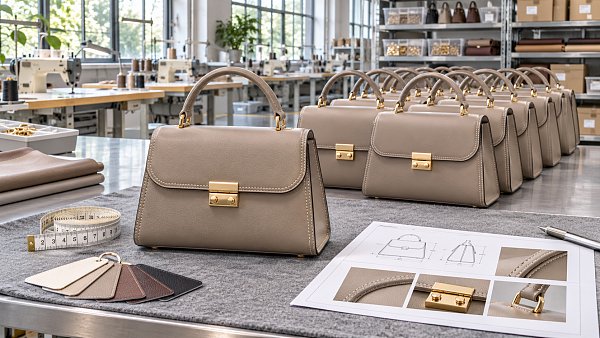
Agree on an approved reference sample and describe acceptable variation. Photographs can help record appearance, but they may not capture color, texture or functional performance accurately. Keep the physical sample where both parties can refer to an equivalent version, and record any subsequent changes in writing. Without this baseline, a dispute over whether a finish or shade is acceptable is difficult to resolve.
Look beyond the sample to production quality
A sample shows what a supplier can produce under sample-making conditions. Bulk production may involve different operators, material lots, equipment or subcontractors. Ask how the supplier controls those changes and request evidence from comparable products rather than relying only on a showroom selection.
Examine the product at its likely points of failure
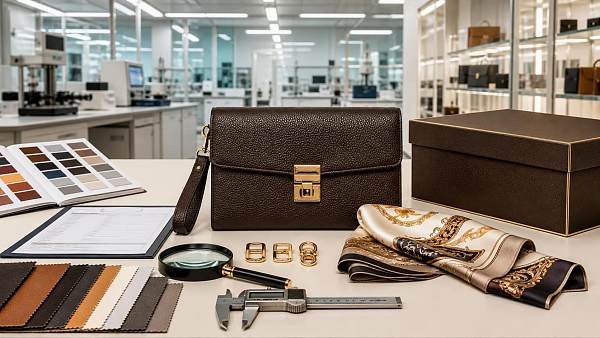
Inspect both appearance and function. For jewelry and small metal accessories, check plating coverage, exposed edges, fastening operation and consistency between matching pieces. For bags and belts, examine seams, lining, hardware attachment, edge paint and the way the item holds its shape. For fabric accessories, check print alignment, color consistency, loose threads and care-label placement.
Use handling and performance checks appropriate to the product and intended use. A clasp should operate consistently; a strap attachment should be assessed against an agreed strength requirement where relevant. Repeated opening, abrasion, color transfer or corrosion may matter, but the method, conditions and acceptance limits need to be agreed in advance. An informal check is useful for screening, not a substitute for a specified test where compliance or performance depends on one.
Ask where defects are found and corrected
Request the supplier’s inspection points, defect classifications and process for separating nonconforming goods. A useful answer identifies who checks incoming components, what is inspected during assembly, and how the final lot is released. Ask to see a sample inspection record with sensitive customer information removed. A checklist that exists only as a blank form gives less assurance than a completed record tied to an actual lot.
Agree on critical, major and minor defects for your product, as well as the sampling method and acceptance criteria. For example, an unsafe sharp edge, a nonfunctioning closure and a small cosmetic variation should not automatically receive the same treatment. Specify who can approve a deviation and whether rejected goods will be repaired, replaced or otherwise addressed. Avoid accepting rework without a plan to re-inspect the affected items.
Test delivery claims against the production plan
When assessing how to evaluate fashion accessories supplier reliability, separate the quoted lead time from evidence that the supplier can meet your particular schedule. Ask when the clock starts: after the purchase order, deposit, artwork approval, material approval or receipt of all components. A short stated lead time can conceal a long pre-production stage.
Build the schedule backward from the date goods are needed. Include sample approval, material procurement, production, inspection, corrections, packing, export handling, transit and any import clearance. Confirm which dates are supplier commitments and which depend on a carrier or another party. A factory ship date is not the same as arrival at a warehouse.
Request a delivery history for comparable orders, including the original commitment, actual ship date and reasons for any changes. Review the basis of the figures: whether they cover all orders or selected examples, whether partial shipments count as on time, and whether dates were revised after the order was placed. References can provide context, but they should not replace order records or your own trial.
Discuss what happens when a component is late or a production slot slips. A credible recovery plan names the decision-maker, the notification point and the options available, such as an approved substitute component or a partial shipment. None should be assumed acceptable: substitutions require approval, and split shipments may create additional freight, customs or receiving costs.
Verify capacity at the point where your order will be made
Ask for the production site, the processes performed there and the steps assigned to subcontractors. A supplier may manage design and final assembly while outsourcing plating, casting, printing or packaging. That arrangement is not necessarily a weakness, but it changes where delays and quality failures can originate. Confirm whether the proposed subcontractors are already qualified and whether changes require your approval.
Capacity figures are meaningful only when linked to your product mix and delivery window. A line capable of producing a simple accessory may not have the same output for a design requiring hand finishing or complex assembly. Ask about available capacity during the proposed period, shared bottlenecks, minimum order quantities and the time needed to secure key materials. Check whether the quotation assumes a single design, color or packaging format; a varied assortment can add changeovers and approval work.
Where the order or risk justifies it, conduct a site visit or commission an independent assessment. Verify that the address and operations match the proposal, observe work in progress, and check whether inspection and material identification procedures are actually used. An audit is a snapshot, not a guarantee of future performance. Reconfirm capacity and critical subcontracting arrangements when the order scope changes.
Match compliance evidence to the item and destination
Accessories can combine metals, coatings, adhesives, textiles, plastics and packaging, each of which may create different restrictions or labeling obligations depending on the market and intended user. Children’s products may require particular attention. Identify applicable requirements before approving materials or placing the order; do not assume that one certificate covers every component, product or destination.
Request relevant test reports or declarations and check what they actually cover: the tested material or finished item, the applicable method, the date, the issuing body and any limitations. Compare descriptions and material details with your specification. A report for a different plating composition or an earlier design may not establish conformity for the goods being ordered. Determine whether additional testing is needed after a material, factory or process change.
Traceability matters when a problem is found. Ask how component lots are identified, how production batches are linked to shipments, and how quickly affected goods can be located. For branded or custom designs, also agree on ownership of artwork and tooling, controls over overruns and defective branded goods, and restrictions on sharing designs with subcontractors.
Use a trial order to expose gaps
A trial should resemble the intended order closely enough to test the risks that matter. Confirm the production site, materials, finishing process, packaging and inspection arrangement. A hand-finished sample made outside the normal production flow may still be useful for design approval, but it is a weak test of bulk repeatability.
Set the trial’s acceptance conditions before production begins. Record the approved sample, inspection criteria, promised milestones and required documents. During the order, note whether the supplier reports problems promptly, provides consistent answers and obtains approval before changing a component or date. Communication quality is most revealing when something needs correction, not when the order is proceeding smoothly.
After receipt, compare the goods and documents with the agreement. Review defects by type and severity, packaging condition, quantity accuracy and the timing of each milestone. Where a problem appears, ask for a corrective action that identifies the cause, the containment of affected stock and how the change will be verified. A replacement shipment alone may resolve the immediate shortage without addressing the reason it occurred.
Make the award decision with explicit trade-offs
Compare suppliers on the same specification and delivery basis. A lower unit price may exclude testing, tooling, special packaging, inspection or transport to the agreed delivery point. Clarify currency, payment terms, order quantities and what triggers a price revision. Include the expected costs of quality control and logistics when comparing offers, while keeping uncertain disruption costs visible rather than presenting them as established savings.
Use an evaluation record that distinguishes evidence from promises. An approved trial, a current capacity plan and traceable test documentation support a stronger decision than an unverified statement that the supplier has “strict quality control.” Give greater weight to factors that could prevent sale or derail the delivery date, and set non-negotiable conditions for safety, required documentation and critical product performance.
A supplier with limited capacity or an incomplete delivery record may still be appropriate for a less time-sensitive order, provided the gaps are understood and controlled. For a launch-dependent or difficult-to-replace item, consider a smaller initial allocation, additional inspection or a qualified alternative source. Put the agreed specification, delivery milestones, change-control procedure and remedies into the purchase contract so that the basis for acceptance does not depend on an informal conversation.
Search News
Hot Articles
Popular Tags
Need ExpertConsultation?
Connect with our specialized leisureengineering team for procurementstrategies.
Recommended News
 Nov 20, 2026How to Assess a Fashion Accessories Supplier: Quality, Delivery and RiskLearn how to evaluate fashion accessories supplier reliability with practical checks for product quality, delivery performance, capacity, compliance and risk.● Luxury Retail Analyst
 Nov 11, 2026Choosing an Ultrasonic Jewelry Cleaner Manufacturer: What Buyers Should CheckChoosing an ultrasonic jewelry cleaner manufacturer? Discover the key checks for performance, safety, quality, costs, and support before you buy.● Luxury Retail Analyst
 Nov 06, 2026Rapaport: Small Round Diamond Prices Fell 5.5% in OctoberSmall round diamond prices fell 5.5% in October, according to Rapaport. Explore what the decline may mean for jewelry buyers, suppliers and inventory planning.● Luxury Retail Analyst
 Nov 05, 2026WGC: India's Illegal Gold Imports Surge Over 1,500% in Third QuarterIndia's illegal gold imports surged over 1,500% to 50 tonnes in Q3 2026, the WGC reports. Discover what's driving the rise and its impact on jewellery sales.● Luxury Retail Analyst
 Nov 04, 2026Pandora CEO Warns New Tariffs Could Raise Contemporary Jewelry PricesPandora CEO Alexander Lacik warns that new US tariffs could raise contemporary jewelry prices. Explore the potential impact on businesses and shoppers.● Luxury Retail Analyst
 Nov 02, 2026Shanwei Jewelry Conference Opens as Canton Fair Buyers Begin Sourcing TourShanwei Jewelry Conference connects Canton Fair buyers with local suppliers. Explore sourcing opportunities and key considerations for jewelry procurement.● Luxury Retail Analyst
 Nov 01, 2026US Tariffs on Indian Goods Reach 50%, Raising Jewelry Export ConcernsUS tariffs on Indian goods reach 50%, raising concerns for jewelry exporters. Explore the potential impact on prices, orders, supply chains and jobs.● Luxury Retail Analyst
 Oct 31, 2026US Jewelry Business Closures Ease in Q3, but Active Firms Fall 1.4%US jewelry business closures eased in Q3 2026, but active firms fell 1.4%. Explore the JBT figures and what they reveal about industry contraction.● Luxury Retail Analyst
 Oct 30, 2026Nose Studs and Rings: Which Is Better for a New Piercing?Nose studs and rings: discover which is best for a new nostril piercing, plus expert tips on fit, materials, healing, and when to switch to a hoop.● Luxury Retail Analyst
 Oct 27, 2026Luxury Retail Merchandising: What Sets It Apart From Mass-Market Retail?Discover how luxury retail merchandising differs from mass-market retail, with curated displays, refined spaces, and personalized service that elevate perceived value and inspire purchases.● Luxury Retail Analyst
 Oct 12, 2026How to Choose Designer Eyewear That Fits Your Store’s Customer ProfileDesigner eyewear buying guide for retailers: match frames, price points, brand appeal, fit, and supplier support to your store’s customer profile for stronger sales.● Luxury Retail Analyst
 Oct 07, 2026Thermal Diamond Testers: How They Work and When They Can Misidentify StonesThermal diamond tester guide: learn how it works, spot false positives from moissanite, and choose reliable verification methods for jewelry trade and retail.● Luxury Retail Analyst
 Oct 02, 2026Diamond Tester Wholesale: How to Vet Accuracy, Calibration, and MOQ Before OrderingDiamond tester wholesale guide: verify accuracy, calibration records, supplier quality controls, and MOQ terms before ordering. Source reliable testers with confidence.● Luxury Retail Analyst
 Sep 09, 2026Wholesale Coral Earrings: How Buyers Can Assess Quality, Treatments, and Supply RiskCoral jewelry earrings wholesale guide for buyers: assess quality, treatments, secure settings, documentation, and supply risks before ordering.● Luxury Retail Analyst
 Sep 01, 2026How to Choose a Jewelry Laser Engraving Machine Manufacturer for Custom ProductionChoose a jewelry laser engraving machine manufacturer with proven sample testing, precision fixtures, workflow-ready software, and reliable support for custom production.● Luxury Retail Analyst
 Aug 27, 2026Evaluating Luxury Retail Accessories Suppliers: Quality, Lead Times, and Brand FitLuxury retail accessories supplier selection made clearer: assess quality, lead times, compliance, costs, and brand fit to protect premium launches and margins.● Luxury Retail Analyst
 Jul 29, 2026Fine Jewelry Price Guide: What Affects Cost and How to Judge Real ValueFine jewelry price guide for buyers: learn what drives cost in metals, gemstones, craftsmanship, certification, and branding so you can judge real value, reduce sourcing risk, and buy with confidence.● Luxury Retail Analyst
 Jul 14, 2026What to Ask an Enamel Jewelry Manufacturer Before Sampling and Mass ProductionEnamel jewelry manufacturer selection starts with the right questions. Learn what to ask about materials, color matching, MOQ, QC, compliance, and lead times before sampling and mass production.● Luxury Retail Analyst
 Jul 12, 2026Surgical Steel Belly Rings vs Titanium: Material Differences, Safety, and CostSurgical steel belly rings vs titanium: compare safety, nickel exposure, comfort, durability, and cost to choose the best option for sensitive skin or budget-friendly style.● Luxury Retail Analyst
 Jul 12, 2026Natural Coral Jewelry Guide: How to Identify Real Coral, Treatments, and QualityNatural coral jewelry guide covering how to identify real coral, spot treatments, assess quality, and buy with confidence. Learn the key signs before you choose.● Luxury Retail Analyst
 Jul 11, 2026Braided Leather Bracelets OEM: Material, Clasp, and MOQ Factors Before SamplingBraided leather bracelets OEM guide covering material grades, clasp options, and MOQ factors before sampling. Learn how to reduce sourcing risk, control cost, and choose the right supplier.● Luxury Retail Analyst
 Jul 09, 2026Jewelry Craftsmanship Gemstone Setting Methods Explained: Prong, Bezel, Pave, and MoreJewelry craftsmanship gemstone setting explained clearly: compare prong, bezel, pavé, channel, and more to choose secure, beautiful, and commercially smart jewelry designs.● Luxury Retail Analyst
 Jul 06, 2026Photo Locket Necklace Manufacturer Selection Guide: Materials, MOQ, and Custom OptionsPhoto locket necklace manufacturer selection guide covering materials, MOQ, custom options, compliance, and quality checks to help buyers source smarter and build stronger jewelry lines.● Luxury Retail Analyst
 Jul 05, 2026What to Check When Comparing a Sterling Silver Clasp ManufacturerChoosing a sterling silver clasp manufacturer? Learn what to check first: 925 silver claims, finish quality, testing, compliance, lead times, and hidden sourcing costs.● Luxury Retail Analyst